Venogenic Erectile Dysfunction (Venous Leak ED): Causes, Symptoms, Diagnosis & Treatment
Written by Dr. Pranitha Bangera

Dr. Pranitha Bangera is a gold-medalist healthcare professional with an elite foundation in clinical training and patient care. A researcher at heart, she specializes in creating high-impact, research-driven medical content that empowers readers through accessible patient education. Dr. Bangera focuses on the intersection of digital health and clinical communication, specifically within the fields of sexual health and mental well-being. Her work is dedicated to making complex medical innovations understandable and trustworthy for a global audience.
•
July 30, 2026
Our experts continually monitor the health and wellness space, and we update our articles when new information becomes available.
Quick Read
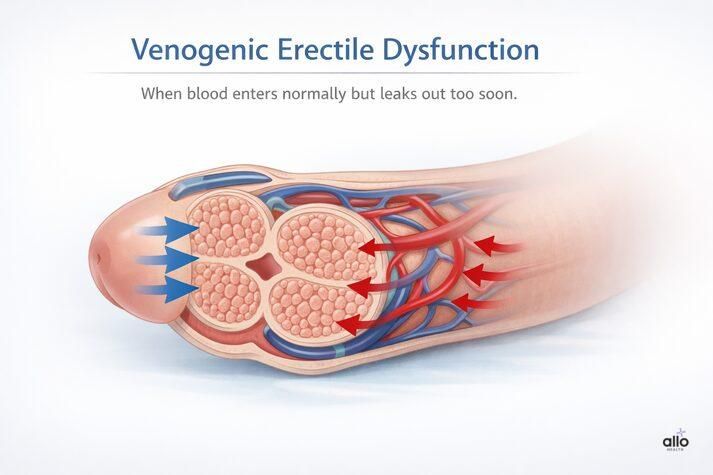
Venogenic erectile dysfunction (also called venous leak) is a type of physical erectile dysfunction where the veins in the penis fail to trap blood, leading to weak or erections, even when blood flow into the penis is normal. This condition often goes unnoticed in men who don’t respond well to ED pills. Causes may include age-related vein weakness, diabetes, high blood pressure, Peyronie’s disease, or past pelvic surgeries. Common signs are loss of firmness, morning and night erections that fade quickly. Diagnosis involves tests like Doppler ultrasound and CT cavernosography to locate the leaking veins. Treatment ranges from lifestyle changes and injections to advanced options like venous embolization, which seals the leaks with high success rates. Early detection and choosing the right treatment with your doctor can significantly improve erections and restore sexual confidence.
Erectile dysfunction can feel confusing and frustrating, especially when erections start strong but fade too quickly. For many men, the issue isn’t desire or blood entering the penis, but the body’s ability to hold that blood. This condition is called venogenic erectile dysfunction, also known as venous leak ED or penile venous insufficiency. Venogenic ED is a type of vasculogenic erectile dysfunction, which means the problem lies in the blood vessels rather than desire or nerve signals. In this condition, blood can enter the penis normally through the arteries, but the veins don’t close properly to keep that blood in place. Because erections depend on both good blood flow and proper blood retention, even healthy arteries can’t compensate when the veins allow blood to leak out too soon. In this article, we’ll explain what venogenic erectile dysfunction is, how it happens, what symptoms to look for, how doctors diagnose it, and what treatment options actually help.

Allo asks
Which of these best describes your erection concerns?
What Is Venogenic Erectile Dysfunction?
Venogenic erectile dysfunction is a type of erectile dysfunction where the penis cannot retain blood long enough to maintain a firm erection — समझें वेनोजेनिक ED के कारण हिंदी में। In most cases, blood flow into the penis is normal, but blood drains out too quickly through the penile veins. Because the problem lies in blood retention rather than blood delivery, venogenic ED often behaves differently from other forms of ED. This is why some men notice that standard ED pills help only briefly or not at all.[1] You may also hear this condition referred to as:
- Venous leakage
- Venous leak
- Corpo-venous insufficiency
- Vascular-induced (vasculogenic) impotence
Understanding How a Normal Erection Works
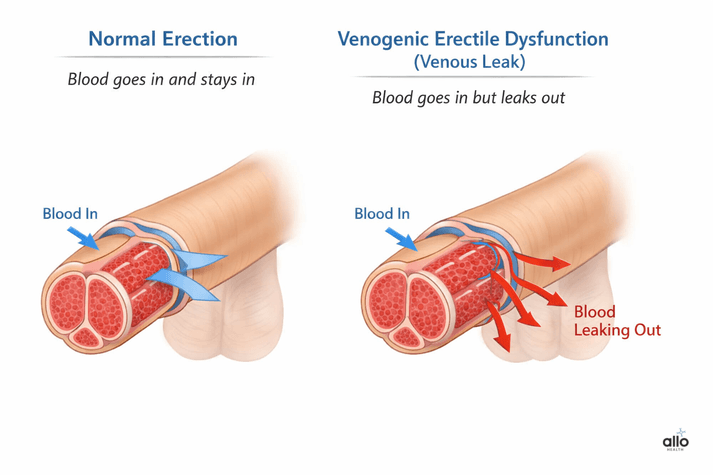
A normal erection depends on a carefully balanced vascular process involving blood vessels, nerves, hormones, and penile tissue. Here’s what typically happens:
- Sexual stimulation increases blood flow to the penis.
- Blood fills the erectile tissues inside the penis (corpora cavernosa)
- As the penis expands, the tissues compress the draining veins
- This compression limits the outflow of blood( venous drainage), allowing the erection to stay firm. [1]
Think of it like filling a water balloon and tying the opening shut — a helpful analogy for how aging affects erectile dysfunction as vessel elasticity decreases over time. Blood goes in, stays in, and the balloon stays filled.
What Is a Venous Leak in Erectile Dysfunction?
In venogenic ED, even though blood enters the penis normally, the veins fail to close effectively. As a result:

- Blood escapes too quickly
- Pressure inside the penis drops
- The erection softens or disappears prematurely
This problem often involves abnormalities in the veins of the penis (penile venous anatomy), weakened tissue support, or dysfunction in the muscles of the erectile tissue. [2]
Causes of Venogenic Erectile Dysfunction
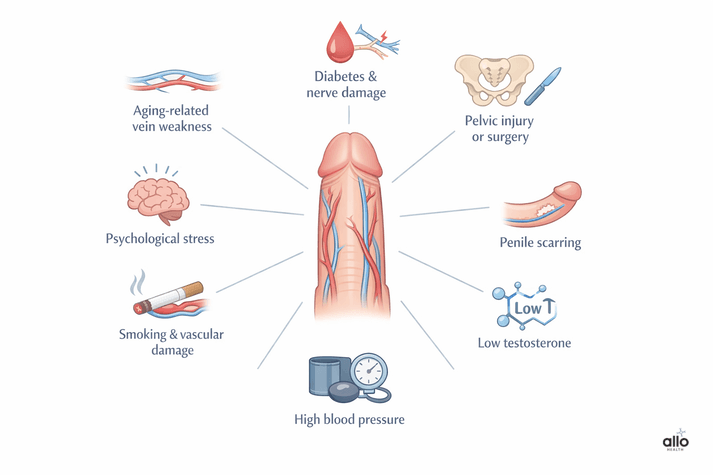
Venogenic ED rarely has just one cause. Most often, it develops from a combination of vascular, structural, hormonal, and psychological factors:
1. Aging-Related Vein Weakness
With age, veins lose elasticity and structural support. Changes in the erectile tissue reduce the penis’s ability to trap blood effectively. [1]
2. Diabetes and Nerve Damage
Diabetes damages small blood vessels and nerves. Over time, this affects the penile tissues and contributes to venous leakage.[1]

3. Pelvic Injuries or Surgery
Pelvic trauma, radical prostatectomy, or radiation can disrupt normal venous drainage and penile vascular control.[3]
4. Smoking and Vascular Damage
Smoking accelerates vascular disease and damages the lining of blood vessels, worsening venous leakage.[4]
5. Psychological Impact
Performance anxiety and chronic stress don’t directly cause venous leaks, but they amplify symptoms and reduce treatment response, especially in younger men. [2]
6. Peyronie’s Disease
Scar-like tissue can form inside the penis and change its shape and flexibility. When this happens, the penis can’t squeeze the veins shut properly during an erection, so blood leaks out too fast and the erection doesn’t last. [1]
7. Hormonal Imbalance (Testosterone)
Testosterone deficiency affects erectile tissue health and libido, worsening existing vascular problems.[3]
8. High Blood Pressure
Hypertension damages blood vessels and alters penile blood flow, contributing to vasculogenic ED.[2]
Symptoms of Venogenic Erectile Dysfunction
Venogenic ED often feels different from typical ED:
1. Incomplete Erection
The penis becomes partially firm but never fully rigid.
2. Loss of Erection During Intercourse
Erections can fade quickly, especially with changes in position.
3. Poor Rigidity
The penis may not feel fully hard, and the tip (head) may stay cool or not fill with blood properly, even when there is some erection.
4. Normal Sexual Desire but Weak Performance
Sexual desire is still there, but the body doesn’t respond the way it should, so getting or keeping an erection becomes difficult.
5. Morning Erection Changes
Reduced or absent morning erections are common.
How Is Venogenic ED Diagnosed?
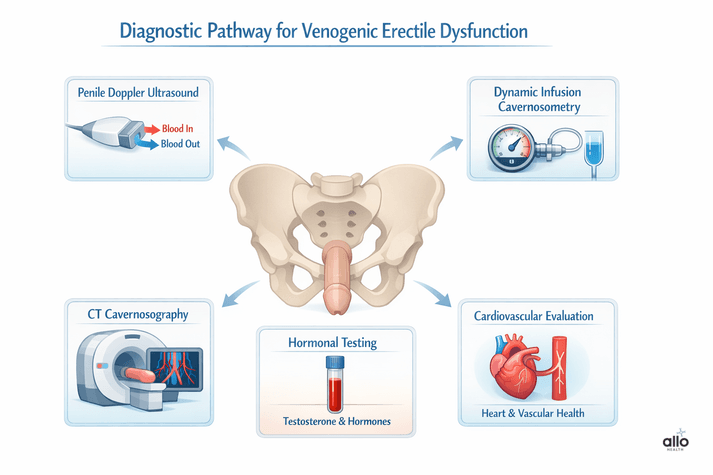
Diagnosing venogenic ED requires a focused vascular assessment:
1. Penile Doppler Ultrasound
A color Doppler ultrasound or color-coded duplex sonography measures:
- Arterial inflow
- Venous outflow
- Erectile response after medication [5]
It’s often the first and most important test.
2. Dynamic Infusion Cavernosometry
This test measures how well the penis retains pressure when fluid is infused, identifying venous outflow problems. [6]
3. Computed Tomography Cavernosography
Also called CT cavernosography or contrast-enhanced computed tomography cavernosography, this imaging study maps leaking veins in 3D and guides treatment planning. [7]
4. Hormonal Testing
Blood tests assess testosterone and rule out endocrine causes.
5. Cardiovascular Evaluation
Because ED often reflects broader cardiovascular disease or atherosclerotic cardiovascular disease, heart risk screening is essential.
Many men with venogenic erectile dysfunction feel frustrated when ED medications don’t help. That’s often because the problem isn’t blood flow, but it’s blood leaking out too soon.
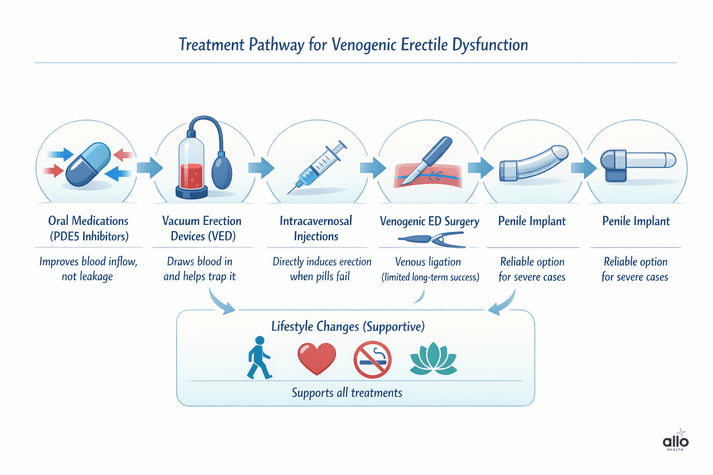
Venogenic Erectile Dysfunction Treatment Options
Treatment depends on the severity, anatomy, and overall health of the individual.
1. Oral Medications (First-Line Treatment)
PDE5 inhibitors or phosphodiesterase-5 inhibitors (like sildenafil or tadalafil) improve blood inflow, but these medications don’t fix the leakage itself. If blood escapes too quickly, pills may only produce short-lived results.
2. Vacuum Erection Devices (VED)
Vacuum erectile devices draw blood into the penis and use a constriction ring to trap it. They work best when combined with other treatments. [8]
3. Intracavernosal Injections
Medications like papaverine intracavernosal injections or alprostadil bypass oral pathways and directly induce erections. They are effective when pills fail.
4. Venogenic ED Surgery
Surgical ligation or penile venous ligation ties off leaking veins. Success rate: Short-term improvement is common, but long-term durability is limited due to missed veins or recurrence. Ideal candidates: Selected cases with isolated superficial leaks.
5. Penile Implants for Severe Venous Leak
A penile implant or penile prosthesis is reserved for advanced, treatment-resistant cases. Pros: reliable erections Cons: irreversible surgery — a stark contrast to less invasive options for arteriogenic erectile dysfunction.
6. Lifestyle Changes
Healthy lifestyle changes can improve blood vessel health and make ED treatments work better. This includes things like regular exercise, eating a balanced diet, maintaining a healthy weight, quitting smoking, limiting alcohol, and managing stress. These changes don’t replace medical treatment, but they support it and improve overall sexual health.
Can Venogenic ED Be Reversed Naturally?
Natural approaches help, but rarely cure venogenic ED alone.[9]
1. Exercise & Pelvic Floor Training
Regular physical activity helps keep blood vessels healthy and flexible, which is important for erections. Simple exercises like brisk walking, cycling, swimming, or light strength training improve overall blood circulation, including to the penis. Pelvic floor exercises (often called Kegel exercises for men) strengthen the muscles that help trap blood inside the penis during an erection. When these muscles are stronger, erections may feel firmer and easier to maintain. These exercises are safe, easy to learn, and can be especially helpful alongside medical treatment.
2. Weight Loss
Carrying extra weight puts stress on blood vessels and increases inflammation in the body. This can worsen problems with blood flow and blood retention in the penis. Losing even a small amount of weight can improve circulation, hormone balance, and energy levels. Many men notice better erection quality and improved response to treatment after reaching a healthier weight.
3. Blood Sugar Control
For men with diabetes, high blood sugar can slowly damage nerves and blood vessels throughout the body, including those in the penis. This damage makes it harder to maintain erections. Keeping blood sugar within the recommended range through proper medication, diet, and regular monitoring helps protect penile blood vessels and may slow further worsening of erectile problems.
4. Stopping Smoking & Alcohol
Smoking damages the inner lining of blood vessels and reduces their ability to function properly. Over time, this can worsen venous leakage and erectile dysfunction. Excessive alcohol use can also interfere with nerve signals and blood flow needed for erections. Quitting smoking and limiting alcohol intake helps protect penile blood vessels and improves the chances that ED treatments will work.
5. Stress Reduction
Ongoing stress, anxiety, or performance pressure can make erectile problems feel worse, even when the main cause is physical. Stress triggers hormones that tighten blood vessels and interfere with sexual response. Relaxation techniques like deep breathing, meditation, yoga, counseling, or sex therapy can improve confidence and help the body respond better during intimacy. Reducing stress doesn’t fix venogenic ED on its own, but it strongly supports treatment success and overall sexual well-being.
Venogenic ED vs Arteriogenic ED
Feature
Venogenic ED
Arteriogenic ED
Main problem
Blood enters the penis, but leaks out too quickly
Not enough blood flows into the penis
What goes wrong
Veins fail to trap blood during an erection
Arteries cannot deliver enough blood
Blood flow status
Arterial blood flow is usually normal
Arterial blood flow is reduced
Erection quality
Starts firm but fades quickly
Difficult to get an erection at all
Morning erections
Often reduced or absent
Usually absent
Response to ED pills
Often limited or short-lasting
Usually better response
Common causes
Weak veins, tissue changes, venous leakage
Narrowed arteries, vascular disease
Treatment focus
Preventing blood leakage and improving retention
Improving blood inflow
When to See a Doctor
If erections start strong but don't last, or medications haven't helped, it's time for proper testing — including reviewing whether Cialis for ED has been used correctly and at the right dose. Early diagnosis prevents frustration and unnecessary trial-and-error.
Final Words
Venogenic erectile dysfunction is more common than many people realize, especially in men who can get an erection but struggle to keep it. This isn’t about desire, confidence, or effort. It’s a physical issue where the penis can’t hold blood long enough to maintain firmness. The encouraging news is that diagnosing venogenic ED has become much more accurate. Tests like Doppler ultrasound and CT cavernosography help identify the exact problem, and modern treatments, including minimally invasive endovascular procedures, have made long-lasting improvement possible for many men. The key is moving toward targeted care based on the real cause. With the right evaluation and treatment plan, venogenic ED is no longer something men simply have to live with. Effective help is available, and outcomes today are better than ever.

Disclaimer
The following blog article provides general information and insights on various topics. However, it is important to note that the information presented is not intended as professional advice in any specific field or area. The content of this blog is for general educational and informational purposes only. The content should not be interpreted as endorsement, recommendation, or guarantee of any product, service, or information mentioned. Readers are solely responsible for the decisions and actions they take based on the information provided in this blog. It is essential to exercise individual judgment, critical thinking, and personal responsibility when applying or implementing any information or suggestions discussed in the blog.
Most Asked Questions
Can venogenic ED be cured?
Venogenic ED doesn’t always have a permanent “cure,” but it can be effectively treated in many cases. With accurate diagnosis and the right approach, many men see significant and lasting improvement in erection quality. Treatments today focus on managing the underlying blood-retention problem rather than guessing, which leads to much better outcomes than in the past.
What is the best treatment for venogenic ED?
The best treatment depends on how severe the venous leak is and which veins are involved. For some men, a combination of medications, vacuum devices, or injections may help. For others, newer minimally invasive procedures like endovascular embolization offer more durable results. A proper vascular evaluation is key to choosing the right option.
Does Viagra work for venous leak ED?
Viagra and similar ED pills may help some men with venogenic ED, but the response is often limited. These medications improve blood flow into the penis, but they don’t fix the problem of blood leaking out. That’s why some men notice erections improve briefly but don’t last long enough.
Is surgery safe for venogenic ED?
Surgical options like venous ligation can be safe in carefully selected cases, but they are used less often today because long-term success rates can be inconsistent. Newer minimally invasive treatments generally carry fewer risks and better durability. Surgery is usually considered only after detailed testing and when other options aren’t suitable.
Is venogenic ED common in young men?
Yes, venogenic ED can occur in younger men, though it’s less common than in older age groups. In younger individuals, venogenic ED often exists alongside factors like performance anxiety, stress, or lifestyle issues. Addressing both the physical and psychological aspects usually leads to better results.
Sources
- 1.
Erectile Dysfunction (ED)
- 2.
Venous leak
- 3.
What Is Venous Leakage?
- 4.
Bilateral external and internal pudendal veins embolization treatment for venogenic erectile dysfunction
- 5.
MRI-Cavernosography: A New Diagnostic Tool for Erectile Dysfunction Due to Venous Leakage: A Diagnostic Chance
- 6.
Venous leak embolization in venogenic erectile dysfunction
- 7.
Percutaneous Treatment of Venous Erectile Dysfunction
- 8.
Penile Doppler Ultrasound for Erectile Dysfunction: Technique and Interpretation
- 9.
Venogenic erectile dysfunction: diagnosis on computed tomography cavernosography and endovascular treatment using an anterograde access via deep dorsal penile vein
Why Should You Trust Us?
Why Should You Trust Us?
This article was written by Dr. Pranitha Bangera, who has more than 1 years of experience in the healthcare industry.
Allo has the expertise of over 50+ doctors who have treated more than 1.5 lakh patients both online and offline across 30+ clinics.
Our mission is to provide reliable, accurate, and practical health information to help you make informed decisions.
For This Article
- We reviewed over 20 top-ranking articles to ensure our content reflects the most up-to-date and well-rounded information available online.
- We relied on trusted medical sources like peer-reviewed journals, hospital websites, and academic research, with a focus on sexual health, vascular function, and male reproductive wellness.
- We explored social media platforms like YouTube, Instagram, and Twitter to understand what real people are searching for, watching, and feeling confused or concerned about when it comes to venogenic erectile dysfunction.
- We browsed forums like Reddit, Quora, and Go Ask Alice to hear firsthand what men are asking, struggling with, and discovering about blood leakage, weak erections, and ED treatment journeys.
- We also watched expert-backed YouTube videos from doctors and specialists to include advice that’s not only accurate, but practical and relatable too.