Stevia and Erectile Dysfunction: Benefits and effects on sexual health
Written by Dr. Anvi Dogra

Dr. Anvi Dogra is a medical writer and healthcare professional with a doctoral background in clinical sciences. She leverages her medical training to produce deeply researched, people first content across the wellness industries. With a "360-degree" understanding of the healthcare industry, Dr. Anvi focuses on bridge-building between clinical data and patient wellness. Known for her ability to make complex medical topics accessible and engaging, Dr. Anvi ensures that all health information is grounded in clinical evidence.
•
April 21, 2026
Our experts continually monitor the health and wellness space, and we update our articles when new information becomes available.
Quick Read
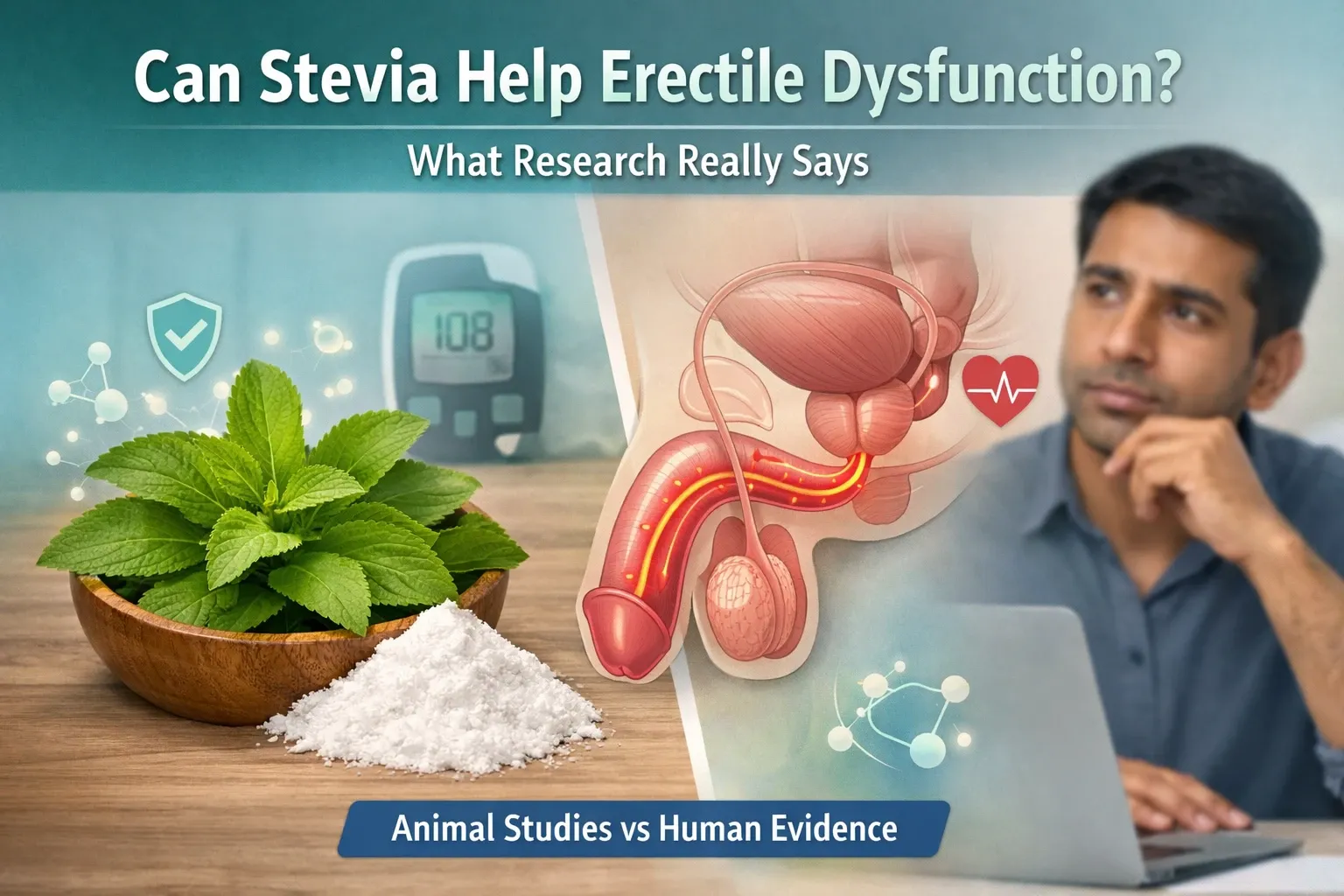
Stevia is often talked about for ED because some animal studies show it may improve sexual function in diabetic rats by reducing inflammation, improving testicular health, and lowering blood sugar. But in humans, we don’t have any proof that stevia helps erections. Stevia is mostly safe in purified forms, but too much can cause bloating, dizziness, low blood pressure, and may interact with diabetes or BP medicines. ED is a real medical condition, and stevia is not a cure. If someone has erection problems, the safest and smartest option is to talk to a doctor.
Stevia is a natural sweetener that many people use instead of sugar. But lately, people all across the internet and forums have started asking: Can stevia help with erectile dysfunction (ED)? The truth is that stevia may help with erectile dysfunction, but it is not clear. Most of the studies done on stevia and erectile dysfunction are done on animals, not humans. In this article, we discuss how stevia may help, where it may not help, and why you should always talk to a doctor before using it for ED.
Can stevia help with ED?
Stevia is sold as a natural and safe sweetener, and many people wonder if it can also help with erectile dysfunction. Most of the scientific evidence that supports this comes from animal studies, especially diabetic rat and mouse models. These studies show some positive effects on sexual function, but only under diabetic conditions, where blood sugar, hormones, and oxidative stress were already disturbed. When we look at human studies, the results are very different. Some animal studies suggest that stevia may help with sexual function, especially when diabetes is the main cause of erectile dysfunction. In diabetic rats, low-dose stevia improved erection quality and sexual performance [1]. Another study found better sperm count, better sperm movement, and lower blood sugar after stevia treatment. Stevia also protected testicular tissue from oxidative stress and inflammation, and in diabetic mice it increased testosterone and improved sperm quality and IVF success [2]. But when it comes to humans, there are no such studies to show that stevia can actually help with erectile dysfunction. One study done on humans showed no change in sexual function. This study also showed a drop in sperm count among the stevia users. Stevia may help diabetic animals with ED, but we lack strong evidence for humans.
How can stevia help with ED?
Why does stevia come up in ED discussions — the way herbs like Avena Sativa for ED do? It is because of the biological effects it shows in diabetic animals. These effects are linked to the same pathways that affect erection quality, hormones, and testicular health. Now let us explore what these effects of stevia are.
Antioxidant effects
Stevia reduces oxidative stress, which is a major cause of diabetes-related ED [3].
Anti-inflammatory effects
Inflammation damages blood vessels and testicular tissue — similar concerns arise around Brilinta and ED through a different mechanism. Stevia has been shown to lower inflammatory markers and improve testicular structure in diabetic rats [3].

Protection of testicular cells
Stevia protects Leydig cells (cells that produce sex hormones in males), increases sperm cells, reduces apoptosis, and supports sperm formation [4].
Better blood flow
Stevia may act as a vasodilator; that means it can help in providing better blood flow to the penis — a pathway shared with several supplements for erectile dysfunction. But this has only been shown in animals [5].
Helps control blood sugar
Since diabetes is one of the causes of ED, improving blood sugar may indirectly help sexual function [6]. All these benefits are seen only in diabetic animals yet. Due to these effects, stevia has gained popularity for treating ED. But we cannot expect the same results in humans.
Is Stevia Safe to Consume?
Stevia leaves are 250 to 300 times sweeter than normal sugar and have been used traditionally for hundreds of years [7]. But when it comes to modern food safety, the rules are strict. The U.S. FDA only considers high-purity steviol glycosides safe for human consumption. [8] Whole stevia leaves and crude extracts are not approved as food additives, and companies cannot sell or import them as sweeteners in some countries as their safety data is unclear.

Side Effects of Consuming Too Much Stevia
Stevia is generally safe in purified forms, but it can cause bloating, nausea, dizziness, lowered blood pressure, and hormone-related changes in some people — lifestyle factors like weightlifting and ED also play a role in the overall picture. Some people may also experience gastrointestinal discomfort due to added sugar alcohols in certain stevia products. Some products also contain sugar alcohols, which can trigger gas, indigestion, cramping, or loose stools, especially in people with a sensitive gut. Stevia can also interact with medications, especially diabetes medicines, blood pressure drugs, and lithium, which may lead to low sugar levels, very low BP, or high lithium buildup. As stevia affects blood sugar, blood pressure, hormones, and medication balance, it’s important to use it carefully. If you are suffering from any medical condition, take prescription medicines, or are thinking of using stevia, always consult a doctor first.
Conclusion
Stevia is a popular natural sweetener, and research in diabetic animals shows it may help sexual function by reducing oxidative stress, protecting testicular cells, and improving testosterone and sperm quality. But human research tells a different story: stevia has no proven benefit for erections as such, and more research is needed. So while stevia is safe for most people as a sweetener, it should not be used as a treatment for erectile dysfunction. If you’re struggling with ED or fertility problems, the safest and smartest step is to speak to a doctor who can identify the real cause and guide you toward the right treatment.

Disclaimer
The following blog article discusses food and diet-related information for general educational purposes. However, it is important to note that the information provided is not intended as personalized dietary advice and should not be considered a substitute for professional guidance from a registered dietitian or qualified healthcare professional. Before making any significant changes to your diet or nutrition plan, it is recommended to consult with a registered dietitian or healthcare professional. Dietary changes can have a significant impact on your overall health and well-being. It is important to approach any changes to your diet in a balanced and sustainable manner, ensuring that you meet your nutritional needs and avoid any potential nutrient deficiencies. Rapid or extreme changes in dietary patterns can be detrimental to your health and may require professional guidance. It is crucial to note that any specific dietary recommendations or guidelines mentioned in this article may not be appropriate for individuals with specific medical conditions, allergies, or intolerances. A registered dietitian or healthcare professional can provide individualized advice, including modifications or alternative food choices to accommodate your unique circumstances. The information provided in this article may not encompass all possible dietary considerations or account for the latest research and nutritional guidelines.
Most Asked Questions
Does stevia decrease testosterone?
Animal studies show mixed results. Some diabetic rat studies found that stevia improved testosterone levels, while one human study showed no change in testosterone among stevia users. So, there is no proof that stevia decreases testosterone in humans, but more research is needed.
What is the negative side of stevia?
In purified form, stevia is generally safe, but it can cause bloating, nausea, dizziness, low blood pressure, and hormone-related changes in some people. Products that contain sugar alcohols may trigger gas, cramping, or indigestion. Whole stevia leaves and crude extracts are not approved as sweeteners in some countries due to limited safety data.
Does stevia decrease testosterone?
Animal studies show mixed results. Some diabetic rats had slightly higher testosterone, while others showed no change. Human research found no effect on testosterone levels, so we cannot say stevia decreases testosterone.
Can stevia reduce sperm count?
Yes, one human study found that regular stevia consumption was linked to a significant drop in sperm count. Some rodent studies also show reduced sperm quality at higher doses.
Is stevia safe for sexual health?
Purified stevia is generally safe for most people, but its impact on fertility is unclear. There’s no proof that it improves erections in humans, and some data suggests it may affect sperm count.
Sources
- 1.
Effect of Stevia rebaudiana Bertoni extract on sexual dysfunction in Streptozotocin-induced diabetic male rats
- 2.
Ameliorative effect of Stevia rebaudiana Bertoni on sperm parameters, in vitro fertilization, and early embryo development in a streptozotocin-induced mouse model of diabetes
- 3.
Not just sweetness, the anti-inflammatory potential of Stevia rebaudiana Bertoni and its major glycosides
- 4.
Effect of Stevia rebaudiana Bertoni extract on sexual dysfunction in Streptozotocin-induced diabetic male rats
- 5.
Inhibitory effect of stevioside on calcium influx to produce antihypertension
- 6.
Hypoglycemic Effect of Aquatic Extract of Stevia in Pancreas of Diabetic Rats
- 7.
Natural sweetener Stevia rebaudiana
- 8.
Aspartame and Other Sweeteners in Food