Can Prostate Cancer Cause Erectile Dysfunction
Written by Dr. Deepali Anand

Dr. Deepali is a medical writer and healthcare professional with a background in clinical surgery and patient care. Having transitioned from active clinical practice to medical communications, she specializes in bridging the gap between complex clinical data and patient education. Dr. Deepali is dedicated to creating evidence-based content that is grounded in scientific rigor and empathy, ensuring that sensitive topics like sexual wellness and mental health are accessible and empowering for every reader.
•
July 30, 2026
Our experts continually monitor the health and wellness space, and we update our articles when new information becomes available.

Quick Read
Can prostate cancer cause erectile dysfunction? While early-stage prostate cancer rarely causes ED directly, advanced tumors can press on nerves and blood vessels that control erections. More commonly, it's the cancer treatments- surgery, radiation, and hormone therapy, that affect sexual function, with 75-85% of men experiencing some degree of ED after treatment. The encouraging news is that recovery is possible through natural healing, medications, devices, and lifestyle changes, with many men seeing improvement over 1-2 years. Most importantly, this doesn't mean the end of intimacy, with today's treatment options and open communication with your healthcare team, you can maintain a fulfilling intimate life while managing your cancer treatment.
Can prostate cancer cause erectile dysfunction? While prostate cancer itself doesn’t usually cause ED in the early stages, it can in advanced cases. More often, it’s the treatments, like surgery, radiation, or hormone therapy, that affect sexual function by impacting nerves, blood flow, or hormone levels.
In this article, we’ll explain how prostate cancer and its treatments are linked to ED, what recovery can look like, and the many medical and lifestyle options available today.
The Connection Between Prostate Cancer and Erectile Dysfunction
Can prostate cancer cause erectile dysfunction? Well, not directly, but if it gets more serious and the treatment for prostate cancer can cause erectile dysfunction.
ED is uncommon as an early-stage symptom of prostate cancer — but related conditions like enlarged prostate and ED are worth evaluating. ED typically appears when the tumor is locally advanced or has started spreading to nearby areas. The cancer then begins to invade and compress the nerves and blood vessels that trigger erections.
Mostly, ED arises because of the cancer treatments- surgery, radiation therapy, and hormone therapy, which can damage the nerves, blood supply, or testosterone production.

A review of 43 studies (13,000+ men) found ED in 28% at diagnosis and 43% after treatment, with the highest rates in pelvic cancers like prostate.[1] Non-cancer structural issues like hernia and ED show similar post-treatment impacts.
Can the Prostate Cancer Itself Cause Erectile Dysfunction?
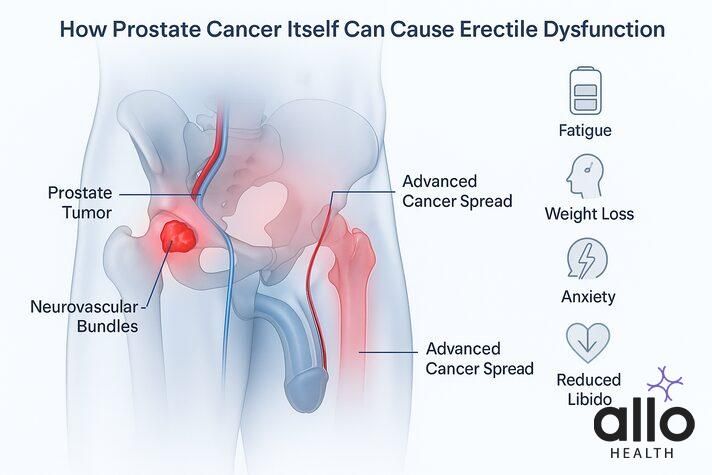
Yes, though it’s less common than cancer treatment-related ED, the prostate cancer tumor itself can directly affect sexual function, especially in more advanced cases[2]. Here’s how:
- Pressure on Nerves or Blood Vessels: If the tumor grows large or invades nearby areas, it can press on the nerves and blood vessels that help control erections, especially the neurovascular bundles or pelvic nerves.
- Advanced or Metastatic Cancer: In later stages, the tumor may spread beyond the prostate. This can lead to gradual or sudden erection loss, sometimes along with pelvic pain or urinary problems.
- Systemic Effects of Cancer: Prostate cancer can also cause fatigue, weight loss, and emotional stress, all of which lower energy, reduce libido, and contribute to ED.
- Cancer-Related Anxiety: Even before treatment begins, the emotional toll of a cancer diagnosis can disrupt sexual desire and function.

Allo asks
What Do You Most Want to Know About ED After Prostate Cancer?
How Prostate Cancer Treatments Can Lead to ED
Most erectile issues after prostate cancer aren’t caused by the cancer itself; they’re caused by the cancer treatments. Study[2] shows 75–85% of men report ED three years after surgery or radiotherapy, even if they had good sexual function before treatment.
Different therapies affect sexual function in different ways:

Radical Prostatectomy (Surgical Removal of the Prostate)
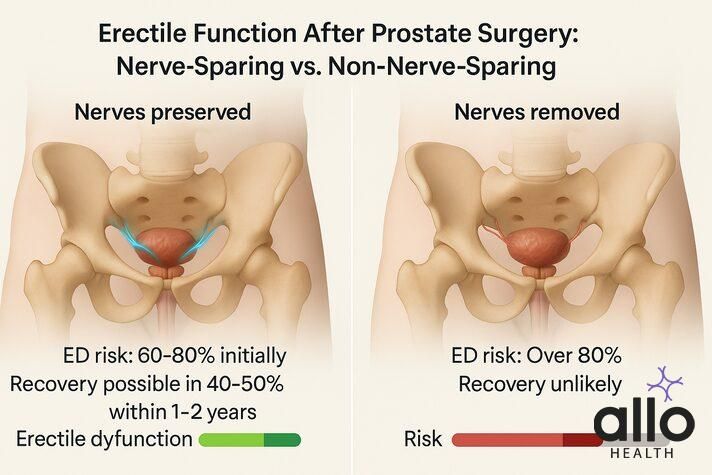
- ED Risk: 60-80% experience ED right after surgery
- Recovery: About 40-50% may regain function over 1–2 years, if the nerves were preserved
- Onset: Sudden, with potential for gradual recovery
Non-Nerve-Sparing Surgery(nerve-sparing prostatectomy): If nerves must be removed completely, the chance of regaining erections is very low.
- ED Risk: Over 80% long-term ED
- Recovery: Unlikely
- Onset: Sudden
External-Beam Radiation Therapy (EBRT)
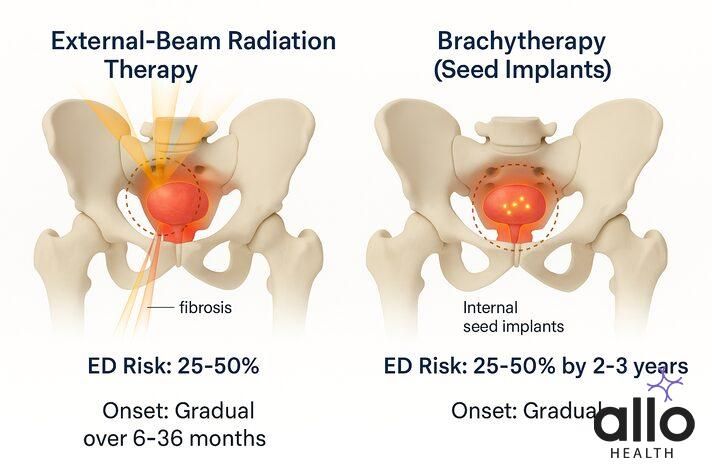
- Damages the small blood vessels and nerves over time, causing scarring (fibrosis) in the pelvic area.
- ED Risk: 25–50% develop ED within 6–36 months
- Onset: Gradual
Brachytherapy (Internal Radiation or Seed Implants)
- Similar to External-Beam Radiation Therapy, but tends to have less radiation scatter.
- ED Risk: 25–50% by 2–3 years post-treatment
- Onset: Gradual
Hormone Therapy (Androgen Deprivation Therapy or Orchiectomy)
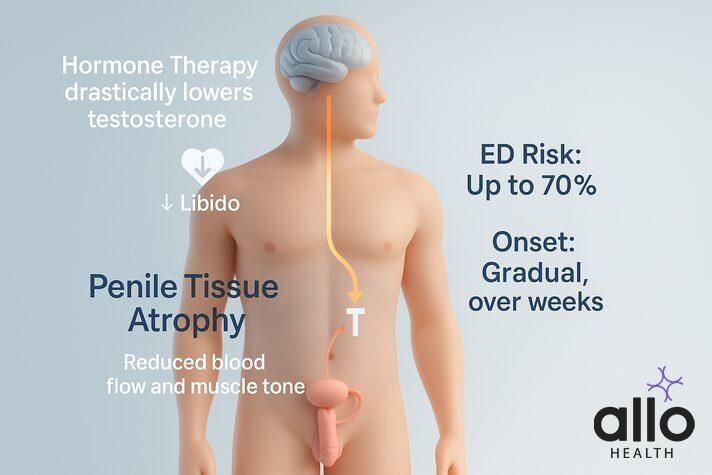
- Lowers testosterone level drastically, which reduces sex drive and leads to changes in penile tissue.
- ED Risk: Up to 70% experience ED or loss of libido
- Onset: Develops over a few weeks
Combined Treatments (e.g., Surgery + Radiation or Hormone Therapy)
- These can combine nerve, blood vessel, and hormone effects, raising the overall ED risk.
- ED Risk: May exceed 85% in long-term survivors
- Onset: Varies by treatment plan
Based on follow-ups with over 200 post-surgery patients, Allo Health found that 62% of men under 60 who underwent nerve-sparing prostatectomy and followed a structured rehab plan (medication, vacuum therapy, and counseling) experienced partial or full erectile function recovery within 18 months.
Why Do Prostate Cancer Treatments Cause Erectile Dysfunction?
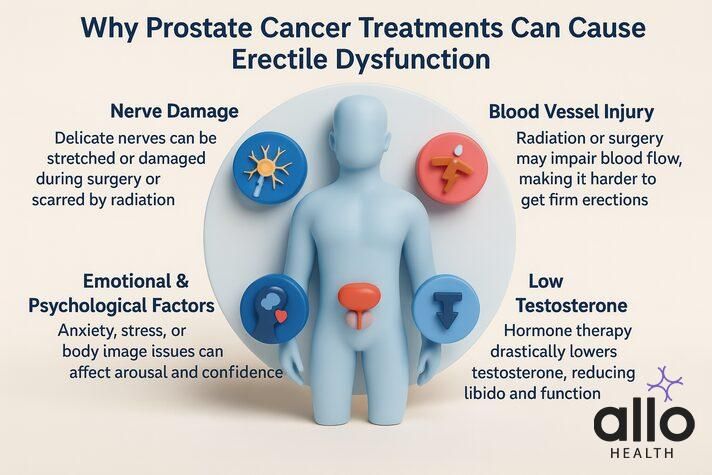
1. Nerve Damage
- The cavernous nerves, which are essential for erections, run right alongside the prostate.
- During surgery, these nerves can get stretched, burned (cauterised), or even removed.
- Radiation can also cause scarring around these nerves over time. When these nerves are damaged, signals from the brain can’t properly reach the penis.
2. Blood Vessel Injury
- Radiation can damage the lining of blood vessels, reducing blood flow into the penis.
- After surgery, low oxygen in the tissue (called postoperative hypoxia) can lead to scarring or stiffening of the spongy tissue in the penis (fibrosis). This makes it harder for the penis to fill with blood and stay firm.
3. Low Testosterone
- Hormone therapy drastically lowers testosterone levels, the main male sex hormone.
- Without enough testosterone levels, your sex drive drops, and the physical process of getting an erection doesn’t work as it should.
- Long-term low levels can even affect the structure of the penis.
4. Psychological and Emotional Factors
- Many men feel anxious about recurrence, have a changed body image, or worry about how their partner sees them.
- This emotional strain can affect confidence, arousal, and intimacy.
Can Erectile Function Be Recovered After Prostate Cancer Treatment?
Yes, in many cases, erectile function can improve over time, especially with the right support, treatment options, and lifestyle changes — the same holds for herniated disc and ED. Here’s how:
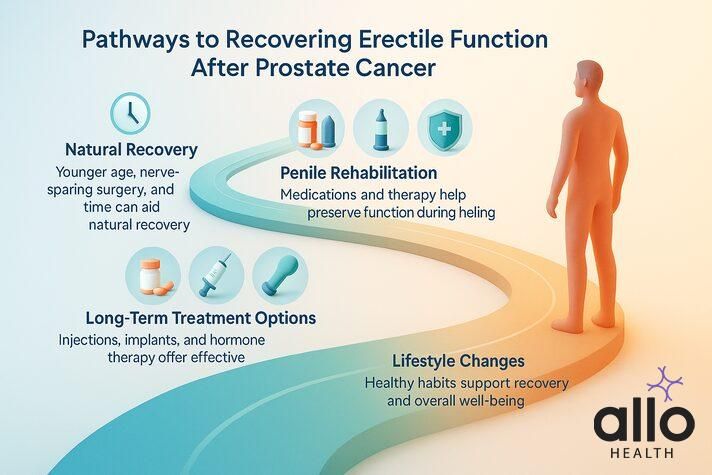
1. Natural Recovery
Some men regain erections naturally after treatment, especially if:
- They are younger (under 60 years)
- Had strong erections before treatment
- Underwent nerve-sparing surgery on both sides
Recovery rates vary: Some men have as low as a 10% chance of full recovery, while others (with ideal factors) may reach over 70% within two years.[4]
2. Penile Rehabilitation
Doctors often recommend starting rehabilitation early, even before or just after treatment. This may include:
- Oral medications like PDE5 inhibitors (like Viagra or Cialis)
- Vacuum erection devices or vacuum pumps to stimulate blood flow
These strategies help keep oxygen flowing to the penis and prevent long-term tissue damage.
3. Long-Term Treatment Options
If pills alone aren’t enough, there are other effective options:
- PDE5 inhibitors work in about 70% of men who stay consistent
- Penile injections(Intracavernous injection therapy), such as alprostadil, can trigger firm erections
- Penile implants and penile prosthesis offer a permanent, discreet solution when other treatments don’t work
- Testosterone replacement therapy or hormonal therapy
4. Lifestyle Changes
Optimizing overall health can support sexual recovery. Consider:
- Managing blood pressure, diabetes, and heart health
- Quitting smoking
- Pelvic-floor exercises (such as Kegels)
- Counseling or sex therapy to rebuild intimacy and reduce anxiety
Your Timeline for Recovery
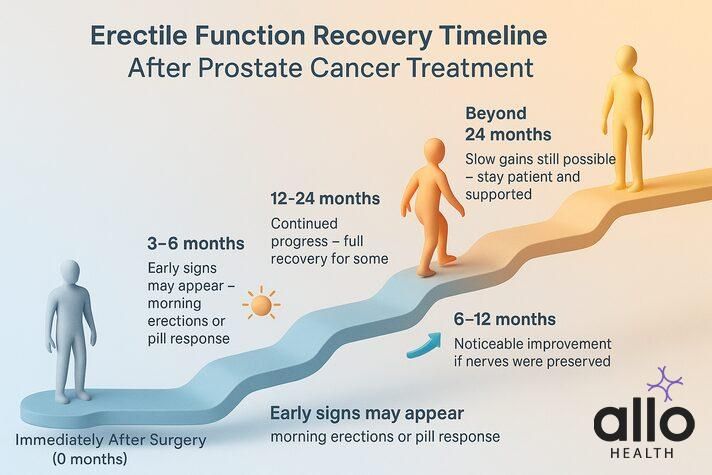
In recovery after prostate cancer treatment, everyone's timeline is different.
- Immediately after surgery: Most men have no erectile function. This is normal and expected.
- 3-6 months: Some early signs of recovery might appear, especially morning erections or response to treatment.
- 6-12 months: This is when more significant improvement typically occurs if it's going to happen naturally.
- 12-24 months: Recovery can continue for up to two years or even longer in some cases.
- Beyond 24 months: While major improvements are less common after two years, some men continue to see gradual progress.
Recovery takes time, especially after prostate surgery. Some men see improvement within months, while others may need longer and a bit of support from medication or devices.
When to Seek Medical Advice
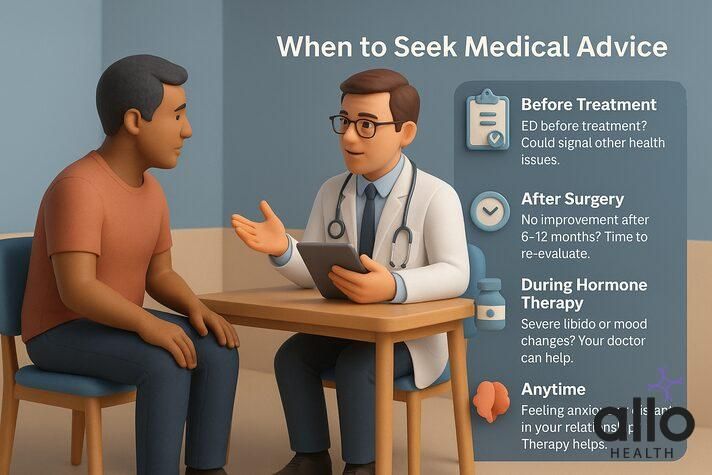
Your sexual health matters; don’t hesitate to speak up — options like Avanafil for ED are available. Here’s when it’s time to reach out to your doctor[5]:
Before Treatment
- ED before cancer treatment may point to other treatable issues like diabetes, cardiovascular disease, or low testosterone.
After Surgery
- No improvement after 6-12 months (even with nerve-sparing surgery) could mean you need additional support.
- Sudden setbacks or pain during sex should be evaluated.
During Hormone Therapy
- Low libido or severe sexual function changes can often be managed with treatment adjustments.
- Mood, energy, and sexual function drops are common and treatable.
Anytime
- Relationship stress or emotional struggles like anxiety or identity loss deserve attention; therapy can help.
Bottom Line
Yes, prostate cancer and its treatments can affect sexual function, but it doesn’t mean the end of your intimate life. With today’s treatment options and support, many men continue to enjoy fulfilling relationships. Stay informed, talk openly with your doctor, and be patient with your recovery. From medications to therapy and beyond, there are solutions. Intimacy may change, but it can still be deeply meaningful, and you’re not alone on this journey.

Disclaimer
The following blog article provides general information and insights on various topics. However, it is important to note that the information presented is not intended as professional advice in any specific field or area. The content of this blog is for general educational and informational purposes only. The content should not be interpreted as endorsement, recommendation, or guarantee of any product, service, or information mentioned. Readers are solely responsible for the decisions and actions they take based on the information provided in this blog. It is essential to exercise individual judgment, critical thinking, and personal responsibility when applying or implementing any information or suggestions discussed in the blog.
Most Asked Questions
How do you treat erectile dysfunction after prostate cancer?
Treatment depends on the cause and severity, but options include oral medications (like Viagra or Cialis), vacuum pumps, penile injections, implants, and hormone therapy if needed. Lifestyle changes and counseling can also help with emotional and relationship aspects.
What PSA level is considered aggressive prostate cancer?
A PSA level above 10 ng/mL may suggest a higher risk of aggressive cancer, especially when combined with a high Gleason score or advanced stage. However, PSA levels alone don't confirm aggressiveness, your doctor will consider other factors too.
Is exercise good for prostate cancer and sexual health?
Yes. Regular physical activity can improve energy, mood, blood flow, and hormone balance—all of which support better recovery and sexual function. Exercise may also reduce cancer-related fatigue and help manage side effects of hormone therapy.
Can prostate cancer be cured permanently?
In many cases, yes, especially if caught early. Localized prostate cancer can often be cured with surgery or radiation. Even in more advanced cases, treatments can control the cancer for many years. Your doctor can guide you based on your stage and health.
Can erectile dysfunction from prostate cancer go away on its own?
Sometimes. Men who had nerve-sparing surgery and were sexually healthy before treatment often regain some or full erectile function over time, especially within the first 1–2 years. For others, treatment support may be needed for recovery.