Penile Numbness and Erectile Dysfunction: Causes and Solutions
Written by Dr. Ritu Koul
Dr. Ritu Koul is a medical professional and author specializing in sexual wellness. Through her writing, she focuses on evidence-based education, compassionate care, and breaking long-standing taboos around sexual health, intimacy, and relationships. Her work aims to empower readers with accurate information to make informed decisions about their well-being.
•
July 30, 2026
Our experts continually monitor the health and wellness space, and we update our articles when new information becomes available.
Quick Read
Penile numbness and erectile dysfunction are often linked together as they share some common underlying issues like nerve compression, poor blood flow, or stress. These issues are treatable; early detection of the symptoms makes the recovery faster and easier. Simple lifestyle changes, medications, and patience can help restore the sensation and performance safely.
Feeling reduced sensation or numbness in your penis can be worrying, especially for people with erectile dysfunction (ED). This often happens when the nerves or blood vessels between your brain and genitals do not work properly, making it difficult for the body to respond to sexual stimulation. Many men describe this as lost sensitivity erectile dysfunction, where decreased penile sensation and erection difficulties happen together. Healing from penile numbness and erectile dysfunction takes time. There is no fixed timeline for this process. For some men, recovery may occur within a few weeks, while for others, it can take several months to a year. In this article, we’ll explore how penile numbness links to erectile dysfunction. We’ll cover common causes, recovery timelines, and discuss medical and lifestyle treatments to help you regain sensation and confidence.

Allo asks
If you noticed penile numbness or erection issues, what would you do first?
Does Penile Numbness Cause Erectile Dysfunction?
Penile numbness can lead to erectile dysfunction. When the nerves that help you feel touch and arousal in the penis get damaged or interrupted, whether from injury or certain health issues, the communication between the brain and the penis is affected. When this happens, the messages don't travel properly, putting the penis at risk of lost penile sensitivity and ED. Difficulty achieving an erect penis improves once the underlying cause is treated.[1]
How Can Penile Numbness Cause Erectile Dysfunction?
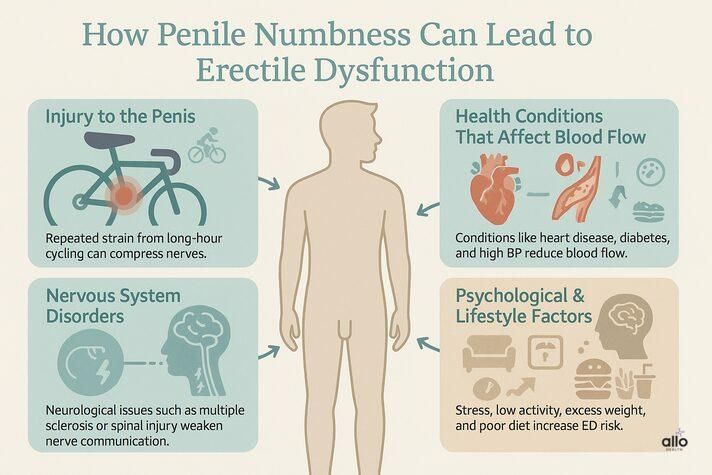
1. Injury to the Penis
- Injuries from repeated strain (common in cyclists), like long-hour cycling, long-distance rides, or bike rides, may put pressure on the nerves and blood vessels in the penis and perineum (the area between the genitals and anus).[2]
- Over time, this pressure may cause nerve damage and, in rare cases, increase the risk for fracture, affecting normal blood flow and reducing sensation.
2. Health Conditions that Affect Blood Flow
- Healthy blood flow is important for normal erections. Conditions like heart disease, diabetes, high cholesterol, and high blood pressure can reduce or block blood flow, which may lower penile sensation and make it harder to get or keep an erection.
- Research shows that almost 50% of men with coronary heart disease (a type of heart disease) also experience erectile dysfunction.[3]
3. Nervous System Disorders
- Conditions like multiple sclerosis (a nerve disorder) and spinal cord injury can disturb the communication between the brain and the genitals.[1]
- This weakens arousal signals, reduces sensitivity, and makes it difficult to maintain erections.
4. Side Effects of Medications
- Some cases of erectile dysfunction can be linked to commonly prescribed medications.
- This includes antidepressants, certain acid-reflux and antifungal medications, hormone-related treatments, and certain blood pressure medications, which may cause erectile difficulties as a side effect.[3]
5. Psychological and Lifestyle Factors
- Mind and body are closely related in sexual health. Research shows that men with anxiety disorders are more likely to experience erectile difficulties.[4]
- Anxiety can start a cycle where sexual problems create stress between partners and make communication difficult. This added stress then affects sexual performance even more, continuing the cycle.
- Performance anxiety can block the body’s natural arousal signals, leading to temporary erectile issues.
- People with depression are about 40% more likely to experience erectile dysfunction than those without it.[3]
- Low physical activity, excess body weight, and an unhealthy diet are linked to a higher risk of erectile dysfunction.[5]
When to See a Doctor
Erection issues or penile numbness sometimes can be normal, especially due to stress, tiredness, certain activities, or short-term changes in blood circulation — though persistent cases mirror the vascular decline seen in age and erectile dysfunction. These symptoms of numbness can affect your confidence and overall well-being if they persist for a long period of time. It’s important to speak with a healthcare professional for a proper check-up and accurate diagnosis. Consider visiting a doctor.
- If you frequently notice a loss of sensation in the penis.
- Difficulty in getting or maintaining erections regularly.
- Decreased feelings of touch with heavy stimulation.
- If you have other long-term medical conditions like heart disease, high blood sugar, obesity, and are experiencing new sexual issues.
- If you feel stressed, depressed, and have a loss of sexual desire.
Think of sensitivity as your body’s way of communicating. When blood flow, hormones, or nerves are affected, those signals weaken, but with the right treatment and lifestyle changes, they can come back.”
Solutions for Penile Numbness and Erectile Dysfunction
There is no single quick fix for penile numbness and erectile dysfunction — treatment must address both the neural and vascular components, including arterial health central to atherosclerosis and erectile dysfunction. Treatment is most effective when it addresses the underlying cause, such as nerve pressure, poor blood flow, or ongoing stress. A doctor can help identify suitable treatments based on your symptoms. Often, a combination of lifestyle changes, medical treatments, and psychological support plays a key role in improving both sensitivity and erection quality.

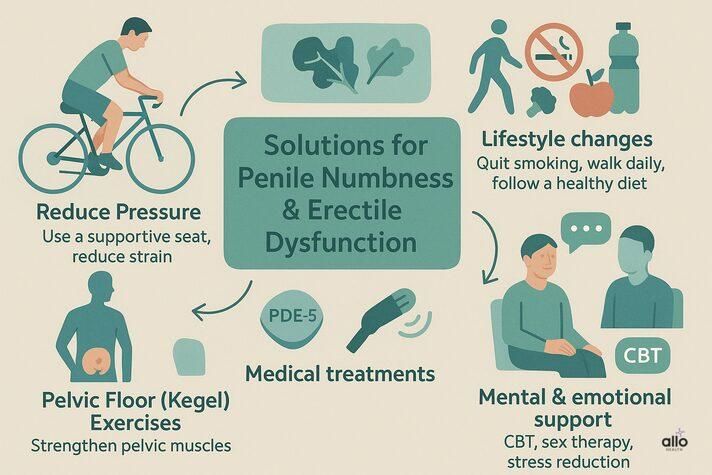
1. Reduce Pressure
- If numbness started after long-distance cycling, the first step is to reduce strain on the area.
- Take breaks during long periods of sitting or cycling to avoid constant pressure on the perineum.
- Use padded bicycle shorts and a supportive, wider bicycle seat.
2. Improve Blood Flow
- Simple lifestyle changes, such as quitting smoking, exercising regularly, or walking, can help improve erectile function.
- Eating a healthier diet, such as the mediterranean diet, may lower the risk of erectile dysfunction.[6]
- ED medications (oral phosphodiesterase-5 inhibitors) like sildenafil and tadalafil can provide relief by improving blood flow and treating erectile dysfunction caused by conditions such as heart disease, high blood sugar, or high blood pressure.
3. Strengthen Pelvic Muscles
- Kegels (pelvic floor exercises) may help improve sexual function. They focus on strengthening the pelvic floor muscles.
- These muscles help control erections, blood flow, and ejaculation. Strengthening them can improve both sensation and erection quality.
4. Shockwave Therapy
- Low-intensity shockwave therapy can help repair and strengthen the blood vessels in the penis.
- By improving blood flow, it becomes easier to achieve and maintain a firmer erection.
5. Mental and Emotional Support
Stress, depression, and performance anxiety can all worsen numbness and erectile problems — compounding the circulatory deficits that drive arteriogenic erectile dysfunction. Helpful strategies include:
- Cognitive behavioural therapy (CBT), either alone or with a partner, can help them identify and understand how their thoughts and emotions affect sexual responses.[6]
- Sex therapy, on its own or combined with medical treatments for erectile dysfunction, helps improve erectile function.
Conclusion
Penile numbness and erectile dysfunction can often be treated — medications like tamsulosin for erectile dysfunction are one option explored when nerve and vascular causes overlap. Healthy habits, steady effort, and patience help people improve over time. However, if the problem continues and starts to affect your confidence or relationships, talk to a doctor. They can help find the cause of numbness and erectile issues and suggest a treatment plan based on your diagnosis.

Disclaimer
The following blog article provides general information and insights on various topics. However, it is important to note that the information presented is not intended as professional advice in any specific field or area. The content of this blog is for general educational and informational purposes only. The content should not be interpreted as endorsement, recommendation, or guarantee of any product, service, or information mentioned. Readers are solely responsible for the decisions and actions they take based on the information provided in this blog. It is essential to exercise individual judgment, critical thinking, and personal responsibility when applying or implementing any information or suggestions discussed in the blog.
Most Asked Questions
Can penile numbness cause erectile dysfunction?
Yes. Numbness or loss of penile sensitivity can interfere with arousal and nerve signaling, making it difficult to achieve or maintain an erection. Since nerves and blood vessels work together for sexual response, reduced sensation often goes hand-in-hand with erectile issues.
How do you treat loss of penile sensitivity?
Treatment depends on the cause. For many men, improving blood flow through exercise, a healthy diet, and quitting smoking helps. If the cause is nerve compression, rest and avoiding long cycling sessions may help. In other cases, testosterone therapy, medication, or sex therapy can restore both sensation and function.
Can lost penile sensitivity be reversed?
In most cases, yes, especially when the underlying cause is identified early. Nerve-related sensitivity loss from cycling, poor blood flow, or hormonal imbalance can often improve within weeks to months with proper care and treatment.
Does stress or anxiety cause penile numbness?
Yes. Mental stress and performance anxiety can reduce blood flow and delay arousal, leading to a feeling of numbness or disconnect during sex. Managing stress through therapy, mindfulness, and good sleep can significantly improve sensitivity and erections.
When should I see a doctor for penile numbness and ED?
If numbness or erectile dysfunction lasts more than a few weeks, or if it’s affecting your confidence and relationships, see a sexual health specialist. Persistent symptoms could indicate an underlying issue like diabetes, hormonal imbalance, or nerve injury that needs medical care.
Sources
- 1.
Neurologic Erectile Dysfunction
- 2.
Diagnosis, Rehabilitation and Preventive Strategies for Pudendal Neuropathy in Cyclists, A Systematic Review
- 3.
Erectile Dysfunction
- 4.
Erectile dysfunction in patients with anxiety disorders: a systematic review
- 5.
Can lifestyle modification affect men’s erectile function?
- 6.
Therapeutic management of erectile dysfunction: The AFU/SFMS guidelines