Self Evaluation of Erectile Dysfunction
Written by Dr. Deepali Anand

Dr. Deepali is a medical writer and healthcare professional with a background in clinical surgery and patient care. Having transitioned from active clinical practice to medical communications, she specializes in bridging the gap between complex clinical data and patient education. Dr. Deepali is dedicated to creating evidence-based content that is grounded in scientific rigor and empathy, ensuring that sensitive topics like sexual wellness and mental health are accessible and empowering for every reader.
•
April 13, 2026
Our experts continually monitor the health and wellness space, and we update our articles when new information becomes available.
Quick Read
Self-evaluation can help you notice whether erection problems are occasional or becoming a repeat pattern. It is useful for tracking signs like weaker erections, reduced morning erections, lower sexual desire, or problems that happen only in certain situations. These clues can sometimes suggest whether physical or psychological factors may be involved, but self-evaluation cannot replace proper medical diagnosis.
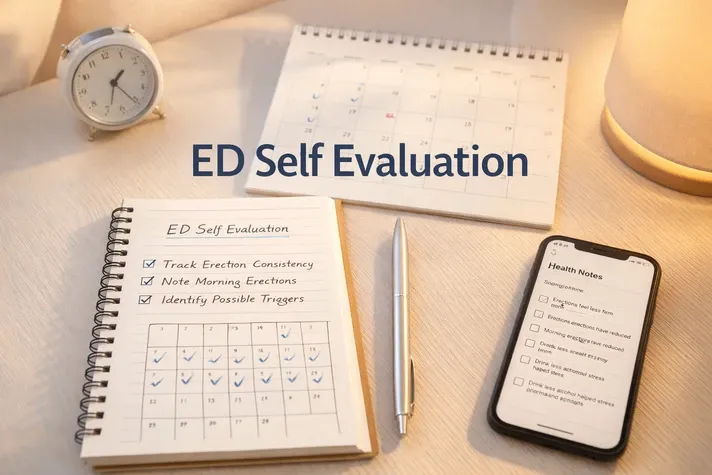
If you are noticing changes in erections, one of the first questions is: Is this serious, or just temporary? That is where self-evaluation helps. It does not replace a doctor’s diagnosis, but it can give you clarity about patterns, triggers, and whether you should seek help. ED often develops gradually, and early awareness can make treatment easier and more effective.
What Does Self-Evaluation of ED Mean?
Self-evaluation means paying attention to patterns in your sexual function over time. Instead of focusing on one bad experience, it looks at consistency, frequency, and context. NIDDK notes that ED is defined as difficulty getting or keeping an erection firm enough for sex, especially when it happens repeatedly, not just once in a while.[1]
Self-evaluation helps answer simple but important questions:
- Is this happening occasionally or regularly?
- Is it getting better, worse, or staying the same?
- Are there clear triggers like stress, alcohol, or fatigue?
Self-evaluation का मतलब है समय के साथ अपने अनुभव को समझना। एक बार की समस्या पर ध्यान देने के बजाय, यह देखना कि यह कितनी बार हो रही है और किस स्थिति में हो रही है।
Key Signs to Look For
Some signs suggest a pattern rather than a one-off issue:

- Erections are less firm than before
- Erections do not last long enough for sex
- You get erections sometimes, but not consistently
- Morning erections have reduced or stopped
- Sexual desire feels lower than usual
NHS guidance notes that depending on the cause, men may still have erections at certain times (like morning), which can help distinguish physical and psychological causes.
कुछ संकेत यह बताते हैं कि समस्या pattern बन रही है:
- पहले की तुलना में इरेक्शन कमज़ोर होना
- इरेक्शन का देर तक न टिकना
- कभी इरेक्शन होना, कभी नहीं
- सुबह का इरेक्शन कम होना या बंद होना
- यौन इच्छा में कमी
Physical vs Psychological Clues
Self-evaluation can also give clues about the possible cause:
- If morning erections are present, the physical system is likely working, and stress or anxiety may be involved
- If morning erections are absent, a physical cause may be more likely
- If ED happens only in certain situations, performance anxiety or relationship factors may play a role
Importance of assessing both physical and psychosocial factors in ED, which is why these patterns matter.

Self-evaluation से यह भी समझ आता है कि कारण क्या हो सकता है:
- अगर सुबह इरेक्शन आता है: तो शारीरिक सिस्टम ठीक हो सकता है
- अगर सुबह इरेक्शन नहीं आता: तो शारीरिक कारण हो सकता है
- अगर सिर्फ कुछ situations में होता है: तो anxiety या relationship factors हो सकते हैं
What Self-Evaluation Cannot Do
Self-evaluation is helpful, but it has limits. It cannot:
- Identify exact medical causes
- Replace blood tests or physical examination
- Rule out underlying conditions like heart disease or hormonal imbalance
Proper ED diagnosis may include medical history, physical exam, and tests. So self-evaluation is the first step, not the final one.
Self-evaluation मदद करती है, लेकिन इसकी सीमाएँ भी हैं: यह सटीक medical कारण नहीं बता सकती? यह tests या doctor की जांच की जगह नहीं ले सकती? यह underlying बीमारी को rule out नहीं कर सकती
What Should You Do Next?
If your self-evaluation suggests that ED is becoming frequent, worsening, or affecting your quality of life, the next step is simple: get a proper medical evaluation. ED is common, and in most cases, it is treatable once the cause is understood.
The goal is not to panic, but not to ignore it either. Early action often leads to better outcomes.
अगर self-evaluation से लगता है कि ED बार-बार हो रहा है, बढ़ रहा है, या आपकी life को प्रभावित कर रहा है, तो अगला कदम है — सही medical evaluation।
Explore More: Self Evaluation
English Articles
Hindi Articles / हिंदी लेख

Disclaimer
The following blog article provides general information and insights on various topics. However, it is important to note that the information presented is not intended as professional advice in any specific field or area. The content of this blog is for general educational and informational purposes only. The content should not be interpreted as endorsement, recommendation, or guarantee of any product, service, or information mentioned. Readers are solely responsible for the decisions and actions they take based on the information provided in this blog. It is essential to exercise individual judgment, critical thinking, and personal responsibility when applying or implementing any information or suggestions discussed in the blog.
Most Asked Questions
Can I diagnose ED myself?
Self-evaluation can help you notice patterns, but a proper diagnosis requires a doctor.
How long should I wait before seeing a doctor?
If symptoms last more than a few weeks or are getting worse, it is better to seek help.
क्या कभी-कभार की समस्या normal है?
हाँ। लेकिन बार-बार होने पर जांच ज़रूरी है।
Why Should You Trust Us?
Why Should You Trust Us?
This article was written by Dr. Deepali Anand, who has more than 1 years of experience in the healthcare industry.
Allo has the expertise of over 50+ doctors who have treated more than 1.5 lakh patients both online and offline across 30+ clinics.
Our mission is to provide reliable, accurate, and practical health information to help you make informed decisions.
For This Article
- We reviewed 30+ top-ranking articles on ED self-assessment, symptoms, and early warning signs to make sure this content is practical, clear, and aligned with real user concerns.
- We referred to trusted medical resources, including guidance from organizations like NIDDK and NHS, to build this article on a reliable and evidence-based foundation.
- We analyzed 15+ research papers, guidelines, and expert resources on erectile dysfunction patterns, psychosocial factors, morning erections, and diagnosis pathways.
- We explored platforms like YouTube, Instagram, and Google search trends to understand what people commonly worry about when trying to judge whether ED is temporary or serious.
- We reviewed real discussions on Reddit and health forums to see how men describe inconsistent erections, anxiety, reduced sexual confidence, and confusion around morning erections.