Lithium and Erectile Dysfunction: Causes, Risks & Solutions
Written by Dr. Pranitha Bangera

Dr. Pranitha Bangera is a gold-medalist healthcare professional with an elite foundation in clinical training and patient care. A researcher at heart, she specializes in creating high-impact, research-driven medical content that empowers readers through accessible patient education. Dr. Bangera focuses on the intersection of digital health and clinical communication, specifically within the fields of sexual health and mental well-being. Her work is dedicated to making complex medical innovations understandable and trustworthy for a global audience.
•
July 30, 2026
Our experts continually monitor the health and wellness space, and we update our articles when new information becomes available.

Quick Read
Yes, lithium can cause erectile dysfunction (ED) in some men. It affects brain chemicals like dopamine and serotonin, lowers testosterone, and disrupts blood flow needed for erections. Studies show that around one-third of men taking lithium experience some form of sexual dysfunction. The good news is that these side effects are usually temporary and improve with medical support, dose adjustments, or safe treatments. Always consult your doctor before making any medication changes to protect both your mental and sexual health.
Lithium is one of the most effective mood stabilizers used for bipolar disorder, but some people notice changes in their sexual function after starting it. If you’ve ever wondered whether lithium causes erectile dysfunction, you’re not alone. Studies show that about one-third of men taking lithium experience erectile dysfunction caused by changes in brain chemistry and blood flow. The drug can lower key hormones like dopamine and testosterone while reducing blood supply to the penis, leading to lower sexual desire and difficulty maintaining an erection. In this article, we will look into whether lithium causes erectile dysfunction, why this happens, and what you can do about it.

Allo asks
Have you noticed any sexual changes since starting lithium?
Does Lithium Cause Erectile Dysfunction?
Yes, research confirms that lithium can cause erectile dysfunction (ED) and other sexual side effects, often referred to as treatment-emergent sexual dysfunction. This means that these problems appear after starting medication. Clinical studies report sexual dysfunction in 25–50 percent of patients on lithium therapy. [1] Another study of 35 men taking only lithium found that about one in three experienced sexual problems, including loss of erection or difficulty maintaining it. [2] These findings suggest that ED is a recognized adverse side effect of psychotropic drugs like lithium and can significantly impact sexual health. Let's look at how lithium causes these sexual symptoms.
How Does Lithium Cause Erectile Dysfunction?
Lithium affects the brain pathways and the penile tissues that are involved in erections — overlapping mechanisms are discussed in Amitriptyline and sex drive.
1. Affect On the Brain:
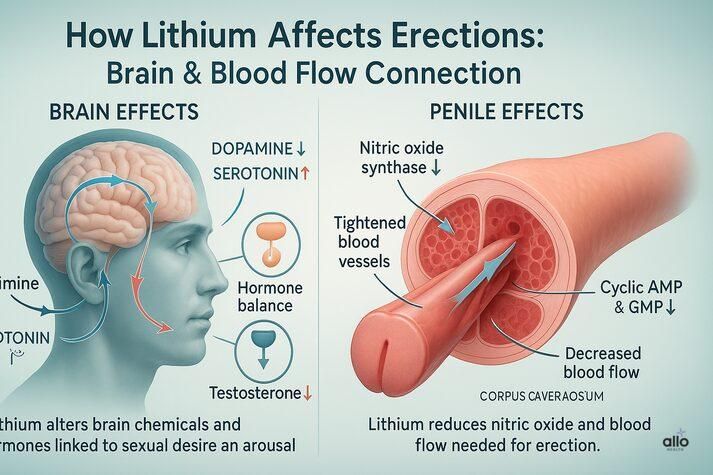
- Lithium decreases dopamine, which is a key chemical responsible for erections. It blocks dopamine receptor activity in brain areas that control sexual arousal and sexual thoughts. [2]
- It also increases serotonin, a brain chemical that helps regulate mood in bipolar disorder, but can lower sexual desire and make it harder to get or keep a penile erection. [1]
- Lithium affects hormone balance by acting on the brain areas that control hormone release. This can lower testosterone and increase prolactin levels, which reduce sexual desire. [2]
- Depressive phases of mood disorders, which Lithium is used to treat, can blunt sexual interest, making it hard to separate psychological from medication-related causes. [1]
2. Affect on Penile Tissues:
- Normal penile erection relies on the nitric oxide pathway. Lithium interferes by reducing the activity of nitric oxide synthase, the enzyme that produces nitric oxide. With less nitric oxide, the erectile tissue cannot relax properly, leading to absent or short-lived erections. [2]
- Lithium reduces certain body chemicals like cyclic AMP and GMP, which help the penis muscles relax, making it harder to get or keep an erection. [2]
- Additionally, lithium can disrupt the balance of other natural chemicals like prostaglandins that control blood flow in the penis. It may increase substances that tighten blood vessels and reduce those that help them relax. [2]
Is ED Caused by Lithium Permanent?
Lithium-induced erectile dysfunction is usually temporary and often improves once the dose is adjusted or supportive treatment begins. Most men regain normal sexual function with proper management. [1] Still, these side effects can be frustrating and sometimes lead to poor medication adherence, meaning male patients might skip doses or stop medication without guidance to avoid side effects. It’s important not tol not to stop your medication, as suddenly discontinuing lithium can trigger serious issues like mood relapse or psychotic excitement. Always talk to your doctor before making any changes to medications.
When to See a Doctor
You should talk to a healthcare professional if you notice changes in libido or erections on lithium — the same applies for most antidepressants and ED:

- Difficulty getting or maintaining an erection for > 4 weeks
- Sudden loss of sexual desire or sexual arousal
- Less pleasure or inability to reach orgasm
- Symptoms of low testosterone (fatigue, mood changes, low drive)
If you’re noticing sexual changes after starting lithium, it doesn’t mean the medication isn’t right for you. We can often adjust the dose or timing without disrupting your mental health.
How to Manage ED Caused by Lithium
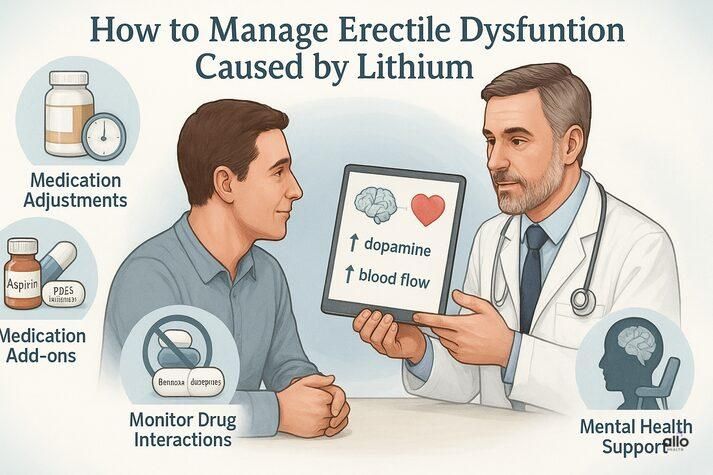
1. Medication Adjustments
Doctors can adjust the dose, change the timing of doses, or explore alternate mood stabilizers or antipsychotic medications with fewer sexual side effects. [3]
2. Medication Add-Ons
- Aspirin (240 mg daily): A study found that aspirin significantly improved erectile function in men taking lithium.
- PDE5 inhibitors (sildenafil, tadalafil): These drugs have been effective in treating lithium-related erectile dysfunction.
3. Monitor Other Drug Use
Avoid combining lithium with benzodiazepines or certain antidepressant medications like venlafaxine or paroxetine, which worsen sexual dysfunction.
4. Mental Health Support
Psychological support like hypnotherapy or CBT can help if sexual function problems also have emotional roots.
How to Prevent ED Caused by Lithium
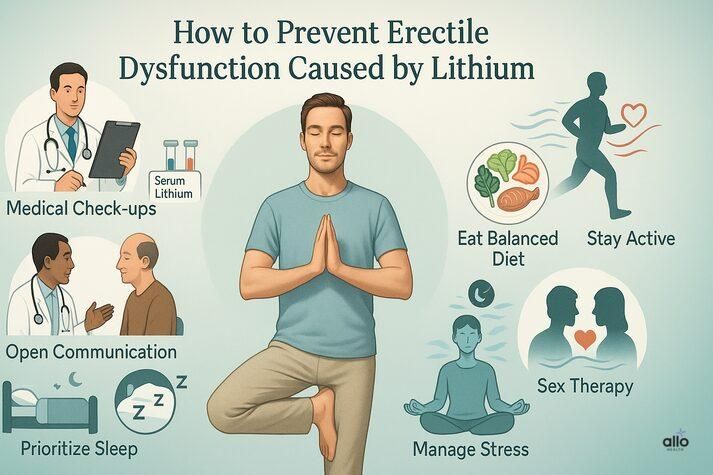
1. Regular medical check-ups
Routine blood tests to monitor serum lithium levels, thyroid function, and hormones (like testosterone) can help catch imbalances early — and anxiety adjuncts like Buspirone and ED may be considered where appropriate.
2. Communicate openly
Discuss sexual symptoms honestly with your doctor. Many male patients hesitate to bring up ED, but it’s a common issue with psychotropic drugs, and doctors can help find solutions such as dose changes or adding ED medication.

3. Stay physically active
Regular exercise improves both mood and blood flow, boosting natural nitric oxide production that helps erections. Aim for at least 30 minutes of moderate activity most days.
4. Eat a balanced diet
A heart-healthy diet rich in fruits, vegetables, whole grains, and omega-3s supports both brain health and sexual function. Avoid heavy alcohol use, which can worsen both bipolar symptoms and ED.
5. Prioritize sleep
Poor sleep can destabilize mood and lower testosterone, both of which affect sexual performance. Maintain a consistent bedtime and limit screens before sleeping.
6. Manage stress
Practice relaxation techniques like deep breathing, yoga, or mindfulness. Stress releases cortisol, which can worsen both mood episodes and erectile function.
7. Consider Sex therapy
Sex therapy can help manage emotional and relationship stress linked to both bipolar disorder and ED — particularly when symptoms fluctuate like temporary erectile dysfunction. It encourages understanding, communication, and intimacy, and can help enhance sexual activity.
Conclusion
While lithium causes erectile dysfunction in some men, it’s rarely permanent or untreatable. The drug remains one of the most reliable options for stabilizing mood disorders like bipolar disorder, but it can affect processes related to erections, like testosterone levels and dopamine regulation. But with the right guidance, both mental health & sexual health can thrive together. If you experience ED or other sexual dysfunction while on lithium, don’t suffer in silence. Consult a qualified sex health expert or psychiatrist for personalized management. With proper support, your emotional balance & intimate life can stay equally strong.

Disclaimer
The following blog article provides general information and insights on various topics. However, it is important to note that the information presented is not intended as professional advice in any specific field or area. The content of this blog is for general educational and informational purposes only. The content should not be interpreted as endorsement, recommendation, or guarantee of any product, service, or information mentioned. Readers are solely responsible for the decisions and actions they take based on the information provided in this blog. It is essential to exercise individual judgment, critical thinking, and personal responsibility when applying or implementing any information or suggestions discussed in the blog.
Most Asked Questions
Can lithium cause erectile dysfunction?
Yes. Research shows that lithium can affect brain chemicals, hormones, and blood flow involved in erections. About one in three men on lithium experience some degree of erectile dysfunction or reduced sexual desire.
Is erectile dysfunction from lithium permanent?
Usually not. In most cases, the problem improves once your doctor adjusts the dose, adds supportive treatment, or helps manage side effects. ED caused by lithium is typically temporary and reversible.
How does lithium cause sexual problems?
Lithium lowers dopamine and testosterone levels, increases serotonin and prolactin, and interferes with the nitric oxide pathway that helps blood flow to the penis — all of which can affect erections and desire.
Does everyone who takes lithium experience sexual side effects?
No. Not everyone develops ED. Some people notice mild changes, while others don’t experience any at all. Risk can depend on your dose, other medications, and overall health.
Can I stop lithium if it’s affecting my sexual performance?
No, you shouldn’t stop lithium suddenly. Doing so can cause serious mood changes or relapse of bipolar symptoms. Always discuss any side effects with your doctor first — they can help you find safe solutions.