What is edging? Benefits, Risks, and Effects on Sexual Health & ED
Written by Dr. Deepali Anand

Dr. Deepali is a medical writer and healthcare professional with a background in clinical surgery and patient care. Having transitioned from active clinical practice to medical communications, she specializes in bridging the gap between complex clinical data and patient education. Dr. Deepali is dedicated to creating evidence-based content that is grounded in scientific rigor and empathy, ensuring that sensitive topics like sexual wellness and mental health are accessible and empowering for every reader.
•
July 30, 2026
Our experts continually monitor the health and wellness space, and we update our articles when new information becomes available.
Quick Read
Edging can be a helpful tool for some men with erectile dysfunction, particularly when ED is tied to performance anxiety, stress, or premature ejaculation. By practicing controlled stimulation and delaying orgasm, you can build sexual awareness, improve stamina, and boost confidence, all of which may ease psychological barriers to maintaining erections. However, edging is not a cure for ED and won't address underlying physical causes like poor circulation, diabetes, or hormonal imbalances. Think of it as a supportive technique that works best alongside healthy lifestyle changes and proper medical treatment. If you're dealing with persistent ED, it's important to consult a healthcare provider for a comprehensive approach rather than relying on edging alone.
Does edging help with erectile dysfunction? Edging isn’t a cure, but it can be a useful tool for some men. Edging means delaying orgasm by controlling stimulation. It may help reduce performance anxiety. It can also improve stamina and build confidence. This is especially true when ED is linked to stress or premature ejaculation.
Physical problems like poor blood flow, diabetes, or hormone imbalances can cause ED — though many confuse masturbation's role in ED with these medical causes. Edging alone does not help everyone with ED.
In this article, we’ll break down what edging is, how it works, its potential benefits and risks, and how to practice it safely.
What is Edging in Sexual Health?
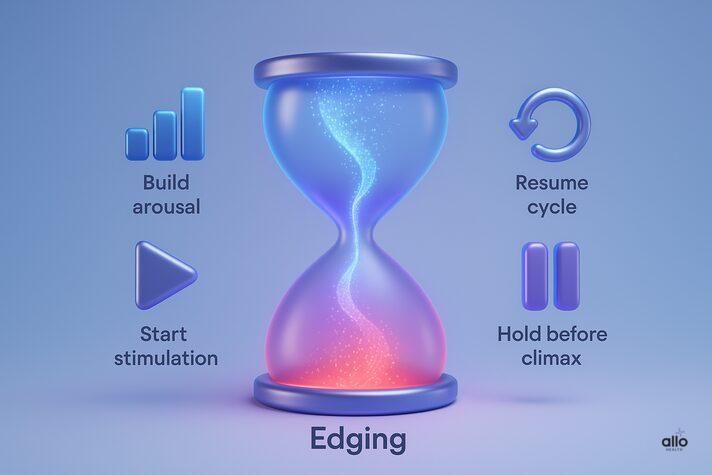
Edging, sometimes called orgasm control, surfing, or the stop–start technique, is a sexual activity where a person delays orgasm on purpose — a practice often discussed alongside excessive sex and ED. It works by bringing yourself (or your partner) close to climax, then slowing down or pausing before orgasm happens.

This technique can be done solo or with a partner. Many people use edging to make sexual activity last longer or to build up intensity for a stronger orgasm.
Here’s how Edging Works:
- Begin sexual stimulation.
- Approach the point of orgasm.
- Slow down or stop stimulation just before climax.
- Resume stimulation after a short pause.
- Repeat this cycle as desired.
For many, edging is simply part of pleasure play. It’s also often used by men dealing with premature ejaculation, as it helps build control and awareness of arousal.[1]
When it comes to erectile dysfunction, edging is not a primary treatment. But, it may still improve certain aspects of sexual activity, like confidence, stamina, and reducing performance anxiety.
Let’s dive deeper into how edging affects sexual health and ED.


Allo asks
Do you feel edging has helped you gain more control and confidence?
Potential Benefits of Edging on Sexual Health
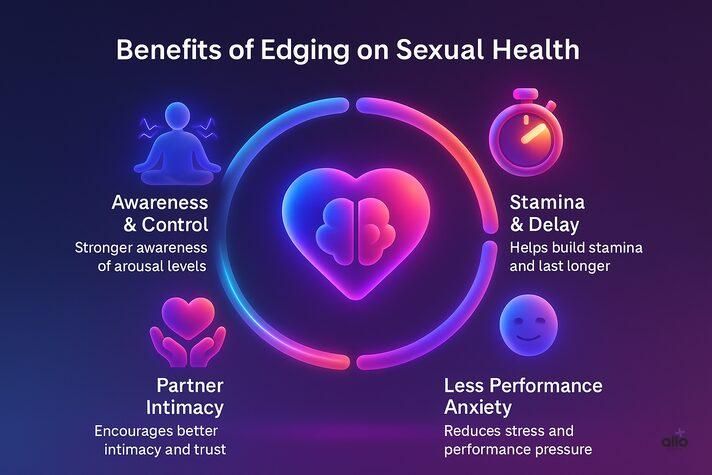
Improves Sexual Awareness & Control
- Regularly practicing the cycle of building and releasing sexual tension can make you more aware of his sexual arousal levels.
- Over time, this awareness helps him gain better control over his sexual response.
- With greater control comes confidence, which often translates into a more satisfying and enjoyable sexual experience.
May Boost Stamina & Delay Ejaculation
- By learning how to control and delay orgasm, edging can help build sexual stamina and endurance.[2]
- Many men find this especially useful for lasting longer during intimacy and improving overall performance.
Reduces Performance Anxiety for Some Men
- As edging strengthens the mind–body connection, it can help reduce anxiety linked to sexual performance.[3]
- Feeling more in control often eases the pressure men may put on themselves, which is important since performance anxiety is a common factor behind erectile dysfunction.
Enhances Partner Communication & Intimacy
- When practiced with a partner, edging encourages open communication about needs, comfort levels, and pacing.
- This teamwork not only reduces performance pressure but can also deepen intimacy, making the experience more satisfying for both partners.
Does Edging Help with Erectile Dysfunction?
Edging by itself does not cure erectile dysfunction. It can offer some indirect benefits that may help men manage certain aspects of erectile issues. Since ED often has both physical and psychological causes, edging should be seen as a supportive tool, not a standalone treatment.
According to Allo Health, nearly 1 in 2 men experience erectile dysfunction, which is based on our internal clinical data of more than 2.5 lakh patients who have visited our clinics.
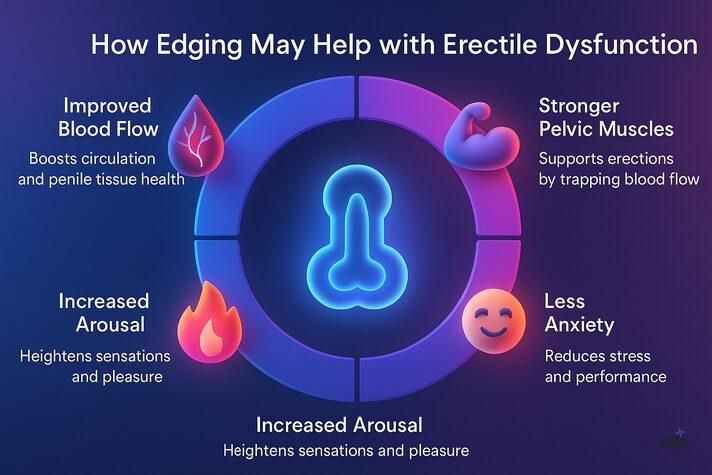
How Edging May Help with Erectile Dysfunction?
Improved Blood Flow and Circulation
- Edging may support erectile function by improving blood flow to the penis.
- During the repeated cycles of arousal and pause, the penis becomes engorged multiple times, which stimulates circulation.
- Over time, this increase in blood flow may help maintain penile tissue health and contribute to stronger, longer-lasting erections.
Enhanced Pelvic Floor Muscle Function
- Some edging techniques, such as the start-stop or squeeze method, engage the pelvic floor muscles.
- Strengthening these muscles is important for erectile function because they help trap blood in the penis during arousal.[4]
Reduced Performance Anxiety
- For many men, performance anxiety is a hidden driver of ED. Edging can act as a confidence-building exercise, allowing men to gain better awareness and control over their sexual response.
- By practicing edging during masturbation, men can learn their arousal patterns, reduce anxiety, and carry that confidence into partnered sexual activity.
Intensifies Arousal
- The stop-start technique of edging often makes arousal feel more intense.
- While this doesn’t directly treat ED, it helps shift the focus away from pressure to “perform” and back toward the enjoyment of pleasure.
- This can improve the overall sexual experience and reduce stress associated with ED.
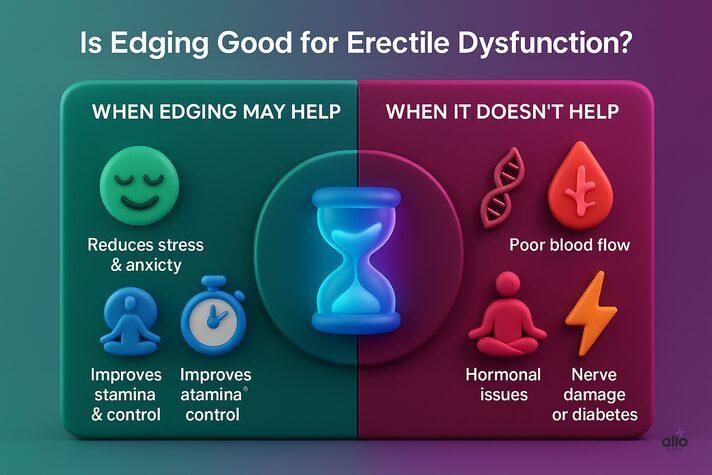
Is Edging Good for Erectile Dysfunction?
Erectile dysfunction (ED) has many causes. These include physical problems like poor blood flow, diabetes, nerve damage, or hormone imbalances. Psychological factors like stress and anxiety can also cause ED.
Edging may be helpful for men with mild ED that is linked to stress, anxiety, or premature ejaculation. By improving arousal awareness, reducing performance pressure, and building confidence, edging can support better sexual control in these cases.
Edging does not fix ED caused by medical problems. These include poor circulation, diabetes, hormone disorders, or nerve problems. In such cases, medical evaluation and treatment are essential.
Edging shifts the focus from 'performance' to pleasure and awareness, which helps some men. But if your ED is rooted in physical causes like poor blood flow, we need to treat those root causes first.
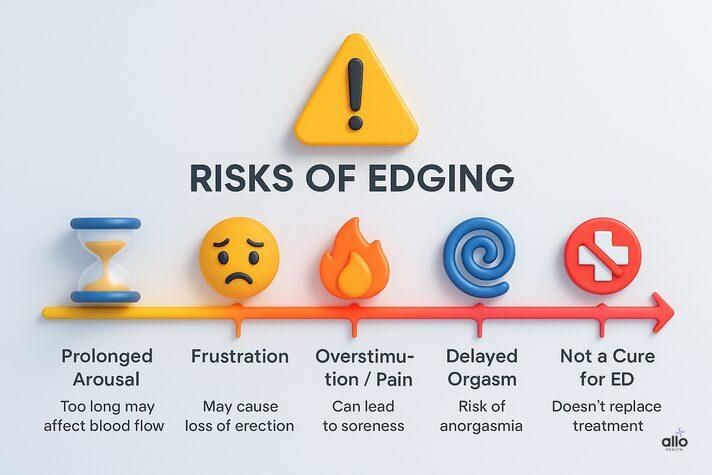
Risks and Downsides of Edging
Potential Impact of Prolonged Arousal
Spending too much time in a state of arousal without orgasm may temporarily affect blood flow and certain body chemicals — similar to how jelqing risks erectile dysfunction — making it harder to get or keep an erection.
Some men may feel epididymal hypertension, also called "blue balls." This is a temporary pain in the testicles caused by long arousal without release.
Can Lead to Frustration or Discomfort
If edging sessions go on for too long, some men may lose their erection or feel frustrated. This frustration can also affect a partner if communication is lacking, so discussing comfort levels is important.
May Cause Overstimulation or Pain if Overdone
Practicing edging too often or for too long can sometimes lead to overstimulation or even mild pain. This may interfere with orgasm or, in some cases, with the ability to stay erect.
Could Delay Orgasm Too Much
Men who have premature or delayed ejaculation should be careful with edging. Over-practice may increase the risk of anorgasmia (difficulty or inability to reach orgasm).
Doesn’t Replace Medical Treatment for ED
It’s important to remember that edging is not a treatment for erectile dysfunction. While it can be a useful tool for improving awareness, stamina, or confidence, its benefits vary from person to person. Men with ongoing ED should still seek medical evaluation and treatment.
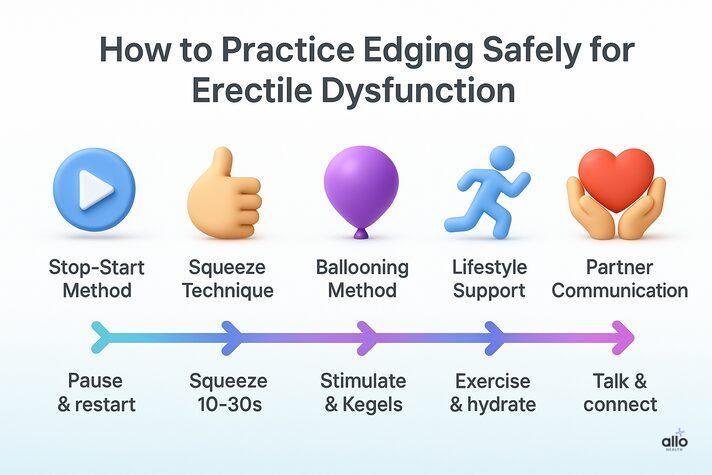
How to Practice Edging Safely for Erectile Dysfunction
1. Edging Techniques for Erectile Dysfunction
Stop-Start Method
Stimulate the penis until you are close to orgasm, then stop. Wait until the urge passes, and then start again.
Pause-Squeeze Method
When you feel close to climax, gently press the head of the penis (where it meets the shaft) for 10-30 seconds. This helps delay ejaculation and can be useful if you have both premature ejaculation and erection issues.
Ballooning Method
Focus on a sensitive spot (often the frenulum). Once highly aroused, stop and do a few Kegel exercises to let arousal calm down before starting again.
2. Complementary Approach
Edging works best when combined with other ED treatments. Sex therapists often suggest using edging along with lifestyle changes, sex therapy, or medical care.
3. Lifestyle Enhancement
Healthy habits improve the benefits of edging. Regular exercise, staying hydrated, quitting smoking, and eating well all support good blood flow, which is key to stronger erections.
4. Partner Communication
Talking with your partner about edging can reduce stress and improve trust. Practicing together can ease anxiety and increase sexual satisfaction for both.
When To See a Doctor
- You are consistently unable to get or maintain an erection.
- You have medical conditions such as diabetes, heart disease, or high blood pressure, which are known risk factors for ED.
- You suspect stress, anxiety, or other psychological factors may be contributing to your symptoms.
Bottom Line
So, is edging good for erectile dysfunction — or would approaches like hypnosis for ED work better? Yes, edging can be helpful for some men, especially when ED is linked to stress, anxiety, or premature ejaculation. But it is not a cure and should not replace medical treatment.
If you want to try edging, think of it as part of a comprehensive approach to sexual health. And if you experience persistent ED, make sure to seek professional help for proper diagnosis and ED therapy.

Disclaimer
The following blog article provides general information and insights on various topics. However, it is important to note that the information presented is not intended as professional advice in any specific field or area. The content of this blog is for general educational and informational purposes only. The content should not be interpreted as endorsement, recommendation, or guarantee of any product, service, or information mentioned. Readers are solely responsible for the decisions and actions they take based on the information provided in this blog. It is essential to exercise individual judgment, critical thinking, and personal responsibility when applying or implementing any information or suggestions discussed in the blog.
Most Asked Questions
Are there any bad effects of edging?
Yes, if overdone. Prolonged arousal without release can cause temporary discomfort like "blue balls" (epididymal hypertension), frustration, or difficulty maintaining an erection. Practicing edging too frequently or for too long may lead to overstimulation, mild pain, or even difficulty reaching orgasm.
Is edging actually good for men?
Edging can be beneficial for men, especially those dealing with premature ejaculation, performance anxiety, or wanting to improve sexual stamina and control. It helps build awareness of arousal patterns and can make sexual experiences more satisfying. However, it's not a cure-all and works best as part of a broader approach to sexual health that includes healthy lifestyle habits and, when needed, medical treatment.
Can edging replace medication or medical treatment for ED?
No. Edging cannot replace medical treatment, especially when ED is caused by physical conditions like diabetes, poor circulation, hormonal imbalances, or heart disease. While it may help with psychological aspects like anxiety and confidence, persistent ED requires professional evaluation and appropriate medical care.
Should I practice edging alone or with my partner?
Both work, and each has benefits. Practicing alone first helps you learn your arousal patterns and build confidence without pressure. Once comfortable, involving your partner can improve communication, reduce performance anxiety, and deepen intimacy.
Sources
- 1.
Comparison of the results of stop-start technique with stop-start technique and sphincter control training applied in premature ejaculation treatment
- 2.
Ejaculation Problems: Too Fast, Too Slow or Not at All?
- 3.
Ejaculatory Disorder Treatments
- 4.
The Role of Pelvic Floor Muscles in Male Sexual Dysfunction and Pelvic Pain