Is Erectile Dysfunction Reversible or Curable? Causes, Recovery, and Best Methods to Cure
Medically reviewed by Dr. Sandip Deshpande

Dr Sandip completed his training in Psychiatry and sexual medicine in the UK. A post-graduate in Psychiatry from KMC Manipal, he worked in the UK for over 8 years following a one-year research post at NIMHANS, Bangalore. With an interest in the fields of sexual health and functioning, he has authored articles in books and peer-reviewed journals. A recipient of the student of the year award by BSART in 2010, he is currently a consultant psychiatrist and sexual and relationship therapist with a belief in a holistic and psychotherapeutic approach to treating psychological distress.
•
Written by Dr. Deepali Anand

Dr. Deepali is a medical writer and healthcare professional with a background in clinical surgery and patient care. Having transitioned from active clinical practice to medical communications, she specializes in bridging the gap between complex clinical data and patient education. Dr. Deepali is dedicated to creating evidence-based content that is grounded in scientific rigor and empathy, ensuring that sensitive topics like sexual wellness and mental health are accessible and empowering for every reader.
•
July 30, 2026
Our experts continually monitor the health and wellness space, and we update our articles when new information becomes available.

Quick Read
Erectile dysfunction, or impotence, is often treatable and in many cases even reversible, especially when the underlying cause is identified early. Temporary triggers like stress, lifestyle habits, or certain medications usually respond well to treatment, while more complex causes like severe vascular disease or nerve damage may be harder to fully cure. Studies show about 29% of men achieve complete recovery within five years, while treatments like oral medications have 70-80% success rates. Modern options such as medications, therapy, devices, and even surgery provide reliable solutions for most men.
Can impotence be cured? That’s usually the first question that comes up when erections start feeling unreliable. The reassuring answer is that erectile dysfunction (ED) is very treatable, and many cases are reversible once a doctor identifies the cause. If someone is wondering is erectile dysfunction curable, the honest medical answer is: sometimes fully, often to a very high degree, and almost always manageable with the right plan. In this article, we’ll break down which types of ED are curable, which may need long-term management, and the treatments that can help.

Allo asks
Do you think impotence (ED) can be cured or reversed?
Can Impotence Be Cured?
Can impotence be cured? In many cases, yes. “Impotence” is an older term for erectile dysfunction, and erectile dysfunction often improves or reverses when treatment targets the underlying cause. People also ask whether ED is something that can truly be resolved. For example, according to a study published in the Journal of Sexual Medicine, about 29% of men experienced complete recovery after five years of treatment.[1].A complete return to normal isn’t guaranteed, but improvement is realistic for many men.
According to Allo Health’s internal clinical data, nearly 1 in 2 men who visited our clinics for sexual health concerns were found to have some degree of erectile dysfunction. For Hindi readers, अलप्रोस्टाडिल के उपयोग is a useful medication-focused reference.
Let’s break down when ED improves and when it may require ongoing support.
Erectile Dysfunction Causes: Curable vs Harder to Treat
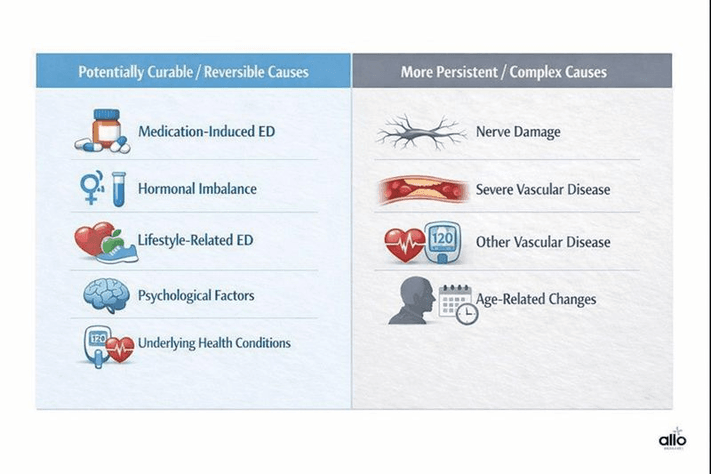
Erectile dysfunction usually has more than one contributing factor — and non-drug options like Best ED Rings often work best as part of a combined plan. The good news is that many causes respond well to early treatment.

Potentially Curable or Reversible Causes of ED
1) Medication-Induced ED
Some medicines interfere with erections, including certain blood pressure drugs, antidepressants, antihistamines, and opioids. When a clinician identifies the medicine and adjusts it safely, erectile function often returns [2].
2) Hormonal Imbalance
Low testosterone can contribute to ED, though prevalence varies widely [3]. In men with true deficiency, testosterone replacement therapy may improve erections and libido. Research shows 36%-42% of patients report improvement after treatment [4]. Testosterone therapy is not a universal ED cure. It helps most when levels are genuinely low.
3) Lifestyle-Related ED
Lifestyle factors are among the most “fixable” causes of ED [5], including:
- Obesity and poor diet
- Smoking or heavy alcohol use
- Sleep problems
- Low physical activity
4) Psychological Factors
Stress levels, anxiety (including performance anxiety), and depression commonly trigger ED. These causes respond well to treatment [6]. Counseling or sex therapy often helps individuals and sometimes couples work through these challenges, improving both sexual health and overall intimacy.

5) Underlying Health Conditions (Treatable, Often Improved)
ED can signal other health issues. Key health conditions include:
- Diabetes
- Heart disease
- High blood pressure
- Obstructive sleep apnea
Treating these issues not only benefits overall health but can also reverse erectile problems.
More Persistent and Complex Causes of ED
Some causes create lasting damage, which makes full reversal harder, but treatment can still help.
1) Nerve Damage
Diabetes-related nerve injury, pelvic surgery, or spinal trauma can limit recovery in the neurogenic ED.
2) Severe Vascular Disease
Advanced blood vessel damage, such as advanced atherosclerosis (blood vessel stiffening and blockage), reduces penile blood flow and restricts natural improvement.
3) Age-Related Changes
Age itself does not cause ED, but health changes over time can contribute. Many men still respond well to treatment even if erections feel different than earlier in life.
The earlier you talk to a doctor about ED, the better the outcome. Most men who seek help find that their condition is reversible or very manageable.
Can Erectile Dysfunction Be Reversed?
Many men ask can erectile dysfunction can be reversed because they want to know if this is temporary or permanent. In a large number of cases, ED improves significantly when someone removes the trigger and supports overall health. So, can ED improve naturally or medically? Often it’s a combination:
- Lifestyle changes support circulation, sleep, and energy
- Stress reduction improves arousal and confidence
- Medical treatment supports blood flow during recovery
Early action improves the odds of long-term improvement — and device-based aids like vacuum pumps for ED are a common first-line non-drug option.
Treatment Options: How ED Can Improve (Even When It’s Not Fully Reversible)

Cost of Erectile Dysfunction Treatment in India
| Treatment Option | Estimated Cost (India) | Notes |
|---|---|---|
| Oral Medications | ₹25-₹450 per strip | Commonly options include Tadalafil, Sildenafil & Avanafil (prescription required) |
| Consultation with a Sexologist / Urologist | ₹800-₹2,000 | Costs vary by city and clinic |
| Shockwave Therapy (Li-ESWT) | ₹2,500-₹4,000 per session | Usually requires multiple sessions & is under research |
| Penile Implant (Indian Malleable) | ₹1.5-₹2.5 lakh | Rigid implant option |
| Penile Implant (Inflatable) | ₹4-₹9 lakh | Advanced 3-piece implants (AMS / Coloplast) |
Modern ED treatments work well for many men. Even in situations where ED cannot be completely cured or reversed, these treatments can still provide significant support, reduce symptoms, and allow for a more satisfying sexual experience.
Oral Medications (First-Line)
The first-line treatment for ED is usually oral ED medications known as PDE5 inhibitors. These include:
- Sildenafil (Viagra)
- Tadalafil (Cialis)
- Vardenafil (Levitra)
These medicines improve blood flow to the penis during sexual stimulation. Studies report success rates around 70-80%, even when ED doesn’t fully reverse [7]. Doctors widely prescribe sildenafil and tadalafil in India, with familiar brands such as Suhagra, Manforce, Penegra, and Megalis. A clinician should confirm safety, especially in men with heart disease or nitrate use.
Advanced Treatments
Penile Injections / Urethral Therapy
Doctors may use medicines like alprostadil as injections or urethral suppositories. Many men self-administer these penile injections after training, and success rates are high [8].
Vacuum Erection Devices
Also known as penis pumps, these devices are safe and effective, with a success rate of around 50-60%.[9] They work by creating a vacuum that pulls blood into the penis, helping to achieve an erection.
Penile Implants
For men who don’t respond to other treatments, penile implants offer reliable erections with satisfaction rates around 90-95% [10].
Shockwave Therapy
Low-intensity shockwave therapy aims to improve penile blood flow over time. It may help some men with mild to moderate vascular ED.
Therapy (Often the Missing Piece)
- Sex therapy
- Cognitive Behavioral Therapy (CBT)
- Couples therapy
These approaches reduce anxiety and break the cycle of fear and avoidance in sex life.
Natural Remedies: Do Ashwagandha and Shilajit Work?
Many Indian men use natural supplements such as Ashwagandha or Shilajit for erectile dysfunction. These supplements may help reduce stress, improve energy levels, and support libido, which can be useful in cases of psychological ED. But these remedies cannot fix physical causes such as blocked blood vessels, nerve damage, or venous leakage. For persistent or severe ED, medical evaluation and evidence-based treatment are necessary.
Can Erectile Dysfunction Be Cured Permanently?
A common question is can erectile dysfunction be cured permanently, especially when someone hopes for a one-time fix.
- When ED comes from reversible causes such as stress, medication side effects, or early lifestyle factors, long-term resolution is possible.
- When ED links to chronic conditions like diabetes or vascular disease, doctors usually manage them long-term with ongoing support.
In other words, some men do experience lasting resolution, but outcomes depend on cause, timing, and consistency of treatment.
Is Erectile Dysfunction Curable or Not?
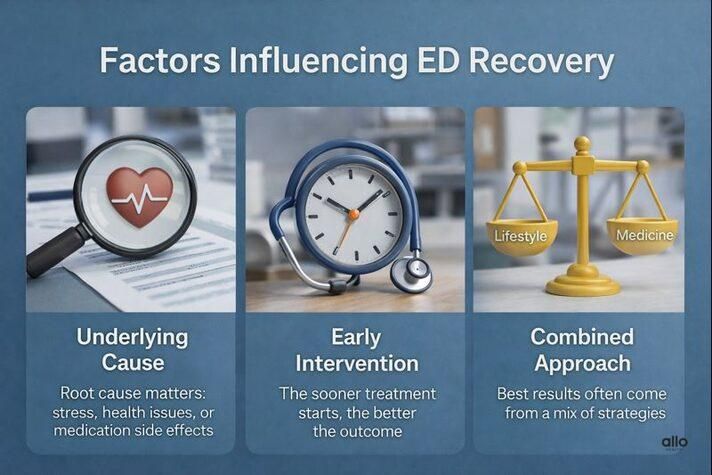
- The underlying cause
- How early does treatment begin
- Using a combined approach that includes medical care, lifestyle changes, and therapy when needed
What To Do If You Have ED
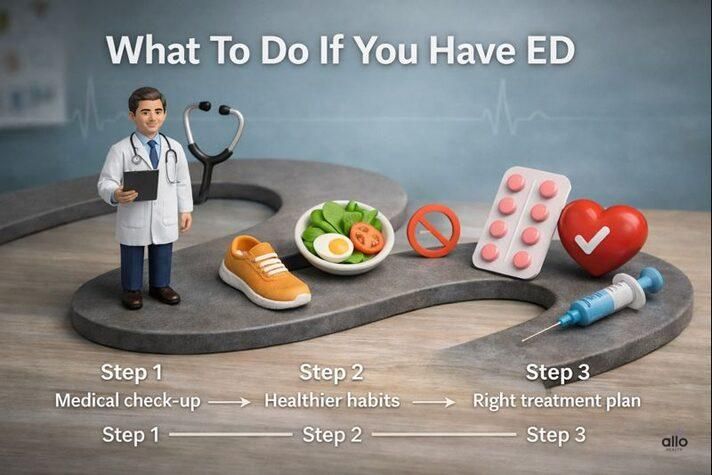
1. Get a Full Evaluation:
Your doctor may perform a physical exam and order blood or urine tests to check for underlying conditions such as diabetes, high blood pressure, or heart disease.
2. Make Lifestyle Changes:
Doctors often recommend lifestyle modifications as a first step: regular exercise, a balanced diet, good sleep habits, and quitting smoking or limiting alcohol.
3. Explore Treatment Options:
Depending on the diagnosis, you and your doctor can decide on the most suitable treatment plan — including attention to rare presentations like plantation erectile dysfunction. This may involve counseling or therapy, medications, or advanced treatment approaches like injections or devices.
Key Takeaway: Does Erectile Dysfunction Go Away?
In short, does erectile dysfunction go away? In a small number of cases, such as short-term stress, it can, especially with the right treatment plan and early intervention, but not on its own. Even if a complete cure isn’t possible, you are far from helpless with today’s medical and psychological support; most men find lasting solutions. The key is identifying the underlying cause and implementing appropriate treatment strategies under the guidance of a medical professional.

Disclaimer
The following blog article provides general information and insights on various topics. However, it is important to note that the information presented is not intended as professional advice in any specific field or area. The content of this blog is for general educational and informational purposes only. The content should not be interpreted as endorsement, recommendation, or guarantee of any product, service, or information mentioned. Readers are solely responsible for the decisions and actions they take based on the information provided in this blog. It is essential to exercise individual judgment, critical thinking, and personal responsibility when applying or implementing any information or suggestions discussed in the blog.
Most Asked Questions
Can impotence be cured permanently?
Impotence can sometimes resolve long term when the underlying cause is reversible, such as stress, lifestyle factors, or medication side effects. In cases involving nerve damage or severe vascular disease, a complete cure may not be possible, but modern treatments can still restore reliable erections and improve quality of life.
Is erectile dysfunction curable or not?
Erectile dysfunction is curable in many cases, but outcomes depend on the cause. Hormonal imbalance, psychological stress, lifestyle factors, and medication-related ED are often reversible, while chronic conditions may require ongoing treatment rather than a one-time cure.
Does erectile dysfunction go away on its own?
ED may improve on its own if it is caused by short-term factors like stress, anxiety, or fatigue. However, if erection problems persist for several weeks or occur repeatedly, it is unlikely to resolve without addressing the underlying cause, and medical evaluation is recommended.
How is impotence treated?
Treatment for impotence depends on the cause and may include lifestyle changes, managing underlying health conditions, oral medications, psychological therapy, or advanced options such as injections or devices. Many men benefit from a combination of approaches rather than a single treatment.
How long does it take to recover from erectile dysfunction?
Recovery time varies. Some men notice improvement within weeks after addressing stress, lifestyle habits, or medication issues, while others may take several months. Long-standing conditions like diabetes or vascular disease may require ongoing treatment to maintain results.
Is erectile dysfunction permanent with age or diabetes?
ED is not automatically permanent with age or diabetes. While these conditions can make erections more challenging, many men still respond well to treatment. Early management of blood sugar, heart health, and lifestyle factors greatly improves long-term outcomes.
Sources
- 1.
Erectile Dysfunction
- 2.
A Case of Reversible Erectile Dysfunction With Topiramate for Alcohol Dependence
- 3.
The Relationship between Testosterone Deficiency and Men's Health
- 4.
Testosterone replacement therapy in males with erectile dysfunction
- 5.
Lifestyle modifications and erectile dysfunction: what can be expected?
- 6.
Spontaneous erectile function recovery among young men with erectile dysfunction taking tadalafil 5 mg once a day
- 7.
Oral sildenafil (Viagra™) in male erectile dysfunction: use, efficacy and safety profile in an unselected cohort presenting to a British district general hospital.
- 8.
Diagnosis and treatment of erectile dysfunction– a practical update
- 9.
Diagnosis and treatment of erectile dysfunction– a practical update
- 10.
Penile implant surgery-managing complications
- 11.
The natural progression and remission of erectile dysfunction: results from the Massachusetts Male Aging Study
Why Should You Trust Us?
Why Should You Trust Us?
This article was written by Dr. Sandip Deshpande, who has more than 27 years of experience in the healthcare industry.
Allo has the expertise of over 50+ doctors who have treated more than 1.5 lakh patients both online and offline across 30+ clinics.
Our mission is to provide reliable, accurate, and practical health information to help you make informed decisions.
For This Article
- We reviewed 20+ top-ranking articles on erectile dysfunction to ensure this piece covers all angles, from medical causes to treatment options and long-term outlook.
- We analyzed 10+ published research papers, including studies from journals like the Journal of Sexual Medicine, to bring you evidence-based insights on ED recovery and cure rates.
- We included real-world perspectives by looking at forums such as Reddit and Quora, where men openly share their struggles and recovery journeys with ED.
- We explored YouTube, Instagram, and other social platforms to understand the most common questions and myths men have about whether ED is curable.
- We cross-checked with credible medical sources and clinical guidelines to ensure our advice is trustworthy, practical, and medically accurate.
- We drew on insights from over 2.5 lakh+ patient consultations at Allo Health, India’s leading sexual health platform, giving us a unique perspective on what real people experience and how treatments work in practice.