Epilepsy and Erectile Dysfunction: Symptoms and Treatment
Written by Dr. Pranitha Bangera

Dr. Pranitha Bangera is a gold-medalist healthcare professional with an elite foundation in clinical training and patient care. A researcher at heart, she specializes in creating high-impact, research-driven medical content that empowers readers through accessible patient education. Dr. Bangera focuses on the intersection of digital health and clinical communication, specifically within the fields of sexual health and mental well-being. Her work is dedicated to making complex medical innovations understandable and trustworthy for a global audience.
•
July 30, 2026
Our experts continually monitor the health and wellness space, and we update our articles when new information becomes available.
Quick Read
Yes, both epilepsy and certain seizure medications can cause erectile dysfunction (ED) in some men. Older antiepileptic drugs may lower testosterone or affect brain chemicals that control sexual desire, leading to reduced libido or erection problems. The good news is that newer epilepsy medicines usually have fewer sexual side effects, and adjusting treatment can often help. Along with this, managing stress, staying active, and discussing concerns openly with your doctor can improve both seizure control and sexual health.
Epilepsy doesn’t just affect the brain; it can influence many parts of life, including sexual health. Many men living with epilepsy experience some form of sexual dysfunction, with erectile dysfunction (ED) being one of the most common. Epilepsy can affect the brain areas that control sexual arousal, disrupting signals needed for erections. It can also disturb hormone balance, lowering testosterone levels that support libido and sexual function. In addition, some antiepileptic drugs (AEDs) may worsen this by reducing testosterone or altering brain chemicals like dopamine and serotonin. In this article, we’ll explore how epilepsy affects sexual function, whether epilepsy medications can cause erectile dysfunction, and how to manage it effectively.

Allo asks
What do you think most affects sexual health in epilepsy?
Can Epilepsy Cause Erectile Dysfunction?
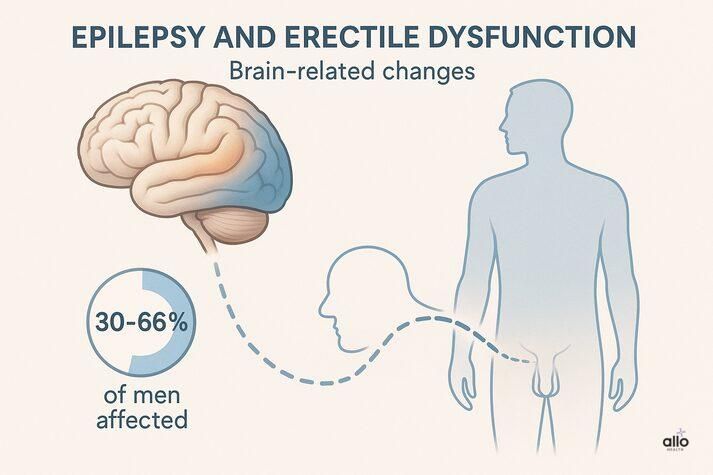
Yes, epilepsy can cause erectile dysfunction. Studies confirm that sexual dysfunction is more prevalent in people with epilepsy than in the general population, with ~30–66% of men reporting decreased libido and difficulty maintaining erections. [1] Research has found that men with temporal lobe epilepsy or partial epilepsy are at higher risk of developing ED and reduced sexual desire.[2] The risk is even greater in those who have frequent seizures or are on multiple antiepileptic drugs. [3]
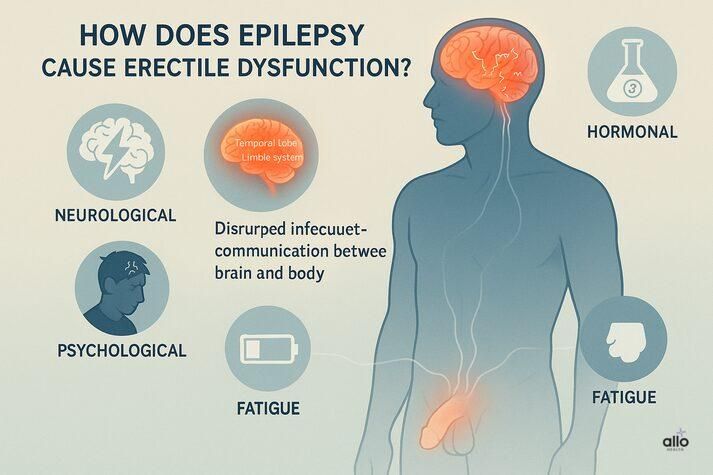
How Does Epilepsy Cause Erectile Dysfunction?
Epilepsy can affect sexual function in many ways — many of which mirror what’s reported in asthma and ED:
1. Affect on the Brain:
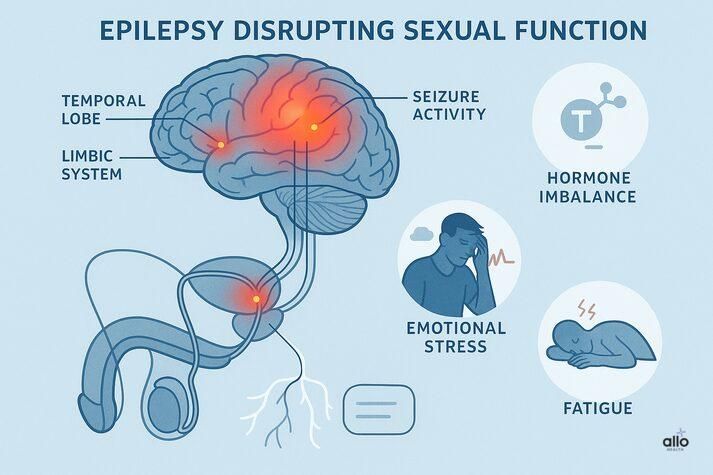
Epileptic activity in parts of the brain (the temporal lobe and limbic system), which control emotions and sexual arousal, can disturb how the brain and nervous system send signals. The disruption can affect the brain activity and make it harder for the brain to trigger sexual desire and erections. [4] Epilepsy can also affect how the brain controls hormone release, leading to changes in testosterone, the male hormone responsible for sex drive, and other key hormones.[5] When testosterone levels drop, or when the body can’t use it properly, sexual desire decreases, and maintaining an erection becomes more difficult.
2. Psychological Factors:
Living with epilepsy often brings emotional stress or anxiety that can amplify medication effects — including those seen with antibiotics and ED. Over time, these mental health factors contribute significantly to ED. [6]
3. Physical Fatigue:
Repeated generalized seizures or post-seizure fatigue can also reduce energy, motivation, and overall quality of life, further affecting sexual health. [6]
Can Epilepsy Drugs Cause Erectile Dysfunction?
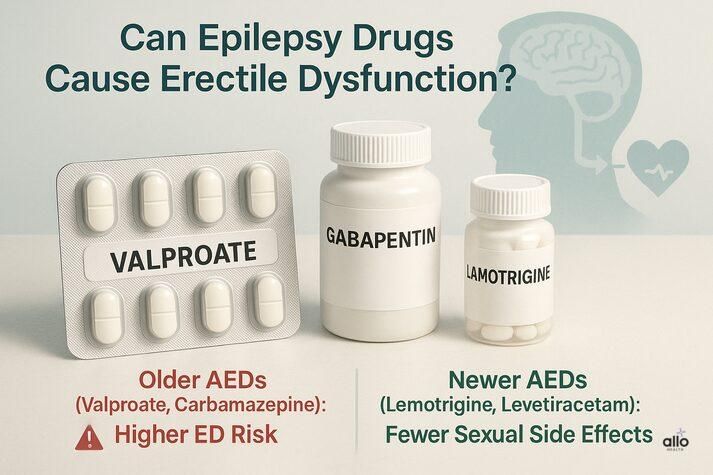
Yes. Many antiepileptic drugs are known to cause or worsen erectile dysfunction and other forms of sexual dysfunction. The risk of ED depends on drug type, doses, treatment durations, and combinations of multiple anticonvulsant medications. [7] Drugs like Valproate can affect sex hormones and sperm health, while medicines like gabapentin and pregabalin can sometimes lower sexual desire. On the other hand, newer AEDs like lamotrigine, levetiracetam, and oxcarbazepine are associated with fewer sexual side effects. In some cases, switching to these drugs even improves sexual function.
How Do Epilepsy Drugs Cause Erectile Dysfunction?
Antiepileptic medication can affect sexual function through several biological mechanisms:

1. Changes in Testosterone levels:
Older medicines like Dilantin (phenytoin), Tegretol (carbamazepine), and phenobarbital can lower testosterone levels because they cause the liver to break down hormones faster. [8] AEDs can also raise levels of a protein called SHBG (sex hormone binding globulin )that locks away testosterone.[9]This means less active testosterone is available in the body, making it harder to have normal sexual desire or erections.
2. Brain Chemical Imbalance:
AEDs may affect dopamine and serotonin balance, two brain chemicals central to sexual arousal and mood. Elevated serotonin and reduced dopamine can blunt desire and cause ED. [10]
3. Hormone Imbalance:
Using epilepsy medicines for a long time can upset the body’s hormone balance, changing levels of key hormones related to erections, like luteinizing hormone and prolactin, which can further lower testosterone levels.
4. Sedation:
Some AEDs and psychotropic drugs have sedative effects on the central nervous system, leading to reduced alertness and libido — and combining them with antihistamines and ED-linked drugs compounds sedation.
When to See a Doctor
You should consult a healthcare professional if you notice:

- Persistent difficulty achieving or maintaining an erection
- A noticeable drop in sexual desire or arousal
- Side effects after starting or changing epilepsy medications
- Signs of depression, anxiety, or relationship strain due to sexual changes
Don’t hesitate to bring up sexual health with your doctor. ED is a recognized, treatable complication of epilepsy and its medications. Early communication helps tailor therapy while preserving both seizure control and quality of life.
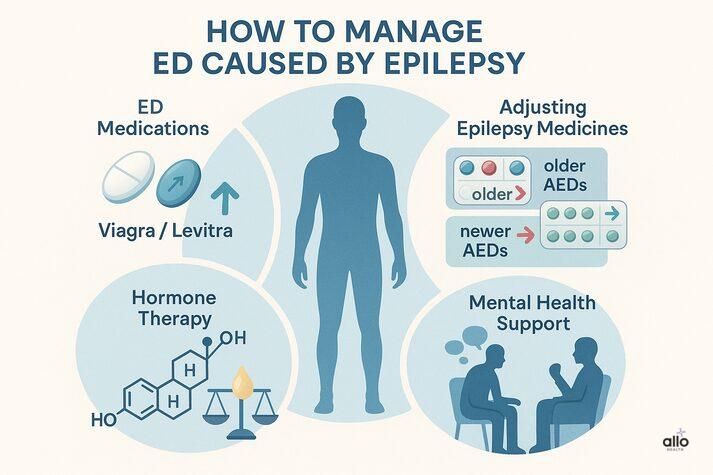
How to Manage ED Due to Epilepsy
Treatment for ED caused by epilepsy or medications focuses on fixing the main causes while keeping seizures under control:
1. ED Medications
ED medications like Phosphodiesterase-5 inhibitors (Viagra, Levitra) are first-line treatments for ED and can be safely used under medical guidance in people with epilepsy.
2. Adjusting Epilepsy Medicines
If your current antiepileptic drugs are contributing to sexual problems, your doctor might switch you to newer AEDs like lamotrigine, levetiracetam, and oxcarbazepine, which have fewer sexual side effects.
3. Hormone Therapy
In some cases, low testosterone caused by the disease or the drugs can be the main reason behind ED. If blood tests confirm this, your doctor may recommend hormonal therapy to restore healthy testosterone levels and improve sexual function.
4. Mental Health Support
Psychological therapy, sex therapy, or couples counseling can help manage anxiety or depression that contribute to sexual difficulties. Support groups or contacting a confidential helpline can provide additional reassurance.
How to Prevent ED Due to Epilepsy or Drugs
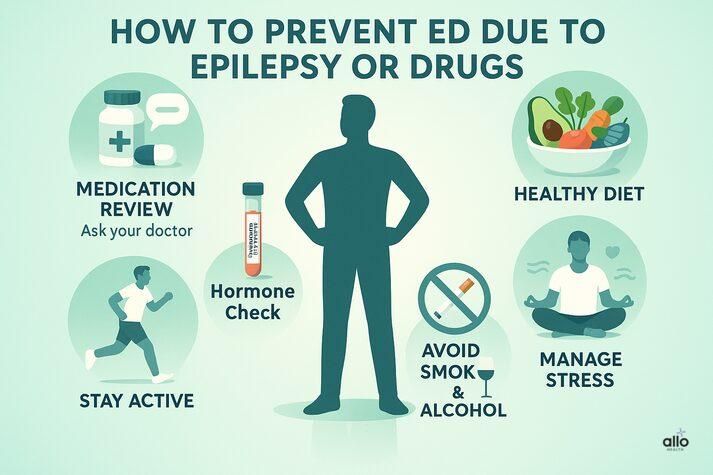
You can take proactive steps to reduce the chances of developing ED while managing epilepsy — and alongside them, review your ED treatment options:
- Discuss medication options early. If a new AED affects erections, ask about alternatives.
- Track hormone levels. Regular blood tests for testosterone, LH, and prolactin can catch imbalances early.
- Eat a balanced diet. Focus on foods that support cardiovascular health, like fruits, vegetables, and omega-3s, which benefit both the brain and sexual function.
- Stay active. Moderate physical activity improves circulation and mood.
- Prioritize mental health. Managing stress is important because it can trigger ED as well as seizures.
- Limit alcohol and smoking. Alcohol and tobacco lower testosterone and can trigger seizures.
Conclusion
Epilepsy and erectile dysfunction are closely linked through a mix of brain, hormonal, and medication effects, but the problem is common and manageable. Understanding how seizures and antiepileptic drugs affect sexual health helps patients and doctors take targeted steps toward recovery. With the right treatment plan, medication adjustments, and healthy lifestyle choices, most men regain normal sexual function and overall quality of life.

Disclaimer
The following blog article provides general information and insights on various topics. However, it is important to note that the information presented is not intended as professional advice in any specific field or area. The content of this blog is for general educational and informational purposes only. The content should not be interpreted as endorsement, recommendation, or guarantee of any product, service, or information mentioned. Readers are solely responsible for the decisions and actions they take based on the information provided in this blog. It is essential to exercise individual judgment, critical thinking, and personal responsibility when applying or implementing any information or suggestions discussed in the blog.
Most Asked Questions
Can epilepsy cause erectile dysfunction?
Yes. Epilepsy can affect brain areas that control sexual arousal and hormone balance, leading to issues like low libido or trouble maintaining an erection.
Can epilepsy medication cause erectile dysfunction?
Some older antiepileptic drugs (like phenytoin, carbamazepine, or valproate) can lower testosterone or affect brain chemicals related to desire. Newer medicines such as lamotrigine and levetiracetam have fewer sexual side effects.
Is erectile dysfunction from epilepsy or medication permanent?
Usually not. Once the underlying cause is identified — whether hormonal, neurological, or medication-related — ED often improves with treatment adjustments or therapy.
Which epilepsy drugs are least likely to cause ED?
Newer drugs like lamotrigine, oxcarbazepine, and levetiracetam are generally linked to fewer sexual side effects and may even improve sexual function in some men.
Can I take Viagra or other ED medications if I have epilepsy?
Yes, phosphodiesterase-5 inhibitors like Viagra or Cialis are considered safe for most men with epilepsy, but you should always consult your doctor before starting them.
Sources
- 1.
Epilepsy and Issues Related to Reproductive Health
- 2.
Sexual disturbances in temporal lobe epilepsy
- 3.
Sexual Dysfunction in Male Patients with Idiopathic Generalized Tonic Clonic Seizures
- 4.
The relationship between epilepsy and sexual dysfunction
- 5.
Sex and Hormonal influences on Seizures and Epilepsy
- 6.
Sexual Dysfunction and Associated Psychiatric Comorbidities Impacting Quality of Life in Epilepsy
- 7.
Sexual dysfunction related to antiepileptic drugs in patients with epilepsy
- 8.
Effects of carbamazepine on male reproductive hormones
- 9.
Differential effects of antiepileptic drugs on sexual function and reproductive hormones in men
- 10.
Drug-Induced Sexual Dysfunction in Individuals with Epilepsy