Mindfulness and Relaxation Techniques for Anxiety: A Practical Guide
Written by Dr. Srishti Rastogi
Dr. Srishti Rastogi is a medical writer and healthcare professional dedicated to high-quality patient education and public health awareness. Leveraging her clinical background, she produces deeply researched, evidence-based content for digital health platforms and medical publications. Dr. Srishti’s unique dual perspective as a clinician and communicator allows her to craft content that builds trust and credibility with readers navigating sensitive health topics.
•
September 7, 2026
Our experts continually monitor the health and wellness space, and we update our articles when new information becomes available.
Quick Read
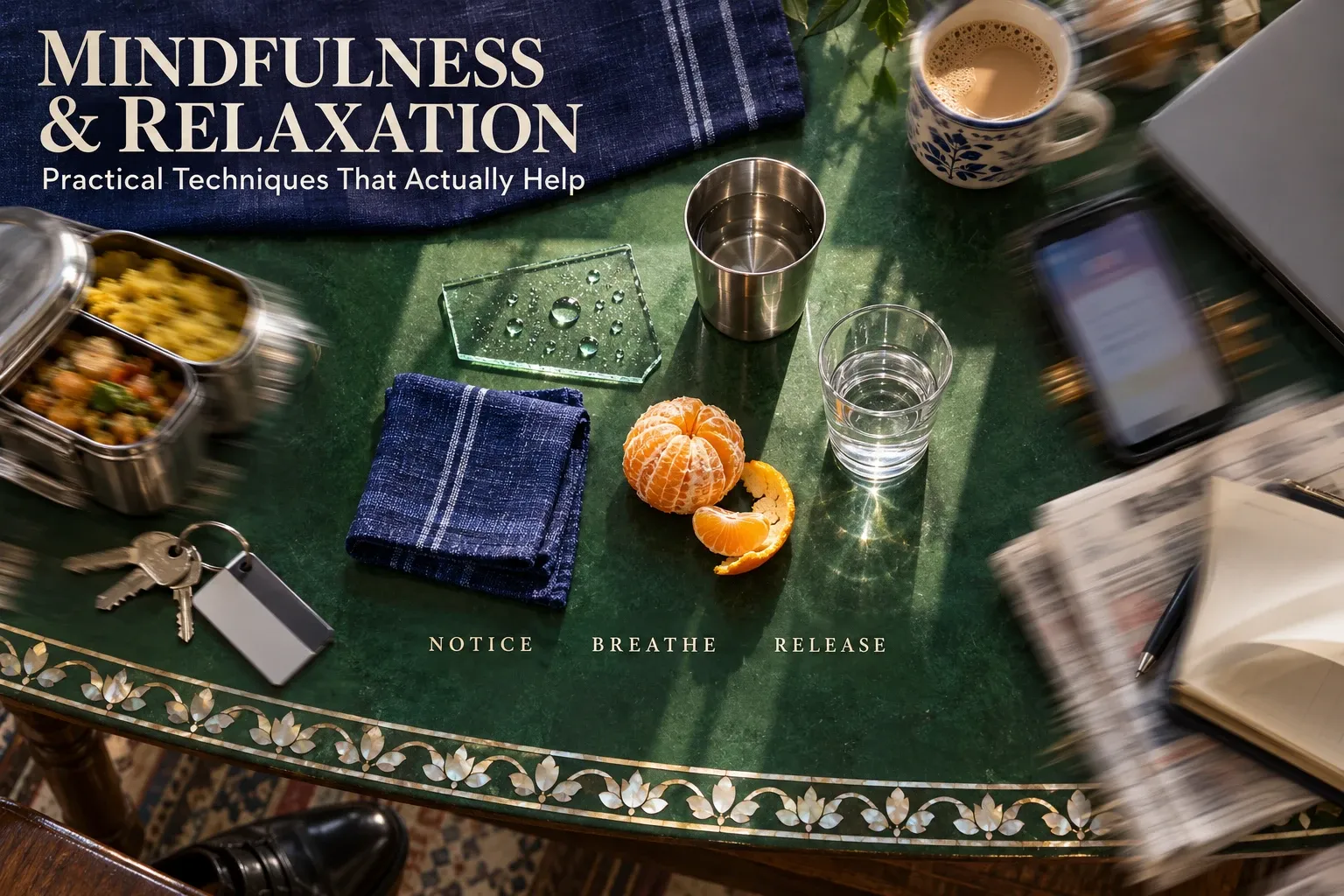
Mindfulness, meditation and relaxation techniques are different things that overlap. The ones with the best evidence behind them are simple: slow breathing, progressive muscle relaxation, grounding, and body scan. A single five-minute breathing session can measurably calm your body before it even ends, and research finds that how long or how often you practise matters less than actually doing it. These techniques help most people manage everyday stress and anxiety, but they are a support, not a replacement for treatment if anxiety or low mood is persistent or disabling.
Has someone told you to “take deep breaths” when you were anxious?
This advice can sound dismissive, especially when your problem feels much bigger than your breathing. But breathing and relaxation exercises are not meant to prove that your problem is small. They are practical ways to help your body settle so that you can think more clearly.
Here are the techniques worth learning and how to use them properly.
What Is the Difference Between Mindfulness, Meditation and Relaxation?
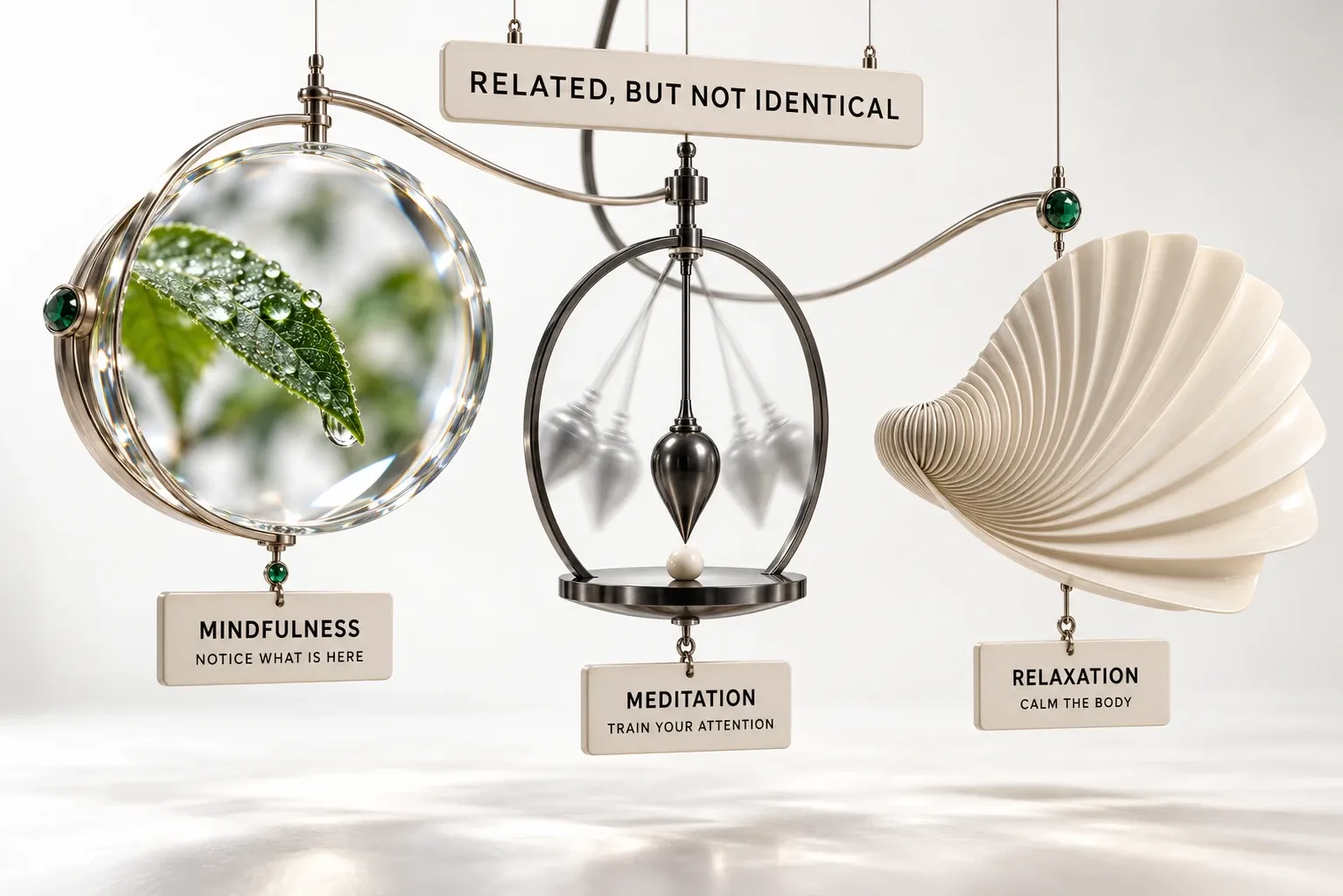
These words are related, but they do not mean exactly the same thing.
Mindfulness means paying attention to what is happening right now without immediately judging it.

Meditation is a practice used to train your attention. Mindfulness meditation is one type of meditation.
Relaxation techniques are exercises that calm the body’s stress response. They include slow breathing, progressive muscle relaxation, body scans and guided imagery [1].
You do not need to stop every thought or make your mind completely blank. The aim is to notice when your attention has moved away and gently bring it back.

Is Mindfulness Religious?
Mindfulness meditation has roots in Buddhist traditions, but the form commonly used for stress and anxiety treatment is not religious.
You do not need to follow any belief system, repeat a prayer or sit in a particular position. You can practise it while sitting on a chair, lying in bed or travelling.
Your mind will wander. That does not mean you are doing it incorrectly. Noticing this and bringing your attention back is the practice itself.

Allo asks
What happens when you try to calm yourself?
What Is the Best Breathing Exercise for Anxiety?
Start with simple, slow breathing. Complicated counting is not necessary.
- Sit or lie in a comfortable position.
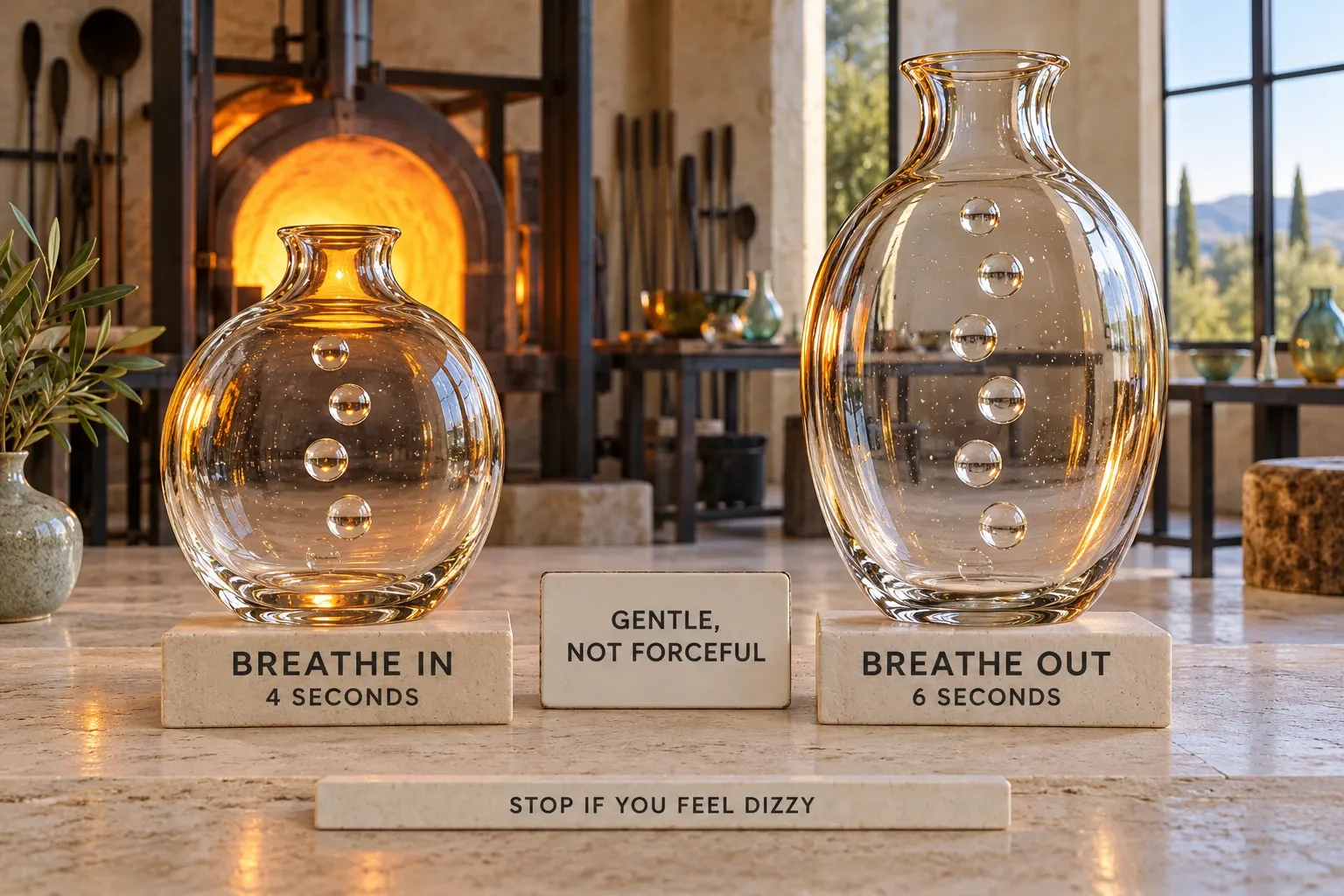
- Breathe in gently through your nose for four seconds.
- Let your stomach rise instead of lifting your shoulders.
- Breathe out slowly for six seconds.
- Continue for two to five minutes.
The longer, gentle exhale helps your body move towards a calmer state.
Research supports breathwork as a useful tool. A review of 12 randomised trials involving 785 people found that breathing exercises reduced stress, anxiety and depression [2]. Another study found that five minutes of slow breathing improved a measure of the body’s calming response and reduced anxiety in 47 adults [3].
Do not take very large or forceful breaths. This can make you feel light-headed. Stop and return to normal breathing if you feel dizzy or uncomfortable.
You do not have to stop every thought during mindfulness. Notice that your mind has wandered and gently bring it back.
Do Box Breathing and 4-7-8 Breathing Work?
They can help some people slow their breathing.
- Box breathing: Breathe in for 4 seconds, hold for 4, breathe out for 4 and hold for 4.
- 4-7-8 breathing: Breathe in for 4 seconds, hold for 7 and breathe out for 8.
These exact numbers are not magic. Their main purpose is to slow you down and make the exhale longer.
Holding your breath may feel uncomfortable if you are already panicking, breathless, pregnant or living with a heart or lung condition. In that case, skip the hold and use gentle four-in, six-out breathing instead.
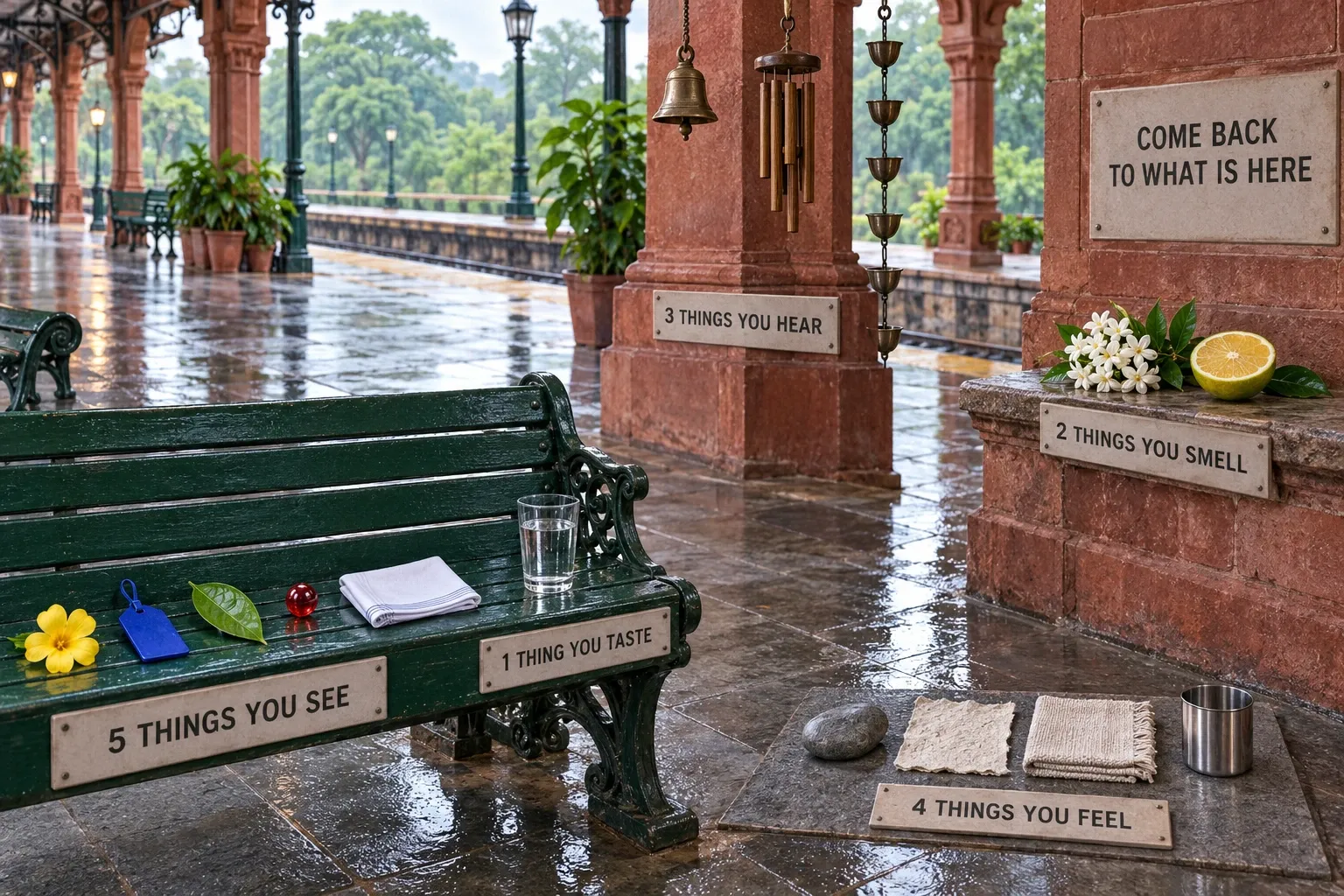
How Do You Use the 5-4-3-2-1 Grounding Technique?
Grounding brings your attention away from frightening thoughts and back to your present surroundings.
Look around and notice:
- Five things you can see
- Four things you can feel or touch
- Three things you can hear
- Two things you can smell
- One thing you can taste
You do not need to find perfect answers. You might notice a fan, the floor under your feet, traffic outside or the taste of water.
This technique can be useful when your thoughts are racing or you feel disconnected from your surroundings. For more help during panic, read the guide to panic attacks and panic disorder.
How Do You Do Progressive Muscle Relaxation?
Stress can make your muscles stay tight without you noticing. Progressive muscle relaxation helps you recognise and release that tension.
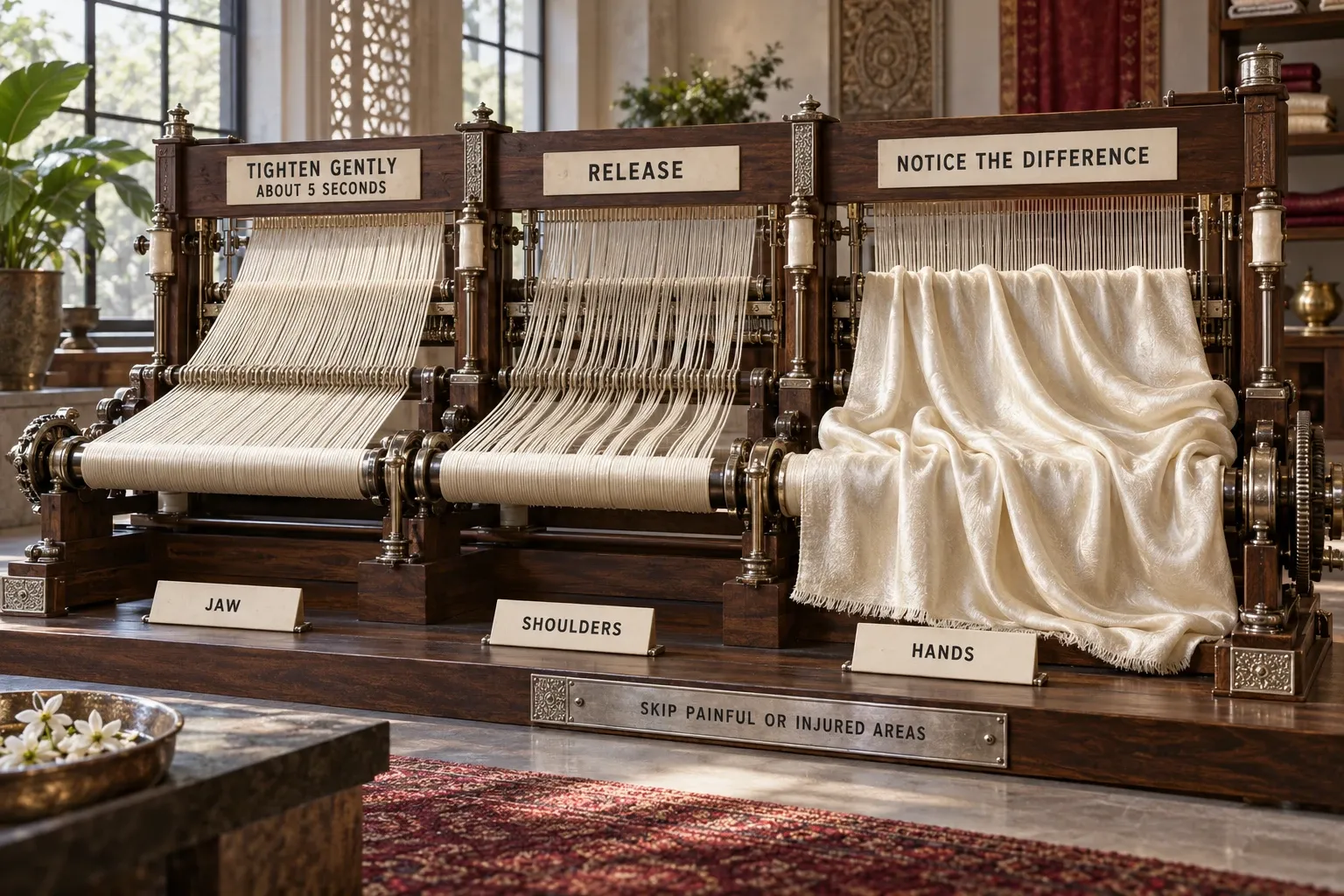
Start with your feet. Tighten the muscles gently for about 5 seconds. Then release them and notice the difference. Move slowly through your legs, stomach, hands, arms, shoulders and face. Avoid tightening any injured or painful area.
A review of 46 studies involving more than 3,400 adults found that progressive muscle relaxation helped reduce stress, anxiety and depression [4].
You can practise it before sleeping or after a stressful day. It usually takes around 10 to 15 minutes, but a shorter version focusing only on your jaw, shoulders and hands can also help.
What Is a Body Scan?
A body scan is similar to muscle relaxation, but you do not tense your muscles.
Move your attention slowly from one part of your body to another. Notice warmth, tightness, pressure, tingling or contact with the bed or chair. You do not need to change what you feel.
If focusing on your body increases your anxiety, keep your eyes open and use grounding instead. Not every technique suits everyone.
What Is Guided Imagery?
Guided imagery means picturing a place that feels calm or safe.
You might imagine sitting near the sea, walking through a garden or resting in a quiet room. Try to notice the colours, sounds, temperature and smells.
You can use an audio recording or guide yourself. Stop if the image makes you uncomfortable or brings up upsetting memories.
How Long Should You Practise Mindfulness?
You do not need to meditate for 20 minutes every day.
Start with 2 or 3 minutes. Choose one technique and connect it to something you already do, such as waking up, taking a tea break or going to bed.
Research has not found a simple rule that longer breathwork sessions always produce better results [2]. A short practice you actually use is more helpful than a long routine you keep postponing. Try the same technique for one week before deciding whether it suits you.
Can You Practise Relaxation in a Shared Indian Home?
Yes. You do not need a separate meditation room.
In a joint family, hostel, PG or shared flat, finding quiet time may be difficult. You can practise slow breathing while lying in bed, sitting at your desk, travelling in a cab or standing somewhere private for two minutes.
Body scans can be done before getting out of bed. Grounding can be used anywhere because nobody else needs to know that you are doing it.
Choose the method that needs the least space and feels easiest to repeat.
When Should You Use These Techniques?
Relaxation exercises may help:
- Before a stressful meeting, exam or interview
- When worry is making it difficult to focus
- During the early signs of anxiety
- After an argument or overwhelming day
- While preparing for sleep
- Alongside therapy for an anxiety condition
They may also support people dealing with generalised anxiety disorder, social anxiety disorder or ongoing stress and burnout.
Can Mindfulness Replace Therapy or Medication?
No. These techniques can calm your body and help you manage difficult moments. They do not treat every cause of anxiety, depression or trauma by themselves.
Consider professional support if anxiety or low mood:
- Continues for several weeks
- Affects your sleep, work, studies or relationships
- Makes you avoid important situations
- Feels difficult to manage by yourself
- Keeps returning despite using self-help techniques
Relaxation can be used alongside therapy or medication. It does not have to replace either one. If you are unsure about speaking to a therapist, read what to expect in psychotherapy.
Which Relaxation Technique Should You Try First?
Start with slow breathing if your body feels tense or overactive. Try grounding if your thoughts are racing. Choose progressive muscle relaxation if you notice tension in your shoulders, jaw or body.
You do not need to learn every method. Pick one, practise it for a few minutes each day and notice whether it helps.
If these techniques are not enough, a confidential consultation with Allo Health can help you understand what is keeping the stress or anxiety going and what support may work for you.

Disclaimer
This blog article discusses mental health and emotional wellbeing for general educational and informational purposes only. It is not a substitute for professional advice, diagnosis, or treatment, and only a qualified mental health professional, such as a psychiatrist, psychologist, or licensed therapist, can diagnose a condition or recommend treatment. If you are struggling, please reach out to a qualified professional or someone you trust; if you are in crisis or may be at risk of harming yourself, use the crisis support resources on this page. For any decisions about your mental health, we encourage you to seek the guidance of a qualified professional.
Most Asked Questions
What is the difference between mindfulness and meditation?
Mindfulness is a way of paying attention, present-moment, non-judgemental. Meditation is a formal practice for training attention, and mindfulness meditation is one specific style of it. You can be mindful without meditating, such as by eating a meal without your phone.
How long does it take to feel calmer?
A single five-minute breathing session has been shown to measurably lower anxiety scores before it ends. Longer-lasting change from regular practice tends to build over weeks, not one sitting, but you should not need to wait weeks to notice something in the moment.
Do I need to practise every day for this to work?
Research on breathwork found no link between how often people practised and how much benefit they got. Doing it at all, even occasionally, appears to matter more than hitting a daily quota.
Can breathing exercises stop a panic attack?
They can help you get through one, but the practical steps for a panic attack itself, including breathing and grounding, are covered in detail in our panic disorder guide rather than repeated here.
Is box breathing better than the 4-7-8 method?
Neither has been shown to beat the other. Both work through the same mechanism, a longer exhale than inhale, so the one you find easier to remember and stick with is the better choice for you.
Sources
- 1.
American Psychiatric Association. Relaxation Techniques for Mental Wellness. Published 14 March 2024. Accessed 2 September 2026.
- 2.
Fincham GW, Strauss C, Montero-Marin J, Cavanagh K. Effect of breathwork on stress and mental health: a meta-analysis of randomised-controlled trials. Scientific Reports. 2023;13:432. doi:10.1038/s41598-022-27247-y.
- 3.
Magnon V, Dutheil F, Vallet GT. Benefits from one session of deep and slow breathing on vagal tone and anxiety in young and older adults. Scientific Reports. 2021;11:19267. doi:10.1038/s41598-021-98736-9.
Why Should You Trust Us?
Why Should You Trust Us?
This article was written by Dr. Srishti Rastogi, who has more than 1 years of experience in the healthcare industry.
Allo has the expertise of over 50+ doctors who have treated more than 1.5 lakh patients both online and offline across 30+ clinics.
Our mission is to provide reliable, accurate, and practical health information to help you make informed decisions.
For This Article
- We used guidance from the American Psychiatric Association to explain breathing exercises, progressive muscle relaxation, body scans and guided imagery.
- We reviewed a meta-analysis of randomised controlled trials on breathwork. Its main stress analysis included 12 trials and 785 adults. We also considered its separate findings on anxiety and depression.
- We included a study of 47 younger and older adults that measured anxiety and the body’s calming response before and after five minutes of slow breathing.
- We reviewed 46 studies from 16 countries involving more than 3,400 adults to understand the evidence for progressive muscle relaxation.
- We checked what the research can and cannot prove. We have not presented one breathing pattern, duration or technique as guaranteed to work for everyone.
- We included practical safety advice, such as avoiding forceful breathing, stopping if you feel dizzy and skipping breath-holding if it feels uncomfortable.