Assertiveness: How to Say No and Set Boundaries
Written by Dr. Srishti Rastogi

Dr. Srishti Rastogi is a medical writer and healthcare professional dedicated to high-quality patient education and public health awareness. Leveraging her clinical background, she produces deeply researched, evidence-based content for digital health platforms and medical publications. Dr. Srishti’s unique dual perspective as a clinician and communicator allows her to craft content that builds trust and credibility with readers navigating sensitive health topics.
•
September 8, 2026
Our experts continually monitor the health and wellness space, and we update our articles when new information becomes available.
Quick Read
Assertiveness means saying what you need clearly without insulting or controlling the other person. It does not guarantee that they will agree. It helps you communicate your decision and decide what you will do if they do not respect it. This can feel difficult in Indian families, workplaces and relationships, where saying no is often seen as selfish or disrespectful. But assertiveness is a skill. It can be learnt.
Maybe this has happened to you. Someone asks for a favour. You don’t want to do it, or honestly don’t have the time. But you say yes anyway. Then comes the irritation. Sometimes guilt. Sometimes anger at the other person, even though you never actually told them you wanted to say no.
That’s where assertiveness comes in.

Allo asks
What makes saying no hardest for you?
What Does Assertiveness Mean?
Assertiveness means saying what you think, feel or need clearly, while still respecting the other person [1].
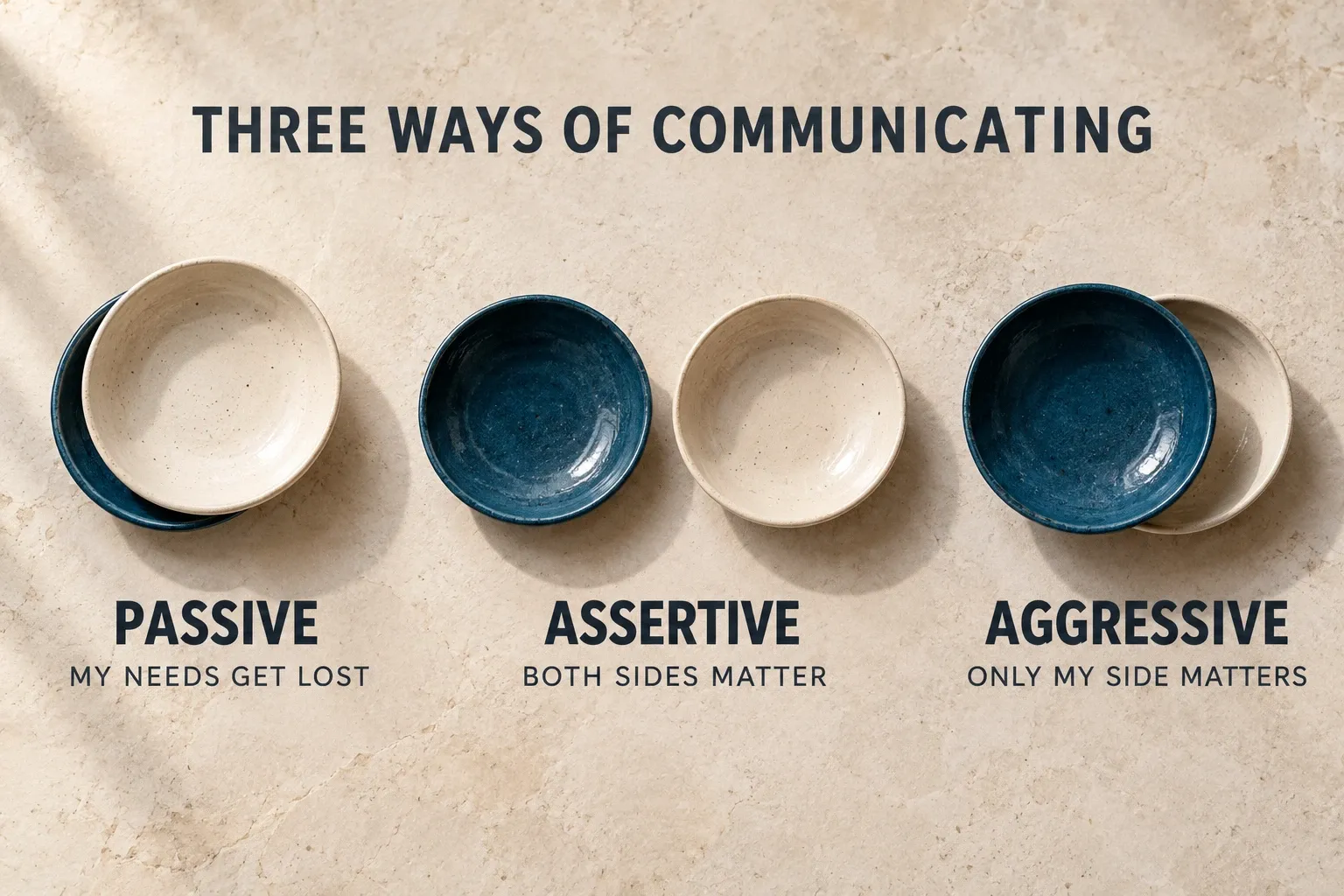
It sits somewhere between staying silent and becoming aggressive.
| Communication style | What usually happens |
|---|---|
| Passive | You ignore your needs to avoid conflict |
| Assertive | You say what you need, clearly and respectfully |
| Aggressive | You ignore the other person’s needs or rights |
| Passive-aggressive | Your anger comes out through silence, sarcasm or indirect behaviour |
You don’t need a loud voice or a “strong personality” to be assertive. You’re not trying to overpower anyone.

If your anger tends to come out through shouting or losing control, understanding and managing anger may be more useful.
Why Is Saying No So Hard in Indian Families?
Because, for many of us, saying no was never really encouraged.
We grow up hearing things like “adjust kar lo”, “elders know better” or “family comes first”. These ideas aren’t always bad. But they can make it difficult to disagree, especially with parents and older relatives.

The same thing happens at work. Your manager asks you to stay late. Again. You want to refuse, but then you think, “What if they feel I’m not serious about my job?”
Women may be expected to compromise more. Men may feel they should handle everything without saying they’re struggling. Different pressure, same result. You keep agreeing.
Over time, all that adjusting can add to stress and burnout. A 2024 study spoke to 15 assertive college students from mostly urban parts of India. Their experiences suggested that family, education, role models and opportunities to speak freely can all shape assertiveness [3]. It was a small study, so it can’t speak for everyone in India. Still, it shows that this is something people can learn.
Many people think saying no will damage the relationship. But constantly saying yes when you don’t want to can damage it too. Assertiveness helps you be honest before exhaustion turns into anger or resentment.
Is Being Assertive Rude?
No. Though it may feel rude at first. Rudeness means ignoring the other person’s feelings or rights. Assertiveness means you consider their position without completely dropping your own.

You can respect your parents and still disagree with them. You can care about a friend and still refuse a favour. You can be committed to your job without being available at every hour.
The other person may feel disappointed. That’s uncomfortable, of course. But disappointment isn’t the same as disrespect.
What If the Other Person Ignores Your No?
This is the part that often gets missed. Assertiveness isn’t a trick that makes people agree with you. The other person may still argue, sulk, guilt-trip you or simply refuse to listen.
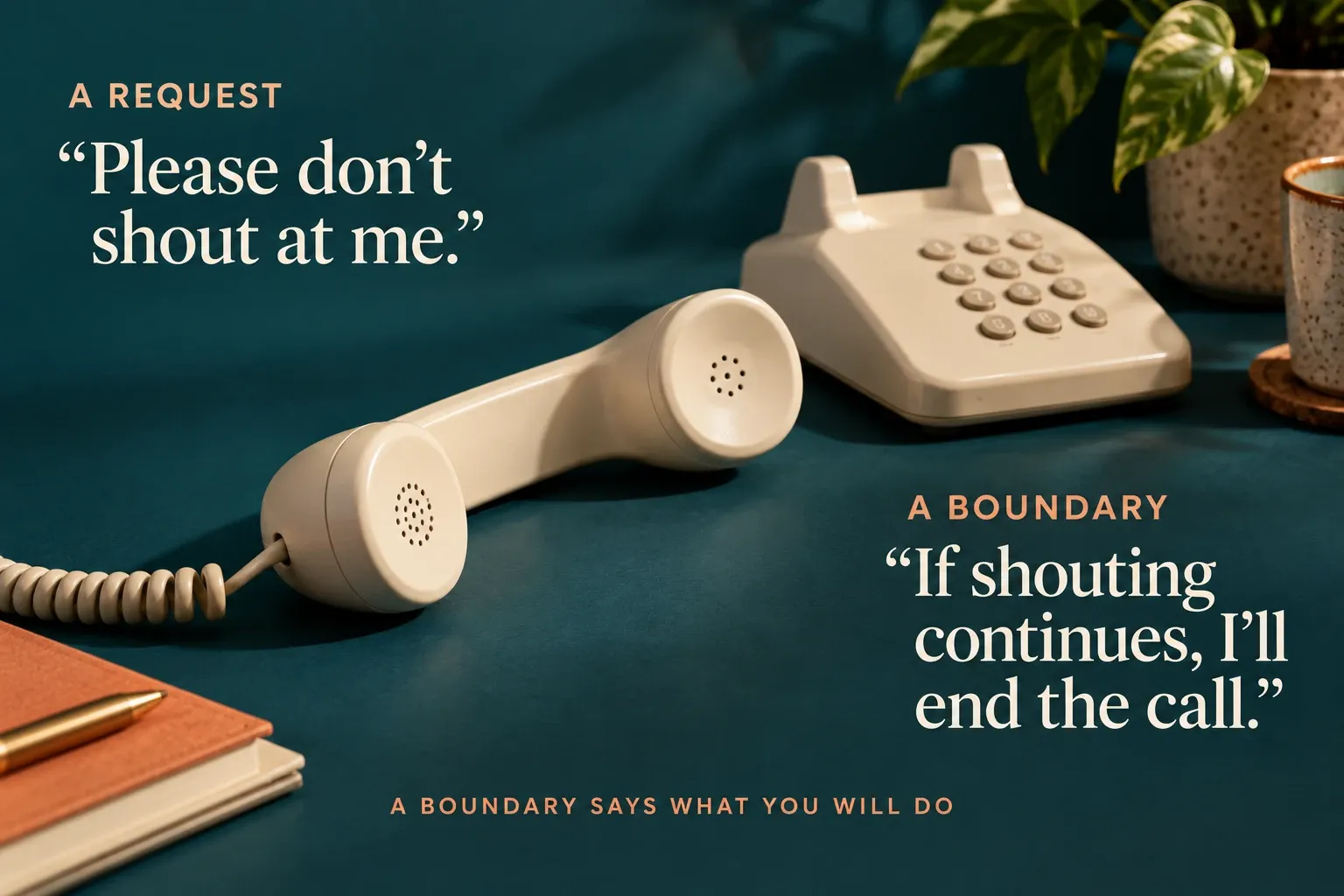
Being assertive means making your position clear and deciding what you will do next. For example:“Please don’t shout at me. If the shouting continues, I’ll end the call.” The first part is a request. The second part is a boundary because it says what you’ll do.
You’re not controlling their behaviour. You’re choosing your response. If they keep pushing, you don’t need to invent a better explanation. You can calmly repeat the same answer. This is known as the broken-record technique [1].
Feeling nervous during these conversations is normal. Breathing and grounding techniques may help you settle before responding.
How Do You Say No Without Feeling Guilty?
You may feel guilty. Especially in the beginning. That doesn’t necessarily mean you’ve done something wrong. Sometimes guilt appears because you’ve stopped doing what everyone expects from you.

A useful first step is to stop answering immediately. Say you need some time to think. Then check whether you actually have the time, energy or willingness to agree. If the answer is no, keep it short. You don’t need to give a detailed defence of your decision. Long explanations often turn into negotiations.
And if someone is disappointed? Let them be disappointed for a while. You don’t have to fix every uncomfortable feeling another person has.
What Is People-Pleasing?
People-pleasing is a pattern, not a mental health diagnosis. You may keep other people comfortable at your own expense. You might apologise too much, avoid sharing a different opinion or feel responsible whenever someone is upset.
Usually, there’s a reason behind it. Maybe speaking up caused fights when you were younger. Perhaps being “the adjusting one” brought you love or approval. Or maybe refusing people simply never felt safe.
Whatever the reason, it isn’t a permanent part of your personality. Patterns can change.
Is It an Assertiveness Problem or Social Anxiety?
Sometimes the problem isn’t knowing what to say. You know exactly what you want to say. You’re just terrified of saying it. Social anxiety involves a strong fear of being judged, rejected or embarrassed. It may affect conversations, meetings, phone calls and social events.
If that fear appears in many situations or makes you avoid important parts of life, read more about social anxiety disorder. If worrying has spread into work, health, money, family and other areas, it may also help to understand generalised anxiety disorder.
Is It Always Safe to Be Assertive?
No. And this matters. Not everyone has the same amount of power. You may depend on someone for money, housing, work or physical safety. Some people react to boundaries with threats, control or violence.
In that situation, staying quiet may sometimes be about protecting yourself. It doesn’t mean you lack courage. Speak privately to a therapist, trusted person or suitable support service before confronting someone who may harm you. Safety comes first.
Can Therapy Help You Become More Assertive?
Yes. Assertiveness training is practical. It isn’t just a therapist telling you to “speak confidently”.
You may work on the situations where you usually stay silent, prepare clearer responses and practise difficult conversations through role-play. The therapist can also help with the guilt or fear that comes up afterwards.
A 2026 review looked at 12 controlled studies involving 503 people. Assertiveness training produced a moderate improvement in social anxiety [2]. The research is encouraging, though larger studies and longer follow-ups are still needed.
If you’ve never spoken to a therapist, knowing what to expect in psychotherapy may make that first appointment feel less awkward.
When Should You Get Help?
It may be worth speaking to a therapist if saying no regularly leaves you anxious or guilty, people keep taking advantage of you or you avoid important conversations altogether.
You don’t have to start with the biggest conflict in your life. Start somewhere small. One honest answer. One clear limit. The other person may not like it. That doesn’t automatically mean you said something wrong.
Assertiveness isn’t about making everyone accept your answer. It’s about accepting that your needs matter too. If you want help building this skill, you can speak confidentially with a mental health professional at Allo Health.

Disclaimer
This blog article discusses mental health and emotional wellbeing for general educational and informational purposes only. It is not a substitute for professional advice, diagnosis, or treatment, and only a qualified mental health professional, such as a psychiatrist, psychologist, or licensed therapist, can diagnose a condition or recommend treatment. If you are struggling, please reach out to a qualified professional or someone you trust; if you are in crisis or may be at risk of harming yourself, use the crisis support resources on this page. For any decisions about your mental health, we encourage you to seek the guidance of a qualified professional.
Most Asked Questions
Is being assertive the same as being rude or bossy?
No. Rudeness and aggression ignore what the other person needs; assertiveness doesn't. The difference is respect, not how firmly you say something.
How do I say no without feeling so guilty about it?
Keep it short. "I can't do that this week" says enough on its own, without a long justification that invites the other person to argue with your reasons. The guilt usually fades faster than expected once you see the relationship survives the no.
Could my difficulty speaking up actually be social anxiety?
It's possible. If the block feels like real fear rather than ordinary discomfort, especially around being judged or disliked, that's worth discussing with a professional rather than treating it as only a skills gap.
Does assertiveness training actually work, or is it just advice?
There's real evidence behind it. Research pooling multiple controlled studies has found a meaningful, moderate improvement in social anxiety after structured assertiveness training, in a similar range to other established talk therapies.
What if someone reacts to my boundary with anger or threats?
That's different from ordinary pushback. If a reasonable boundary is consistently met with escalating anger or threats, it's worth talking to a professional about your specific situation rather than managing it alone.
Sources
- 1.
Association for Behavioral and Cognitive Therapies. Assertiveness Training.
- 2.
Hede JP, Malouff JM, Meynadier J. A Meta-Analysis of Randomised Controlled Trials on the Efficacy of Assertiveness Training for Social Anxiety. International Journal of Applied Positive Psychology. 2026;11:28.
- 3.
Goel A, Padickaparambil S, Sreelakshmi ES, Pothiyil DI. Understanding Facilitators for Assertiveness Among College Students in India: A Qualitative Study. Current Psychology. 2024.
Why Should You Trust Us?
Why Should You Trust Us?
This article was written by Dr. Srishti Rastogi, who has more than 1 years of experience in the healthcare industry.
Allo has the expertise of over 50+ doctors who have treated more than 1.5 lakh patients both online and offline across 30+ clinics.
Our mission is to provide reliable, accurate, and practical health information to help you make informed decisions.
For This Article
- We used guidance from the Association for Behavioral and Cognitive Therapies to explain assertiveness and techniques such as the broken-record method.
- We reviewed a 2026 analysis of 12 controlled studies involving 503 participants.
- We included India-specific research while clearly stating that the study was small and mostly involved urban college students.
- We explained the limits of assertiveness. It cannot control another person’s reaction, remove every power difference or make an unsafe situation safe.
- We separated everyday difficulty saying no from social anxiety, which may need professional treatment.