PTSD and Trauma: What They Are, and What Actually Helps
Written by Dr. Srishti Rastogi

Dr. Srishti Rastogi is a medical writer and healthcare professional dedicated to high-quality patient education and public health awareness. Leveraging her clinical background, she produces deeply researched, evidence-based content for digital health platforms and medical publications. Dr. Srishti’s unique dual perspective as a clinician and communicator allows her to craft content that builds trust and credibility with readers navigating sensitive health topics.
•
October 9, 2026
Our experts continually monitor the health and wellness space, and we update our articles when new information becomes available.
Quick Read
Trauma is what a frightening or overwhelming event leaves behind in you, not the event itself. Most people who go through something traumatic do not develop PTSD. When the reactions do not settle after about a month and start running your life, that is post-traumatic stress disorder. It is treatable. Talking therapies built for trauma help many people recover.
If you or someone you know is in crisis, help is available right now. You are not alone, and things can get better with the right support.
After a frightening or overwhelming event, your mind and body may continue to feel unsafe. You may have nightmares, unwanted memories, poor sleep or feel constantly alert.
For many people, these reactions become easier within a few weeks. When they continue for more than a month and disrupt daily life, they may be signs of post-traumatic stress disorder (PTSD) [1].
This guide explains PTSD symptoms, complex PTSD, treatment and when to get help.
What Are Trauma and PTSD?
Trauma can describe a deeply distressing event and the emotional response that follows it. The same event may affect two people differently.
PTSD is a mental health condition that can develop after experiencing or witnessing a traumatic event. Symptoms usually last for more than a month and affect work, studies, sleep, relationships or everyday life [1].

About 70% of people worldwide experience a potentially traumatic event, but most do not develop PTSD. Around 5.6% of people exposed to trauma develop the condition [1]. Having PTSD does not show how strong or weak someone is.

Allo asks
Which of these has been part of your experience?
What Are the Symptoms of PTSD?
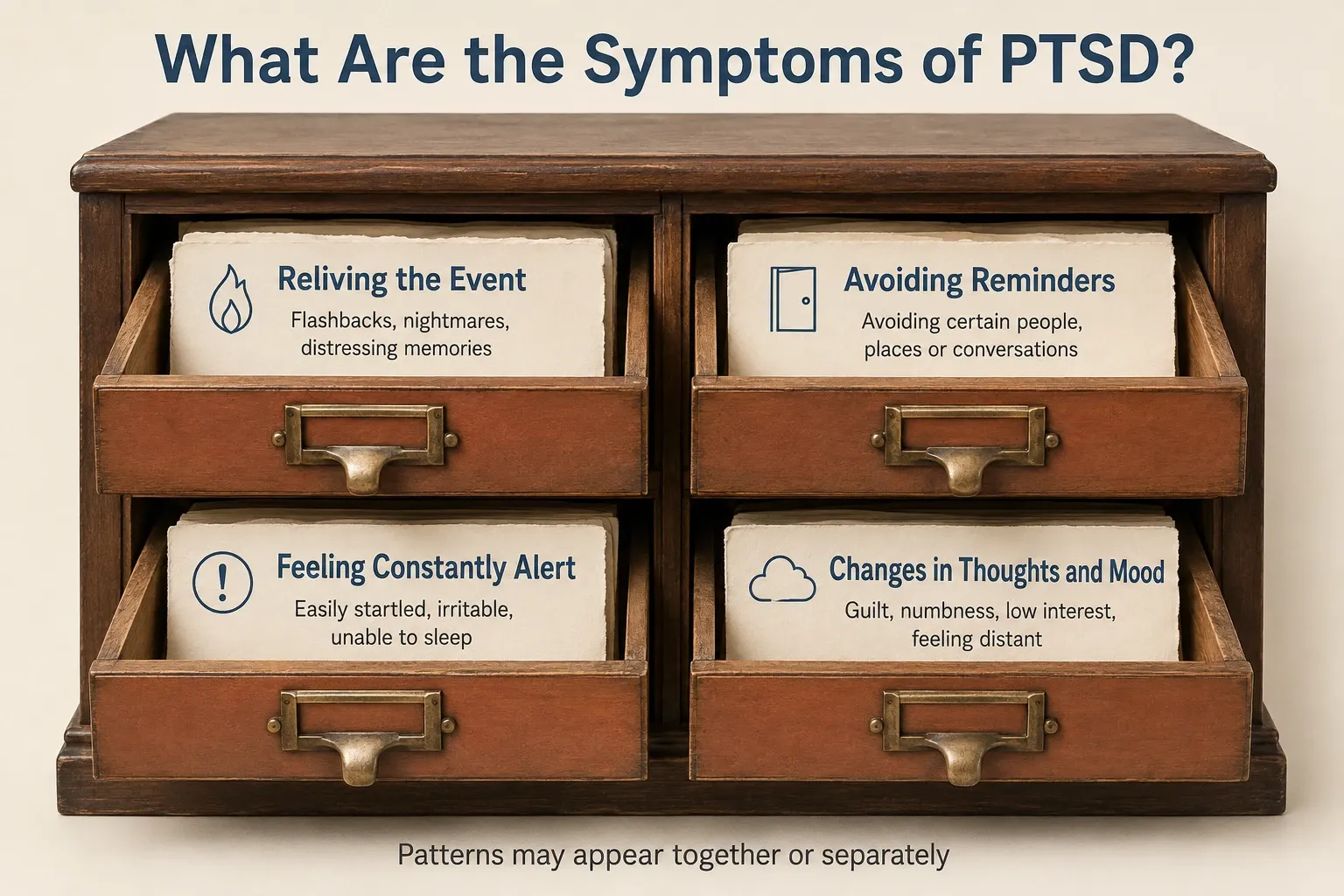
PTSD symptoms generally fall into four groups:
| Symptom pattern | What it may feel like |
|---|---|
| Reliving the event | Flashbacks, nightmares or distressing memories |
| Avoiding reminders | Avoiding certain people, places or conversations |
| Feeling constantly alert | Being easily startled, irritable or unable to sleep |
| Changes in thoughts and mood | Guilt, numbness, low interest or feeling distant from others |
A flashback may feel as if the event is happening again. During a flashback, you may lose awareness of where you are for a short time.
Your body may also respond automatically by fighting, running away or freezing. Freezing during a traumatic event is not a choice or a sign that you failed.

PTSD can affect sleep. Read more about insomnia, nightmares and sleep problems.
Flashbacks are also different from the intrusive thoughts seen in OCD. A flashback involves reliving a traumatic memory, while an OCD thought creates doubt or fear that may lead to a ritual.
Grief vs PTSD
Grief and PTSD can happen after a sudden death, but they are not the same.
| Grief | PTSD |
|---|---|
| Mainly centres on missing the person | Mainly centres on fear and danger |
| Feelings may come in waves | Reminders may cause intense fear or flashbacks |
| Usually changes and becomes easier to carry | Symptoms may remain stuck without support |
Both conditions can happen together. Read more about grief and bereavement.
What Is Complex PTSD?
Complex PTSD may develop after repeated or long-term trauma, particularly when escaping the situation was difficult. Examples may include ongoing abuse, neglect or violence.
It includes the main symptoms of PTSD, along with:
- Difficulty managing emotions
- A deeply negative view of yourself
- Difficulty trusting people or maintaining close relationships [3]
Trauma during childhood may later appear as anxiety, anger, low self-worth or difficulty feeling safe with others. These signs do not prove that someone has complex PTSD. A professional must assess the full situation.
In India, harmful childhood experiences may sometimes be dismissed as strict discipline or a private family matter.[5] Recognising that an experience affected you does not require you to blame your family or reject your culture.
I want patients to hear this clearly: freezing during a traumatic event is not a choice, and it's not a sign you failed. It's an automatic response your body chose for you in that moment. There's no version of that where you did it wrong.
How Can PTSD Affect Daily Life?
PTSD may affect:
- Sleep: Nightmares or difficulty relaxing
- Work and studies: Poor concentration, tiredness or avoiding certain places
- Relationships: Difficulty trusting others or feeling emotionally distant
- Daily activities: Avoiding routes, crowds, travel or other reminders
- Physical health: Headaches, body tension or a racing heartbeat
Avoidance may bring short-term relief, but it can gradually make your world feel smaller.
What Causes PTSD?
PTSD may follow:
- Accidents or medical emergencies
- Physical or sexual assault
- Abuse or neglect
- Violence or conflict
- Natural disasters
- A sudden or traumatic death
Not everyone who experiences trauma develops PTSD. Risk may depend on how severe or long-lasting the event was, earlier experiences and the support available afterwards.
How Is PTSD Diagnosed?
There is no blood test or scan for PTSD. A qualified professional will ask about:
- Your current symptoms
- How long they have continued
- How they affect daily life
- The event in a level of detail you can manage
You do not need to describe every detail during the first appointment. Online PTSD tests may help you notice symptoms, but they cannot provide a diagnosis.
Read about what to expect in psychotherapy.
How Is PTSD Treated?
PTSD can be treated, even when the trauma happened many years ago.
Trauma-Focused Therapy
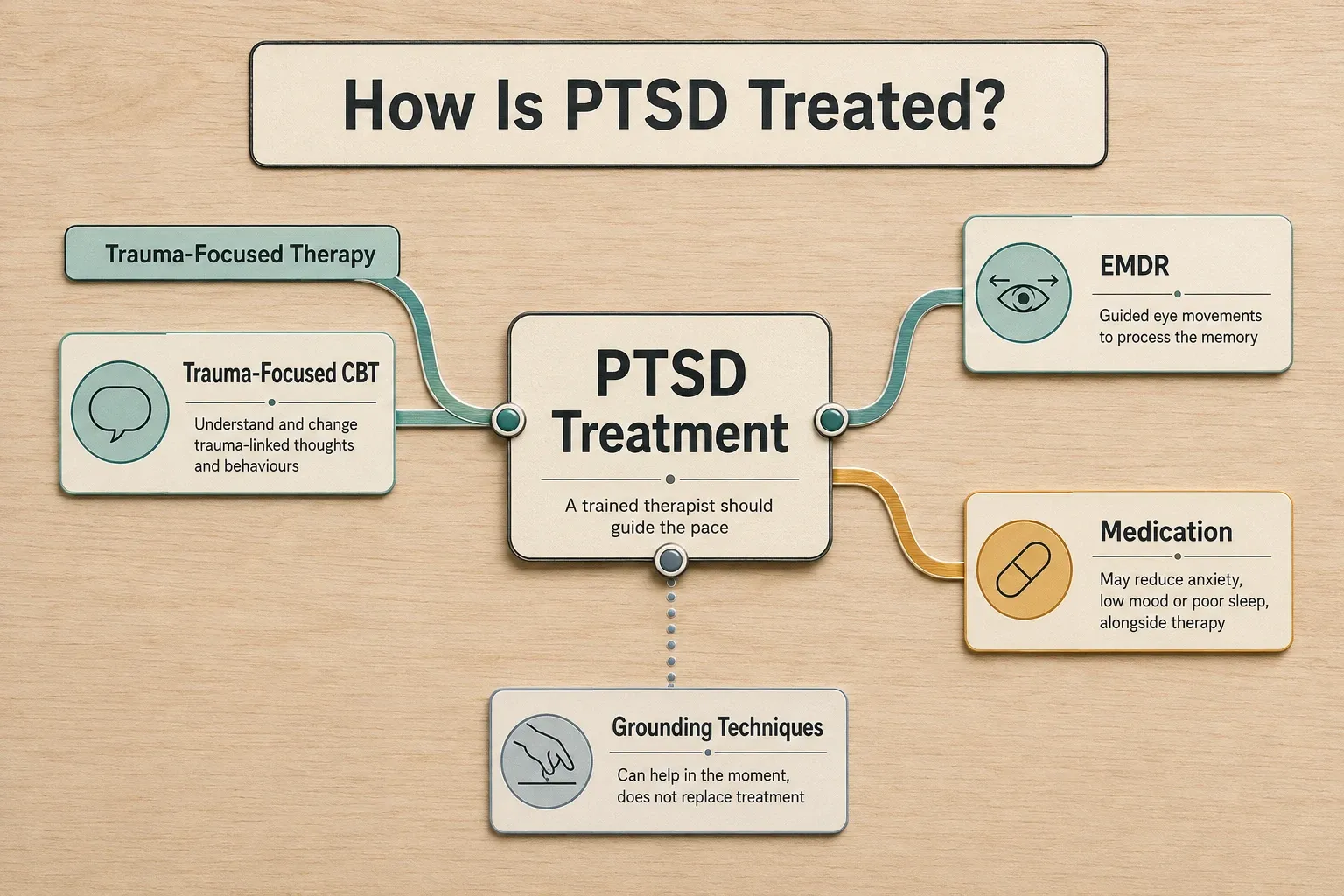
Recommended treatments include:
- Trauma-focused CBT: Helps you understand and change thoughts and behaviours connected to the trauma.
- EMDR: Uses guided eye movements while you process the traumatic memory.
Both treatments can reduce PTSD symptoms [2][4]. A trained therapist should provide them at a pace you can manage.
Medication
A doctor may prescribe medication to reduce symptoms such as anxiety, low mood or poor sleep. Medication may be used alongside therapy, depending on your needs [2].
Do not start, stop or change medication without medical advice. Read more about psychiatric medications.
Grounding Techniques
Grounding can help during a flashback or when your surroundings feel unreal. You can try:
- Naming five things you can see
- Pressing your feet gently into the floor
- Holding a cool object
- Breathing slowly
- Reminding yourself where you are and that the event is over
These techniques can help in the moment but do not replace treatment. Learn more about grounding and relaxation.
When Should You Get Help for PTSD?
Speak to a trauma-informed therapist or clinician if:
- Symptoms continue for more than a month
- Symptoms return long after the event
- You avoid people, places or activities
- Sleep, work, studies or relationships are affected
- You feel constantly alert, numb or disconnected
- You use alcohol or other substances to cope
People may tell you to “forget it” or “move on,” but trying to avoid every reminder can keep PTSD symptoms going. Professional treatment offers a safer way to process what happened.
Seek urgent help if you have thoughts of harming yourself or feel unable to stay safe. Call 112, go to the nearest hospital emergency department or ask someone you trust to stay with you.
Can PTSD Get Better?
Yes. PTSD is treatable, and many people improve with suitable care. Recovery may take time, but you do not have to manage the symptoms alone. People with PTSD may benefit from trauma-focused forms of therapy. Trauma-focused therapy is a specialized form of psychotherapy that directly addresses the emotional, psychological, and physical impacts of traumatic experiences rather than just treating general life stress.
If you feel ready, you can book a confidential consultation with a mental health professional at Allo Health. If you are worried about someone else, read our guide to supporting a loved one.

Disclaimer
This blog article discusses mental health and emotional wellbeing for general educational and informational purposes only. It is not a substitute for professional advice, diagnosis, or treatment, and only a qualified mental health professional, such as a psychiatrist, psychologist, or licensed therapist, can diagnose a condition or recommend treatment. If you are struggling, please reach out to a qualified professional or someone you trust; if you are in crisis or may be at risk of harming yourself, use the crisis support resources on this page. For any decisions about your mental health, we encourage you to seek the guidance of a qualified professional.
Most Asked Questions
Does PTSD only affect soldiers?
No. Combat is one cause among many. Road accidents, assault, abuse, medical emergencies, disasters, violence at home, and sudden bereavement all cause PTSD, and most people living with it have never been near a war.
Does talking about it make it worse?
Unstructured retelling can be distressing, which is where the fear comes from. Trauma-focused therapy is not that. It is paced, and it is designed so that the memory loses its grip rather than being repeatedly reopened. Avoiding the memory feels safer and is what keeps PTSD in place.
Should I be over it by now?
There is no schedule. PTSD can start months or years after the event, and people get better after carrying it for decades. A long gap is a reason to get help, not a reason to assume it is too late.
Is PTSD the same as grief?
No, though they often sit together after a sudden or violent death. As above, grief is a response to loss and moves on its own, while PTSD is a fear response that stays stuck. You can have both at once, and each needs different support.
Can PTSD go away on its own?
Sometimes, particularly in the first weeks, which is why early symptoms are often watched rather than treated straight away. Once symptoms have settled in and are affecting daily life, waiting tends to entrench them. Treatment is the reliable route.
Sources
- 1.
World Health Organization. Post-traumatic stress disorder (fact sheet), updated 27 May 2024.
- 2.
Hamblen JL, Norman SB, Sonis JH, et al. A Guide to Guidelines for the Treatment of Posttraumatic Stress Disorder in Adults: An Update. National Center for PTSD, US Department of Veterans Affairs. 2019.
- 3.
Maercker A. Development of the new CPTSD diagnosis for ICD-11. Borderline Personality Disorder and Emotion Dysregulation. 2021;8:7.
- 4.
Khan AM, Dar S, Ahmed R, et al. Cognitive Behavioral Therapy versus Eye Movement Desensitization and Reprocessing in Patients with Post-traumatic Stress Disorder: Systematic Review and Meta-analysis of Randomized Clinical Trials. Cureus. 2018;10(9):e3250.
- 5.
Maurya C, Maurya P. Adverse childhood experiences and health risk behaviours among adolescents and young adults: evidence from India. BMC Public Health. 2023;23:536.
Why Should You Trust Us?
Why Should You Trust Us?
This article was written by Dr. Srishti Rastogi, who has more than 1 years of experience in the healthcare industry.
Allo has the expertise of over 50+ doctors who have treated more than 1.5 lakh patients both online and offline across 30+ clinics.
Our mission is to provide reliable, accurate, and practical health information to help you make informed decisions.
For This Article
- We referenced global prevalence data on trauma exposure and PTSD, so the statistics in this article, including how many people experience a traumatic event versus how many go on to develop PTSD, reflect established research rather than assumption.
- We drew on the recognised four-symptom-cluster model of PTSD (reliving, avoidance, hyperarousal, and changes in thoughts and mood) to keep the symptom descriptions accurate and consistent with how clinicians actually assess the condition.
- We referenced evidence-based, trauma-focused treatments, including trauma-focused CBT and EMDR, so the treatment section reflects therapies with genuine clinical support rather than general talking-therapy advice.
- We were careful to distinguish PTSD from related experiences it's often confused with, including grief and OCD, so readers can better recognise which pattern is closest to their own experience.