Psychosis and Schizophrenia: What They Are, and What Recovery Looks Like
Written by Dr. Srishti Rastogi

Dr. Srishti Rastogi is a medical writer and healthcare professional dedicated to high-quality patient education and public health awareness. Leveraging her clinical background, she produces deeply researched, evidence-based content for digital health platforms and medical publications. Dr. Srishti’s unique dual perspective as a clinician and communicator allows her to craft content that builds trust and credibility with readers navigating sensitive health topics.
•
August 19, 2026
Our experts continually monitor the health and wellness space, and we update our articles when new information becomes available.
Quick Read
Psychosis is a temporary loss of contact with reality. Schizophrenia is one condition that can cause psychosis, but it is not the only one. Schizophrenia does not mean “split personality,” and most people with it are not dangerous. Early treatment can improve recovery.
If you or someone you know is in crisis, help is available right now. You are not alone, and things can get better with the right support.
Psychosis can be frightening for the person experiencing it and for their family. However, it can be treated, and many people recover or learn to manage their symptoms well.
This guide explains the symptoms, early warning signs, treatment and when to seek urgent help.
What Is the Difference Between Psychosis and Schizophrenia?
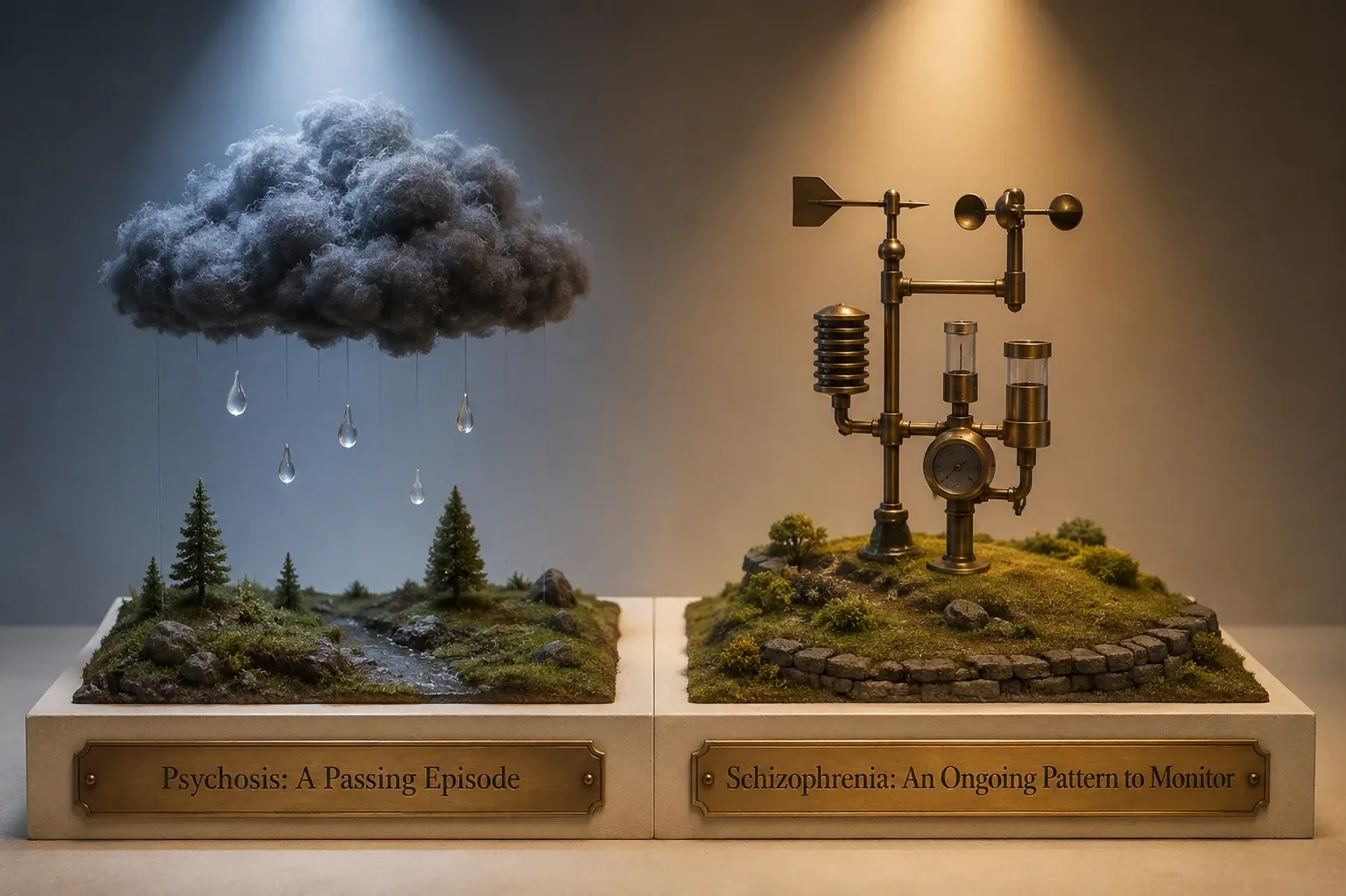
Psychosis is a set of symptoms that affects a person’s contact with reality. Schizophrenia is a mental health condition that can cause repeated or ongoing psychosis.
| Psychosis | Schizophrenia |
|---|---|
| An experience or group of symptoms | A diagnosed mental health condition |
| May involve hallucinations, fixed unusual beliefs or confused thinking | May also affect motivation, emotions and daily functioning |
| Can have several different causes | Usually involves symptoms continuing or returning over time |
Having one psychotic episode does not automatically mean someone has schizophrenia. Psychosis can also happen because of:

- Bipolar disorder
- Severe depression
- Alcohol or drug use
- Extreme lack of sleep
- Certain medicines or physical illnesses
Schizophrenia affects around 23 million people worldwide and often begins during the late teenage years or twenties [1].
What Are the Symptoms of Psychosis and Schizophrenia?
Symptoms can differ from person to person.
| Symptom | What it may look like |
|---|---|
| Delusions | Strong beliefs that other people do not share, such as feeling watched or targeted |
| Hallucinations | Hearing, seeing or sensing something that others do not |
| Disorganised thinking | Speech or ideas that are difficult for others to follow |
| Reduced motivation and expression | Withdrawing, speaking less, showing little emotion or struggling to begin tasks |
Hearing voices is the most common hallucination in psychosis. The experience can feel completely real to the person. Read more about hearing voices.
Reduced motivation is sometimes mistaken for laziness or rudeness. It can be a symptom of schizophrenia and may make work, studies, relationships and self-care difficult.


Allo asks
Have you noticed any of these changes, in yourself or someone close to you?
What Are the Early Signs of Psychosis?
Psychosis can sometimes appear suddenly. In other cases, changes develop slowly over weeks or months.
Possible early signs include:
- Withdrawing from friends and family
- A sudden drop in work or studies
- Sleeping at unusual times
- Becoming increasingly suspicious
- Expressing unusual or confusing ideas
- Paying less attention to hygiene or appearance
- Finding it difficult to concentrate
These signs can have many causes and do not confirm psychosis. However, an assessment is important when several changes happen together or become worse.
Early treatment is linked with better outcomes [2][4].
What Causes Psychosis?
There is no single cause. Psychosis may develop because of a combination of:
- Genetics and brain development
- Severe stress or trauma
- Alcohol or drug use
- Physical illness
- Certain medicines
- Long periods without sleep
Cannabis and stimulant drugs can trigger psychosis in some people, particularly those who are already vulnerable.
Common Myths About Schizophrenia
| Myth | What is true |
|---|---|
| “Schizophrenia means split personality.” | Schizophrenia affects how one person thinks, understands reality and functions. It is different from dissociative identity disorder. |
| “People with schizophrenia are dangerous.” | Most people with schizophrenia are not violent. Any increased risk is usually connected with untreated symptoms or alcohol and drug use, not the diagnosis alone [3]. |
How Are Psychosis and Schizophrenia Diagnosed?
There is no single blood test or brain scan that confirms schizophrenia. A psychiatrist will ask about:
- What the person is experiencing
- How long the symptoms have continued
- How daily life has changed
- Physical health and current medicines
- Alcohol or drug use
With the person’s permission, information from close family members may also help. The doctor may arrange tests to rule out physical illnesses or substance effects.
Diagnosis may take more than one appointment. Online tests cannot diagnose psychosis or schizophrenia. Cost, travel and a shortage of mental health professionals can make assessment difficult to access in some parts of India. Online consultations may help, although urgent or severe symptoms may still require an in-person hospital assessment.
How Are Psychosis and Schizophrenia Treated?
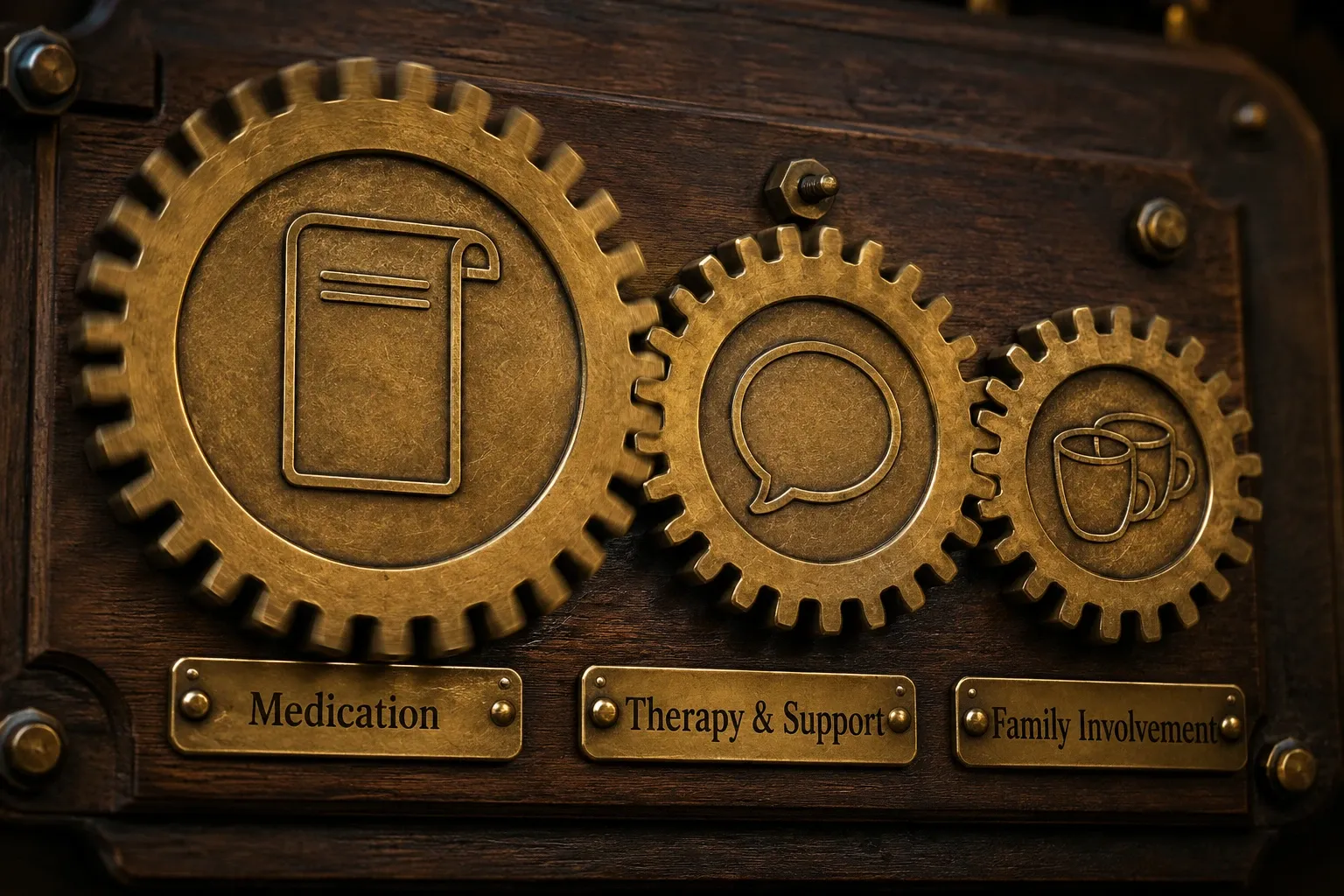
Treatment usually combines medication with psychological, family and practical support.
Medication
Antipsychotic medicines can reduce hallucinations, delusions and confused thinking [2]. A psychiatrist will choose the medicine, explain possible side effects and monitor progress.
Finding the right medicine and dose may take time. Do not stop or change it without speaking to the prescribing doctor.
Read more about psychiatric medicines.
Therapy and Practical Support
Treatment may also include:
- Education about the condition
- Therapy for distress and coping
- Support for family members
- Help returning to work or studies
- Support with daily routines and relationships
- Treatment for alcohol or drug use, when needed
Read about what to expect in psychotherapy.
In India, family members are often closely involved in care. This can be a valuable source of practical and emotional support [2]. Some families first seek support through prayer, religious practices or traditional healers. These may provide comfort, but they should be used alongside medical care, not instead of it. Delaying treatment can make recovery more difficult.
Our guide explains how to support a loved one.
Can Someone Recover From Schizophrenia?
Yes. At least 1 in 3 people with schizophrenia recover fully, and many others improve significantly with treatment [1]. Recovery does not always mean that symptoms disappear permanently. It may mean:
- Fewer or less severe episodes
- Returning to work or studies
- Managing daily activities independently
- Maintaining relationships
- Recognising early warning signs
Starting treatment early and continuing with the agreed care plan can improve recovery.

When Should You Seek Urgent Help?
Seek help immediately if someone:
- Hears voices telling them to harm themselves or someone else
- Has thoughts of suicide or self-harm
- Is extremely frightened, confused or agitated
- Has stopped eating, drinking or sleeping because of their experiences
- Is unable to care for themselves or stay safe
Stay calm and avoid arguing about whether the person’s experience is real. Speak gently, reduce noise and help them reach professional care.
Call 112, go to the nearest hospital emergency department or ask a trusted person to stay with them. See our crisis support and helplines.
When Should You Arrange a Mental Health Assessment?
Arrange an assessment if someone:
- Has started hearing or seeing things that others do not
- Has developed strong and unusual beliefs
- Is becoming increasingly suspicious or withdrawn
- Is struggling with work, studies or self-care
- Has shown several early warning signs that are getting worse
Early help can reduce the disruption caused by psychosis. Fear of judgement may make someone hide their symptoms or avoid treatment. Respond calmly and focus on getting help rather than labelling or blaming them. If these signs sound familiar, you can book a confidential consultation with a mental health professional at Allo Health.

Disclaimer
This blog article discusses mental health and emotional wellbeing for general educational and informational purposes only. It is not a substitute for professional advice, diagnosis, or treatment, and only a qualified mental health professional, such as a psychiatrist, psychologist, or licensed therapist, can diagnose a condition or recommend treatment. If you are struggling, please reach out to a qualified professional or someone you trust; if you are in crisis or may be at risk of harming yourself, use the crisis support resources on this page. For any decisions about your mental health, we encourage you to seek the guidance of a qualified professional.
Most Asked Questions
Is schizophrenia the same as multiple personality disorder?
No. That is dissociative identity disorder, a different and much rarer condition. The confusion comes partly from the word itself, which comes from Greek roots meaning "split mind". The split it refers to is between thought and reality, not between separate personalities.
Can you recover from schizophrenia?
Yes. At least one in three people with schizophrenia recover fully, and many more improve enough to work, study, and have relationships. Recovery does not always mean symptoms never return. For most people it means they become less frequent, less intense, and much easier to manage.
Does one episode of psychosis mean I have schizophrenia?
No. Psychosis can be triggered by drugs, extreme sleep loss, severe depression, bipolar disorder, and some physical illnesses, and a single episode may never repeat. What it does mean is that you need a proper assessment rather than a guess.
Can someone with psychosis tell that they are unwell?
Often not, at least during an episode, and this is one of the hardest parts for families. The beliefs and perceptions feel completely real from the inside, so being told they are not usually feels like an accusation. Arguing about whether it is real rarely helps. Staying calm, staying connected, and getting professional help does.
Does cannabis cause schizophrenia?
It is more complicated than yes or no. Cannabis and stimulants can trigger psychosis in people who are already vulnerable, and they make relapse more likely in someone who already has a diagnosis. Most people who use cannabis do not develop schizophrenia. But for anyone with a family history or an existing diagnosis, it is a genuine risk rather than a scare story.
Sources
- 1.
World Health Organization. Schizophrenia (fact sheet), updated 6 October 2025.
- 2.
Grover S, Chakrabarti S, Kulhara P, Avasthi A. Clinical Practice Guidelines for Management of Schizophrenia. Indian Journal of Psychiatry. 2017;59(Suppl 1):19-33.
- 3.
Fazel S, Gulati G, Linsell L, Geddes JR, Grann M. Schizophrenia and violence: systematic review and meta-analysis. PLOS Medicine. 2009;6(8):e1000120.
- 4.
Salazar de Pablo G, Guinart D, Armendariz A, et al. Duration of untreated psychosis and outcomes in first-episode psychosis: systematic review and meta-analysis of early detection and intervention strategies. Schizophrenia Bulletin. 2024;50(4):771-783.
Why Should You Trust Us?
Why Should You Trust Us?
This article was written by Dr. Srishti Rastogi, who has more than 1 years of experience in the healthcare industry.
Allo has the expertise of over 50+ doctors who have treated more than 1.5 lakh patients both online and offline across 30+ clinics.
Our mission is to provide reliable, accurate, and practical health information to help you make informed decisions.
For This Article
- We referenced global prevalence data showing schizophrenia affects around 23 million people worldwide, so the scale and typical age of onset described in this article reflect established epidemiological research, not assumption.
- We drew a clear, clinically accurate distinction between psychosis as a symptom pattern and schizophrenia as a diagnosed condition, so readers understand that one psychotic episode does not automatically mean a schizophrenia diagnosis.
- We addressed the two most damaging myths about schizophrenia directly, including the false association with violence, and were careful to note that any increased risk is linked to untreated symptoms or substance use, not the diagnosis itself, so readers get an accurate picture rather than a stigmatising one.
- We referenced evidence linking early treatment to better outcomes, so the emphasis on early assessment throughout this article reflects genuine clinical evidence, not general reassurance.
- We were specific about recovery, citing that at least 1 in 3 people with schizophrenia recover fully, rather than leaving recovery as a vague or overly optimistic claim.