Personality Disorders Explained: Causes, Types, and Treatment
Written by Dr. Srishti Rastogi

Dr. Srishti Rastogi is a medical writer and healthcare professional dedicated to high-quality patient education and public health awareness. Leveraging her clinical background, she produces deeply researched, evidence-based content for digital health platforms and medical publications. Dr. Srishti’s unique dual perspective as a clinician and communicator allows her to craft content that builds trust and credibility with readers navigating sensitive health topics.
•
October 12, 2026
Our experts continually monitor the health and wellness space, and we update our articles when new information becomes available.
Quick Read
A personality disorder is a long-standing pattern in how someone thinks, feels, and relates to other people. It causes real distress or gets in the way of life. It is not a verdict on someone's character. Around 8 in 100 people worldwide meet criteria for one. The names have become internet insults, which has made the whole subject harder to talk about honestly. They respond to therapy, and the outlook is better than most people assume.
If you or someone you know is in crisis, help is available right now. You are not alone, and things can get better with the right support.
Personality is the way we think, feel and behave. Everyone has habits that can sometimes cause problems.
But when the same patterns continue for years and repeatedly affect relationships, work or daily life, they may be signs of a personality disorder. You may be reading this because the same problems keep appearing in your relationships, work or emotions. Or perhaps someone’s behaviour is repeatedly hurting you.
This guide explains personality disorders, their common types, how they are diagnosed and how treatment can help.
What Is a Personality Disorder?
A personality disorder is a long-lasting pattern in how someone:
- Thinks about themselves and other people
- Manages emotions
- Responds to stressful situations
- Behaves in relationships
These patterns usually appear across different parts of life and are difficult to change without support. An occasional argument, selfish decision or emotional reaction does not mean someone has a personality disorder.

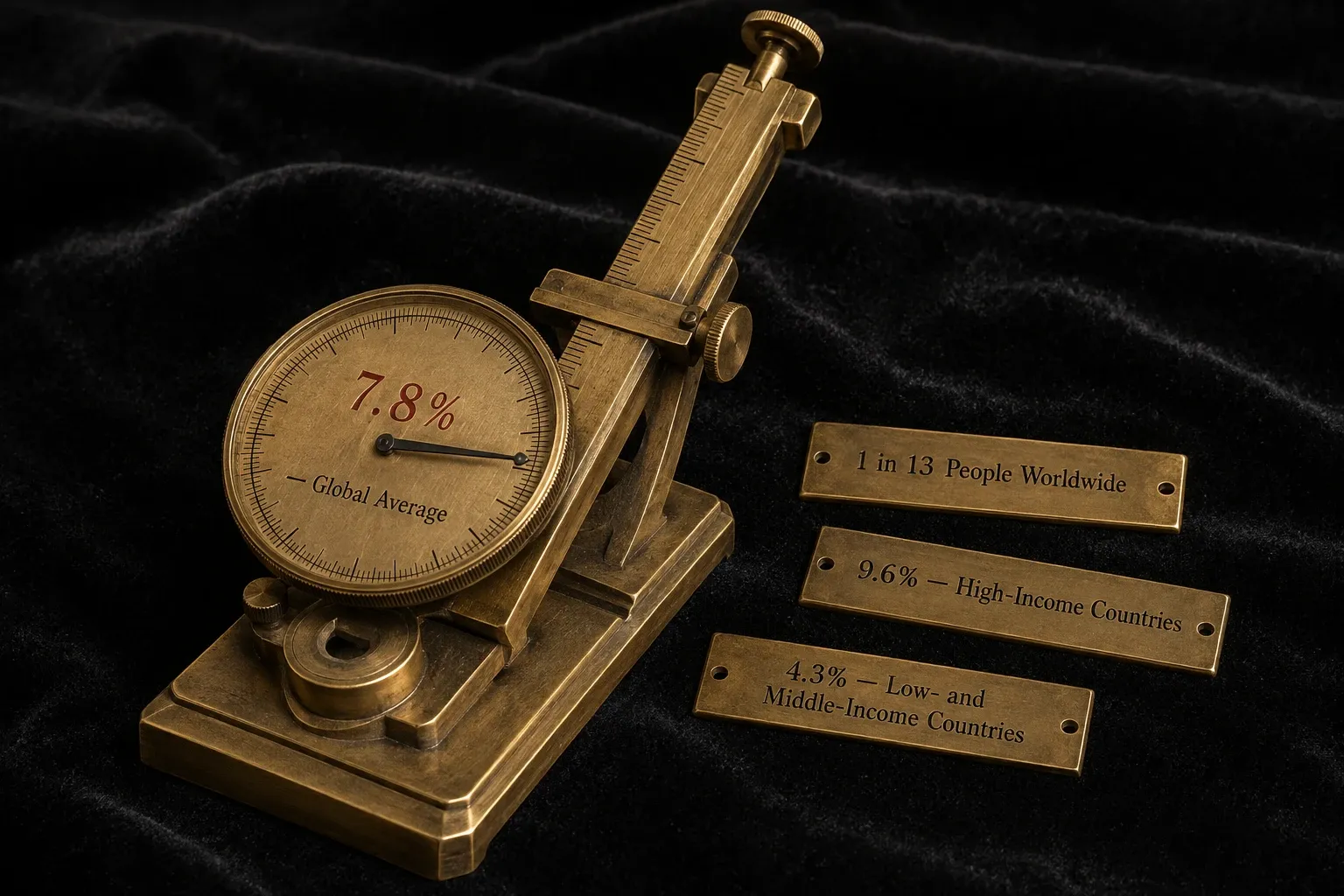
Around 7.8% of people worldwide may have a personality disorder, roughly 1 in 13 [1].
What Are the Types of Personality Disorders?
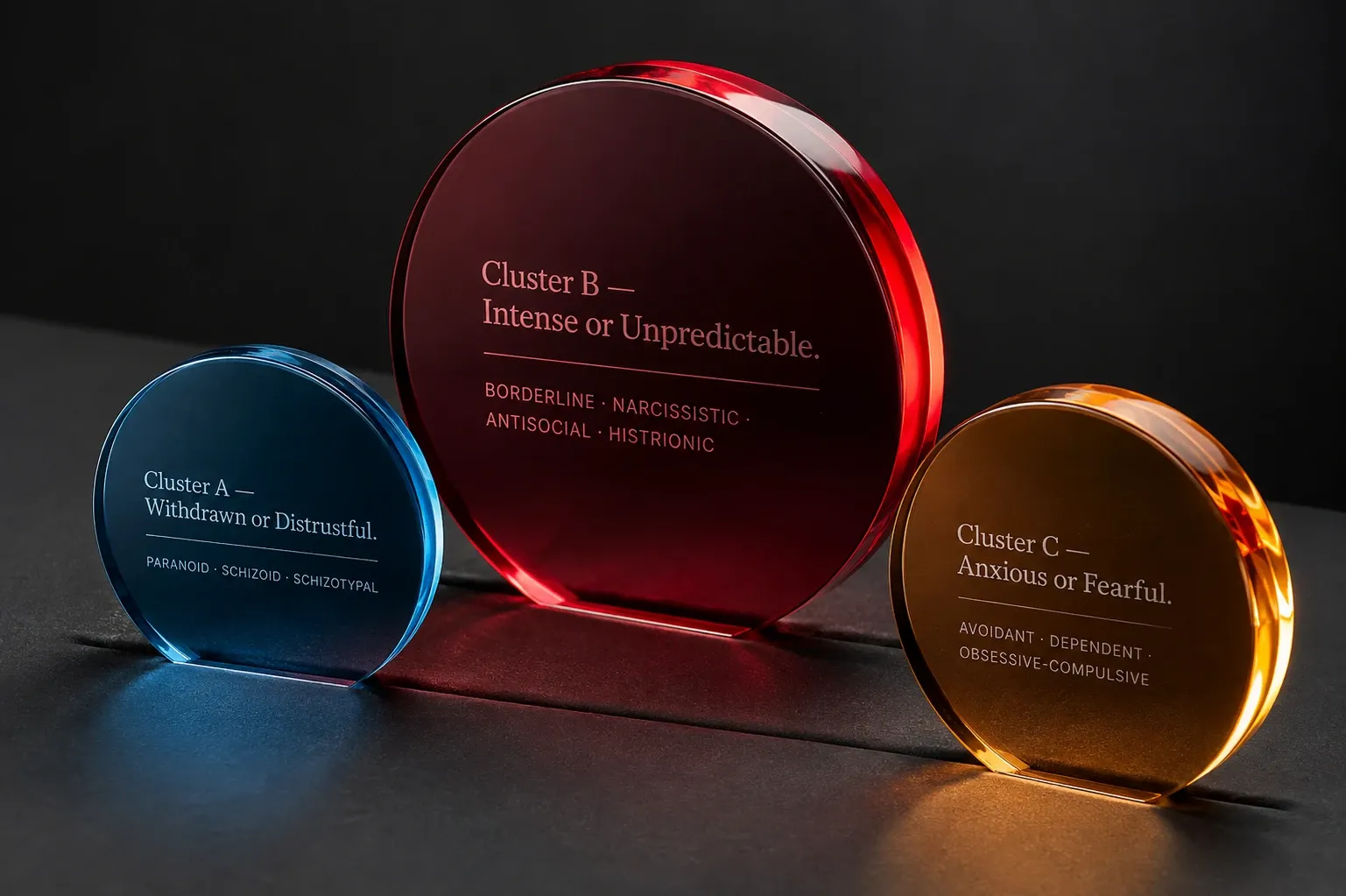
Personality disorders have traditionally been divided into three groups:
| Group | Common pattern | Types traditionally included |
|---|---|---|
| Cluster A | Distrustful or socially withdrawn | Paranoid, schizoid and schizotypal |
| Cluster B | Intense emotions or unpredictable behaviour | Borderline, narcissistic, antisocial and histrionic |
| Cluster C | Anxiety, fear or a strong need for control | Avoidant, dependent and obsessive-compulsive |
The newer ICD-11 system looks at how much a person’s difficulties affect their life and which personality traits they have, instead of putting them into one fixed category [2]. However, people still commonly use the older names.

What Do Common Personality-Disorder Labels Mean?
Narcissistic Personality Disorder
Narcissistic personality disorder is more than arrogance or selfishness. It may involve:
- A strong need for praise or admiration
- Difficulty understanding other people’s feelings
- An unstable sense of self-worth
- Strong reactions to criticism
Calling someone a “narcissist” after an argument is not a diagnosis. A person can behave selfishly or hurtfully without having a personality disorder.
Borderline Personality Disorder
Borderline personality disorder may cause intense emotions, fear of being abandoned, an uncertain sense of identity and unstable relationships.
These emotions may change quickly, especially during relationship difficulties. This differs from bipolar disorder, where mood episodes usually last for days or weeks.
Learn more about borderline personality disorder.
Antisocial Personality Disorder
Antisocial personality disorder involves a long-term pattern of ignoring other people’s rights or safety. This pattern usually begins during adolescence.
“Sociopath” and “psychopath” are widely used online and in films, but they are not formal diagnoses. Behaving badly does not automatically mean someone has antisocial personality disorder.
Obsessive-Compulsive Personality Disorder
Obsessive-compulsive personality disorder, or OCPD, involves a strong need for order, control and perfection. The person may believe their standards and behaviour are reasonable.
It is different from obsessive-compulsive disorder (OCD). In OCD, unwanted thoughts cause anxiety and lead to repeated actions or mental rituals that the person usually wants to stop.
Some symptoms of personality disorders can overlap with those of trauma-related conditions, such as difficulties managing emotions or trusting others. A qualified professional can help understand these patterns and whether more than one condition is present.
The word 'narcissist' has done real damage to understanding. These are long-standing patterns that respond to good therapy; nobody needs to accept a label to start getting better.
Can You Diagnose Someone as a Narcissist?
No. You cannot diagnose another person from their social-media posts, arguments or behaviour in one relationship.
If someone repeatedly hurts, controls or frightens you, you do not need to prove that they have a disorder before setting boundaries or leaving the relationship. Focus on how their behaviour affects you and what you need to feel safe.
Online personality tests cannot provide a reliable diagnosis. A proper assessment usually requires several detailed conversations with a mental health professional.

Allo asks
Have you ever been called (or called someone) a "narcissist" during an argument?
What Causes Personality Disorders?
There is no single cause. Possible factors include:
- Genetics and temperament
- Childhood neglect or abuse
- Unstable or unpredictable caregiving
- Difficult early relationships
- Trauma and long-term stress
- Learned ways of managing emotions or staying safe
Some patterns may have helped a person cope with difficult circumstances when they were younger but create problems later in life. Understanding the cause does not excuse harmful behaviour, but it can guide treatment.
Learn more about trauma and PTSD.
How Are Personality Disorders Diagnosed?
There is no blood test or scan for a personality disorder. A mental health professional will consider:
- How long the patterns have been present
- Whether they occur in different situations
- Their effect on relationships, work and daily life
- Other possible conditions, such as anxiety, depression or trauma
- Information about the person’s experiences and history
In India, people may first seek help for anxiety, depression or relationship problems. The longer-term personality pattern may only become clear over several appointments. This is normal because diagnosis takes time.
Can Personality Disorders Be Treated?
Yes. Personality disorders can be treated, and many people learn to manage their emotions, build healthier relationships and function better.
Therapy
Therapy is the main treatment. It may help someone:
- Understand repeated patterns
- Manage strong emotions
- Respond differently during conflict
- Develop a more stable sense of self
- Build safer and healthier relationships
Research shows that psychological treatment can reduce symptoms, particularly in borderline personality disorder [3]. The most suitable approach depends on the person and their needs.
Read about what to expect in psychotherapy.
Medication
Medication does not directly change a personality disorder. A doctor may prescribe it for related concerns such as depression, anxiety or sleep problems [4].
Do not begin, stop or change psychiatric medication without medical advice.
When Should You Seek Help?
Consider speaking to a mental health professional if:
- The same painful pattern appears in several relationships
- Strong emotions are difficult to control
- Conflict repeatedly affects work, studies or family life
- You are unsure who you are or what you want
- You recognise a harmful pattern but cannot change it
- Different people have raised similar concerns about your behaviour
- You experience depression, self-harm or suicidal thoughts
You do not need to identify the correct diagnosis before seeking help. You can begin by explaining what keeps happening and how it affects your life.
Can People With Personality Disorders Get Better?
Yes. Change may take time, but treatment can help people understand their patterns, manage emotions and develop healthier relationships.
If these difficulties are affecting your life, you can book a confidential consultation with a qualified mental health professional at Allo Health. If you are concerned about somebody else, read our guide to supporting a loved one.

Disclaimer
This blog article discusses mental health and emotional wellbeing for general educational and informational purposes only. It is not a substitute for professional advice, diagnosis, or treatment, and only a qualified mental health professional, such as a psychiatrist, psychologist, or licensed therapist, can diagnose a condition or recommend treatment. If you are struggling, please reach out to a qualified professional or someone you trust; if you are in crisis or may be at risk of harming yourself, use the crisis support resources on this page. For any decisions about your mental health, we encourage you to seek the guidance of a qualified professional.
Most Asked Questions
Can a personality disorder be cured?
"Cured" is not the useful word, but the picture is much better than the reputation suggests. Patterns soften with treatment and often with age, and many people reach a point where the pattern no longer runs their relationships. Borderline personality disorder in particular has a considerably better outlook than most people are told.
How do I know if someone in my life is a narcissist?
You cannot know, and that is not evasion. Diagnosis needs a clinician, a full history, and the person themselves. What you can assess is the behaviour and its effect on you, which is what actually matters for your decisions. Whether it has a clinical name changes nothing about whether it is acceptable.
Why do these names sound so judgemental?
Because they were built that way, and clinicians know it. That is part of why the World Health Organization moved away from the ten labels towards describing severity instead. Many services now avoid the older terms entirely, and you are entitled to ask what a clinician means by one.
Can therapy work if I do not think anything is wrong with me?
Often, yes. Very few people arrive convinced they have a personality disorder, and treatment does not require you to accept the label. It works on the specific things that are not going well, such as relationships that keep collapsing or emotions that overwhelm you.
I recognise myself in one of these. What now?
Recognising yourself in a description is a starting point, not a diagnosis, and the descriptions are broad enough that most people see something familiar. Take it to a professional rather than settling it alone, and be wary of building an identity around a label you have given yourself.
Sources
- 1.
Borderline personality disorder: a comprehensive review of diagnosis and clinical presentation, etiology, treatment, and current controversies
- 2.
Bach B, First MB. Application of the ICD-11 classification of personality disorders. BMC Psychiatry. 2018;18:351.
- 3.
Winsper C, Bilgin A, Thompson A, et al. The prevalence of personality disorders in the community: a global systematic review and meta-analysis. Journal of Personality Disorders. 2020;34(6):813-838.
- 4.
Katakis P, Schlief M, Barnett P, et al. Effectiveness of outpatient and community treatments for people with a diagnosis of 'personality disorder': systematic review and meta-analysis. BMC Psychiatry. 2023;23.
Why Should You Trust Us?
Why Should You Trust Us?
This article was written by Dr. Srishti Rastogi, who has more than 1 years of experience in the healthcare industry.
Allo has the expertise of over 50+ doctors who have treated more than 1.5 lakh patients both online and offline across 30+ clinics.
Our mission is to provide reliable, accurate, and practical health information to help you make informed decisions.
For This Article
- We referenced the UK's National Institute for Health and Care Excellence (NICE) guidance on borderline personality disorder recognition and management, so our position on medication reflects clinical practice standards rather than a general assumption.
- We drew on the peer-reviewed paper explaining the WHO's ICD-11 reclassification of personality disorders, published in BMC Psychiatry, to explain a shift almost none of the other major health sites currently cover.
- We used a global systematic review and meta-analysis across 46 studies and 21 countries to source our prevalence figures, rather than quoting a single regional estimate as though it applied everywhere.
- We were deliberate about separating clinical terms like narcissistic and antisocial personality disorder from their internet usage as insults, so the article corrects common misuse rather than reinforcing it.
- We included an India-specific section addressing how personality disorder patterns are more often first labeled by family as "difficult" or "oversensitive" than assessed clinically, reflecting real barriers to diagnosis here rather than assuming a Western clinical pathway.