Depression: Symptoms, Causes, Types, and Treatment
Written by Dr. Srishti Rastogi

Dr. Srishti Rastogi is a medical writer and healthcare professional dedicated to high-quality patient education and public health awareness. Leveraging her clinical background, she produces deeply researched, evidence-based content for digital health platforms and medical publications. Dr. Srishti’s unique dual perspective as a clinician and communicator allows her to craft content that builds trust and credibility with readers navigating sensitive health topics.
•
August 13, 2026
Our experts continually monitor the health and wellness space, and we update our articles when new information becomes available.
Quick Read
Depression is a common and treatable medical condition, not a weakness or something you can simply snap out of. It is more than ordinary sadness: a persistent low mood or loss of interest that lasts and gets in the way of daily life, often with physical symptoms too. It has many causes and several forms, and it responds well to treatment, usually talking therapy, sometimes medication decided with a doctor, and often both. If you are struggling, help is available and things can get better.
Depression is common, but it can be difficult to recognise. You may think you are simply sad, tired or unable to cope. Depression can affect how you feel, think and manage daily life, but it can improve with suitable treatment and support.
What Is Depression?
Depression is more than feeling sad for a few days. It can make you feel low, empty, numb or unusually tired. You may lose interest in things you normally enjoy, and simple tasks such as getting out of bed or replying to a message may feel difficult. When these symptoms last for at least two weeks and affect daily life, they may be signs of depression [1].
Depression can be mild, moderate or severe. You do not need to wait until life feels impossible before seeking help.
India’s National Mental Health Survey found that around one in twenty Indians experience a depressive disorder during their lifetime. However, many people who need mental healthcare do not receive it [5].

Depression vs Sadness: What’s The Difference
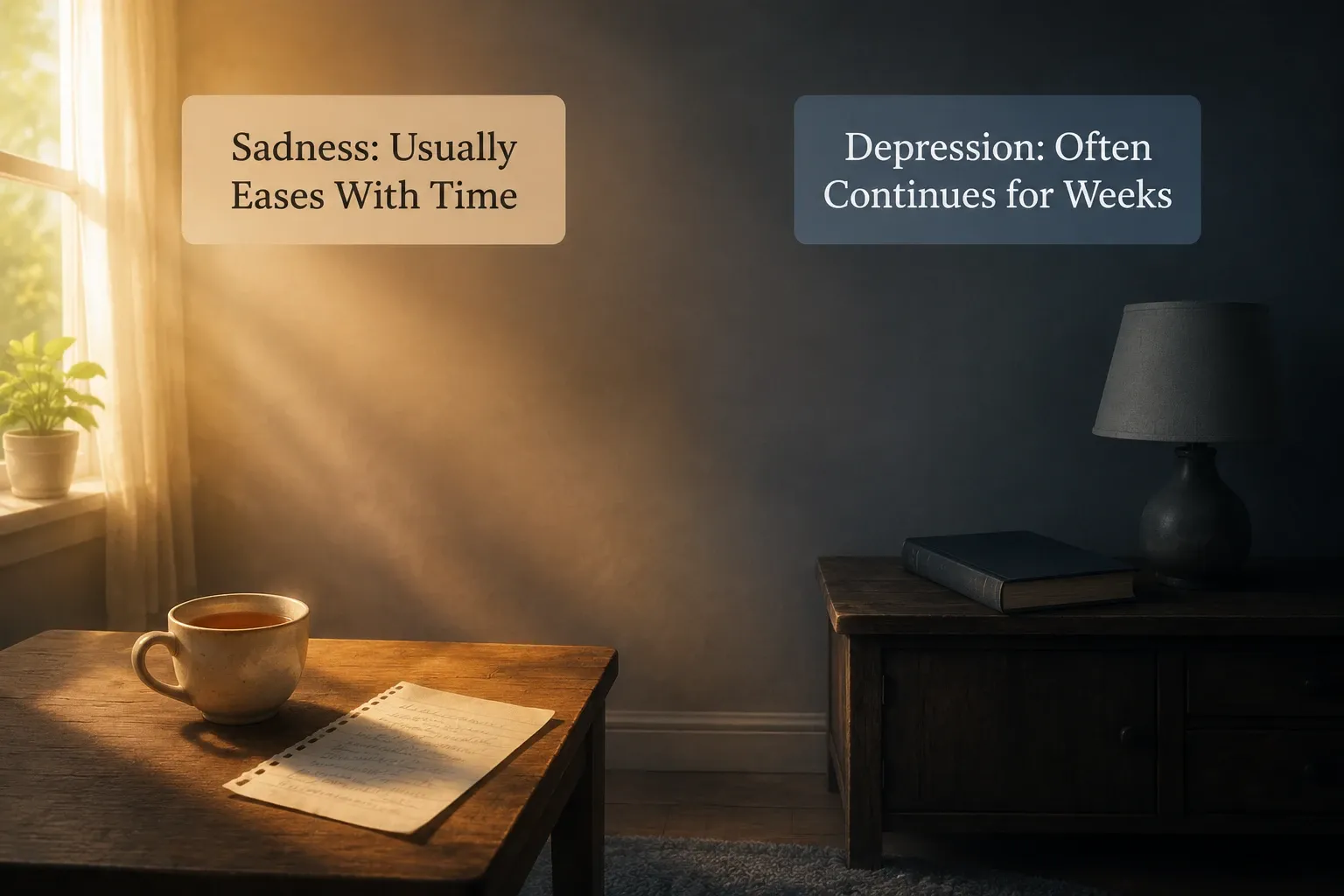
Sadness usually becomes easier with time. Depression lasts longer and has a greater effect on daily life [2].
| Sadness | Depression |
|---|---|
| Often has a clear reason | May or may not have a clear cause |
| Usually eases with time | Often continues for at least two weeks |
| You can usually still enjoy some things | Interest and enjoyment may reduce greatly |
| Daily life is usually manageable | Work, relationships or self-care may become difficult |
What Are the Symptoms of Depression?
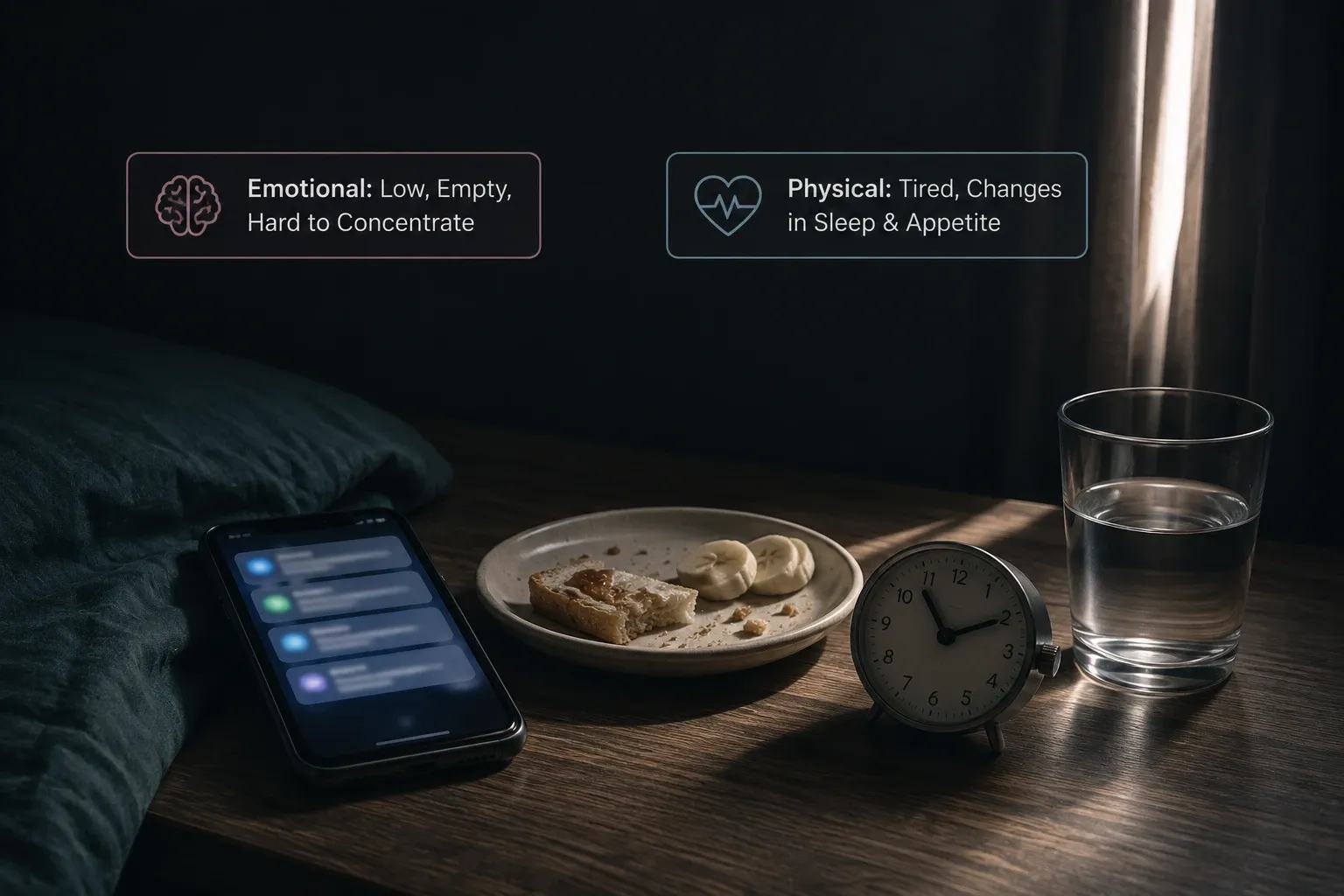
Depression can affect your emotions, body and behaviour.
Emotional and Mental Symptoms
- Feeling low, empty, numb or unusually irritable
- Losing interest in activities you normally enjoy
- Feeling hopeless, guilty or worthless
- Finding it difficult to concentrate or make decisions
- Thinking about death or suicide
Physical and Behavioural Symptoms
- Feeling tired even after resting
- Sleeping or eating more or less than usual
- Losing or gaining weight
- Experiencing unexplained aches or pains
- Avoiding people and activities
- Struggling with work, studies or everyday tasks
- Moving or speaking more slowly than usual
Depression may look different at different ages. Teenagers may become irritable, withdraw from others or struggle at school. Older adults may notice tiredness, body pain, memory problems or loss of interest rather than obvious sadness.
In India, some people first seek help for tiredness, headaches, body pain, weakness or stomach problems [6]. These symptoms can have several causes, so a doctor may check both your physical and mental health.


Allo asks
What's closest to how you've been feeling lately?
What Are the Types of Depression?
Common types include:
- Major depressive disorder: Symptoms affect daily life for at least two weeks.
- Persistent depressive disorder: Depression continues for two years or longer [3].
- Seasonal affective disorder: Depression returns during a particular season.
- Depression during or after pregnancy: Symptoms begin during pregnancy or after childbirth. Read about pregnancy and post-delivery mental health.
- Bipolar depression: Depressive episodes occur as part of bipolar disorder.
“High-functioning depression” is not an official diagnosis. The phrase describes someone who continues working, studying or caring for others while struggling privately.
What Causes Depression?
Depression usually develops through a combination of factors, including:
- Family history
- Trauma, grief or difficult experiences
- Long-term stress
- Loneliness or lack of support
- Family or relationship problems
- Financial or workplace pressure
- Caregiving responsibilities
- Physical illness or ongoing pain
- Alcohol, drugs or certain medicines
Sometimes there is no obvious cause. You do not need to understand exactly why it started before seeking help.
Depression is sometimes described as a “chemical imbalance,” but this is too simple. Your biology, health, experiences, relationships and surroundings can all play a part.
So many patients tell me they thought they were just tired, or just going through a phase. Depression doesn't always look dramatic, sometimes it looks like everything feeling a little heavier than it should. If that's been going on for weeks, it's worth naming it.
How Is Depression Diagnosed?
There is no single test for depression. A qualified professional will ask about your symptoms, how long they have lasted and how they affect your life.
A doctor may also check for conditions such as anaemia or thyroid problems, which can cause similar symptoms. Online depression tests may help you notice possible signs, but they cannot confirm a diagnosis.
Tell the professional if you have experienced unusually high energy, needed very little sleep or acted impulsively. These may be signs of bipolar disorder, which needs a different treatment approach.
How Is Depression Treated?
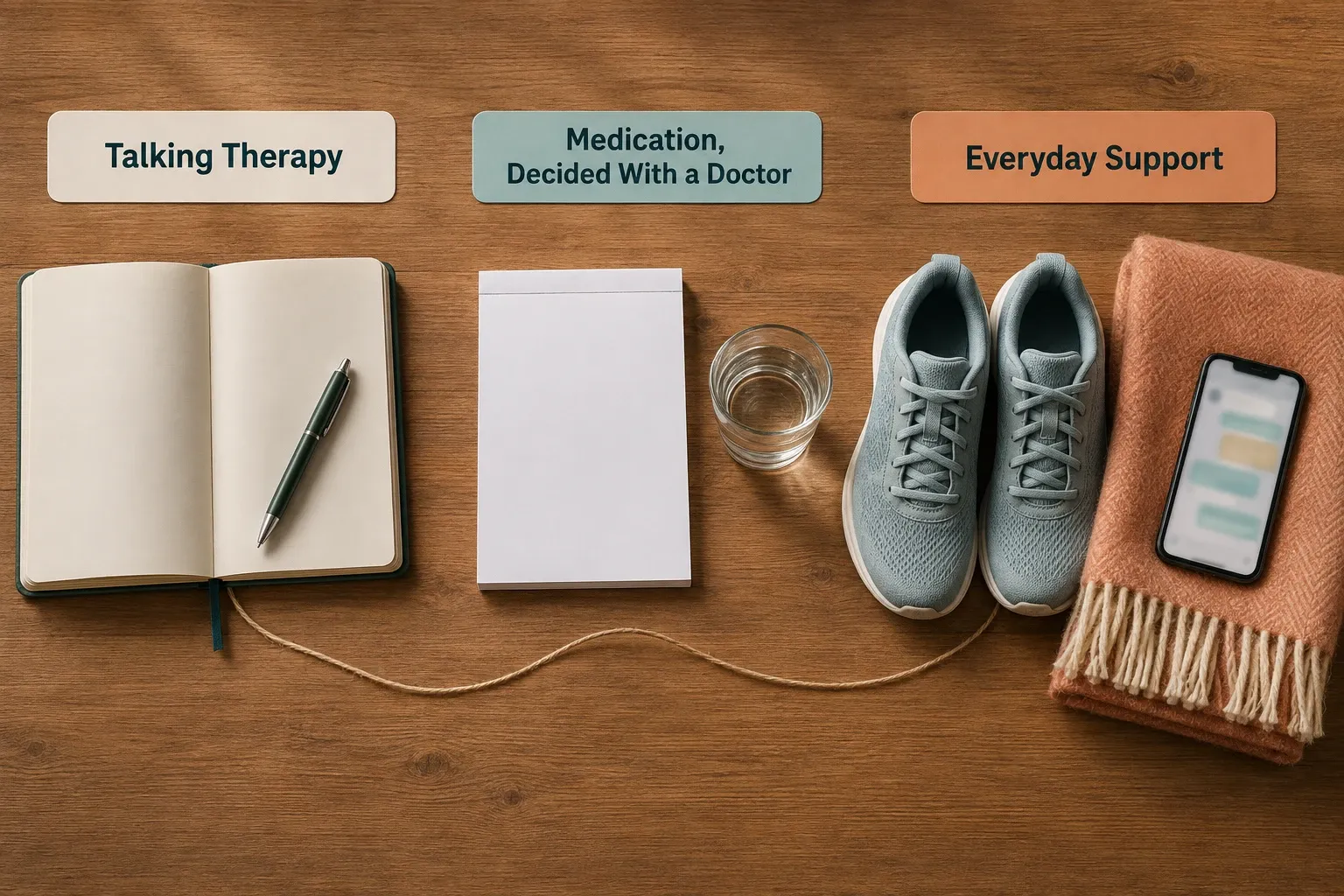
Treatment depends on your symptoms, health and preferences. Milder depression may be treated with therapy and guided self-help. Moderate or severe depression may require therapy, medication or both.
Talking Therapy
Therapy can help you understand and manage the thoughts, feelings and behaviours linked to depression.
Common approaches include:
- Cognitive behavioural therapy (CBT): Helps you recognise unhelpful patterns and respond differently.
- Behavioural activation: Helps you gradually return to meaningful activities when motivation is low [4].
Learn what to expect in psychotherapy or read about the difference between a psychiatrist, psychologist and therapist.
Medication
A doctor may recommend antidepressants, especially for moderate or severe depression.
Antidepressants can take time to work and may cause side effects. Do not start, stop or change your medicine without medical advice.
Everyday Support
Small actions can support recovery, although they do not replace professional care:
- Follow a simple routine
- Eat and sleep at regular times
- Stay connected with someone you trust
- Take a short walk or do another manageable activity
- Reduce or avoid alcohol
Start with what feels possible today. Taking a shower, sitting outside briefly or messaging someone can be a useful first step.
If treatment is not helping enough, tell your clinician. The plan may need more time, an adjustment or a different approach.
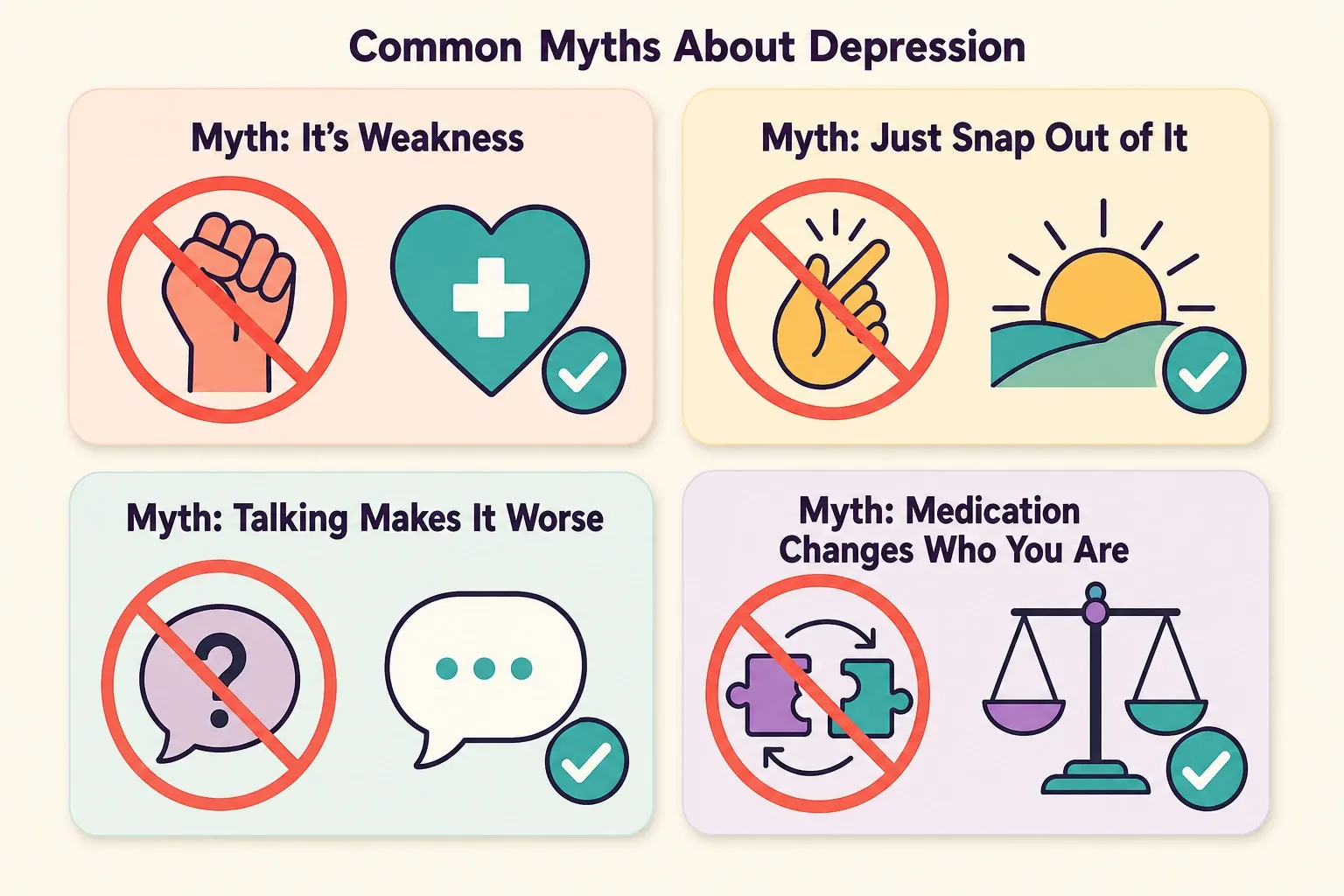
Common Myths About Depression
| Myth | What is true |
|---|---|
| “Depression is weakness.” | Depression is a health condition, not a character flaw. |
| “You can snap out of it.” | Depression affects energy and motivation. A person may need support and treatment. |
| “Talking about suicide makes it worse.” | Asking directly does not give someone the idea. It can help them speak openly and receive support [7]. |
| “Antidepressants change who you are.” | Antidepressants are used to reduce symptoms. Discuss any concerns or side effects with your doctor. |
When Should You Seek Help?
Speak to a mental health professional if your symptoms:
- Have lasted for at least two weeks
- Affect your work, studies, relationships or self-care
- Make everyday activities difficult
- Continue to become worse
Fear of judgement or being called “weak” or “pagal” can stop people from seeking care. You do not need to wait for a crisis.
Depression may occur alongside anxiety. It may also be difficult to distinguish from grief after a loss. A professional can help you understand what you are experiencing.
When to Get Urgent Help
If you are thinking about suicide, may harm yourself or cannot stay safe:
- Tell someone you trust and ask them to stay with you.
- Call 112, India’s emergency number.
- Call Tele-MANAS at 14416 or 1-800-89-14416 for free, 24-hour mental health support.
- Go to the nearest hospital emergency department.
- Do not remain alone.
See our crisis support and helplines page for more options. If you are worried about someone else, read our guide to supporting a loved one.
Can Depression Get Better?
Yes. Depression is treatable, although recovery can take time. If the first approach does not help enough, another treatment or combination may work better.
If you feel ready, you can book a confidential consultation with a mental health professional at Allo Health.

Disclaimer
This blog article discusses mental health and emotional wellbeing for general educational and informational purposes only. It is not a substitute for professional advice, diagnosis, or treatment, and only a qualified mental health professional, such as a psychiatrist, psychologist, or licensed therapist, can diagnose a condition or recommend treatment. If you are struggling, please reach out to a qualified professional or someone you trust; if you are in crisis or may be at risk of harming yourself, use the crisis support resources on this page. For any decisions about your mental health, we encourage you to seek the guidance of a qualified professional.
Most Asked Questions
Can depression be cured?
Depression responds well to treatment, and most people improve or recover with the right support. Talking therapies such as CBT and behavioural activation help many people, medication is an option used with a doctor, and everyday support helps too. How much and how quickly it helps varies from person to person, and setbacks do not mean it will not work.
How do I help someone who is depressed?
Listen without judgement, take them seriously, encourage them gently toward professional help, and stay in touch. If they mention suicide or seem unsafe, treat it seriously and help them reach a professional or a helpline now rather than waiting.
Why do I feel numb rather than sad?
Depression is not always sadness. Many people describe feeling empty, flat, or numb, or lose interest and pleasure in things (anhedonia) rather than feeling actively low. Physical tiredness and body aches are common too. These are recognised parts of depression, not a sign that it "isn't really depression."
Sources
- 1.
National Institute of Mental Health. Depression.
- 2.
NHS. Depression in adults.
- 3.
Cleveland Clinic. Persistent Depressive Disorder (Dysthymia).
- 4.
National Institute for Health and Care Research (NIHR). Simpler, cheaper therapy (behavioural activation) can be as good as CBT for treating depression.
- 5.
Gururaj G, Varghese M, Benegal V, et al. National Mental Health Survey of India, 2015–16. NIMHANS, Bengaluru.
- 6.
Grover S, Kumar V, Chakrabarti S, et al. IPS multicentric study: Functional somatic symptoms in depression. Indian Journal of Psychiatry. 2013;55(1):31–40.
- 7.
Dazzi T, Gribble R, Wessely S, Fear NT. Does asking about suicide and related behaviours induce suicidal ideation? What is the evidence? Psychological Medicine. 2014;44(16):3361–3363.
Why Should You Trust Us?
Why Should You Trust Us?
This article was written by Dr. Srishti Rastogi, who has more than 1 years of experience in the healthcare industry.
Allo has the expertise of over 50+ doctors who have treated more than 1.5 lakh patients both online and offline across 30+ clinics.
Our mission is to provide reliable, accurate, and practical health information to help you make informed decisions.
For This Article
- We drew the clinical definition and duration criteria for depression from established diagnostic guidance, so the distinction between everyday sadness and depression reflects recognised clinical standards, not informal opinion.
- We referenced India's National Mental Health Survey to ground our prevalence figures and treatment-gap claims in actual national data, rather than assumptions about how common depression is in India.
- We looked at how depression can present physically, through tiredness, body pain, or stomach problems, especially relevant to Indian readers who often first seek help for physical symptoms rather than naming a mental health concern directly.
- We referenced evidence-based treatment approaches, including cognitive behavioural therapy and behavioural activation, so the therapy section reflects what clinicians actually use rather than generic self-help advice.
- We addressed common myths about depression individually, including the harmful misconception that asking about suicide increases risk, so readers get accurate information rather than assumptions repeated from hearsay.
- We were careful to distinguish depression from related conditions like bipolar disorder and grief, so readers get a clearer picture of when a different kind of professional assessment may be needed.
- We included current, verified crisis helpline numbers for India, so readers who need urgent support are directed to real, working resources rather than outdated information.