Sleeping Pills: What They Do, Why They Are Short-Term and How to Stop Safely
Written by Dr. Srishti Rastogi

Dr. Srishti Rastogi is a medical writer and healthcare professional dedicated to high-quality patient education and public health awareness. Leveraging her clinical background, she produces deeply researched, evidence-based content for digital health platforms and medical publications. Dr. Srishti’s unique dual perspective as a clinician and communicator allows her to craft content that builds trust and credibility with readers navigating sensitive health topics.
•
October 5, 2026
Our experts continually monitor the health and wellness space, and we update our articles when new information becomes available.

Quick Read
Sleeping pills can help you sleep for a short stretch, but they do not treat what is keeping you awake. Guidelines in India and abroad put a talking therapy for insomnia first and keep pills for short periods. The main risks are next-day drowsiness, falls, memory problems and dependence. They are prescription-only in India, and they should not be mixed with alcohol or stopped suddenly on your own.
If you or someone you know is in crisis, help is available right now. You are not alone, and things can get better with the right support.
If you have been prescribed a sleeping pill, you may be wondering how quickly it will work, how long you can take it and whether you may become dependent on it.
This article explains the main types of sleeping pills, their possible side effects and how they are stopped safely.
What Are Sleeping Pills?
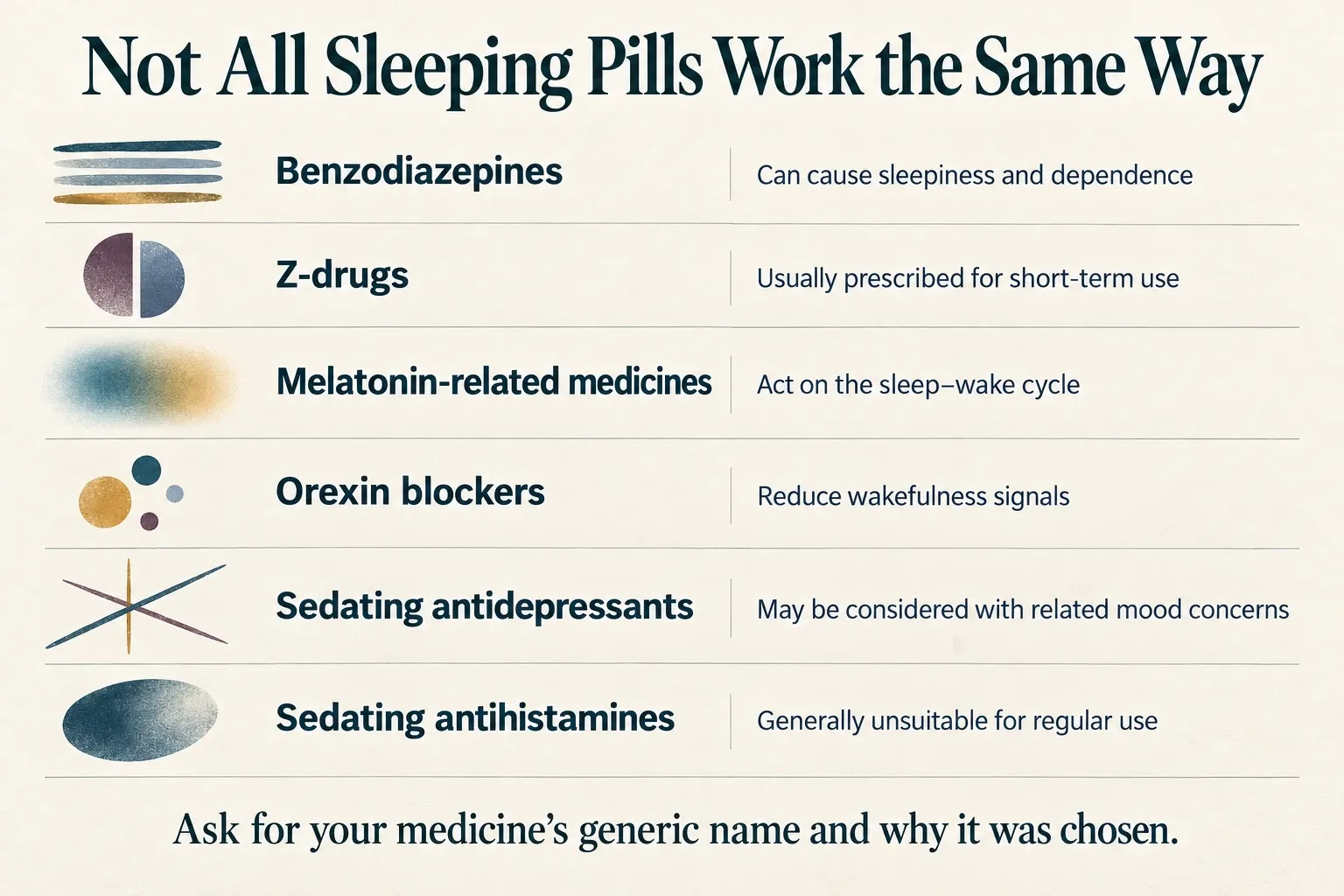
“Sleeping pill”, also called neend ki goli, is a general term for medicines that may help you fall asleep or stay asleep. But not all sleeping pills work in the same way.
| Type | Examples | What to know |
|---|---|---|
| Benzodiazepines | Nitrazepam, lorazepam | Can make you sleepy quickly but may cause dependence |
| Z-drugs | Zolpidem, zopiclone, eszopiclone | Work similarly to benzodiazepines and are usually used for a short time |
| Melatonin-related medicines | Melatonin, ramelteon | Act on the body’s sleep-wake cycle |
| Orexin blockers | Suvorexant | Reduce the brain signals that help keep you awake |
| Sedating antidepressants | Trazodone, mirtazapine | May be considered when sleep problems occur with depression or anxiety |
| Sedating antihistamines | Doxylamine, diphenhydramine | Allergy medicines that cause sleepiness but are not suitable for regular use |
Ask your doctor for the generic name of your medicine and why it was chosen. Do not take a tablet simply because it helped a friend or family member sleep.

When Are Sleeping Pills Prescribed?
A doctor may prescribe a sleeping pill when insomnia is severe, is affecting daily functioning or has started after a short-term event such as illness, hospitalisation, grief or a major personal crisis. The medicine may help you sleep while the underlying problem is being addressed. However, it is generally not the first treatment for insomnia that has continued for several months.
Indian and international guidelines recommend non-medicine treatments before or alongside sleeping pills [2][3]. The most effective long-term treatment is usually cognitive behavioural therapy for insomnia, also called CBT-I. CBT-I helps you change the habits, routines and thoughts that may be keeping the sleep problem going. Learn more about insomnia and its treatment.

Allo asks
What worries you most about taking a sleeping pill?
How Long Can You Take Sleeping Pills?
The answer depends on the medicine and your health, but many sleeping pills are intended for a few days or weeks rather than regular long-term use [3][4]. With some medicines, your body gradually becomes used to the dose. The tablet may feel less effective, and taking more may seem tempting. Increasing the dose without medical advice can be dangerous. Longer treatment may sometimes be considered when:
- Insomnia is severe or persistent
- CBT-I is not available
- Other treatments have not helped
- A specialist believes that the benefits outweigh the risks
If you have been taking a sleeping pill for several months, do not panic and do not stop it suddenly. Ask your doctor to review whether it is still helping and whether the dose can be reduced safely.

Do Sleeping Pills Cause Dependence?
Some can. Physical dependence means your body has adjusted to the medicine. If you suddenly stop it, you may develop withdrawal symptoms or have much worse sleep for a while. Dependence can happen even when you take the medicine exactly as prescribed. It does not automatically mean that you are addicted.
Addiction involves cravings, loss of control and continuing to use a medicine despite harm. Benzodiazepines and Z-drugs can cause dependence. The risk may increase with regular use, higher doses and longer treatment [6][8]. Read more about the difference between dependence and addiction in our guide to anti-anxiety medication.
What Side Effects Can Sleeping Pills Cause?
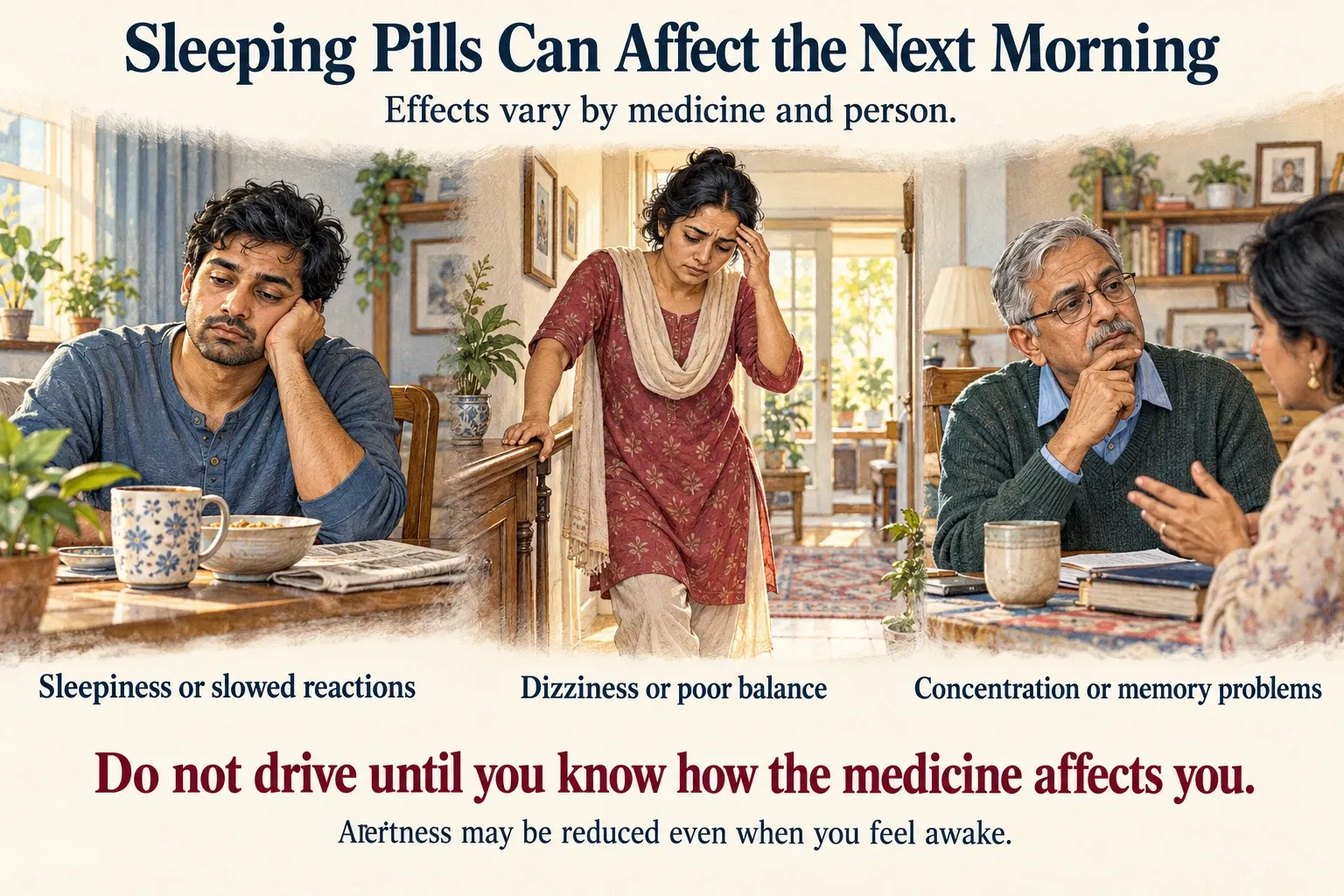
Side effects vary by medicine, but common problems include:
- Feeling sleepy or slow the next morning
- Dizziness or poor balance
- Difficulty concentrating
- Memory problems
- Headache or nausea
- Confusion, particularly in older adults
Do not drive, operate machinery or do work that requires full concentration until you know how the medicine affects you. Some sleeping pills can reduce alertness the next morning even if you feel awake [1].
Sleepwalking and Other Unusual Behaviour
Some Z-drugs have been linked to activities performed while a person is not fully awake. These can include walking, cooking, eating or driving, followed by having no memory of the event [1][7]. If this happens:
- Stop taking the medicine
- Contact your doctor immediately
- Do not drive
- Ask someone you trust to stay with you if necessary
If you need a sleeping pill longer than planned, tell your doctor. You can review what is keeping you awake, whether the medicine is still helping and how to reduce it safely if that is the right next step.
Are Sleeping Pills Riskier for Older Adults?
Yes. Older adults may be more sensitive to sedating medicines.
Sleeping pills can increase the risk of:
- Falls and fractures
- Confusion
- Memory problems
- Daytime sleepiness
- Difficulty maintaining balance
A review involving adults over 60 found that the benefits were modest and side effects were relatively common [5]. If an older family member takes a sleeping pill regularly, ask their doctor to review whether it is still needed. Never reduce or remove it without medical guidance.
What Should You Avoid While Taking Sleeping Pills?
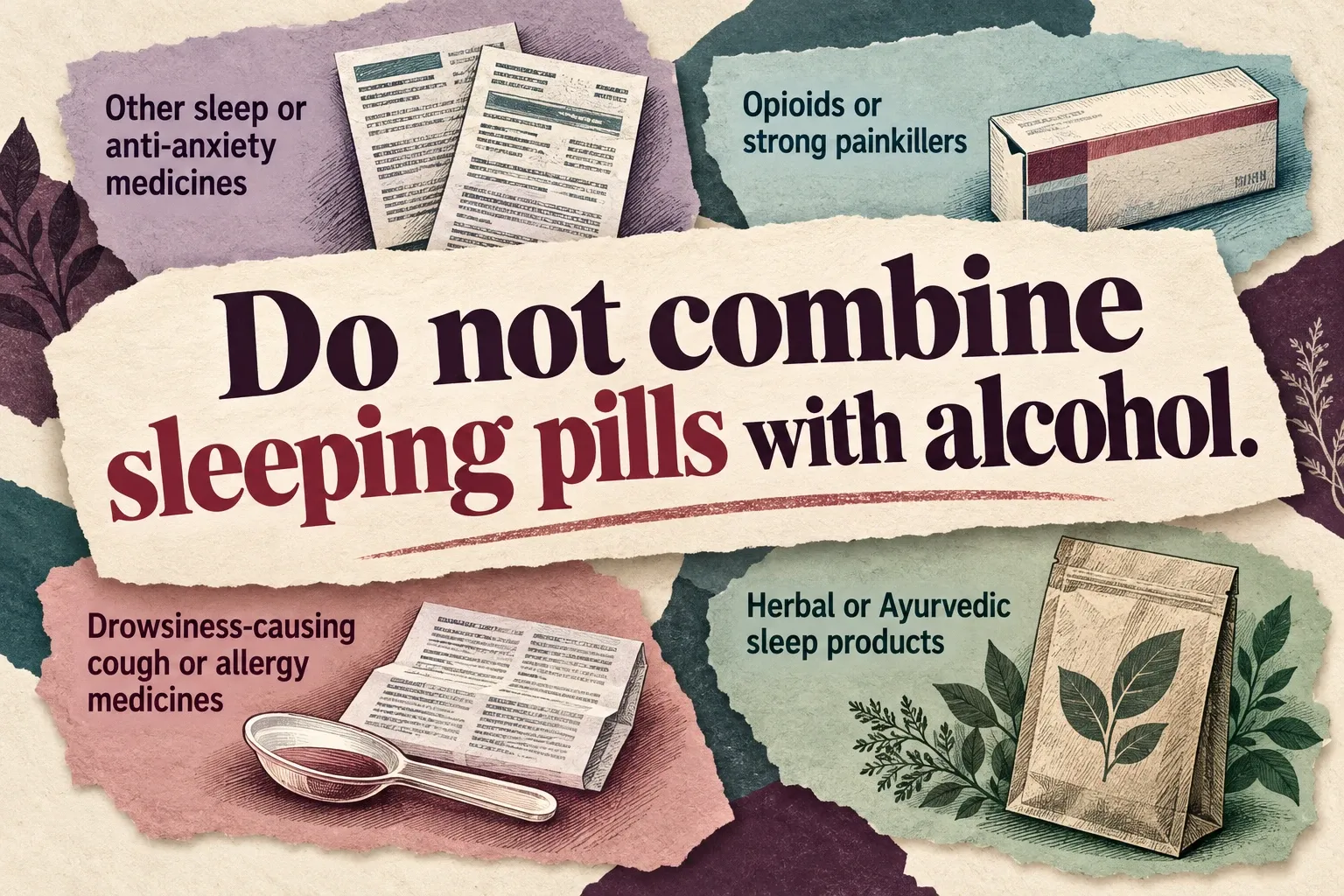
Do not combine a sleeping pill with alcohol. Both can slow brain activity and make you dangerously sleepy. In severe cases, breathing may become slow or difficult. Also check with a doctor or pharmacist before combining it with:
- Another sleeping medicine
- Anti-anxiety medicines
- Opioid or strong painkillers
- Cough medicines that cause drowsiness
- Sedating antihistamines
- Herbal or Ayurvedic sleep products
- Other medicines that make you sleepy
Tell your doctor about all prescription medicines, supplements and substances you use. If alcohol is becoming difficult to control, read about alcohol and substance use.
Are Melatonin and Pharmacy Sleep Aids Safe?
“Natural” or available without a prescription does not always mean suitable for regular use. Melatonin may help in certain situations involving the body clock, but evidence does not support using it routinely for all cases of long-term insomnia [2][9]. Antihistamine-based sleep aids may cause:
- Next-day sleepiness
- Dry mouth
- Constipation
- Confusion
- Difficulty passing urine
People may also become tolerant to their sedating effect. Pharmacy sleep aids are generally intended for short-term use [4]. Tell your doctor if you use melatonin, antihistamines, Ayurvedic products, homeopathic remedies or herbal sleep supplements. Combining several sedating products can increase the risk of side effects.
How Do You Stop Sleeping Pills Safely?
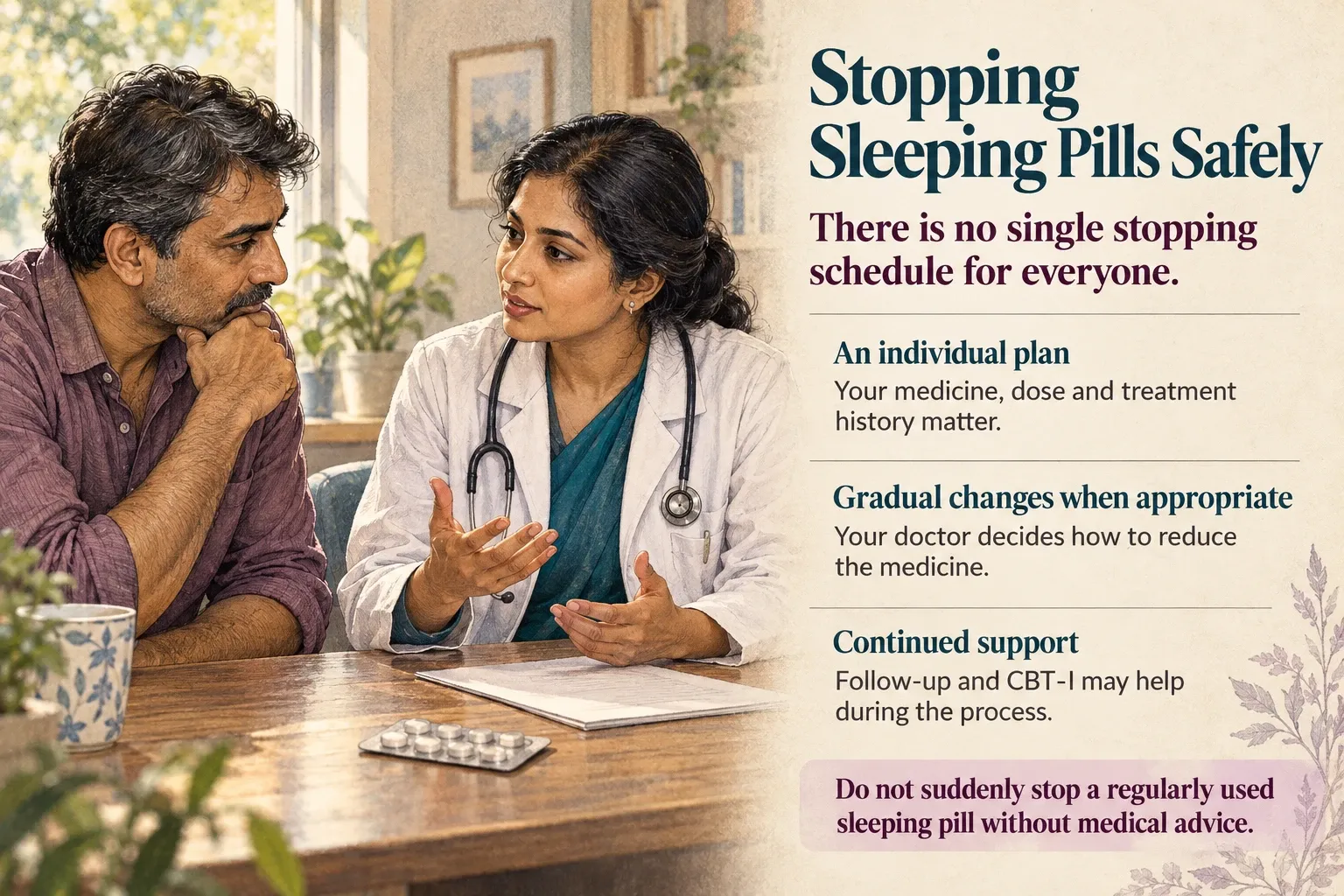
Do not stop a regularly used sleeping pill suddenly unless a doctor tells you to. Benzodiazepines and some other sleep medicines are usually reduced gradually. The plan depends on:
- Which medicine you take
- Your current dose
- How long you have taken it
- Your physical and mental health
- Whether you have experienced withdrawal before
Reducing the dose too quickly may cause:
- Rebound insomnia
- Anxiety or restlessness
- Sweating or shaking
- Nausea
- Confusion
- Seizures in severe cases
There is no single stopping schedule that is safe for everyone [8]. Your doctor may reduce the dose in stages and monitor how you respond. Sleep may temporarily become worse while your body adjusts. This does not necessarily mean you will never sleep without the medicine. CBT-I and consistent [sleep habits]({{INTERNAL_LINK: Sleep Hygiene}}) can support the process.
Can You Buy Sleeping Pills Without a Prescription in India?
Prescription sleeping pills should only be taken after a medical assessment. Some benzodiazepines and similar medicines are more strictly controlled because of their dependence and misuse risks. Do not buy prescription sleeping pills from an unverified website, take loose tablets from a chemist or use someone else’s prescription.
If you already take one, keep a photograph of the prescription and bring the medicine strip to appointments. This helps the doctor check the exact medicine, strength and instructions.
What Should You Ask Your Doctor?
Ask these questions before starting or continuing a sleeping pill:
- What is the generic name of this medicine?
- Why has it been prescribed for me?
- How and when should I take it?
- How long is it intended to be used?
- What side effects should I watch for?
- Can it cause dependence?
- What medicines or substances should I avoid?
- What is the plan for reducing or stopping it?
- What should I do if I miss a dose?
If poor sleep continues, ask whether CBT-I or another treatment may help. You can also read what to expect in therapy.
If you would like help understanding your sleep problem or reviewing treatment options, you can book a confidential consultation with a mental health professional at Allo Health.

Disclaimer
This blog article discusses mental health and emotional wellbeing for general educational and informational purposes only. It is not a substitute for professional advice, diagnosis, or treatment, and only a qualified mental health professional, such as a psychiatrist, psychologist, or licensed therapist, can diagnose a condition or recommend treatment. If you are struggling, please reach out to a qualified professional or someone you trust; if you are in crisis or may be at risk of harming yourself, use the crisis support resources on this page. For any decisions about your mental health, we encourage you to seek the guidance of a qualified professional.
Most Asked Questions
How quickly does a sleeping pill work?
Most start working within 20 to 30 minutes, and melatonin takes longer [6]. That is why it is safest to take one when you are already in or next to your bed.
Is it safe to take a sleeping pill every night?
For most people, guidelines keep them to short periods. India's guidelines note that one group has been studied for up to six months without major harm, and allow longer use under a doctor where therapy for insomnia is not available [2]. Nightly use is a plan to agree with your doctor, not a habit to drift into.
Can I take a sleeping pill that was prescribed to someone in my family?
No. The dose, the group and the safety checks were chosen for them, not for you. Health guidance is clear that sleeping pills should not be shared [6].
Are sleeping pills riskier for older adults?
Yes. In people over 60, side effects such as daytime tiredness and confusion were several times more common on sleeping pills than on a dummy tablet [5]. Falls are the main worry. An older relative on one should have it reviewed regularly.
My antidepressant makes me sleepy. Is it a sleeping pill?
Not necessarily. Many medicines for mental health cause drowsiness as a side effect. Take it the way your doctor prescribed, and do not use it for sleep unless your doctor has said to [6].
Sources
- 1.
US Food and Drug Administration. Taking Z-drugs for Insomnia? Know the Risks.
- 2.
Gupta R, et al. Clinical Practice Guidelines for Sleep Disorders. Indian Journal of Psychiatry. 2017;59(Suppl 1)–S138.
- 3.
National Institute for Health and Care Excellence. Guidance on the Use of Zaleplon, Zolpidem and Zopiclone for the Short-Term Management of Insomnia.
- 4.
National Health Service. Insomnia.
- 5.
Glass J, Lanctôt KL, Herrmann N, Sproule BA, Busto UE. Sedative Hypnotics in Older People With Insomnia: Meta-analysis of Risks and Benefits. BMJ. 2005;331:1169.
- 6.
Healthdirect Australia. Safe Use of Sleeping Pills.
- 7.
US Food and Drug Administration. Certain Prescription Insomnia Medicines: New Boxed Warning Due to the Risk of Serious Injuries.
- 8.
US Food and Drug Administration. FDA Requiring Boxed Warning Updated to Improve Safe Use of the Benzodiazepine Drug Class.
- 9.
Sateia MJ, Buysse DJ, Krystal AD, Neubauer DN, Heald JL. Clinical Practice Guideline for the Pharmacologic Treatment of Chronic Insomnia in Adults. Journal of Clinical Sleep Medicine. 2017;13(2):307–349.
Why Should You Trust Us?
Why Should You Trust Us?
This article was written by Dr. Srishti Rastogi, who has more than 1 years of experience in the healthcare industry.
Allo has the expertise of over 50+ doctors who have treated more than 1.5 lakh patients both online and offline across 30+ clinics.
Our mission is to provide reliable, accurate, and practical health information to help you make informed decisions.
For This Article
- This article draws on sleep treatment guidance from the Indian Psychiatric Society, NICE and the NHS, with direct links to the sources in the references.
- It explains what different sleeping medicines do, because advice for a prescribed benzodiazepine may differ from advice for melatonin or an antihistamine bought at a pharmacy.
- It covers the questions readers need to act on: how long to take a medicine, what to avoid while taking it, which side effects need attention and how to ask for help stopping it.
- It includes practical concerns for readers in India, such as sharing tablets within a family, buying sleep aids from a chemist and seeking help when CBT for insomnia is hard to access.
- The article does not recommend a brand, dose or stopping schedule. Those decisions need a doctor who knows the person’s medicines and health history.