Sexual Side Effects of Psychiatric Medicines: What Can Help
Written by Dr. Srishti Rastogi

Dr. Srishti Rastogi is a medical writer and healthcare professional dedicated to high-quality patient education and public health awareness. Leveraging her clinical background, she produces deeply researched, evidence-based content for digital health platforms and medical publications. Dr. Srishti’s unique dual perspective as a clinician and communicator allows her to craft content that builds trust and credibility with readers navigating sensitive health topics.
•
October 6, 2026
Our experts continually monitor the health and wellness space, and we update our articles when new information becomes available.

Quick Read
Many psychiatric medicines can affect your sex life, most often antidepressants and some antipsychotics. The usual changes are lower desire, trouble with erections or arousal, and delayed or absent orgasm. These side effects are common and often go unreported, and there are several ways to manage them. Options include waiting, lowering the dose, switching medicine or adding a treatment. Don't stop or skip your medicine on your own. Tell your doctor, who can change the plan safely.
If you or someone you know is in crisis, help is available right now. You are not alone, and things can get better with the right support.
Changes in your sex life can happen after starting some psychiatric medicines. You may notice less interest in sex, trouble getting aroused, erection problems or changes in orgasm. These problems can feel awkward to talk about. You may also worry that your doctor will ask you to stop a medicine that is helping your mental health.
But you do not have to deal with the problem silently. Your doctor can help work out whether the medicine is causing it and what can be changed safely.

Allo asks
Have you noticed a change in your sex life since starting a psychiatric medicine?
Which Psychiatric Medicines Can Affect Your Sex Life?
Several types of psychiatric medicines can cause sexual side effects. The risk depends on the medicine, the dose and the person taking it.
Antidepressants
Antidepressants are one of the medicine groups most often linked with sexual side effects. SSRIs and SNRIs, such as sertraline, escitalopram and venlafaxine, may cause problems such as:
- less interest in sex
- difficulty getting or keeping an erection
- difficulty becoming aroused
- delayed ejaculation
- difficulty reaching orgasm
In a study of 1,022 people whose sexual function was normal before treatment, 59% developed a sexual problem while taking an antidepressant [1].

If your main concern is erection problems while taking an antidepressant, read our guide to antidepressants and erectile dysfunction.
Antipsychotics
Some antipsychotics can also affect your sex life. They may lower sexual desire or cause problems with erections, arousal or orgasm. Some antipsychotics raise a hormone called prolactin, which can affect sexual function.
The risk is not the same with every antipsychotic [2]. You can learn more about this group in our guide to antipsychotics.
Mood Stabilisers and Anti-Anxiety Medicines
Sexual side effects have also been reported with some mood stabilisers and anti-anxiety medicines, including benzodiazepines [5]. There is less research on these medicines than on antidepressants and antipsychotics.

Not everyone taking psychiatric medicine will have sexual side effects. Two people taking the same medicine may have very different experiences.
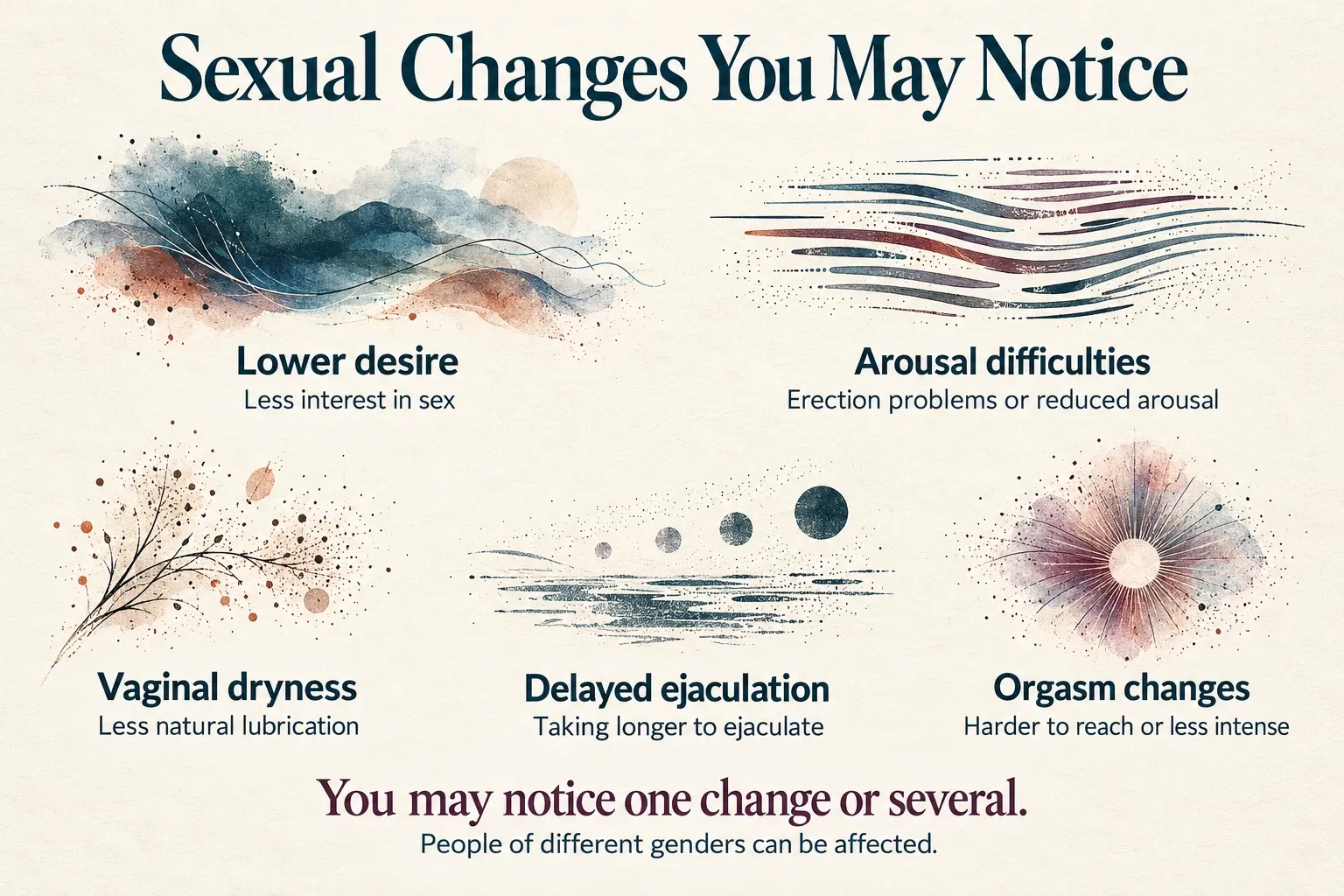
What Sexual Side Effects Can Psychiatric Medicines Cause?
The changes are not always about erections. Psychiatric medicines can affect different parts of your sex life. You may notice:
- less interest in sex
- difficulty getting or keeping an erection
- less sexual arousal
- vaginal dryness
- delayed ejaculation
- difficulty reaching orgasm
- orgasms that feel weaker than before
You may have one of these problems or several. Women can experience sexual side effects too. In a study from Lucknow, researchers looked at 50 women taking escitalopram whose depression had improved. Half had sexual difficulties. Low sexual desire was the most common problem [3].
Rarely, some medicines can cause a painful erection that lasts for hours and does not go away. This needs urgent medical care.
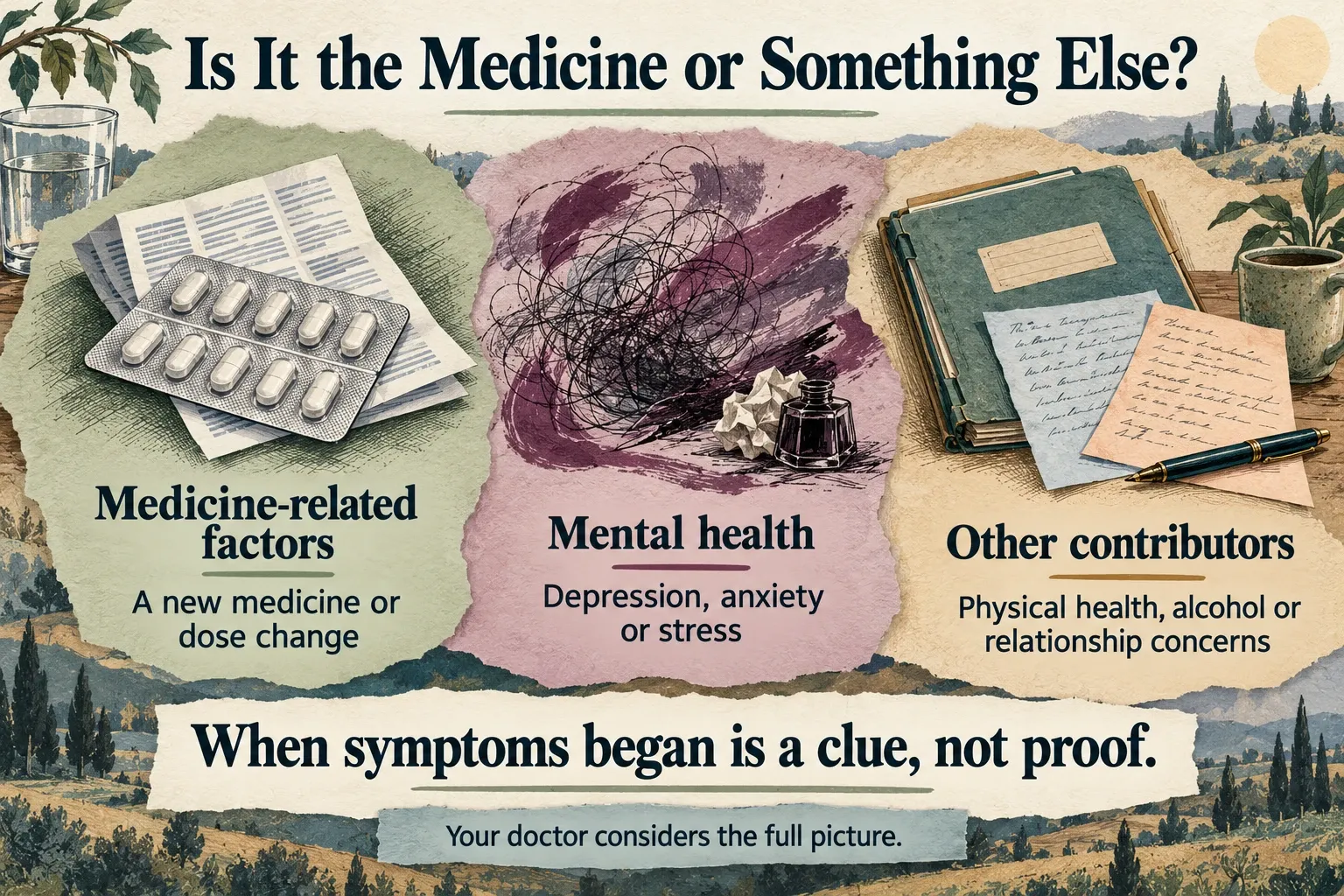
Is It the Medicine or the Mental Health Condition?
Sometimes it can be difficult to tell. Depression itself can lower your interest in sex and affect sexual function. Anxiety, stress and relationship problems can also affect your sex life. Physical health problems can play a part too. These include: diabetes, high BP, thyroid problems, hormone problems, alcohol use and other medicines
One useful clue is when the problem started. For example, if your sex life was fine before starting a new medicine and the problem appeared soon after, the medicine may be playing a role. But this does not prove that the medicine is the only cause. Your doctor can look at the full picture before deciding what may be happening.
A sexual side effect can be frustrating, especially when the medicine is otherwise helping. But suddenly stopping treatment may cause withdrawal symptoms or allow the mental health condition to return. Speak to your doctor before changing the dose or stopping the medicine.
Should You Stop the Psychiatric Medicines If You Notice Any Sexual Problem?
No. Do not stop it on your own. Stopping some psychiatric medicines suddenly can cause withdrawal symptoms. The condition being treated may also return or become worse. The same applies to skipping tablets before sex. Do not change how you take your medicine unless your doctor tells you to.
If sexual side effects are bothering you, tell your doctor instead. There may be ways to manage them without giving up a treatment that is helping you.
If you have already stopped your medicine and your mental health is getting worse, contact your doctor. If you feel you may harm yourself or cannot stay safe, seek urgent help or use our crisis support and helplines.
What Can Your Doctor Do About Sexual Side Effects?
There is no single solution that works for everyone. What your doctor suggests will depend on the medicine you take, how well it is working and what sexual problem you are having. They may consider:
Waiting and Reviewing
Sometimes sexual side effects improve after your body gets used to a medicine. If the problem is mild and the medicine is working well, your doctor may suggest waiting for a while and checking again.
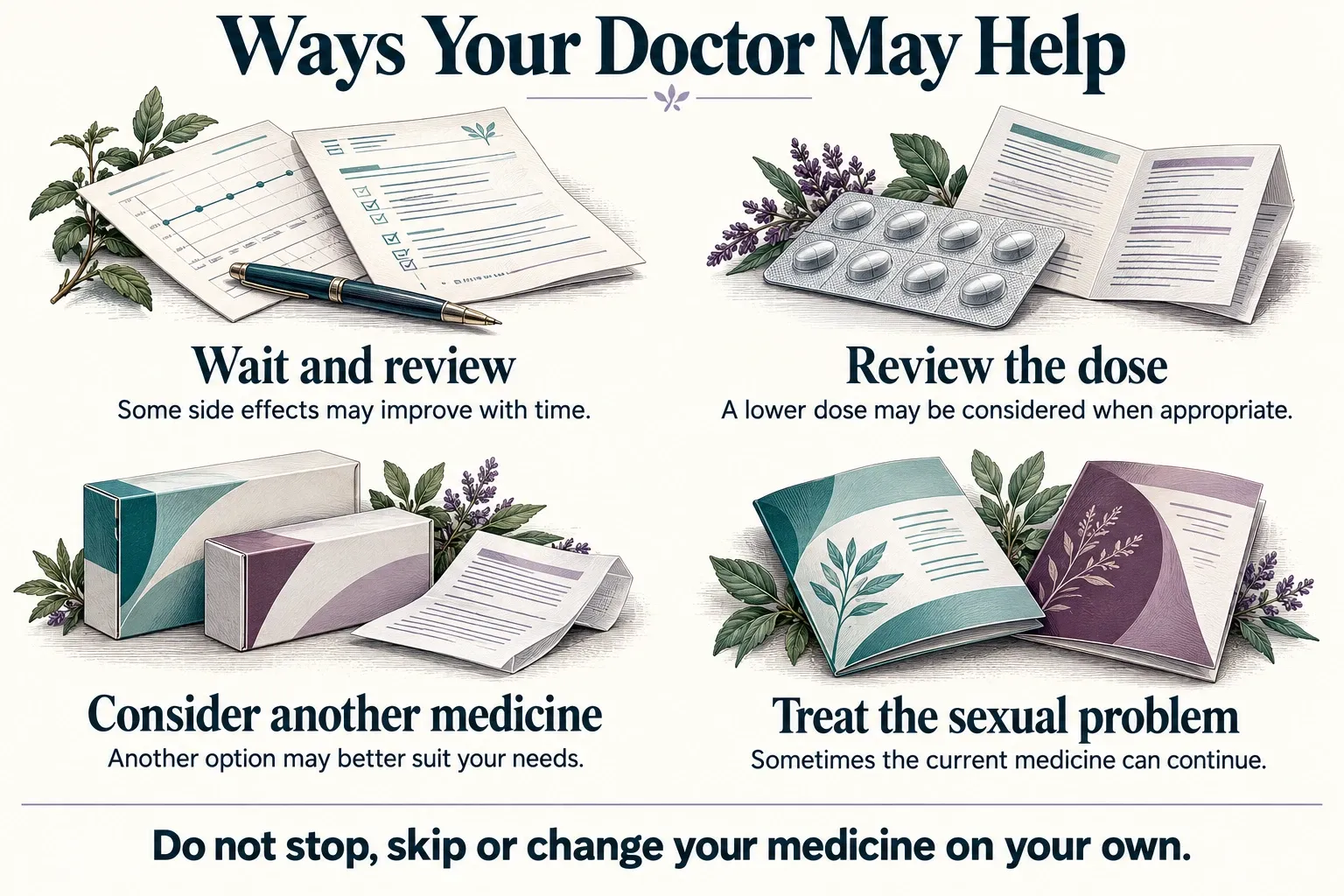
Changing the Dose
For some medicines, a lower dose may reduce sexual side effects. But do not lower the dose yourself. Your doctor needs to make sure that the medicine still works and that the change is made safely.
Changing the Medicine
If the problem continues, your doctor may consider another medicine. Some psychiatric medicines are less likely to cause sexual side effects than others. The right choice depends on the condition being treated and your overall health.
Treating the Sexual Problem
Sometimes the psychiatric medicine can stay the same and the sexual problem can be treated separately. For example, sildenafil may help some men who develop erection problems while taking antidepressants [7].
The treatment will depend on the type of sexual problem you have. Any new medicine should be checked by a doctor to make sure it is safe to take with your current medicines.
Can Sexual Side Effects Continue After Stopping Psychiatric Medications?
For many people, sexual function improves after the medicine is stopped or changed [5].
However, sexual problems have sometimes been reported after certain antidepressants have been stopped. In 2019, the European Medicines Agency asked for warnings that sexual problems may continue after stopping SSRIs and SNRIs in some cases [8].
It is not clear how often this happens. If a sexual problem continues after you stop a psychiatric medicine, tell your doctor. Do not assume you simply have to live with it.
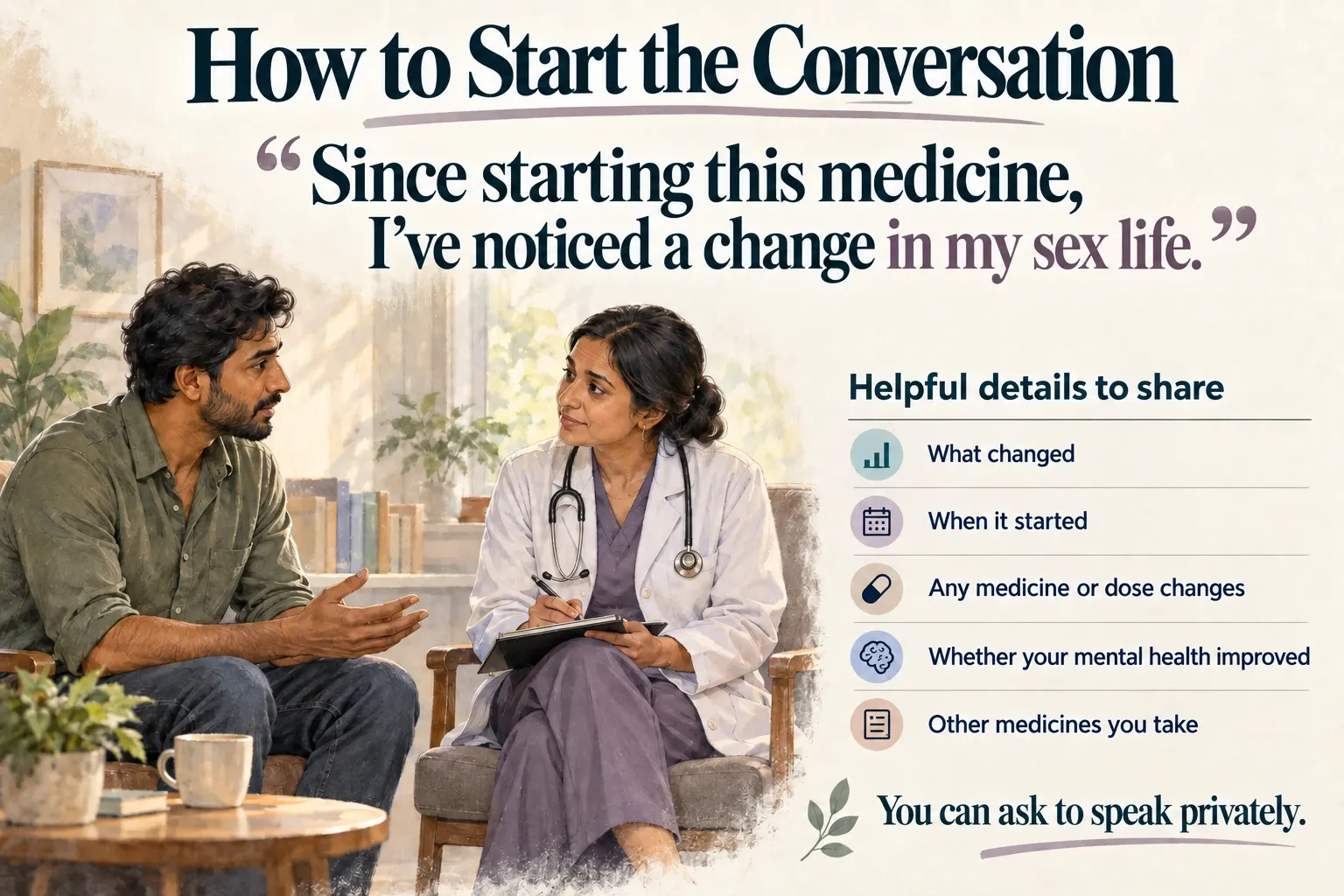
How Do You Talk to Your Doctor About It?
You do not need to use medical words or explain everything perfectly. You can simply say that “Since starting this medicine, I've noticed a change in my sex life.” It can also help to tell your doctor:
- what changed
- when you first noticed it
- whether it started after a new medicine or dose change
- whether your mental health has improved
- any other medicines you take
If you would rather discuss this without a partner or family member in the room, you can ask to speak to your doctor privately.
Getting Your Mental Health and Sex Life Back on Track
Sexual side effects from psychiatric medicines can be frustrating, but you do not have to ignore them. The first step is to tell your doctor what has changed. They can check whether the medicine, your mental health condition, another health problem or a combination of these may be responsible.
Depending on the cause, they may wait and review, change the dose, switch medicines or treat the sexual problem separately. Most importantly, do not stop or change your psychiatric medicine on your own. The aim is to find a treatment plan that supports both your mental health and your sex life.

Disclaimer
This blog article discusses mental health and emotional wellbeing for general educational and informational purposes only. It is not a substitute for professional advice, diagnosis, or treatment, and only a qualified mental health professional, such as a psychiatrist, psychologist, or licensed therapist, can diagnose a condition or recommend treatment. If you are struggling, please reach out to a qualified professional or someone you trust; if you are in crisis or may be at risk of harming yourself, use the crisis support resources on this page. For any decisions about your mental health, we encourage you to seek the guidance of a qualified professional.
Most Asked Questions
Do all antidepressants cause sexual side effects?
Not for everyone, and not to the same degree. Antidepressants that mainly raise serotonin, the SSRIs and SNRIs, have the highest rates, and those that work in other ways have lower rates [1]. Your doctor can weigh this when choosing or changing a medicine.
Will sexual side effects go away on their own?
Sometimes, but for most people they don't settle just by waiting [5]. If a few weeks have passed and nothing has improved, raise it at your next appointment rather than putting up with it.
Can I take an erection tablet with my antidepressant?
Only with your doctor's advice. Erectile dysfunction medicines have evidence for antidepressant-related erection problems [7], but they aren't safe for everyone, especially people with heart problems or on certain other medicines.
Can antidepressants cause premature ejaculation?
They usually do the opposite and delay ejaculation. For that reason, doctors sometimes use certain SSRIs to treat premature ejaculation [9].
My partner thinks I've lost interest in them. What should I say?
Explain that a medicine or the condition itself can lower desire, and that it isn't about them. Some people find it easier to bring their partner to an appointment so the doctor can explain.
Sources
- 1.
Montejo AL, Llorca G, Izquierdo JA, Rico-Villademoros F. Incidence of sexual dysfunction associated with antidepressant agents: a prospective multicenter study of 1022 outpatients. Journal of Clinical Psychiatry, 2001;62(Suppl 3):10-21. PubMed abstract
- 2.
Serretti A, Chiesa A. A meta-analysis of sexual dysfunction in psychiatric patients taking antipsychotics. International Clinical Psychopharmacology, 2011;26(3):130-140. doi:10.1097/YIC.0b013e328341e434. PubMed abstract
- 3.
Roy P, Gupta B, Tripathi A, et al. Sexual functioning in females with depression in remission receiving escitalopram. Indian Journal of Medical Research, 2019;150(6). King George's Medical University, Lucknow.
- 4.
Atlantis E, Sullivan T. Bidirectional association between depression and sexual dysfunction: a systematic review and meta-analysis. Journal of Sexual Medicine, 2012;9(6):1497-1507. Abstract
- 5.
Tripathi A, Agrawal A, Joshi M. Treatment-emergent sexual dysfunctions due to antidepressants: a primer on assessment and management strategies. Indian Journal of Psychiatry, 2024;66(3):293-303. doi:10.4103/indianjpsychiatry.indianjpsychiatry_784_23.
- 6.
National Institute for Health and Care Excellence. Depression in adults: treatment and management. NICE guideline NG222, 2022, recommendations 1.4.13, 1.4.14 and 1.8.3.
- 7.
Taylor MJ, Rudkin L, Bullemor-Day P, Lubin J, Chukwujekwu C, Hawton K. Strategies for managing sexual dysfunction induced by antidepressant medication. Cochrane Database of Systematic Reviews, 2013, CD003382.pub3. Plain-language summary
- 8.
Persistent Sexual Dysfunction After SSRIs and SNRIs: A Clinical Framework for Assessment, Counseling, and Pharmacovigilance
- 9.
Avasthi A, Grover S, Sathyanarayana Rao TS. Clinical practice guidelines for management of sexual dysfunction. Indian Journal of Psychiatry, 2017;59(Suppl 1):S91-S115 (SSRIs in premature ejaculation, pp. S109-S110). Indian Psychiatric Society copy
Why Should You Trust Us?
Why Should You Trust Us?
This article was written by Dr. Srishti Rastogi, who has more than 1 years of experience in the healthcare industry.
Allo has the expertise of over 50+ doctors who have treated more than 1.5 lakh patients both online and offline across 30+ clinics.
Our mission is to provide reliable, accurate, and practical health information to help you make informed decisions.
For This Article
- This article looks at sexual side effects across different psychiatric medicines, including antidepressants, antipsychotics, mood stabilisers and anti-anxiety medicines.
- It covers sexual health more broadly than erections alone, including changes in desire, arousal, ejaculation, vaginal dryness and orgasm in both men and women.
- We do not automatically assume that a medicine is responsible. Mental health conditions, diabetes, high blood pressure, thyroid or hormone problems, alcohol, other medicines and relationship factors may also affect sexual function.
- We do not recommend stopping, skipping or changing psychiatric medicines without speaking to the prescribing doctor first.
- The information is based on published medical research, clinical guidance and medicine-safety information, and treatment and safety information should be medically reviewed before publication.