Addiction Medications: What They Treat and How to Use Them Safely
Written by Dr. Srishti Rastogi
Dr. Srishti Rastogi is a medical writer and healthcare professional dedicated to high-quality patient education and public health awareness. Leveraging her clinical background, she produces deeply researched, evidence-based content for digital health platforms and medical publications. Dr. Srishti’s unique dual perspective as a clinician and communicator allows her to craft content that builds trust and credibility with readers navigating sensitive health topics.
•
September 24, 2026
Our experts continually monitor the health and wellness space, and we update our articles when new information becomes available.
Quick Read
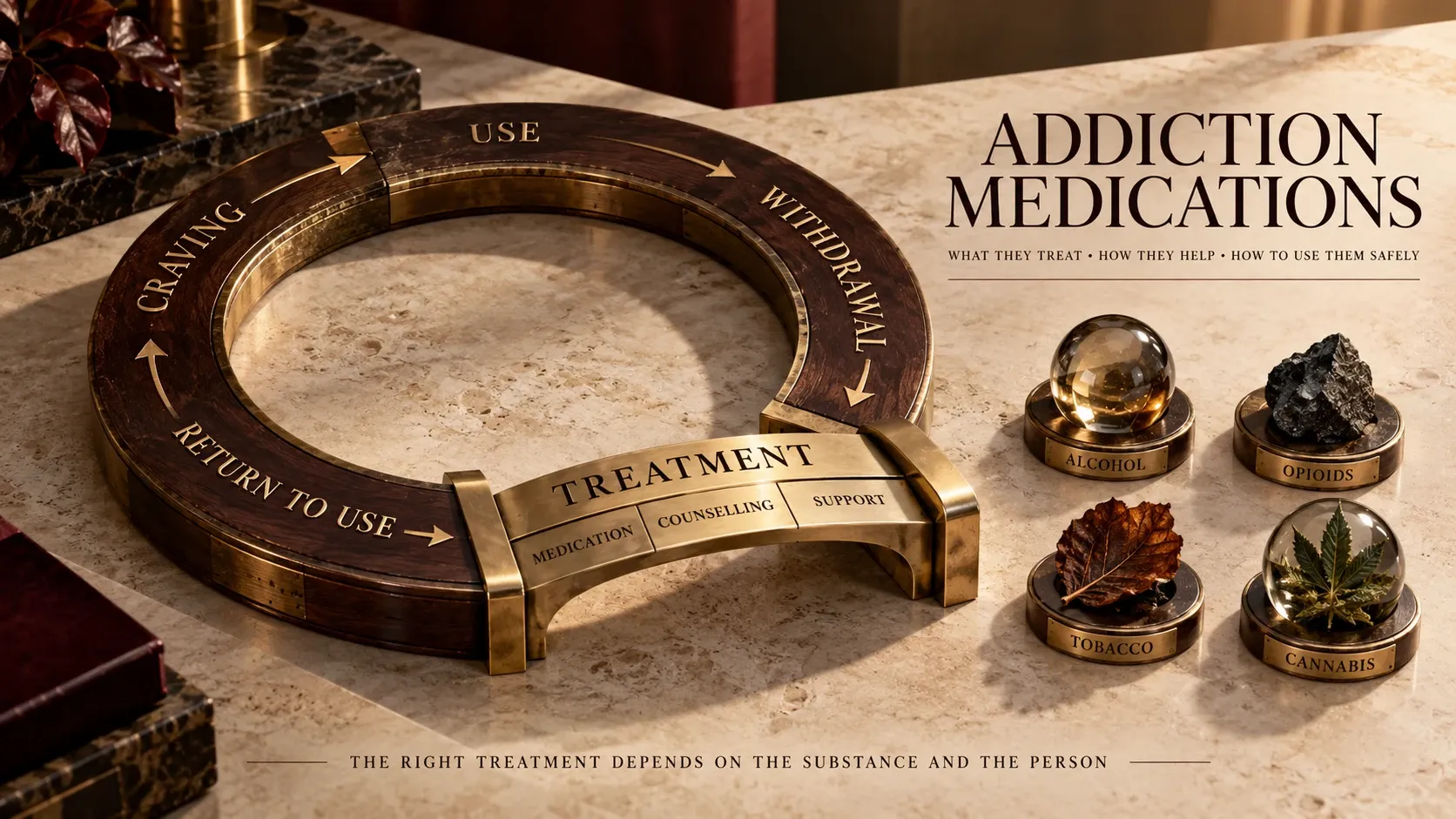
Medicines can help people recover from alcohol, opioid and tobacco addiction. They ease withdrawal, reduce cravings, make a return to heavy use less likely and, for opioids, lower the risk of dying. They work best alongside counselling and support, not on their own. The medicines for alcohol and opioids need a doctor's prescription. No medicine should ever be given to someone without their knowledge. For cannabis, no medicine has yet been proven to work.
If you or someone you know is in crisis, help is available right now. You are not alone, and things can get better with the right support.
Addiction treatment is not only about willpower or trying to stop on your own. For some types of addiction, medicines can make the process safer and easier to manage.
The medicine depends on the substance being used. Someone stopping heavy alcohol use may need medicine to manage withdrawal safely. Another person may need treatment to reduce alcohol cravings. For opioid dependence, medicines such as methadone or buprenorphine can prevent withdrawal and reduce the risk of overdose. There are also medicines that can help people quit tobacco.
These medicines are not a quick fix, and the same treatment does not work for every addiction. This guide explains which medicines are used for alcohol, opioids and tobacco, what they actually do, and the safety points you and your family should know.

Allo asks
What are you looking for help with?
What Do Addiction Medicines Do?
Addiction medicines can help at different stages of recovery. Some make withdrawal safer when a person first stops using a substance. Others reduce cravings or make a return to heavy use less likely. In opioid dependence, certain medicines can also reduce the risk of overdose and death [1,8].
But medication is not the whole treatment.

It does not automatically deal with stress, relationships, habits or other reasons that may contribute to substance use. This is why medication is often combined with counselling and other forms of support.
A return to substance use also does not necessarily mean treatment has failed. Addiction can behave like other long-term health conditions, where symptoms can return and the treatment plan may need to be adjusted [2].
Which Medicines Are Used for Alcohol Addiction?
Alcohol treatment usually has two stages: managing withdrawal safely and helping the person avoid returning to heavy drinking.
Medicines for alcohol withdrawal
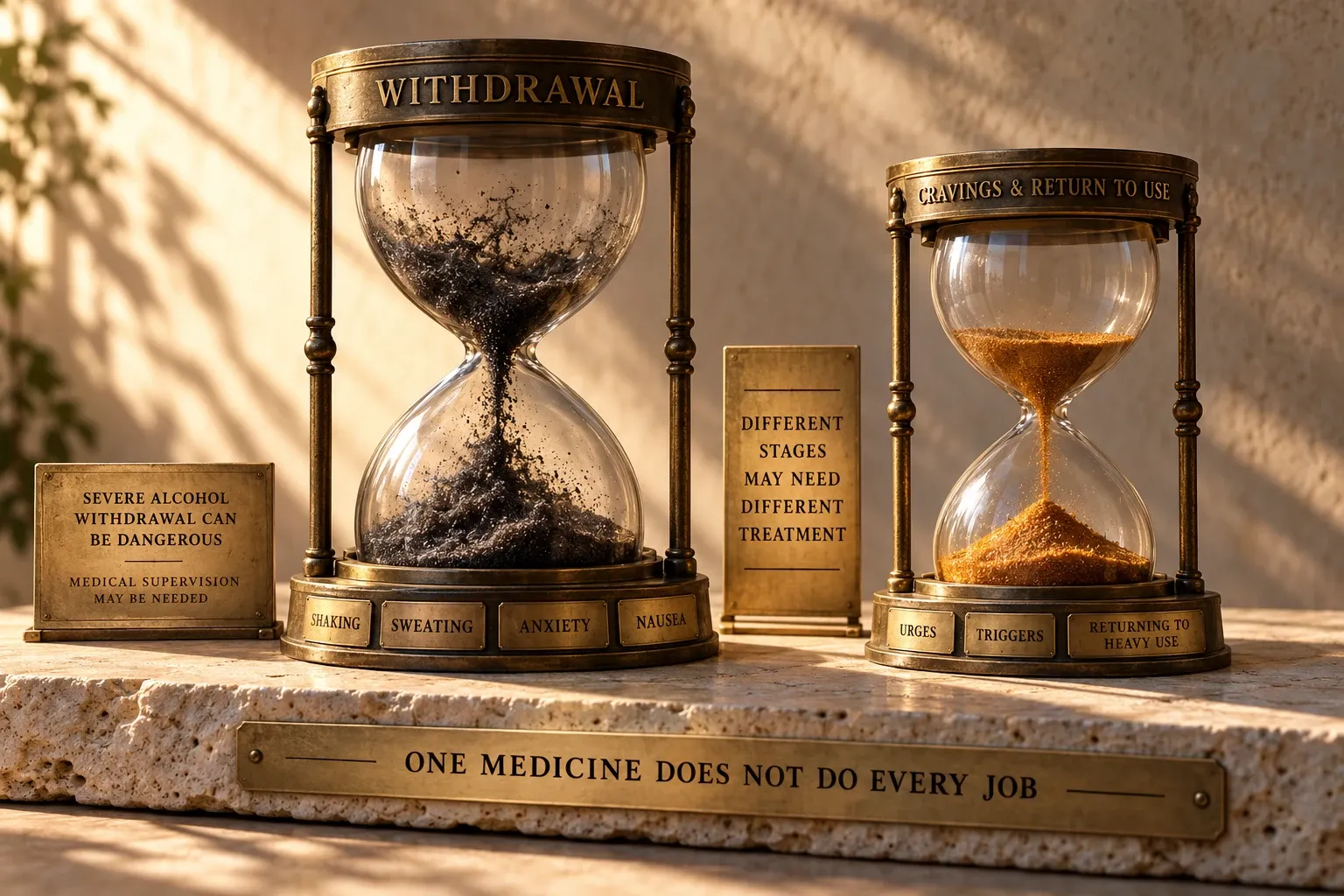
If someone has been drinking heavily every day, suddenly stopping alcohol can sometimes cause dangerous withdrawal. Symptoms can include shaking, sweating, anxiety, nausea and difficulty sleeping. Severe withdrawal can cause seizures, hallucinations or severe confusion.

A doctor may prescribe a short course of a benzodiazepine during withdrawal to reduce these risks [1]. These medicines are generally used for the withdrawal period, not as long-term treatment for alcohol dependence. If someone drinks heavily every day, it is safer to speak to a doctor before suddenly stopping alcohol. Read more about alcohol addiction and how to stop drinking safely.
Medicines used after alcohol withdrawal
Once withdrawal is over, medicines such as acamprosate or naltrexone may be considered [1]. Acamprosate is generally used to help someone remain alcohol-free. Naltrexone can reduce the rewarding effects of alcohol and make a return to heavy drinking less likely.
The benefit is useful, but it is not the same for everyone. A large review found that around one additional person remained alcohol-free for every 12 people treated with acamprosate. For naltrexone, around one additional person avoided returning to heavy drinking for every 20 people treated [3].
Treatment is usually reviewed regularly. If drinking has not changed after several weeks, the doctor may reconsider the medicine or the overall treatment plan [1]. If you take naltrexone, tell any doctor or dentist treating you for pain. Naltrexone can interfere with the effects of opioid painkillers [1].
What Is Disulfiram and How Does It Work?
Disulfiram is an alcohol dependence medicine that causes an unpleasant reaction if a person drinks alcohol while taking it. It does not directly reduce alcohol cravings. Instead, drinking alcohol while taking disulfiram can cause flushing, headache, nausea, vomiting and a fast heartbeat [4].
Because of this reaction, disulfiram may be considered when someone wants to stop drinking completely and other medicines are unsuitable, or when the person understands the risks and prefers this option [1]. Alcohol can also be present in some foods, medicines, perfumes and sprays. A reaction may occur for up to two weeks after the last dose [4].
Can You Give Disulfiram Without the Person Knowing?
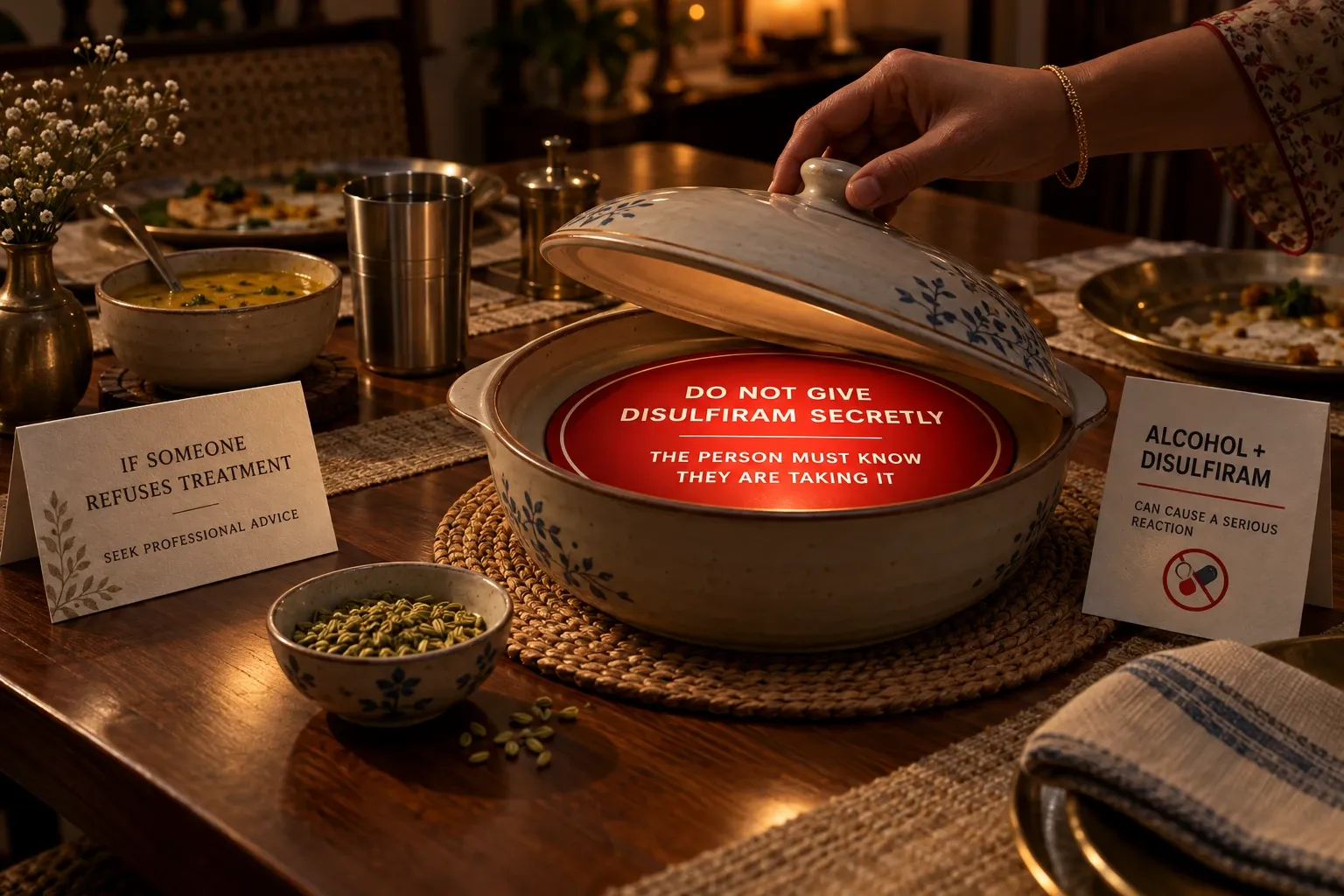
No. Disulfiram should never be secretly mixed into someone's food or drink. This is especially important for families to know.
In India, disulfiram is sometimes referred to as reaction ki dawai. There have been reports of family members giving it secretly in an attempt to stop someone from drinking [5]. This can be dangerous. If the person drinks alcohol without knowing they have taken disulfiram, the resulting reaction can be severe. The official medicine information specifically warns that disulfiram should not be given to someone who is intoxicated or without their full knowledge [4].
Indian doctors have also reported cases of serious psychiatric reactions after people were secretly given disulfiram [6]. If someone you love does not want treatment, you can still seek advice yourself. You can speak to a doctor about how to approach the situation or contact India's national de-addiction helpline at 14446 for counselling and referral support [7]. Do not use powders, drops or other products that claim they can secretly stop someone from drinking.
Which Medicines Are Used for Opioid Dependence?
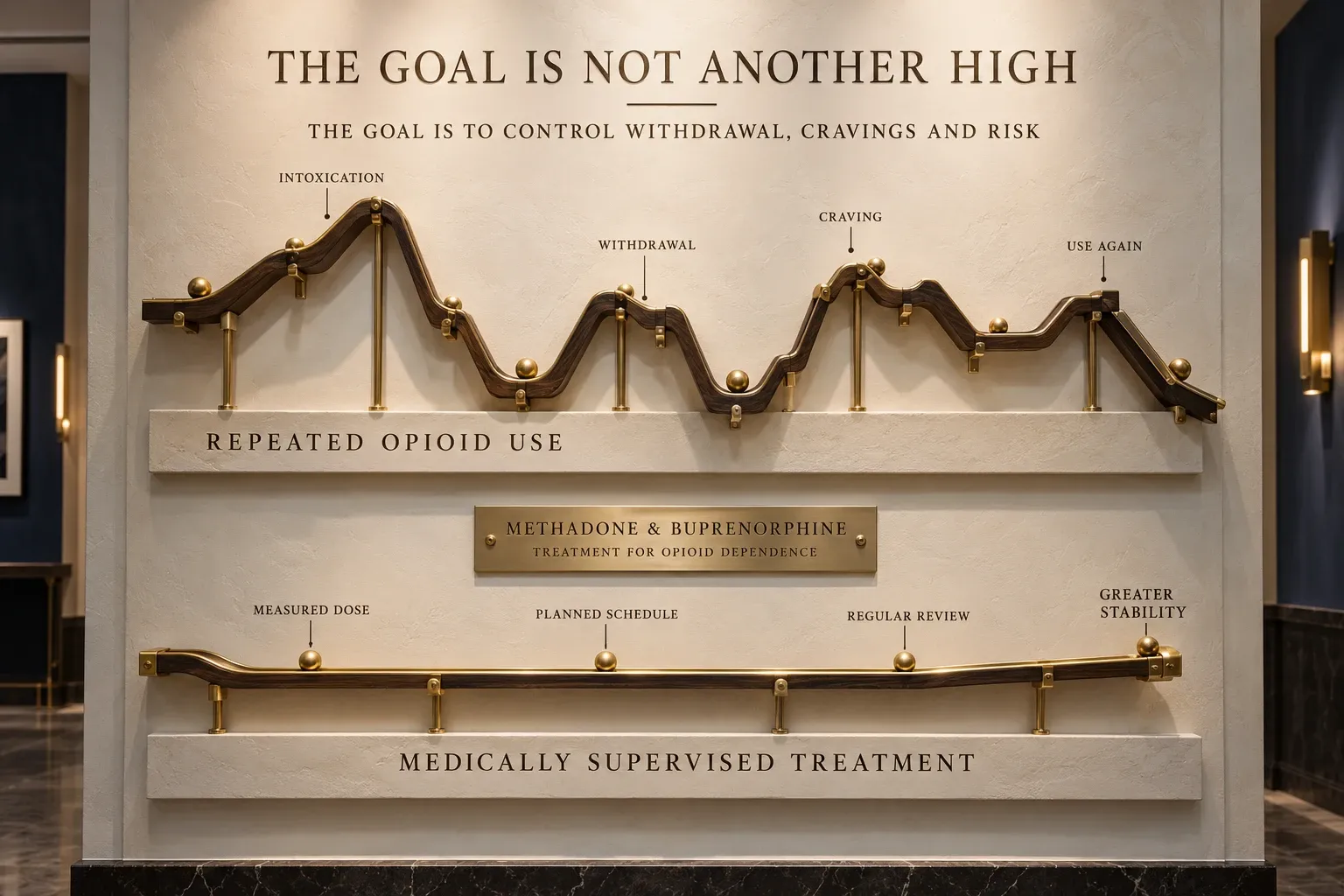
Opioids include heroin as well as some strong prescription painkillers. Two important medicines used to treat opioid dependence are methadone and buprenorphine. They prevent withdrawal and reduce cravings, allowing the person to move away from repeated cycles of opioid use [8].
Treatment is usually structured and medically supervised. The medicine is given in a controlled dose and the person is reviewed regularly. This approach is known as opioid substitution therapy or opioid agonist treatment. It has also been used in India for many years, with Indian evidence showing improvements in treatment retention, daily functioning and quality of life [9].
Another medicine, naloxone, has a different role. It can rapidly reverse an opioid overdose when given in time [8].
Is Methadone or Buprenorphine Just Replacing One Drug With Another?
This is a common concern, but medically supervised opioid treatment is different from uncontrolled opioid use. The dose is known and taken on a planned schedule. The aim is to prevent withdrawal and cravings without the repeated intoxication and withdrawal cycle associated with opioid dependence.
More importantly, staying in treatment can reduce the risk of death. A large review found that death rates were substantially higher when people were outside methadone treatment than when they were receiving it. The period soon after leaving treatment was particularly risky [10].
For this reason, methadone or buprenorphine should not be stopped suddenly without discussing it with the treating doctor.
Methadone and buprenorphine are medical treatments for opioid dependence. When used under proper supervision, their purpose is to control withdrawal and cravings and reduce the risks linked with uncontrolled opioid use.
Which Medicines Can Help Someone Quit Tobacco?
Several medicines can make quitting tobacco easier.
The World Health Organization recommends:
- Nicotine replacement therapy (NRT): patches, gum and other nicotine products that reduce withdrawal and cravings
- Varenicline: reduces nicotine cravings and makes tobacco less rewarding
- Bupropion: can reduce cravings and withdrawal symptoms
- Cytisine: another medicine that can help people stop smoking [11]
Medication works better when combined with behavioural support [11]. Treatment is not only for cigarette smoking. Some options may also help people who use smokeless tobacco such as gutka or khaini.
Read more about how to quit smoking and tobacco.
Is There Medicine for Cannabis Addiction?
There is currently no medicine proven to reliably treat cannabis use disorder. A 2025 review found that the evidence for the medicines studied so far remains uncertain. These treatments are still considered experimental [12].
That does not mean cannabis dependence cannot be treated. Counselling and behavioural approaches can still help people reduce or stop their use. Read more about cannabis dependence and treatment.
How Do You Get Addiction Treatment in India?
You do not always need to be admitted to a rehabilitation centre to start treatment. The first step can simply be an appointment with a doctor or addiction specialist. They can assess what the person is using, how much they use, whether withdrawal could be dangerous and which treatment may be suitable.
Medicines used for alcohol and opioid dependence require medical supervision. Do not buy and start them yourself, even if they are available online.
You can also call India's national de-addiction helpline at 14446 for counselling and information about treatment services [7].
What Should You Ask the Doctor About Addiction Medication?
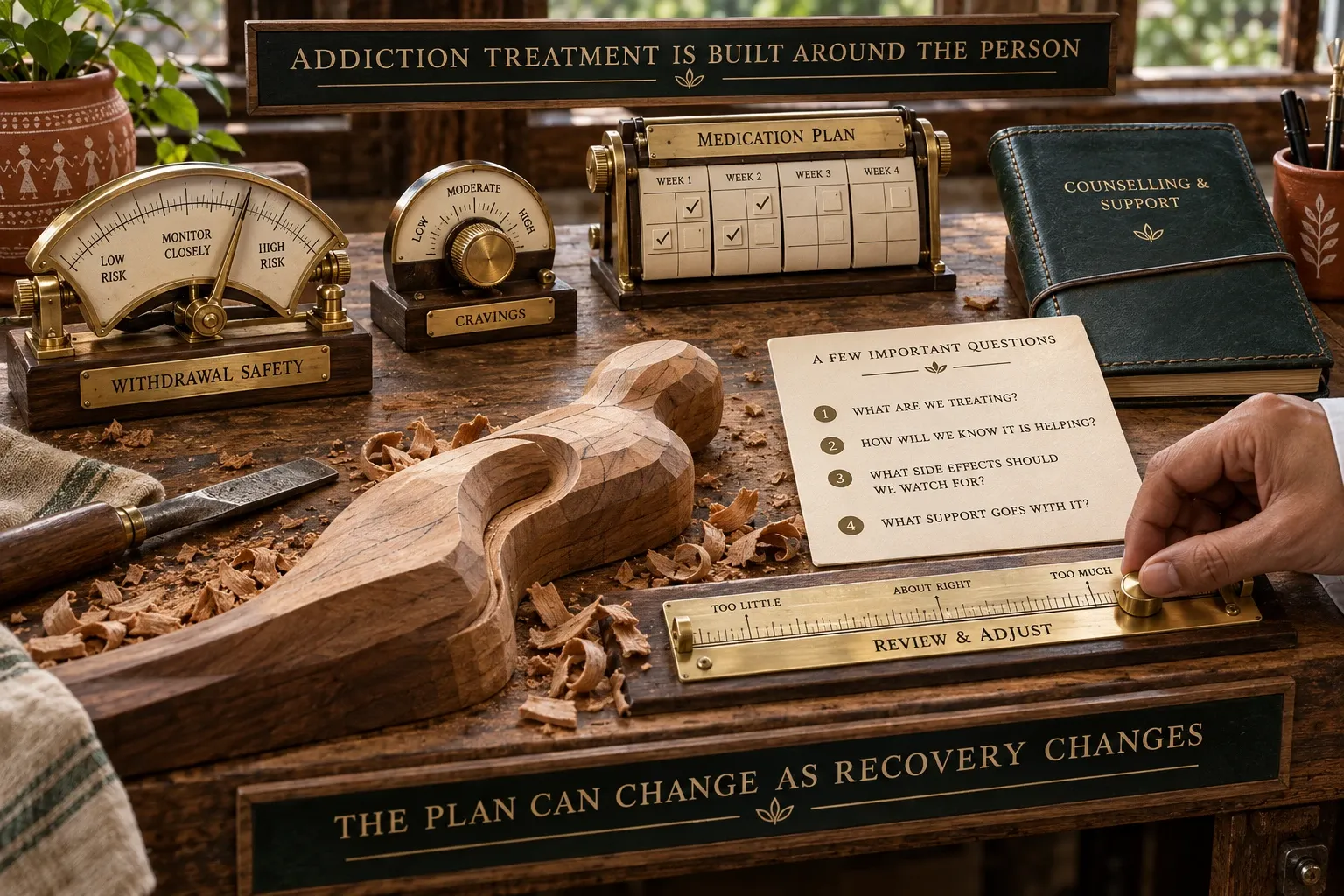
You do not need to know the names of all the medicines before the appointment. Start with a few practical questions:
- Which medicine is suitable for this type of addiction?
- Is it for withdrawal, cravings or preventing a return to use?
- How long will it need to be taken?
- What side effects should we watch for?
- How will we know if it is helping?
- What happens if the person drinks or uses the substance again?
- What counselling or other support should be used with it?
If you are confused about where to start, you can also book a confidential consultation with Allo Health to discuss the symptoms, substance use and the kind of professional support that may be appropriate.
You can also read our guide to Understanding Psychiatric Medications if you want to understand how these medicines are prescribed and monitored.

Disclaimer
This blog article discusses mental health and emotional wellbeing for general educational and informational purposes only. It is not a substitute for professional advice, diagnosis, or treatment, and only a qualified mental health professional, such as a psychiatrist, psychologist, or licensed therapist, can diagnose a condition or recommend treatment. If you are struggling, please reach out to a qualified professional or someone you trust; if you are in crisis or may be at risk of harming yourself, use the crisis support resources on this page. For any decisions about your mental health, we encourage you to seek the guidance of a qualified professional.
Most Asked Questions
Is there a medicine that reduces alcohol cravings?
Naltrexone and acamprosate can make a return to drinking less likely [3]. They help most alongside counselling, and a doctor decides which one fits.
What checks happen before starting an alcohol medicine?
Guidance asks for a medical assessment, including blood tests of liver and kidney function [1]. You'll then be seen regularly.
Can I drink a little while taking disulfiram?
No. Even small amounts can cause a strong reaction, including alcohol hidden in some foods and sprays [1].
Are ayurvedic or homeopathic de-addiction medicines safe to use?
Talk to a doctor before using any product sold as a de-addiction cure, and don't use one in place of treatment.
How long will I need to take the medicine?
Alcohol medicines are usually taken for about six months, sometimes longer [1]. Opioid treatment is usually long-term [8]. Your doctor reviews the plan with you.
Sources
- 1.
NICE – Alcohol-use disorders: diagnosis, assessment and management
- 2.
NIDA – Drugs, Brains, and Behavior: Treatment and Recovery
- 3.
AHRQ – Pharmacotherapy for Adults With Alcohol-Use Disorders in Outpatient Settings
- 4.
DailyMed – Disulfiram Tablets: Prescribing Information
- 5.
Indian Journal of Medical Ethics – Surreptitious Use of Disulfiram
- 6.
Industrial Psychiatry Journal – Disulfiram-Induced Psychosis: A Case Series
- 7.
Government of India – Nasha Mukt Bharat Abhiyaan
- 8.
WHO – Opioid Overdose
- 9.
Indian Journal of Psychiatry – The Journey of Opioid Substitution Therapy in India
- 10.
BMJ – Mortality Risk During and After Opioid Substitution Treatment
- 11.
WHO – Clinical Treatment Guideline for Tobacco Cessation in Adults
- 12.
Cochrane – Pharmacotherapies for Cannabis Use Disorder
Why Should You Trust Us?
Why Should You Trust Us?
This article was written by Dr. Srishti Rastogi, who has more than 1 years of experience in the healthcare industry.
Allo has the expertise of over 50+ doctors who have treated more than 1.5 lakh patients both online and offline across 30+ clinics.
Our mission is to provide reliable, accurate, and practical health information to help you make informed decisions.
For This Article
- This article was created to give you practical, evidence-based information about medicines used in addiction treatment without presenting medication as a quick fix.
- The information on alcohol, opioid, tobacco and cannabis treatment has been checked against established clinical guidelines, systematic reviews, official medicine information and peer-reviewed research. Sources include the World Health Organization, NICE, Cochrane, the US National Library of Medicine and published Indian medical literature.
- We have also included issues that are especially relevant to families in India. This includes the risks of secretly giving disulfiram, how opioid substitution treatment is used, and where to seek help through India's national de-addiction services.
- Safety information is treated separately from general treatment advice. For example, the article explains why suddenly stopping heavy alcohol use can sometimes be dangerous, why disulfiram should never be given without the person's knowledge, and why medicines such as methadone or buprenorphine should be medically supervised.
- We also distinguish between what medicines can and cannot do. Some can reduce withdrawal or cravings, but medication alone may not address the stress, habits, relationships or other factors connected with substance use.