How to Support a Loved One Through a Mental Health Condition
Written by Dr. Srishti Rastogi

Dr. Srishti Rastogi is a medical writer and healthcare professional dedicated to high-quality patient education and public health awareness. Leveraging her clinical background, she produces deeply researched, evidence-based content for digital health platforms and medical publications. Dr. Srishti’s unique dual perspective as a clinician and communicator allows her to craft content that builds trust and credibility with readers navigating sensitive health topics.
•
August 13, 2026
Our experts continually monitor the health and wellness space, and we update our articles when new information becomes available.

Quick Read
When someone you love is struggling with their mental health, you do not need to be an expert or have all the answers. What helps most is showing up, listening without judgment, and staying alongside them. You can gently encourage professional help and support their recovery, but you cannot force someone to get better, and their illness is not yours to cure. And looking after yourself is part of caring, not a betrayal of it.
Watching someone you love struggle is one of the hardest things to sit with, and it is normal to feel helpless or afraid of saying the wrong thing. The reassuring truth is that support does not need training. Often the most powerful thing you can offer is simply to be there, to listen, and to keep showing up.
You Don't Have to Fix It
You do not have to make their problem go away. A mental health condition, such as depression, is a health problem. A person cannot simply “think positive” or talk themselves out of it.
You do not need to become their therapist or find a solution to every problem. Your role is to care, listen and support them while they get professional help and recover at their own pace.
Remember that their recovery is not completely in your hands. It depends on many things, including treatment, support and time. If they have a difficult day, it does not mean you have failed them. You can support them with love, but you are not responsible for whether they recover or become unwell again.

Allo asks
What's been hardest about supporting your loved one?
Starting the Conversation
You do not need perfect words, just a private, unhurried moment and a genuine question. Try:

- "I've noticed you don't seem yourself lately. I'm here if you want to talk."
- "I've been a bit worried about you. How are you really doing?"
- "You don't have to go through this alone. What would help?"
Then let them answer, and resist the urge to jump in with solutions. If they are not ready to talk, that is okay. Leaving the door open often matters more than any single conversation.
People worry so much about saying the wrong thing that they end up saying nothing at all. Honestly, 'I've noticed you don't seem yourself, I'm here' does more good than any perfect script. You don't need the right words, just a genuine one.
What to Say, and What to Avoid
Say things that show acceptance and presence, like 'I'm here for you' - and avoid phrases that minimise, like 'just think positively' or 'others have it worse. Let the person finish speaking. Do not interrupt or quickly give advice. First, accept their feelings. You can say, “That sounds very difficult.” Then ask, “How can I help?”
| Try Saying | Try to avoid |
|---|---|
| “I’m here for you.” | “Just get over it.” |
| “This is not your fault.” | “Other people have bigger problems.” |
| “How can I help?” | “Just think positively.” |
| “Take your time.” | “Cheer up. It’s not that bad.” |
| “You matter to me.” | “It’s all in your head.” |
These hurtful phrases can make the person feel blamed or misunderstood. Mental health problems are not a choice. When you are unsure what to say, listen calmly and remind them that you care
How Do You Encourage Someone to Get Professional Help?
Your support is important, but a mental health professional can give them the right treatment. Encourage them gently. Do not pressure or shame them. [1]

You can help by:
- Finding a suitable doctor, psychologist or psychiatrist
- Sitting with them while they book an appointment
- Going with them if they want support
- Helping with travel, childcare or talking to family
If they feel nervous, explain what happens in therapy. If a doctor has suggested medicine, learning how psychiatric medicines work may reduce their fear.
An adult usually has the right to decide whether they want treatment. Keep encouraging them, but do not force them. Too much pressure may make them stop talking to you.
If they take medicine, encourage them to follow their doctor’s instructions. Do not change the dose or tell them to stop. They should discuss side effects or other worries with their doctor.
Recovery takes time. Some days will be better than others. A difficult day does not mean the treatment has failed.
If they may harm themselves or someone else, or cannot stay safe, seek emergency help immediately.

If Your Loved One Is in Crisis
Take it seriously if someone says they want to die, feel like a burden, or have no reason to live. Asking about suicide will not put the idea in their mind. Ask calmly and directly.
If you think they may be suicidal [2]:
- Ask: “Are you thinking about suicide?”
- Listen: Let them speak without judging or giving a lecture.
- Stay with them: Do not leave them alone if they may act soon.
- Make the area safer: If you can do so safely, move medicines, weapons or other dangerous items away.
- Get help: Call a helpline such as Tele-MANAS, the Government of India's free mental health helpline, or their doctor or a mental health professional [7].
- Check on them later: Continue calling or visiting after the crisis.
If there is immediate danger, use the emergency numbers in the crisis box above, take them to the nearest hospital emergency department, or see crisis support and helplines. Do not put yourself in danger. You are not expected to manage the crisis alone.
Take Care of Yourself Too
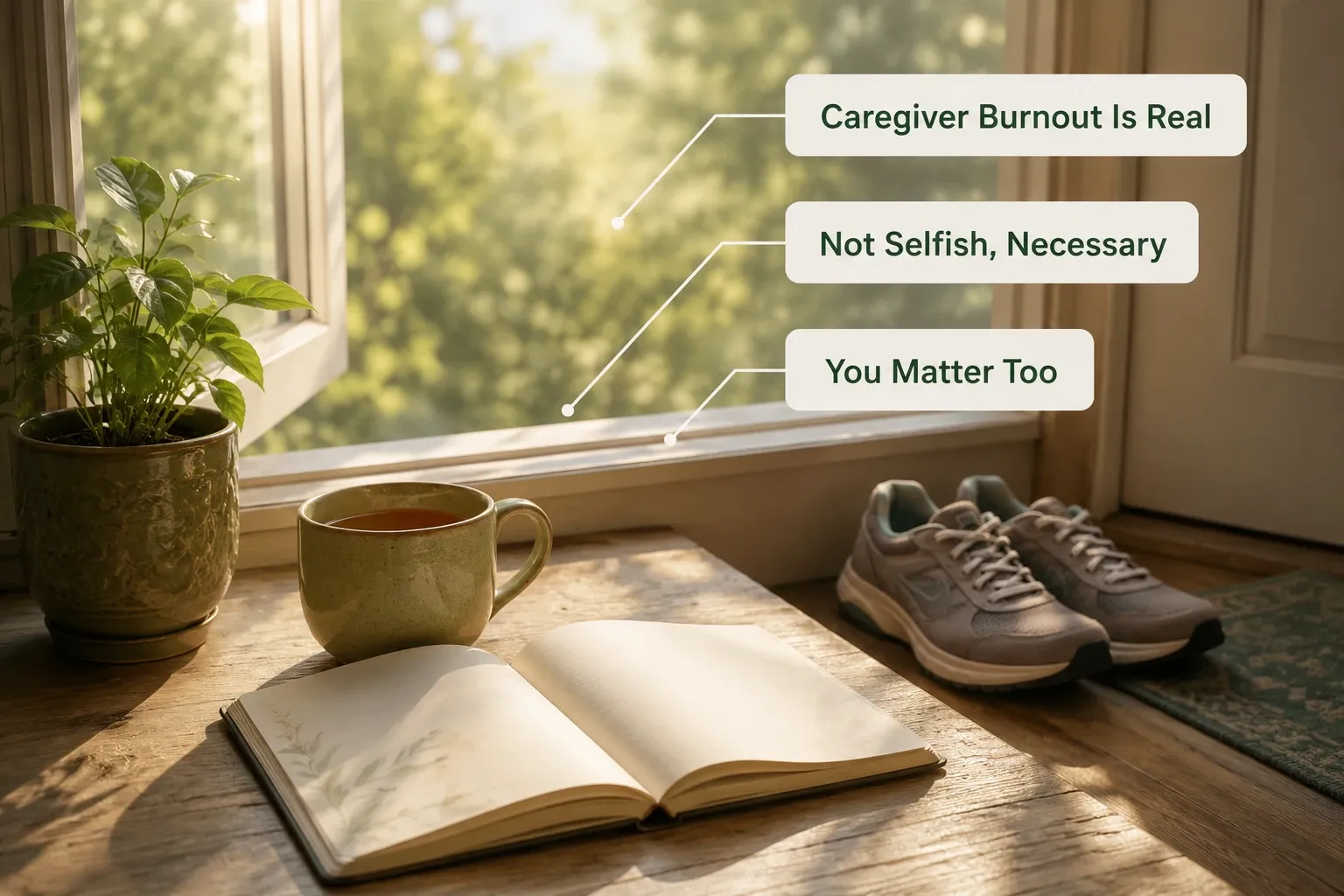
Supporting someone can be tiring. Over time, you may experience caregiver burnout [3]. Signs can include:
- Feeling tired most of the time
- Becoming angry or irritated easily
- Having trouble sleeping
- Losing interest in things you enjoy
- Feeling upset with the person and then feeling guilty
These feelings do not make you a bad person. They mean you need support too.
Try to rest, continue some of your normal activities, set limits and ask others to share the work [4]. Learn to notice your own stress and burnout. You can also join a carers’ support group or speak to a mental health professional.
Supporting Someone in an Indian Family
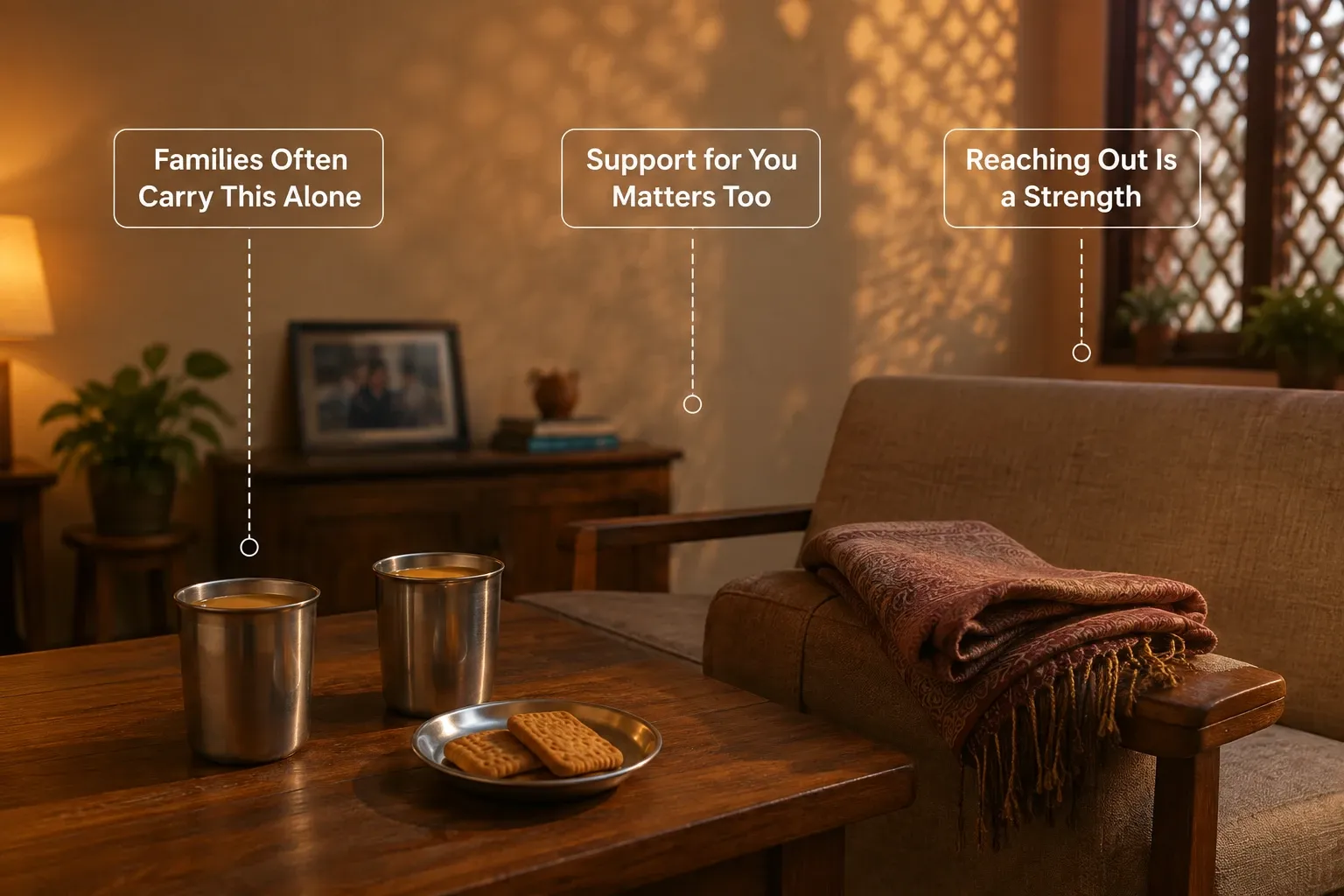
In India, family members often provide most of the care. This can become difficult when there is little help from others. Research shows that carers cope better when they also receive support [5].
Families may also worry about:
- “Log kya kahenge?” or what other people will say
- The cost of treatment
- Missing work or studies
- Telling relatives about the problem
- Asking someone outside the family for help
These difficulties do not mean you are failing [6]. Caring for someone can be hard. Asking a relative, professional or support group for help is a sign of strength.
When Family Support Is Not Enough
Contact a doctor, mental health professional or helpline if the person:
- Is getting worse
- Cannot manage daily activities
- Is using alcohol or drugs to cope
- Talks about dying or not wanting to live
- May harm themselves or someone else
- Is behaving in a way that makes you feel unsafe
You do not have to decide how serious the problem is by yourself. A professional or helpline can guide you.
Conclusion
You do not need to fix every problem. Listen, stay patient and help your loved one reach professional support. Remember to care for yourself too.
If either of you needs support, you can book a confidential consultation with Allo Health when you feel ready.

Disclaimer
The following blog article provides general information and insights on various topics. However, it is important to note that the information presented is not intended as professional advice in any specific field or area. The content of this blog is for general educational and informational purposes only. The content should not be interpreted as endorsement, recommendation, or guarantee of any product, service, or information mentioned. Readers are solely responsible for the decisions and actions they take based on the information provided in this blog. It is essential to exercise individual judgment, critical thinking, and personal responsibility when applying or implementing any information or suggestions discussed in the blog.
Most Asked Questions
How do I help someone who won't get help?
You cannot force a competent adult into treatment, and pushing hard often makes people withdraw. Keep the conversation open, share what you have noticed without judgment, offer to help with the practical steps, and stay connected. Many people come round once they feel safe and unpressured. If they are at risk of harm, that is different, and you should contact a helpline or doctor for guidance.
Is it true that asking about suicide makes it more likely?
No, this is a common myth. Asking someone directly and calmly whether they are thinking about suicide does not plant the idea. It often brings relief and opens a path to help. If you are worried, ask, stay with them, and connect them to support.
How do I look after myself while caring for someone?
Treat your own wellbeing as essential, not optional. Keep parts of your own life going, set gentle limits, share the load, and watch for caregiver burnout, which shows up as exhaustion, irritability, and losing interest in things. A carers' support group or your own conversation with a professional can help.
Sources
- 1.
Mind. Helping someone else seek help for a mental health problem.
- 2.
National Institute of Mental Health. 5 action steps to help someone having thoughts of suicide.
- 3.
Cleveland Clinic. Caregiver burnout: what it is, symptoms and prevention.
- 4.
Royal College of Psychiatrists. Caring for someone with a mental illness.
- 5.
Jagannathan A, Thirthalli J, Hamza A, Nagendra HR, Gangadhar BN. Predictors of family caregiver burden in schizophrenia: study from an in-patient tertiary care hospital in India. Asian Journal of Psychiatry. 2014;8:94–98. doi:10.1016/j.ajp.2013.12.018
- 6.
White Swan Foundation. Caregiving.
- 7.
Tele-MANAS, Ministry of Health and Family Welfare, Government of India.
Why Should You Trust Us?
Why Should You Trust Us?
This article was written by Dr. Srishti Rastogi, who has more than 1 years of experience in the healthcare industry.
Allo has the expertise of over 50+ doctors who have treated more than 1.5 lakh patients both online and offline across 30+ clinics.
Our mission is to provide reliable, accurate, and practical health information to help you make informed decisions.
For This Article
- We referenced guidance from Mind (UK) on helping someone seek help without forcing them into treatment, so the boundary this article draws between supporting and controlling reflects established best practice, not assumption.
- We followed the National Institute of Mental Health's five action steps for supporting someone having thoughts of suicide, so the crisis guidance in this article matches a recognised clinical framework rather than general advice.
- We referenced Cleveland Clinic's clinical description of caregiver burnout to make sure the signs and self-care guidance in this article reflect a genuine, named condition, not just a turn of phrase.
- We drew on a peer-reviewed study from NIMHANS on family caregiver burden in schizophrenia, so our claims about the real weight Indian families carry, and what helps them carry it more sustainably, are grounded in Indian research, not generalised from elsewhere.
- We referenced the Royal College of Psychiatrists' guidance on caring for someone with a mental illness to ground the "what to say, what to avoid" language recommendations in professional practice.
- We consulted White Swan Foundation's caregiving resources for context specific to Indian families, including the stigma and financial pressures caregiving often adds.
- We verified that the crisis helpline details referenced in this article are current and correctly sourced from the Ministry of Health and Family Welfare.