Social Anxiety Disorder: What It Is and What Helps
Written by Dr. Srishti Rastogi

Dr. Srishti Rastogi is a medical writer and healthcare professional dedicated to high-quality patient education and public health awareness. Leveraging her clinical background, she produces deeply researched, evidence-based content for digital health platforms and medical publications. Dr. Srishti’s unique dual perspective as a clinician and communicator allows her to craft content that builds trust and credibility with readers navigating sensitive health topics.
•
September 4, 2026
Our experts continually monitor the health and wellness space, and we update our articles when new information becomes available.
Quick Read
Social anxiety disorder is an intense, lasting fear of being judged or watched by other people, strong enough to change what you do. It usually starts in the early teens, which is why so many people file it under personality rather than health. It responds well to treatment, and the therapy that works best for it is a short, structured course rather than years of talking.
If you or someone you know is in crisis, help is available right now. You are not alone, and things can get better with the right support.
Do you read a message several times before sending it? Stay quiet in a meeting even when you know the answer? Keep yourself busy in the kitchen during a family function to avoid conversation?
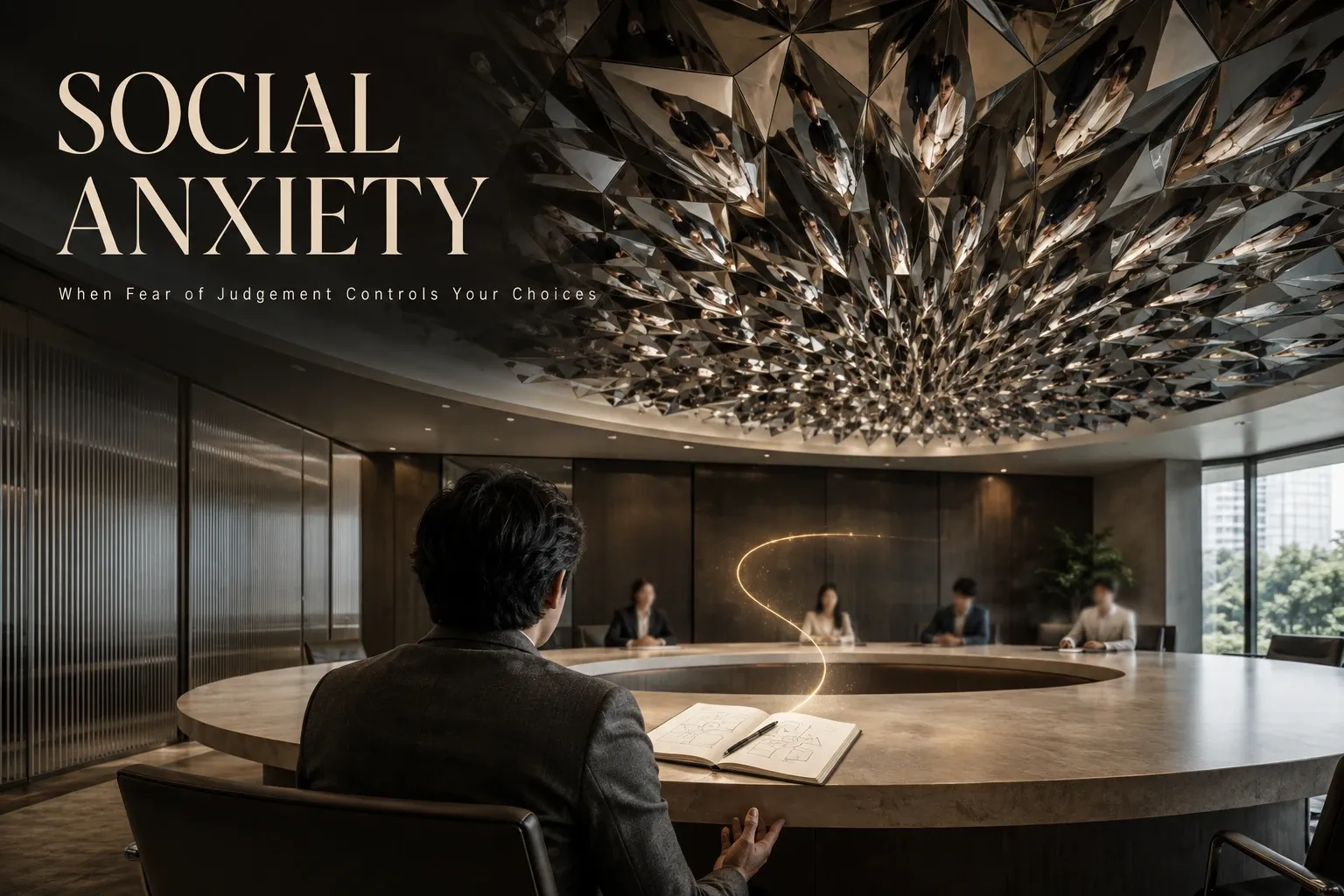
You may think, “This is just my personality.” But when fear of judgement starts controlling your choices, it may be social anxiety disorder.

Allo asks
How often do you avoid speaking, meeting people or taking opportunities because you fear being judged or embarrassed?
What Is Social Anxiety Disorder?
Social anxiety disorder is an intense fear of situations where other people may watch, judge or embarrass you.
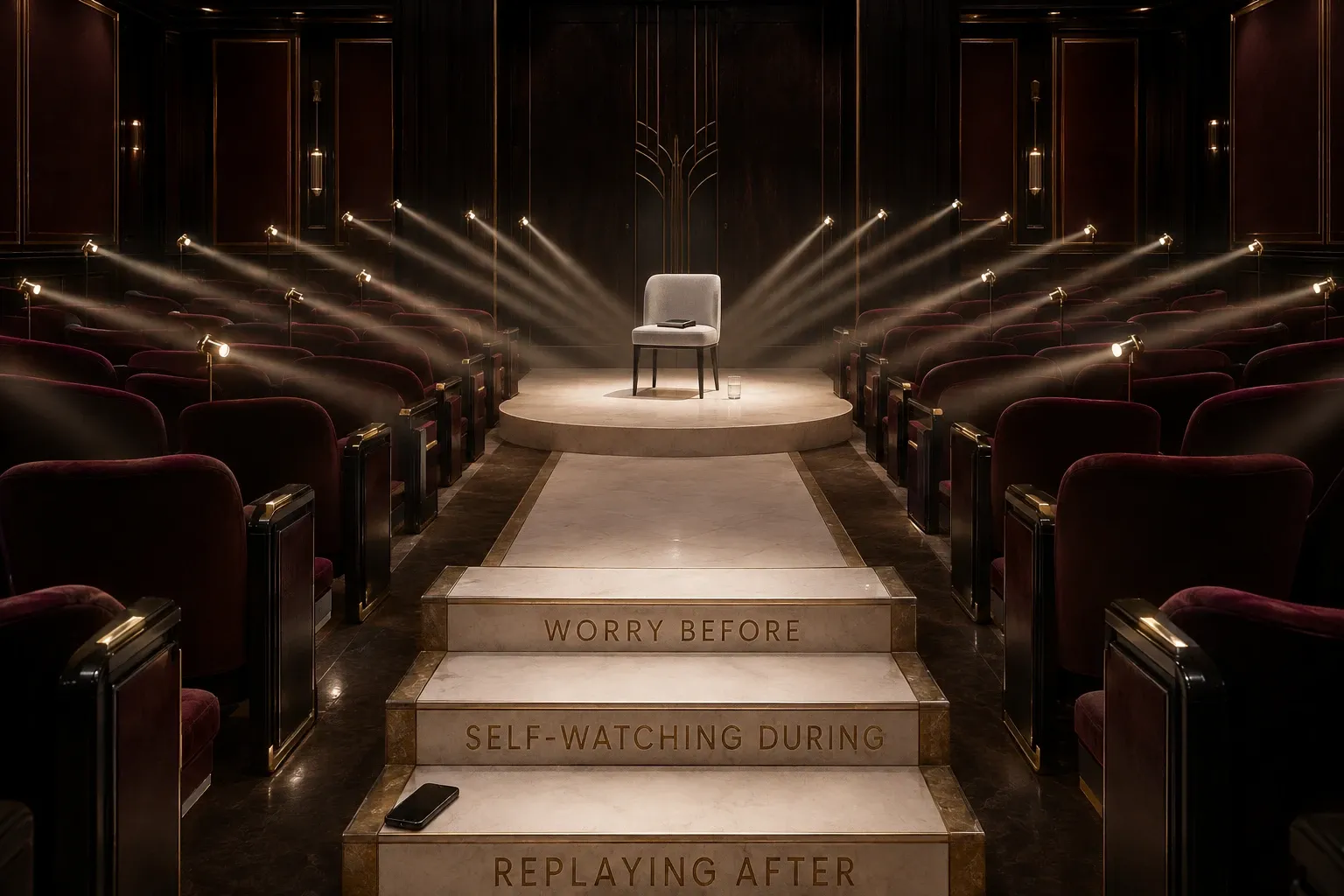
The anxiety can appear before, during and after a situation. You may worry for days before an interview, closely watch yourself while speaking and replay the conversation afterwards.
For a diagnosis, this fear usually continues for at least six months and affects daily life [1].

Some people feel anxious in most social situations. Others mainly struggle with speaking in class, attending interviews or giving presentations.
In India, social anxiety may be mistaken for being sharmila, respectful or well-behaved. Fear of log kya kahenge can also make a strong fear of judgement seem normal. The important question is whether the fear is stopping you from doing things you want or need to do.
Am I an Introvert, Shy or Socially Anxious?
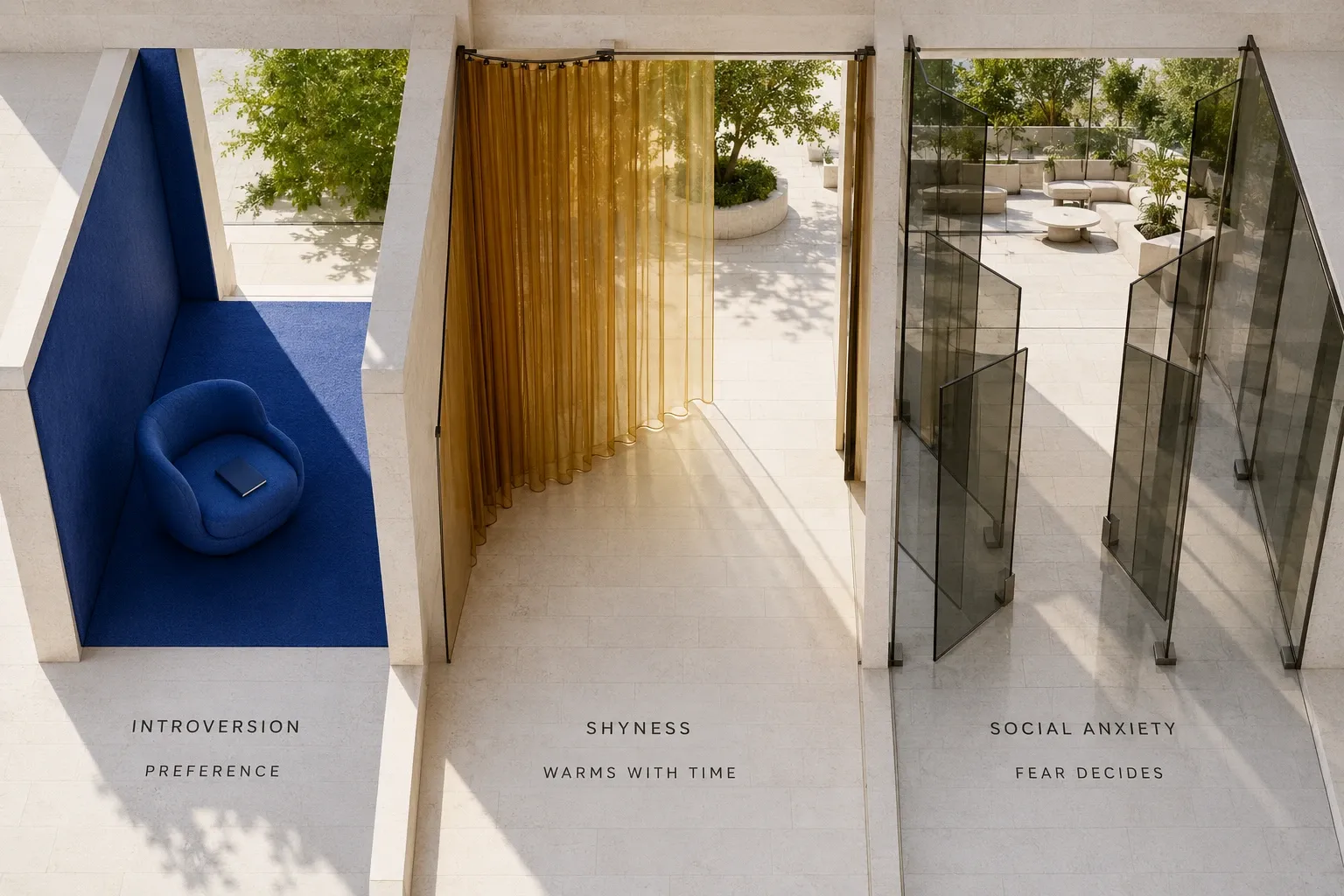
Being an introvert is not a mental health condition. Introverts often prefer smaller groups, quiet places or time alone. They can usually socialise when they choose.

Shyness means feeling nervous around unfamiliar people. This discomfort often reduces as you become familiar with them.
Social anxiety is different because fear begins to control your decisions.
| Introversion | Shyness | Social anxiety disorder |
|---|---|---|
| You prefer less social activity | You feel awkward at first | You strongly fear being judged |
| Alone time feels refreshing | You become comfortable with time | Anxiety may begin days before an event |
| You can socialise when you want | You usually participate despite discomfort | You avoid things you want or need to do |
| It does not seriously limit your life | It causes mild discomfort | It affects work, studies or relationships |
The simplest difference is this: an introvert chooses less social contact because they prefer it. A person with social anxiety may avoid it because they fear it.
You can also be both introverted and socially anxious.
Social anxiety can be confused with agoraphobia. Social anxiety is mainly about being judged. Agoraphobia is mainly about being somewhere where escape or help may be difficult.
What Are the Symptoms of Social Anxiety?
Social anxiety may cause blushing, sweating, shaking, nausea, a racing heartbeat or your mind suddenly going blank.
You may worry that everyone is watching you, rehearse simple sentences before speaking or replay conversations afterwards. You may avoid eye contact, calls, meetings, family functions or social events.
Some people use their phone to avoid interaction. Others arrive late so they can skip small talk or drink alcohol before an event to feel more confident.
Avoidance gives quick relief, but it also keeps the fear going. You do not get the chance to learn that you may be able to manage the situation.
What Causes Social Anxiety?
There is no single cause. Social anxiety may develop through a mix of family history, a sensitive temperament and difficult social experiences.
Bullying, humiliation, repeated criticism or highly controlling environments may increase the risk. [3] However, this does not mean that one person or event caused the condition.
Indian children who stay quiet around adults may receive praise for being obedient, so their anxiety can remain unnoticed. The problem may only become clear later during viva exams, interviews, office meetings or matrimonial meetings.
You do not need to find the exact cause before starting treatment. Treatment focuses on how the fear affects you now.
Read more about how anxiety develops in our guide to generalised anxiety disorder.
How Does Social Anxiety Affect College and Work?
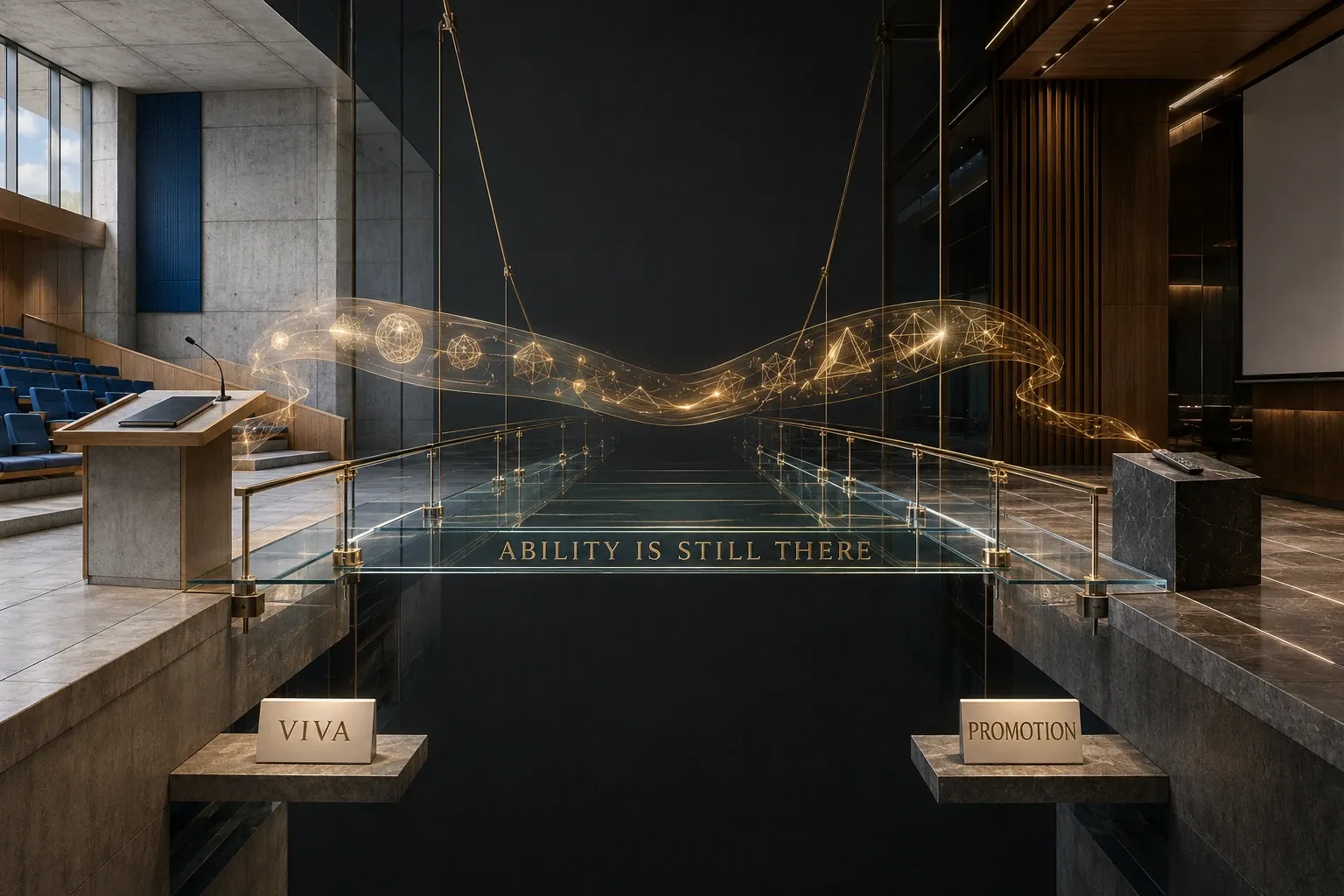
Social anxiety does not mean that you lack ability. Fear may prevent you from showing what you know.
A student may avoid asking questions, giving a viva or joining a group project. An employee may remain silent during meetings, avoid speaking to senior colleagues or turn down a promotion.
A study of 290 medical students in Gujarat found that about 11% screened positive for social anxiety. Only one had previously consulted a psychiatrist [5]. A larger Indian study found that social anxiety affected social life for 77% of people with the condition, work for 63% and family life for 68% [4]. It also found an 82% treatment gap, meaning most people identified with the condition had not received treatment.
You do not have to become the most confident person in the room. The goal is to speak, study, work and build relationships without fear making every decision for you.
How Is Social Anxiety Diagnosed?
There is no blood test, scan or online quiz that can diagnose social anxiety disorder.
A mental health professional will ask which situations make you anxious, what you fear may happen, how long this has continued and how it affects your life.
They may also ask about depression, panic attacks and alcohol use. This is important because some people drink before weddings, office parties or other social situations to feel less anxious.
A questionnaire can support the assessment, but it cannot confirm the condition by itself.
What Is the Best Treatment for Social Anxiety?
Cognitive Behavioural Therapy
Cognitive behavioural therapy, or CBT, designed for social anxiety is a recommended first treatment for adults [2].
It helps you understand your fear of judgement, reduce constant self-monitoring and gradually face situations you normally avoid.
Treatment is structured and goal-based. Guidelines describe courses of around 14 to 16 sessions over approximately four months, although the length depends on your needs [2].
Read what to expect in psychotherapy for information about sessions, confidentiality and choosing a qualified professional in India.
Gradual Exposure
Exposure means facing feared situations in small, manageable steps.
You might begin by greeting a neighbour, then ask a question in a shop and later speak during a small meeting. For a student, it could mean answering one question in class before working towards a presentation.
The goal is not to remove all anxiety immediately. It is to learn that you can manage the situation even while feeling nervous.
Medication
A psychiatrist may prescribe medication when social anxiety is severe, when someone prefers medication or when therapy alone has not helped enough.
Certain antidepressants are commonly used for social anxiety. They may take a few weeks to work. Do not start, stop or change medication without speaking to your doctor.
Read more about psychiatric medications.

What Can You Do Yourself to Manage Social Anxiety?
Start with one situation that feels uncomfortable but manageable. Stay in it instead of escaping immediately, and repeat it regularly.
Focus on the other person or the conversation rather than watching your own face, voice and body. Try to reduce habits such as rehearsing every sentence or constantly looking at your phone.
Do not depend on alcohol for confidence. It may provide short-term relief but can make anxiety harder to manage. If you use alcohol or other substances before social situations, tell your doctor or therapist.
Slow breathing can help you remain in a difficult situation, but it should not become something you believe you cannot cope without.
When Should You Get Help for Social anxiety?
Consider professional help if social anxiety:
- Affects college, work or relationships
- Makes you avoid interviews, meetings or family events
- Stops you from taking opportunities you want
- Leads you to depend on alcohol
- Occurs with depression
- Makes your life smaller than you want it to be
A confidential consultation with Allo Health can help you understand what is happening and which treatment may suit you.

Disclaimer
This blog article discusses mental health and emotional wellbeing for general educational and informational purposes only. It is not a substitute for professional advice, diagnosis, or treatment, and only a qualified mental health professional, such as a psychiatrist, psychologist, or licensed therapist, can diagnose a condition or recommend treatment. If you are struggling, please reach out to a qualified professional or someone you trust; if you are in crisis or may be at risk of harming yourself, use the crisis support resources on this page. For any decisions about your mental health, we encourage you to seek the guidance of a qualified professional.
Most Asked Questions
Is social anxiety the same as being an introvert?
No. Introversion is a preference about how you recharge, and many introverts are comfortable in social situations they choose. Social anxiety disorder involves fear and distress, and it takes the choice away. You can be an extrovert with social anxiety, wanting company and dreading it at the same time.
Can social anxiety go away on its own?
Sometimes, especially in milder forms. But for adults whose social anxiety has persisted, the chance of recovering without treatment is modest [2]. That is an argument for getting help rather than for waiting it out, and it is not a life sentence either way.
I'm only anxious about presentations. Is that still social anxiety?
It can be. The diagnostic manuals recognise a performance-only form, where the fear is limited to speaking or performing in front of others and the rest of social life feels fine [3]. It is treated along similar lines.
Will therapy make me do public speaking straight away?
No. Facing feared situations is part of the treatment, but it is graded, agreed with you in advance, and built up in steps. Nothing is sprung on you, and starting is usually much smaller than people expect.
I'm fine on chat and terrible in person. Does that mean it's not real?
Not at all. Text removes most of what the fear is about: being watched, reacting in real time, and being seen to be nervous. Finding online contact easier is a very common pattern, not evidence against social anxiety.
Can I get help if I can't face walking into a clinic?
Yes. This is a common barrier for exactly this condition, and online consultations exist partly because of it. Starting from home is a legitimate way in, not a lesser version of getting help.
Sources
Why Should You Trust Us?
Why Should You Trust Us?
This article was written by Dr. Srishti Rastogi, who has more than 1 years of experience in the healthcare industry.
Allo has the expertise of over 50+ doctors who have treated more than 1.5 lakh patients both online and offline across 30+ clinics.
Our mission is to provide reliable, accurate, and practical health information to help you make informed decisions.
For This Article
- We reviewed guidance from the World Health Organization, the National Institute of Mental Health and NICE to explain social anxiety, diagnosis and treatment accurately.
- We checked Indian research on how social anxiety affects work, family life and social life, including nationally representative data.
- We reviewed an Indian study involving medical students to understand how social anxiety may appear in college and why it often goes unrecognised.
- We compared evidence on cognitive behavioural therapy, gradual exposure and medication to present established treatment options without promising a quick cure.
- We separated social anxiety from introversion, shyness and agoraphobia so readers can understand the differences without diagnosing themselves.