Panic Attack or Heart Attack? Symptoms, Causes and When to Worry
Written by Dr. Srishti Rastogi

Dr. Srishti Rastogi is a medical writer and healthcare professional dedicated to high-quality patient education and public health awareness. Leveraging her clinical background, she produces deeply researched, evidence-based content for digital health platforms and medical publications. Dr. Srishti’s unique dual perspective as a clinician and communicator allows her to craft content that builds trust and credibility with readers navigating sensitive health topics.
•
September 2, 2026
Our experts continually monitor the health and wellness space, and we update our articles when new information becomes available.
Quick Read
A panic attack is a sudden surge of intense fear with strong physical symptoms, and it peaks within minutes. It feels dangerous and it is not. But if you're having chest pain and you don't know why, get it checked by a doctor first rather than deciding it's panic. Panic attacks are treatable, treatment is shorter than most people expect, and the fear of the next attack is usually the part that needs treating most.
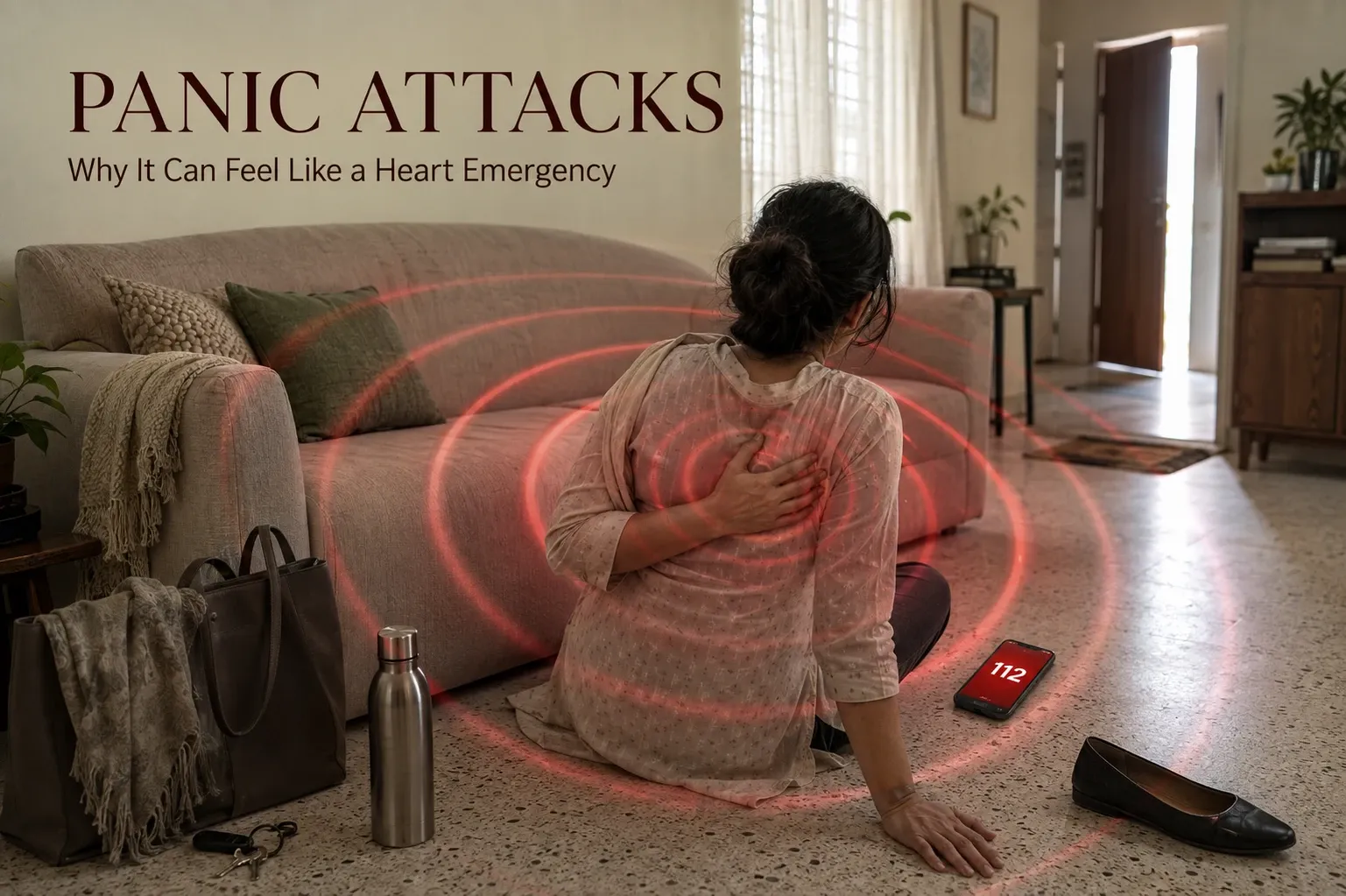
The first time it happens, most people do not think that this is a panic attack. They think something is wrong with their heart.
Your chest tightens. You cannot get a full breath. Your hands start tingling, and the more you notice these changes, the more frightened you become. You may reach a hospital, get an ECG and other tests, and hear that everything looks normal. That can be reassuring, but it may also leave you wondering, “Then why did it feel so real?”
Because it was real. A panic attack causes a genuine physical alarm response in the body. It is treatable, but chest pain should always be medically checked before it is assumed to be panic.
What Is a Panic Attack?
A panic attack is a sudden wave of intense fear or discomfort that reaches its peak within minutes.
Your body switches on its emergency response. Your heart beats faster, your breathing changes and your muscles become tense. This is the same system that helps you react to real danger, but during panic it becomes active when no danger is present.

Most panic attacks last between 5 and 20 minutes, although some last longer [1]. You may continue to feel tired, shaky or unsettled after the intense fear comes down.
Having one panic attack does not automatically mean you have panic disorder.

Allo asks
When you feel your heart racing suddenly, what's usually your first thought?
What Does a Panic Attack Feel Like?
A panic attack causes several physical and emotional symptoms at the same time.
Common symptoms include:

- A racing or pounding heartbeat
- Breathlessness or chest tightness
- Shaking, sweating, dizziness or nausea
- Tingling in the hands, feet or around the mouth
- Feeling unreal, out of control or afraid of dying
Not everyone has every symptom. The main pattern is that the symptoms come on quickly and become intense within minutes.
Is It a Panic Attack or a Heart Attack?
Panic attacks and heart attacks can both cause chest pain, sweating, breathlessness and fear. You cannot safely tell them apart from symptoms alone.
New or unexplained chest pain should be checked by a doctor, even if you have experienced panic before.
Call 112 or go to the nearest hospital immediately if the pain is severe, does not go away or spreads to the arm, jaw, neck, back or stomach. Also get emergency help if it comes with fainting, heavy sweating or severe breathlessness.
Getting checked is not an overreaction. A doctor should assess possible heart and other physical causes before deciding that the symptoms came from panic.
In India, people with chest pain may first visit an emergency department or cardiologist. This is the correct first step. A Kerala study of 118 people whose chest pain had been assessed as non-cardiac found that 39.8% had panic disorder [2]. This was one hospital study, so the figure does not apply to everyone.
What Is the Difference Between a Panic Attack and an Anxiety Attack?
A panic attack usually begins suddenly and becomes intense within minutes. Anxiety tends to build more slowly around a worry or stressful situation.
“Anxiety attack” is not a formal medical diagnosis. People often use it to describe a period of severe worry, tension or feeling overwhelmed.
Anxiety may continue for hours or days around an exam, interview, medical report or family problem. Panic is usually shorter and brings a stronger rush of physical symptoms.
If worry remains present on most days, read more about generalised anxiety disorder.

What Should You Do During a Panic Attack?
The aim is to help your body move through the alarm response without adding more fear.
If you are in a safe place, sit down and loosen anything tight around your neck. Breathe out slowly and gently. Avoid taking repeated large breaths because overbreathing can make dizziness and tingling worse.
Choose one object near you and describe its colour, shape and texture. This moves some attention away from the sensations inside your body.
Remind yourself:
“This feels frightening, but it may be panic. The feeling will rise and come down.”
Try not to check your pulse repeatedly or search every symptom online during the attack. These actions can make the fear stronger.
Breathing and grounding techniques become easier when practised before you need them.
If the symptoms are new, severe or different from your usual attacks, seek medical help.
How to Help Someone During a Panic Attack
Stay nearby and speak in a calm, normal voice. Ask whether they would like to sit somewhere quieter.
Do not crowd them, ask many questions or repeatedly tell them to calm down. You can say:
“I am here. Let us take this one moment at a time.”
Do not assume it is panic if the person has new chest pain, faints or seems seriously unwell. Arrange medical help.
Read more about supporting someone during a mental health problem.
I worry less about frequent attacks and more about the quiet changes - someone who's stopped taking the metro, or won't go out alone anymore. That's panic disorder taking over, one avoided place at a time.
When Do Panic Attacks Become Panic Disorder?
Panic disorder may be diagnosed when attacks keep happening and you spend a month or more worrying about another attack or changing your behaviour to avoid one.
You may stop using the metro, exercising, taking lifts or going somewhere alone. These places begin to feel dangerous because escaping or getting help might be difficult.
When this avoidance becomes severe, it may develop into agoraphobia.
A normal body sensation can also become a trigger. Breathlessness after climbing stairs or a faster heartbeat after coffee may be mistaken for the start of another attack. Fear then increases the sensation, creating a panic cycle.
Panic Attacks at Night: Can They Happen During Sleep?
Yes. A panic attack can wake you from sleep with a racing heart, breathlessness or intense fear.
A night-time panic attack is the same type of alarm response as a daytime attack. However, breathing problems, thyroid conditions and other health issues can cause similar symptoms.
Tell a doctor if attacks regularly wake you from sleep. Read more about insomnia and sleep disorders.
How Are Panic Attacks Treated?
Panic disorder can be treated with cognitive behavioural therapy, guided self-help, medicine or a combination of these.
Cognitive Behavioural Therapy
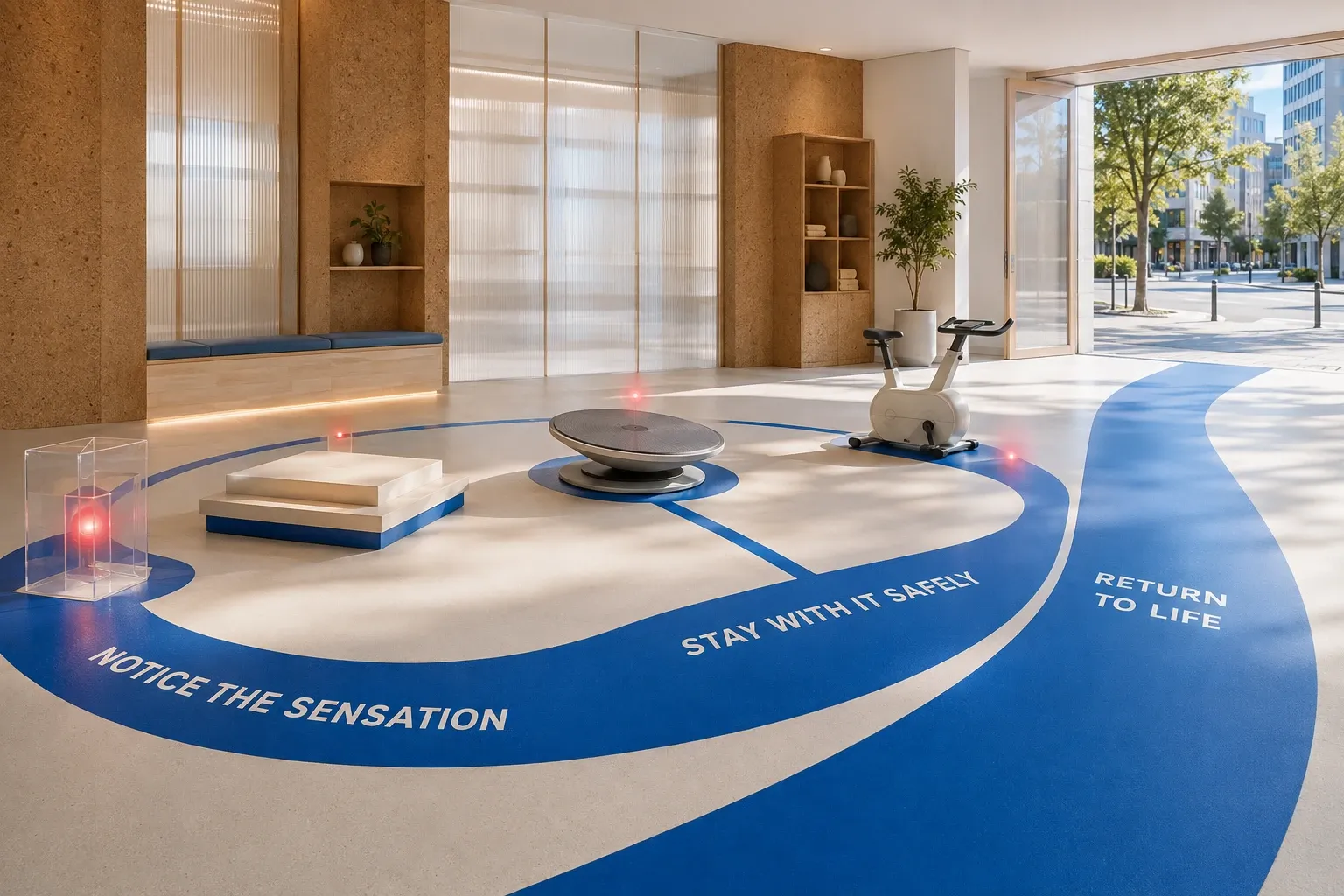
CBT helps you understand the panic cycle and become less frightened of normal body sensations. It also helps you gradually return to places or activities you have started avoiding.
Clinical guidance recommends around 7 to 14 hours of CBT in total for panic disorder [3]. If therapy is new to you, read about what happens in a counselling session.
Medicine
A doctor may recommend an antidepressant when panic attacks are frequent or seriously affect daily life.
Benzodiazepines may reduce anxiety quickly, but clinical guidance does not recommend them as a long-term treatment for panic disorder because they may lead to poorer long-term outcomes [3]. Do not start, stop or change a prescribed medicine yourself. Learn more about how psychiatric medicines work.
Why Do Panic Attacks Often Go Untreated in India?
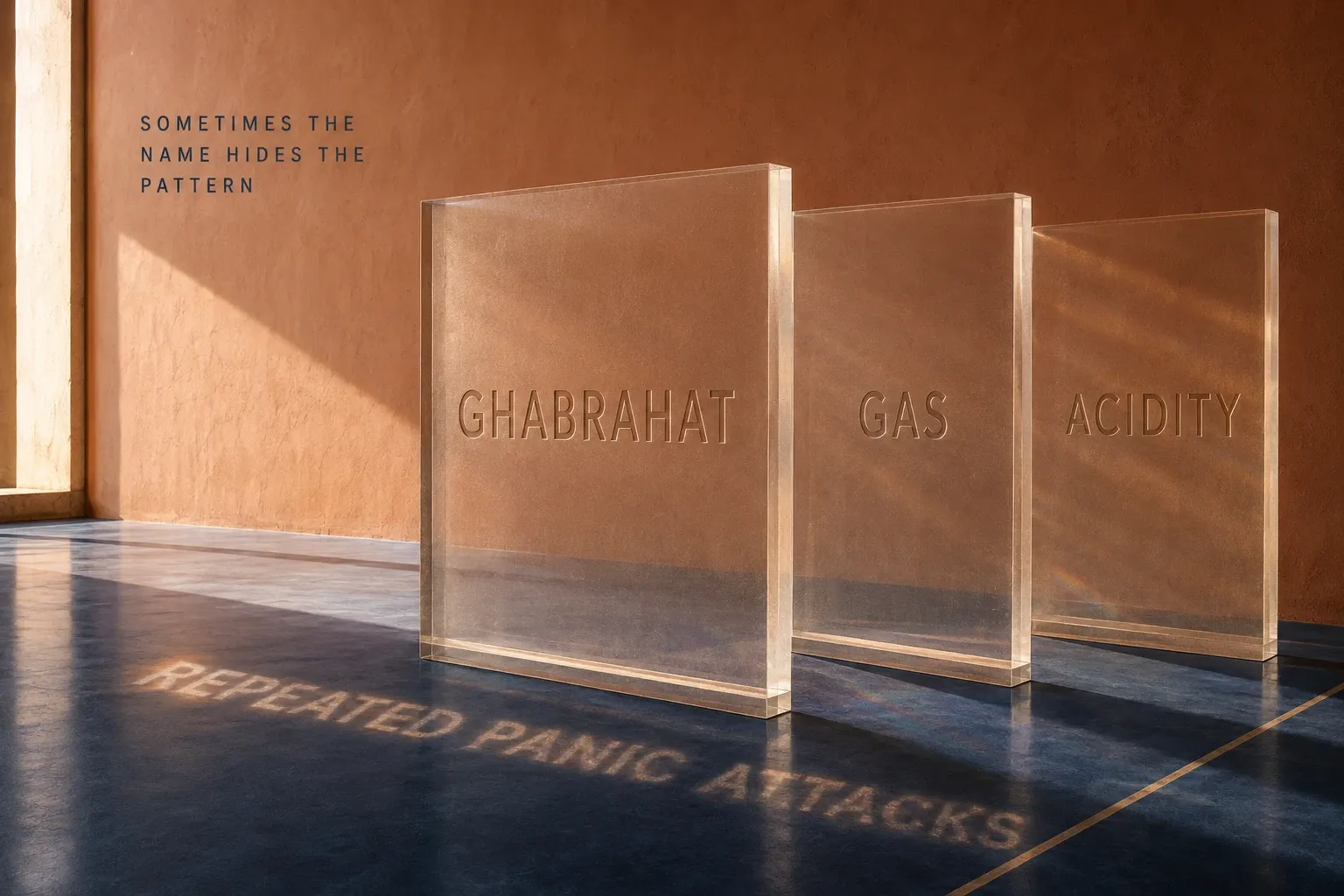
Words such as ghabrahat, gas and acidity may be used for many different symptoms. This can make it difficult to recognise when repeated episodes are panic attacks.
Normal heart reports can provide relief, but they do not treat the fear of another attack. If your doctor has ruled out a heart problem and the attacks continue, ask for a mental health assessment.
You are not wasting anyone’s time by asking what should happen next.
When Should You See a Doctor?
Speak to a doctor if you have repeated attacks, worry constantly about the next one or have started avoiding places and activities.
You should also get checked if the symptoms are new or if you are unsure whether they are caused by panic.
Treatment can reduce both the attacks and the fear surrounding them. Getting help early may prevent avoidance from taking over more of your life.
A confidential consultation with a mental health professional at Allo Health can help you understand your symptoms and decide what support may suit you.

Disclaimer
This blog article discusses mental health and emotional wellbeing for general educational and informational purposes only. It is not a substitute for professional advice, diagnosis, or treatment, and only a qualified mental health professional, such as a psychiatrist, psychologist, or licensed therapist, can diagnose a condition or recommend treatment. If you are struggling, please reach out to a qualified professional or someone you trust; if you are in crisis or may be at risk of harming yourself, use the crisis support resources on this page. For any decisions about your mental health, we encourage you to seek the guidance of a qualified professional.
Most Asked Questions
How long does a panic attack last?
The peak arrives within minutes, and most attacks settle substantially within about half an hour [1]. Feeling wrung out, shaky or tearful for a few hours afterwards is common and doesn't mean the attack is still going. If severe symptoms genuinely continue for hours without easing, that's worth a medical opinion, because it's not the usual pattern.
Why do panic attacks happen when nothing is wrong?
Because the alarm is triggered by the body, not by the situation. Once you've had a bad attack, ordinary sensations like a racing heart after climbing stairs or a skipped beat after coffee can get read as danger, which sets the alarm off, which produces more sensations. That loop is what therapy works on, and it's why "there's nothing to be anxious about" never helps anyone.
Can panic attacks be cured?
Treatment works well for many people, and a lot of them stop having attacks altogether. Being honest about it: relapses happen, particularly at stressful periods, and having a few attacks again after a good stretch is not starting from zero. People who have done the therapy usually recognise what's happening much faster the second time.
Should I stop doing things where a panic attack would be difficult?
It's the natural instinct and it's the one thing that reliably makes panic disorder worse. Every avoided place teaches your brain that the place was dangerous and that you escaped in time. Rebuilding usually means going back gradually, with support, rather than all at once, and it's a standard part of treatment rather than something to manage on willpower.
My family says it's just gas, or that I need to be stronger. How do I explain it?
You may not be able to, and you don't have to win that argument to get treated. What tends to land better than a medical explanation is the specific, factual version: this happens suddenly, it peaks in minutes, my heart has been checked and it's fine, and there's a treatment for it that takes a few months. If someone still doesn't accept it, you can book an appointment without their agreement.
Sources
Why Should You Trust Us?
Why Should You Trust Us?
This article was written by Dr. Srishti Rastogi, who has more than 1 years of experience in the healthcare industry.
Allo has the expertise of over 50+ doctors who have treated more than 1.5 lakh patients both online and offline across 30+ clinics.
Our mission is to provide reliable, accurate, and practical health information to help you make informed decisions.
For This Article
- We referenced clinical sources for this article, including NICE's guidance on panic disorder treatment and a peer-reviewed Kerala hospital study on panic disorder in people with chest pain, so the treatment recommendations and information here reflect current clinical evidence, not guesswork.
- We deliberately included an Indian clinical study rather than relying only on Western data, because how panic attacks show up and get talked about in India - through words like ghabrahat, gas, or acidity - is genuinely different, and most panic disorder content online misses this entirely.
- We built this article around the question we know readers are actually asking first: "Is this my heart or is this panic?" - and we answer it honestly, including telling you when to get emergency help rather than assuming it's panic.
- We were careful with the research we used. Where a statistic came from a single hospital study, we say so, rather than presenting it as something that applies to everyone.