Cannabis (Ganja) side Effects and When Use Becomes Dependence
Written by Dr. Srishti Rastogi
Dr. Srishti Rastogi is a medical writer and healthcare professional dedicated to high-quality patient education and public health awareness. Leveraging her clinical background, she produces deeply researched, evidence-based content for digital health platforms and medical publications. Dr. Srishti’s unique dual perspective as a clinician and communicator allows her to craft content that builds trust and credibility with readers navigating sensitive health topics.
•
September 11, 2026
Our experts continually monitor the health and wellness space, and we update our articles when new information becomes available.
Quick Read
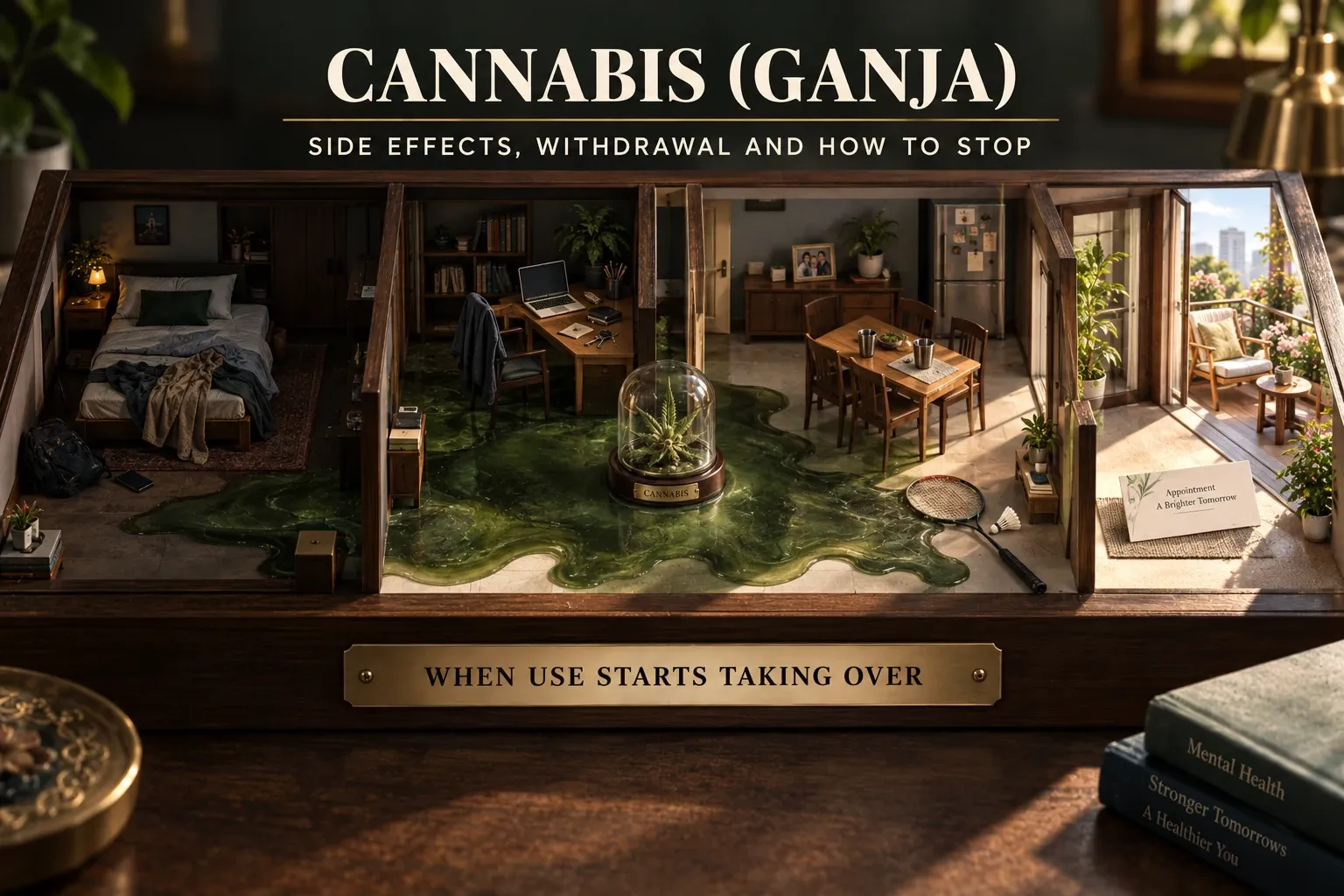
Cannabis can cause dependence. Around 20% to 30% of people who use it regularly develop a problem with it. Stopping brings a real withdrawal that peaks around day three and settles over about two weeks. It isn't medically dangerous the way alcohol withdrawal is. No medicine is approved to treat it, so talking treatments are the main thing that works. In India, bhang and ganja sit on different sides of the law, and that legal line isn't a safety line.
If you or someone you know is in crisis, help is available right now. You are not alone, and things can get better with the right support.
If you are searching for the side effects of cannabis (ganja), chances are you are not just looking for general information. You may be wondering whether your own use, or the use of someone close to you, is becoming a problem.
This can be difficult to judge in India. Cannabis has cultural and religious links, and bhang is legally sold in some places. That can make it seem harmless. But traditional, natural and legal are not the same as safe.
Here is what cannabis can do, how regular use can turn into dependence and what may help if you want to stop.

Allo asks
What brought you to this page?
What Does Cannabis (Ganja) Do to You?
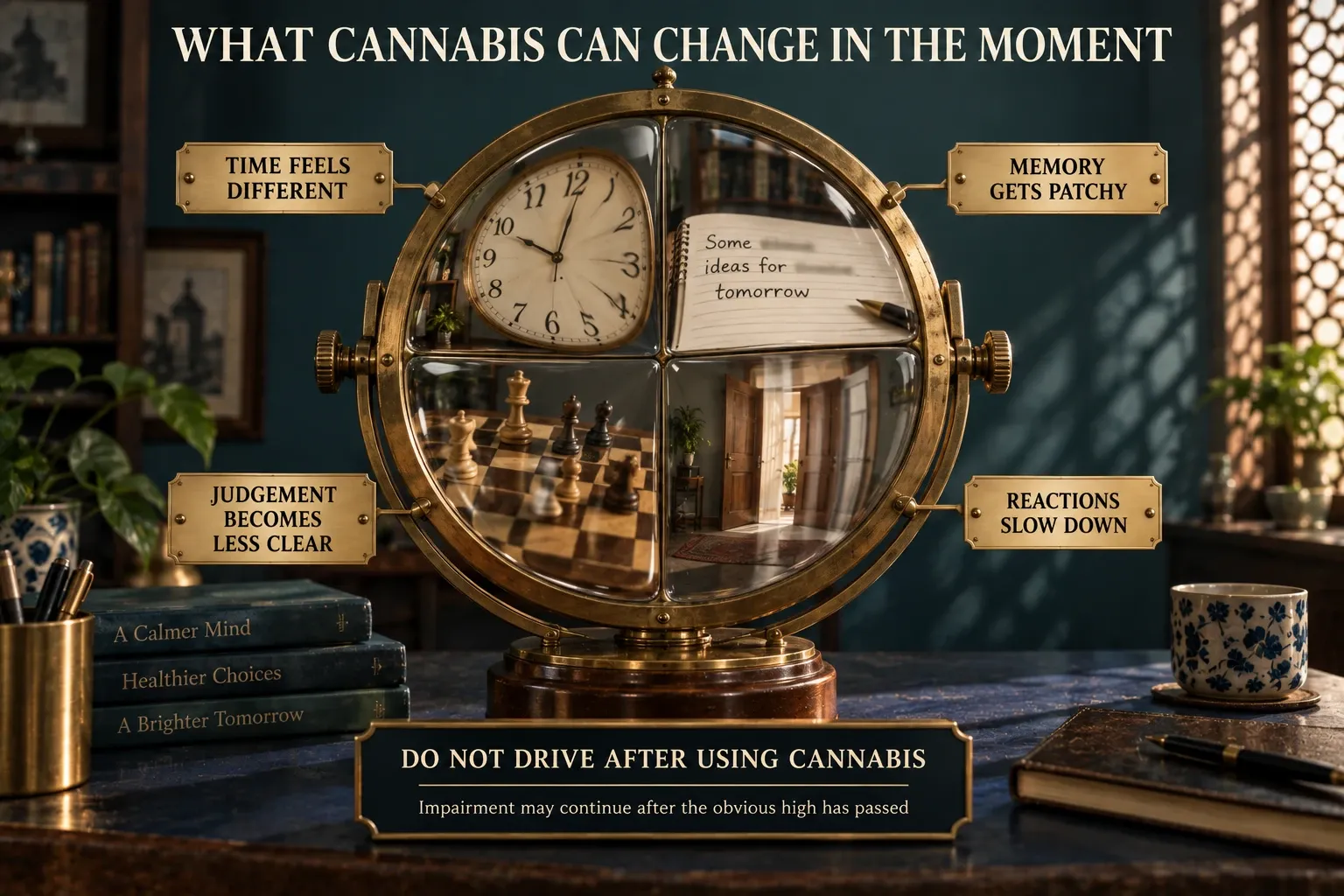
Cannabis affects the parts of the brain that manage memory, mood, appetite, movement and judgement. After using it, you may feel relaxed, talkative or laugh more than usual. Time may seem to move slowly and you may feel hungrier. You might also forget parts of a conversation or lose track of what you were doing. Your reactions and coordination can become slower.
For some people, the experience is very different. Instead of feeling calm, they may become anxious, panicked or suspicious. Cannabis can also cause a racing heart, confusion or the feeling that someone is watching you. These effects are more likely with larger amounts and stronger cannabis products.

Cannabis that is eaten or drunk can take an hour or longer to show its full effect. Because of this delay, some people take more and later realise that they have had too much. Do not drive or operate machinery after using cannabis. Your judgement and reactions may still be affected even after you stop feeling high [1].
Can You Become Addicted to Cannabis (Ganja)?
Yes. Regular cannabis use can lead to cannabis use disorder, also known as cannabis dependence or addiction. Cannabis comes from a plant, but that does not make it non-addictive. Tobacco and opium come from plants too. Research suggests that around 20% to 30% of regular users may develop cannabis use disorder [2]. The risk is higher if you use it daily, started at a young age or use stronger forms of cannabis.
It can also become harder to control when cannabis is your main way of dealing with stress, poor sleep or difficult feelings. What starts as something you use to relax can slowly become something you feel you need to manage the day. Most people who try cannabis do not become dependent. But dependence is not rare, and it is not a sign that someone is weak. You can read more about substance use and addiction.

You do not have to use cannabis every day for it to be a problem. If it is affecting your sleep, mood, relationships, work or daily routine, that is enough reason to ask for help. Treatment is about understanding what keeps the use going, not judging the person.
How Do You Know If Cannabis Use Has Become a Problem?
Rather than focusing only on how often you use cannabis, think about how much control you have over it and how it is affecting your life. You may notice that:
- You often use it more than you planned.
- You make rules for yourself but cannot stick to them.
- You have tried to cut down but started again.
- You need more cannabis to feel the same effect.
- Your work, studies, money or relationships are being affected.
- You are losing interest in things you once enjoyed.
- You use cannabis to feel normal rather than to feel high.
- You feel anxious, restless or unable to sleep when you stop.
However, one sign by itself does not confirm dependence. A mental health professional will look at the whole picture, including how long this has been happening and how it is affecting your daily life. Because, some of these signs can also appear in depression, including low energy, poor motivation and losing interest in things. A proper assessment can help separate the two or identify when both are happening together.

What Does Cannabis Withdrawal Feel Like?
If you stop after using cannabis regularly, you may feel irritable, anxious or restless. Sleep can become difficult, dreams may feel unusually vivid and your appetite may reduce. Some people also feel low for a while. Symptoms usually begin within one or two days of stopping. They tend to be strongest during the first week and then improve over the next two to three weeks [2]. Sleep may take a little longer to return to normal, especially after heavy daily use.
Cannabis withdrawal is not usually dangerous in the way severe alcohol withdrawal can be. Still, it can be uncomfortable. Poor sleep, irritation and strong cravings are common reasons people start using again. One review found withdrawal symptoms in around 17% of cannabis users in general-population studies. The rate was much higher among heavy users and people already receiving treatment [3].
If sleep is making it harder for you to stop, our guide to managing insomnia may help.
Can Cannabis Make Anxiety or Sleep Problems Worse?
Yes. Cannabis may help you relax or fall asleep at first, but regular use can make anxiety and sleep problems worse over time. This can become a difficult cycle. You use cannabis because you cannot sleep, but regular use starts disturbing your natural sleep. You then feel that you need cannabis just to get through the night.
The same thing can happen with anxiety. Cannabis may give short-term relief, but the anxiety comes back. In some people, it becomes stronger. If anxiety is one of the main reasons you use cannabis, treating the anxiety problem itself may make it easier to reduce or stop.
Can Cannabis Cause Psychosis?
Cannabis can cause paranoia, confusion and psychotic symptoms in some people. Psychosis means that a person is having difficulty knowing what is real. They may hear voices, become extremely suspicious or strongly believe things that other people do not.
A large European study found that daily cannabis use was linked with about three times the odds of developing a first psychotic disorder. Daily use of stronger cannabis was linked with nearly five times the odds [4]. This does not mean that cannabis caused every case. Most people who use cannabis do not develop psychosis. However, the risk should not be ignored, particularly with daily or high-strength use.
Feeling confused or suspicious while high may pass when the effects wear off. But if someone continues to hear voices, feels watched or remains confused afterwards, they need urgent medical help.
Is Cannabis (Ganja) Legal in India?
Indian law treats different parts of the cannabis plant differently.
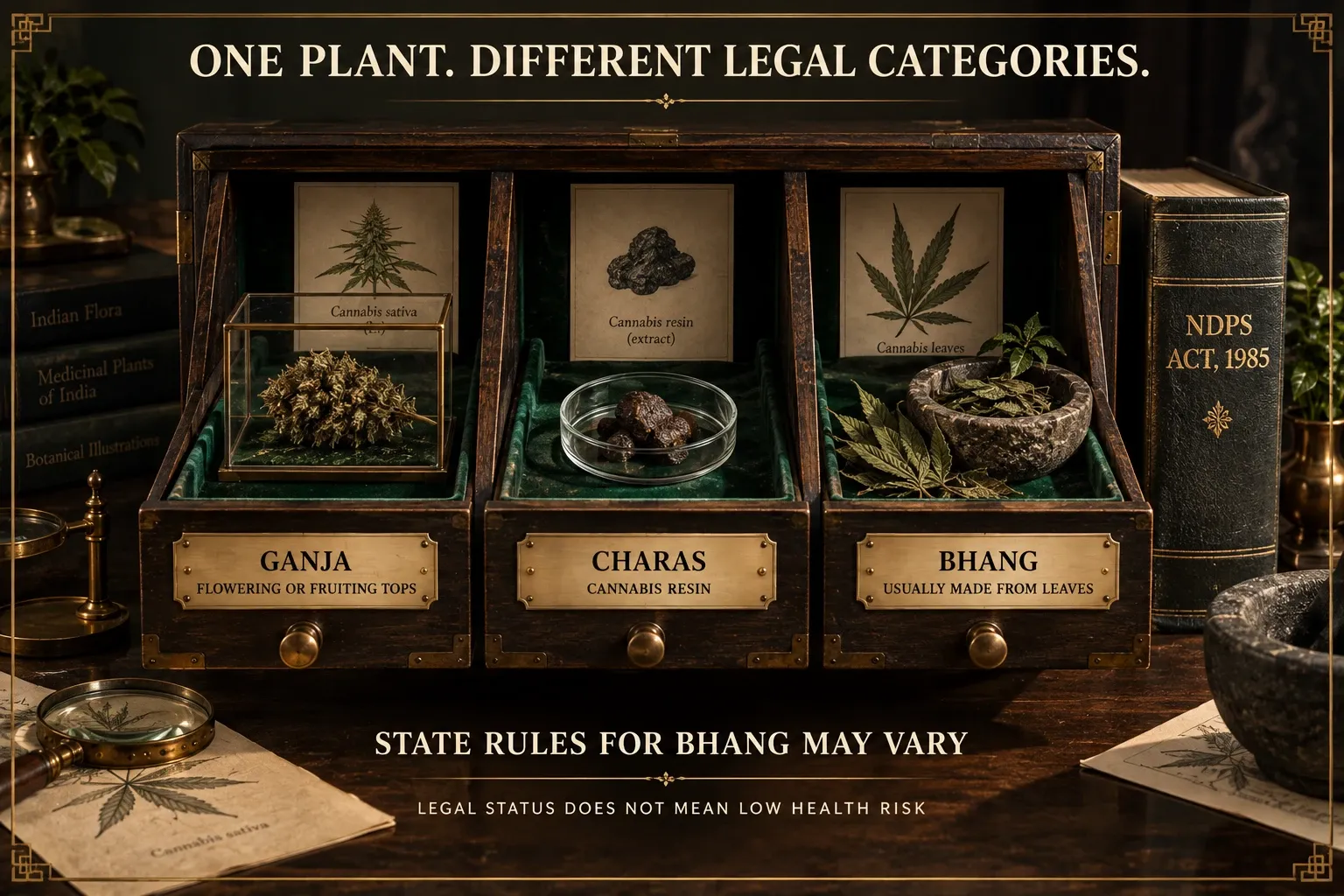
Under the Narcotic Drugs and Psychotropic Substances Act, 1985, ganja generally refers to the flowering or fruiting tops of the plant. Charas is cannabis resin, while bhang is usually made from the leaves. The law excludes leaves and seeds when they are not attached to the flowering or fruiting tops [7]. This is why bhang is treated differently from ganja and charas. Rules for selling or possessing bhang may also vary from one state to another.
But legal and safe do not mean the same thing. A cannabis product may be legally available and still cause health problems when used regularly. India’s national survey estimated that around 2.2 crore people used bhang and about 1.3 crore used ganja or charas. It also estimated that nearly 72 lakh people needed help for a cannabis-related problem [6].
How Can You Stop Using Cannabis?
You can choose to cut down or stop completely. If you have tried cutting down before and it did not work, stopping fully may be easier to manage.
Start with a simple plan:
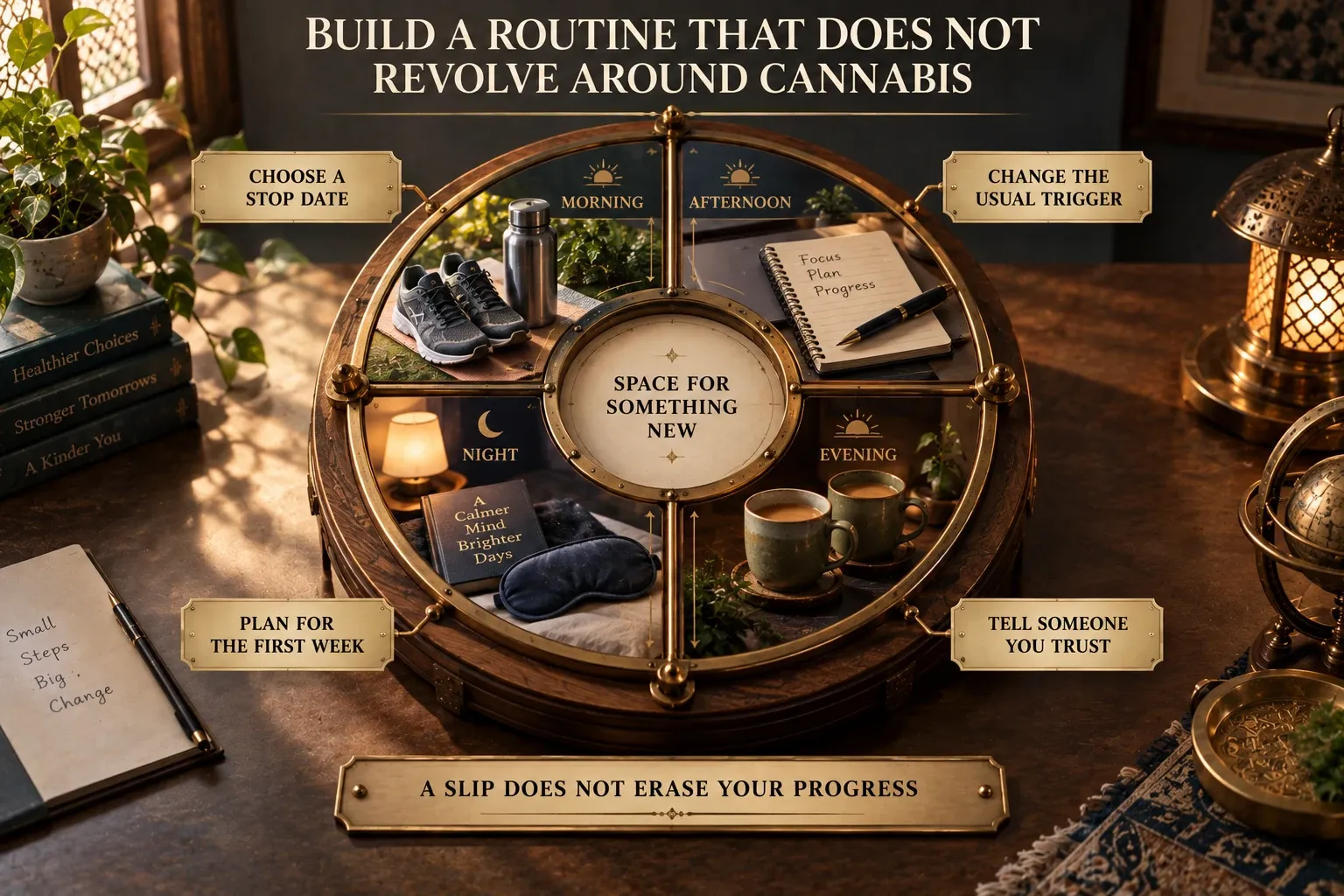
- Choose a date and tell someone you trust.
- Remove cannabis from your home.
- Stay away from situations where you usually use it.
- Arrange extra support for the first week.
Poor sleep, irritation and cravings are common in the beginning. Try to eat regularly, keep your routine lighter and have someone you can call when the urge to use feels strong. There is currently no medicine approved specifically for cannabis dependence [2]. A doctor can still help with related problems such as anxiety, depression or poor sleep.
Talking therapy is the main treatment. Research involving more than 4,000 people found that it helped people reduce their cannabis use. It appeared to work particularly well when motivational support and cognitive behavioural therapy were used together [5].
If you have never spoken to a therapist before, you can read what to expect in psychotherapy. If you use cannabis again after trying to stop, it does not mean you are back at the beginning. Think about what triggered you, change your plan for that situation and continue from there.
When Should You Get Help?
Get urgent help if you or someone with you is hearing or seeing things that are not there, is extremely confused or agitated, continues to feel watched after the high has passed, or is thinking about suicide or self-harm.
Call 112 or go to the nearest hospital emergency department. Ask someone you trust to stay with you. You can also use these mental health crisis helplines. Even when it is not an emergency, professional support may help if you have tried to stop but could not, need cannabis to sleep or manage the day, or can see that it is affecting your work, studies, money or relationships. If you are worried about another person, our guide to supporting a loved one may help you start the conversation.
You do not have to wait until the situation becomes serious. You also do not need to promise that you will quit before asking for help. At Allo Health, cannabis use is treated as a health concern, not a character flaw.

Disclaimer
This blog article discusses mental health and emotional wellbeing for general educational and informational purposes only. It is not a substitute for professional advice, diagnosis, or treatment, and only a qualified mental health professional, such as a psychiatrist, psychologist, or licensed therapist, can diagnose a condition or recommend treatment. If you are struggling, please reach out to a qualified professional or someone you trust; if you are in crisis or may be at risk of harming yourself, use the crisis support resources on this page. For any decisions about your mental health, we encourage you to seek the guidance of a qualified professional.
Most Asked Questions
Is bhang safer than ganja because it's legal in some places?
No. The legal treatment of the two differs because the law defines cannabis by which part of the plant is used, not by how risky it is. India's national survey found harmful and dependent use to be proportionately higher among ganja and charas users. That's a difference in how people use each form, not a clean bill of health for bhang.
How long does weed stay in your system?
This varies so widely by how often you use, how much, and your own body that any single answer is misleading. It's also the wrong question if what you want to know is whether use has become a problem. The signs above are a better guide than a detection window.
Can you get physically addicted to weed, or is it only psychological?
That split isn't as clean as it sounds, and it doesn't change what to do. Regular use produces tolerance and a genuine withdrawal state when you stop, both of which are physical. The pull to use again is also driven by habit and by whatever the cannabis was managing.
Does cannabis cause schizophrenia?
The evidence shows an association, not a straightforward cause. Daily use and stronger products are linked to higher odds of a psychotic disorder, and the risk appears greater for people who are already vulnerable. Most people who use cannabis never develop psychosis.
I only smoke at night to sleep. Is that a problem?
It might be. Cannabis can shorten the time it takes to fall asleep while reducing sleep quality. Stopping often brings a stretch of poor sleep and vivid dreams that pushes people back to it. If you can't sleep without it, that's worth raising with a doctor rather than managing alone.
My family found out and wants to send me to a rehab centre. Is that the only option?
It usually isn't. Most people with a cannabis problem are treated as outpatients, through talking treatments and regular follow-up. Residential care is for a smaller group with more severe or complicated problems. A doctor can advise on what level of care fits.
Sources
- 1.
World Health Organization. The Health and Social Effects of Nonmedical Cannabis Use. 2016.
- 2.
Connor JP, Stjepanović D, Le Foll B, Hoch E, Budney AJ, Hall WD. Cannabis Use and Cannabis Use Disorder. Nature Reviews Disease Primers. 2021;7:16.
- 3.
Bahji A, Stephenson C, Tyo R, Hawken ER, Seitz DP. Prevalence of Cannabis Withdrawal Symptoms Among People With Regular or Dependent Use of Cannabinoids: A Systematic Review and Meta-analysis. JAMA Network Open. 2020;3(4).
- 4.
Di Forti M, et al. The Contribution of Cannabis Use to Variation in the Incidence of Psychotic Disorder Across Europe: Findings From the Multicentre EU-GEI Case-Control Study. The Lancet Psychiatry. 2019;6(5):427–436.
- 5.
Gates PJ, Sabioni P, Copeland J, Le Foll B, Gowing L. Psychosocial Interventions for Cannabis Use Disorder. Cochrane Database of Systematic Reviews. 2016;(5).
- 6.
Ministry of Social Justice and Empowerment, Government of India. Magnitude of Substance Use in India. 2019.
- 7.
Government of India. The Narcotic Drugs and Psychotropic Substances Act, 1985, Section 2(iii).
Why Should You Trust Us?
Why Should You Trust Us?
This article was written by Dr. Srishti Rastogi, who has more than 1 years of experience in the healthcare industry.
Allo has the expertise of over 50+ doctors who have treated more than 1.5 lakh patients both online and offline across 30+ clinics.
Our mission is to provide reliable, accurate, and practical health information to help you make informed decisions.
For This Article
- This article uses evidence from the World Health Organization, peer-reviewed medical journals, Cochrane reviews and Government of India reports.
- The section on ganja, charas and bhang is based on the Indian NDPS Act. It also explains why legal status and health risk are not the same thing.
- We distinguish between a proven cause and an association. For example, the research links frequent cannabis use with a higher risk of psychosis, but it cannot show that cannabis caused every individual case.
- Cannabis dependence is discussed as a health problem. Having difficulty cutting down does not mean someone is weak, careless or lacking willpower.
- The article explains which symptoms may happen during withdrawal and which signs, such as ongoing hallucinations, severe confusion or suicidal thoughts, need urgent help.
- Online information cannot diagnose cannabis use disorder. A qualified professional can look at how often you use, how it affects your life and whether anxiety, depression, sleep problems or another substance may also be involved.