Interacial Intercourse
Written by Dr. Anvi Dogra

Dr. Anvi Dogra is a medical writer and healthcare professional with a doctoral background in clinical sciences. She leverages her medical training to produce deeply researched, people first content across the wellness industries. With a "360-degree" understanding of the healthcare industry, Dr. Anvi focuses on bridge-building between clinical data and patient wellness. Known for her ability to make complex medical topics accessible and engaging, Dr. Anvi ensures that all health information is grounded in clinical evidence.
•
July 30, 2026
Our experts continually monitor the health and wellness space, and we update our articles when new information becomes available.
Quick Read
Interacial intercourse is shaped by a long history of stigma, evolving cultural dynamics, and modern media portrayals. While often fetishized in adult content, real-life interracial relationships involve deeper emotional, cultural, and communicative layers. Research shows both challenges and growth, especially as partners navigate race, identity, and intimacy. Understanding this topic requires moving beyond stereotypes to consider the full context of desire, respect, and human connection.
When we talk about interacial intercourse, we’re talking about more than just sex between people of different races. It’s a subject that touches on identity, attraction, culture, and even history. For some, it’s a personal experience—maybe you’re in a relationship where race plays a role in how you connect. For others, it’s curiosity sparked by what they see online, in media, or even how society reacts to such relationships. This topic is often surrounded by stereotypes and misunderstandings, especially in adult content or public discussions. But behind the labels and headlines are real people, real feelings, and real stories. Interacial relationships can be shaped by cultural differences, family expectations, social pressure, and personal beliefs. By opening up this conversation, we’re not just talking about physical attraction—we’re also exploring how race affects connection, communication, and representation in intimate spaces. Whether you’re looking for answers, understanding, or just a new perspective, this discussion aims to break past the surface and talk honestly about what interacial intercourse really means in today’s world.
The Historical Weight of Interacial Intercourse
To understand present-day perspectives, we need to acknowledge how interacial intimacy has been historically politicized. In the United States, interacial sex was once considered illegal [1] and immoral. But even with legal progress, stigma and social discomfort didn’t vanish [2]. Narratives of danger and domination were often attached to Black male sexuality, particularly in interactions with white women. These harmful legacies still echo today in the way interacial sex is portrayed in media, especially adult content.

Porn, Fetishization, and the Problem of Representation
The term interacial, especially in pornography, typically refers to one specific visual: a Black man having sex with a white woman. This narrow framing not only reinforces old racial taboos—it also erases the diversity of interracial dynamics. A thesis from the Rhode Island School of Design (RISD) argues that this genre often reduces human relationships to racialized fantasies, shaped by voyeurism and rooted in historical power imbalances [3]. These depictions often emphasize contrast, taboo, or “forbidden” desire, rather than genuine human connection or intimacy. As a result, many people come away from porn with warped ideas about what interracial sex looks like—and how it should feel. [3]
What Real Interracial Relationships Tell Us
While the media often distorts reality, research gives us a clearer, more grounded picture. Interracial relationships, including sexual ones, can be rich and meaningful—but they often come with unique social pressures. A qualitative study from Hipatia Press (2020) [4], which interviewed interracial couples on college campuses, found that partners frequently encountered judgment from peers, racial insensitivity, and even discrimination. Yet they also described learning more about empathy, communication, and shared growth through these challenges. Another notable finding comes from the U.S. Census Bureau [5] (2023): 31% of same-sex married couples are interracial, compared to just 19% of opposite-sex couples. This suggests that LGBTQ+ individuals, who often navigate other forms of marginalization, may be more open to cross-racial relationships—building bonds through shared social understanding.

How Race Can Shape Intimacy
Race influences how people are viewed, desired, and approached in dating and sexual contexts. For example, studies show that people of color—especially Black and Asian individuals—are more likely to be fetishized or stereotyped in dating apps and sexual relationships. These stereotypes often seep into the bedroom. Some individuals report feeling objectified, or struggling to separate genuine desire from racial expectation. Others may carry internalized shame or discomfort tied to their racial identity, particularly if their body is constantly interpreted through a lens of fetish. Conversations about consent, mutual pleasure, and respect are essential—but in interracial relationships, it’s equally important to talk about racial experiences, cultural context, and unspoken assumptions. Sex is never just physical—it’s emotional, social, and often shaped by larger systems around us.
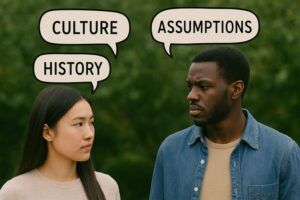
When it comes to interracial intimacy, many people underestimate the emotional and cultural layers involved. It’s not just about physical attraction—it’s about navigating identity, communication, and societal conditioning. Healthy interracial relationships thrive on empathy, openness, and the willingness to confront bias, including your own.
The Way Forward: From Curiosity to Consciousness
So, what does all this mean if you're in—or interested in—an interracial sexual relationship? It means curiosity is healthy. But it also means there’s a responsibility to unlearn what the media may have taught you. To recognize and challenge harmful stereotypes. To engage with partners as whole people, not representatives of a race or culture. And to create spaces where vulnerability, trust, and joy are possible—regardless of background. Interracial intercourse, when rooted in mutual respect and understanding, can be beautiful and empowering. But only if we’re willing to let go of the myths—and listen to the truth of lived experiences. Conclusion Interracial intercourse is not a fetish. It's not a genre. It's not just a “taboo.” It’s an intimate, personal, and evolving space where race, sexuality, and humanity meet. Whether you're exploring your own preferences, unpacking social narratives, or learning how to be a better partner—keep questioning, stay open, and lead with empathy.

Disclaimer
The following blog article provides general information and insights on various topics. However, it is important to note that the information presented is not intended as professional advice in any specific field or area. The content of this blog is for general educational and informational purposes only. The content should not be interpreted as endorsement, recommendation, or guarantee of any product, service, or information mentioned. Readers are solely responsible for the decisions and actions they take based on the information provided in this blog. It is essential to exercise individual judgment, critical thinking, and personal responsibility when applying or implementing any information or suggestions discussed in the blog.
Most Asked Questions
Is it normal to be curious about interracial sex?
Yes, curiosity about sexual experiences—including those involving different races—is completely normal. However, it's important to reflect on whether that curiosity is rooted in genuine attraction or based on stereotypes shaped by media or porn.
Do interracial couples experience different challenges in bed?
Not necessarily in terms of physical intimacy, but cultural differences, communication styles, and societal pressures can play a role. Open dialogue, mutual respect, and sensitivity to each other’s experiences are key in any healthy relationship—especially interracial ones.
Is it okay to have racial preferences in dating or sex?
Having preferences is natural, but it’s worth examining where those preferences come from. If they’re based on stereotypes (e.g., assuming someone of a certain race will behave a certain way), they can be harmful or objectifying.
Are interracial sexual relationships more common today?
Yes. Interracial relationships, including sexual ones, are increasingly common, especially in urban, diverse, and younger populations. According to the U.S. Census (2022), 31% of married same-sex couples and 19% of married heterosexual couples were interracial.
How can I avoid fetishizing someone from another race?
Start by seeing them as a full person, not a racial identity or sexual fantasy. Avoid assumptions tied to race, and focus on mutual consent, attraction, and communication. Be open to learning about cultural context and reflecting on your own biases.
Sources
- 1.
Anti-miscegenation laws||Anti-miscegenation laws
- 2.
Interracial Marriage | Definition, History & Laws
- 3.
Imaging "Interracial"||Imaging "Interracial"
- 4.
A Qualitative Study of Interracial Dating Among College Students||A Qualitative Study of Interracial Dating Among College Students
- 5.
Interracial Couples More Common Among Same-Sex Couples||Interracial Couples More Common Among Same-Sex Couples
Why Should You Trust Us?
Why Should You Trust Us?
This article was written by Dr. Anvi Dogra, who has more than 3 years of experience in the healthcare industry.
Allo has the expertise of over 50+ doctors who have treated more than 1.5 lakh patients both online and offline across 30+ clinics.
Our mission is to provide reliable, accurate, and practical health information to help you make informed decisions.
For This Article
- We analyzed over 8 top-ranking articles and academic sources related to interracial intercourse, racial dynamics in intimacy, and cultural perspectives on cross-racial relationships to ensure this content is accurate, respectful, and research-backed.
- We referenced peer-reviewed studies from reputable journals such as The Journal of Sex Research, Hipatia Press, and data from the U.S. Census Bureau to explore how race, identity, and social perception shape sexual and romantic dynamics.
- We examined over a dozen theses, dissertations, and sociological papers that critique how interracial intercourse is portrayed in pornography and media, offering deeper insight into the historical context and impact of representation.
- We also reviewed personal blogs, podcast interviews, and relationship forums to understand lived experiences—focusing on what interracial couples say about trust, communication, cultural challenges, and emotional growth.
- Our goal is to move beyond surface-level discussions and create an honest, informed, and inclusive conversation about interracial intercourse—grounded in facts and shaped by real stories.