Erectile Dysfunction and Sperm Health: Is There a Connection?
Written by Dr. Deepali Anand

Dr. Deepali is a medical writer and healthcare professional with a background in clinical surgery and patient care. Having transitioned from active clinical practice to medical communications, she specializes in bridging the gap between complex clinical data and patient education. Dr. Deepali is dedicated to creating evidence-based content that is grounded in scientific rigor and empathy, ensuring that sensitive topics like sexual wellness and mental health are accessible and empowering for every reader.
•
July 30, 2026
Our experts continually monitor the health and wellness space, and we update our articles when new information becomes available.
Quick Read
Can an impotent man produce sperm? Absolutely. Erectile dysfunction doesn't affect your body's ability to make sperm; these are two separate systems that work independently. While ED can make it mechanically harder to conceive (since sperm need to reach their destination), your testicles continue producing healthy sperm regardless of erection challenges. The key insight is that ED and fertility issues sometimes appear together because they can share underlying causes like hormonal imbalances or blood flow problems, but having one doesn't automatically mean you'll have the other. The encouraging news is that both conditions are highly treatable, and many men with ED successfully father children either naturally or with medical assistance.
Can impotent man produce sperm, or does erectile dysfunction affect sperm count? It’s a common confusion because erectile dysfunction (ED) and male infertility are often spoken about together. The truth is that ED, which is the difficulty in getting or keeping an erection, does not directly lower sperm count. However, the same health issues that cause ED, such as hormonal imbalances, poor blood flow, stress, or chronic illnesses, can also affect sperm health and fertility. In this article, we’ll break down the difference between impotence and infertility, explore how ED and sperm quality are linked, review what research says, and discuss practical steps men can take to improve both erection strength and reproductive health.
Does Erectile Dysfunction Affect Sperm Count?
Erectile dysfunction, also called impotence, is the inability of the penis to become or remain erect during sex. It can happen due to several reasons, from heart disorders and diabetes to hormonal issues. But does erectile dysfunction affect sperm count? The answer is no. Erectile dysfunction does not reduce sperm count directly. But the difficulty in maintaining an erection during sex, combined with other health factors, can make it harder to conceive. Infertility is different. It refers to the inability to produce or release healthy sperm for fertilization with the female egg. This condition is about sperm quality, quantity, and delivery rather than erectile function.

Allo asks
What worries you more when it comes to sexual health?
What Do We Mean by Sperm Health?
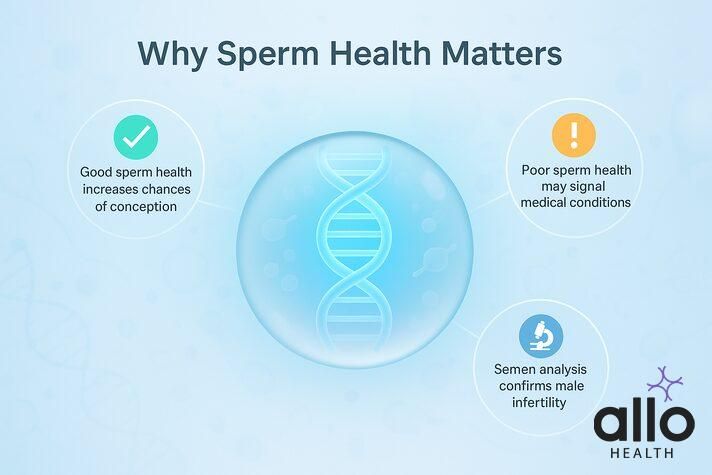
Sperm health refers to the overall quality and functionality of sperm.
Why sperm health matters:
- Good sperm health increases the chances of conception.
- Poor sperm health can signal underlying medical conditions.
- A semen analysis is the standard test to confirm male infertility.
How sperm production works:
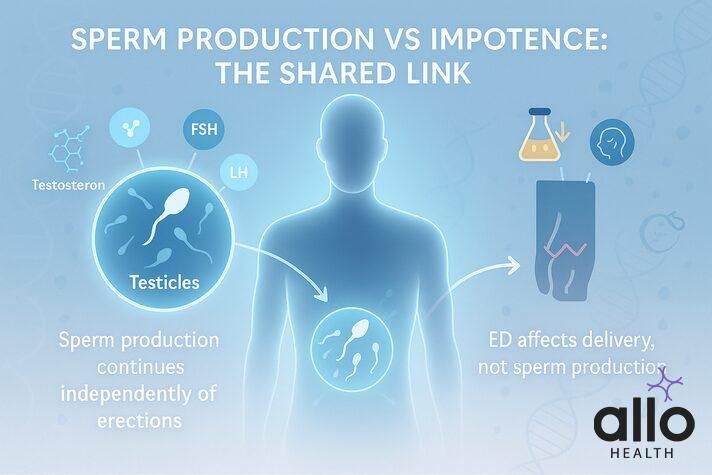
Sperm is produced in the testicles and regulated by hormones such as testosterone, FSH, and LH — factors that can affect both fertility and ED in relationships. This process is independent of erectile function. The testicles continue to produce sperm even if a man struggles with erections, as long as the testicular tissue and hormone systems are healthy. It’s important to understand the difference between fertility and performance; this is what separates erectile dysfunction from infertility.
When Can Impotence Affect Fertility: The Shared Link
Erectile dysfunction can indirectly affect fertility. While it does not stop sperm production, it can interfere with the sperm delivery system. Without an erection strong enough for ejaculation, sperm may not reach the female reproductive system. Some underlying mechanisms also connect ED and sperm health:

Hormonal connection
- Low testosterone can cause both erectile dysfunction and reduced sperm production. About 15% of subfertile men have low testosterone.
- Imbalances in FSH and LH hormones can affect testosterone levels, impacting both erections and sperm.
- High prolactin levels may reduce testosterone, again affecting both functions.
Blood flow connection
- Endothelial dysfunction, the condition where the inner lining of the blood vessels is unable to produce nitric oxide(a chemical that helps the blood vessels relax), which affects erection, can also affect sperm production.
Stress and psychological factors
- The stress of infertility combined with ED can create additional mental strain, further reducing fertility chances.
Erectile dysfunction and sperm health are often confused, but they’re not the same thing. A man can still produce healthy sperm even if he struggles with erections. What we look for are the underlying health factors that might be affecting both.
What Research Says About Erection and Sperm Health
- Men with sperm problems are more likely to have erectile dysfunction than those with normal sperm.
- Men with abnormal sperm shape (teratozoospermia) had about a 32% chance of ED[1].
- Having sperm DNA damage makes ED almost 3 times more likely, and abnormal sperm shape makes it about 2.5 times more likely[2].
- Overall, studies[3]show that ED is more common in men with fertility issues, ranging from 11% to 69% depending on how severe the sperm problem is.
These findings suggest that while ED and sperm problems often appear together, erectile dysfunction itself does not cause infertility — which also affects whether insurance covers ED treatment. Both conditions often share common underlying causes like hormone imbalances or chronic health issues. "According to Allo Health, nearly 1 in 2 men experience some form of erectile dysfunction, based on our internal clinical data of more than 2.5 lakh patients who have visited our clinics."
Can an Impotent Man Produce Sperm?
Yes, an impotent man can produce sperm — see our guide on conceiving with ED for practical options. Erectile dysfunction does not stop sperm production. Impotence (erectile dysfunction) and sperm production are two distinct physiological processes. Not all men with sperm quality issues develop ED, and not all men with ED have sperm problems. The link is significant but not universal. Understanding this distinction is crucial. Even though the sperm delivery system is affected in ED, many men with erectile dysfunction can father children naturally or with medical help.
Improving Both Erectile Function and Sperm Quality
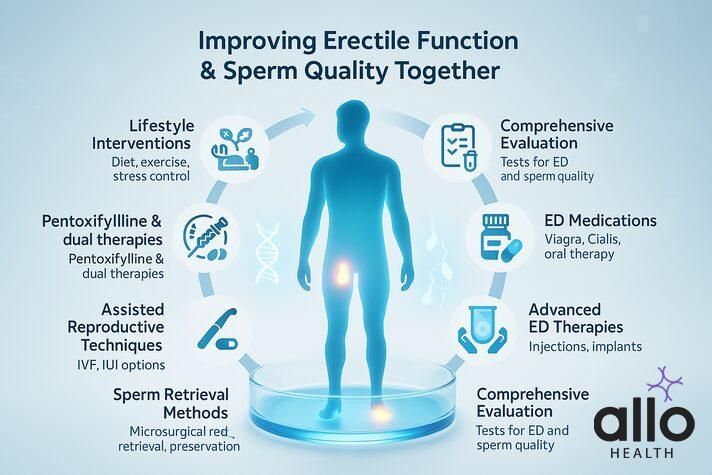
Dual treatment approach
- Some treatments, such as pentoxifylline, benefit both mild erectile dysfunction and poor sperm quality in infertile men.
Comprehensive evaluation
- Men with either condition should undergo testing for both sexual function and fertility. This helps detect issues early and guide treatment.
Lifestyle interventions
- Conditions[4]like diabetes can affect both ED and sperm health. Managing blood sugar, diet, stress, and weight can improve outcomes.
- A balanced diet rich in antioxidants supports both vascular health and sperm quality.
- Managing stress through relaxation techniques or counseling can benefit both sexual function and fertility.
Treatment for Erectile Dysfunction
- Oral ED medications like Viagra and Cialis are proven options.
- Advanced therapies include injections and penile implants.
Assisted Reproductive Techniques
- When ED treatment alone is not enough, fertility treatments like IVF or artificial insemination can help couples conceive using their own sperm.
Sperm Retrieval Methods
- In cases where ejaculation is not possible even with treatment, sperm can be retrieved and preserved through surgical procedures.
Key Takeaways
Erectile dysfunction and sperm health are connected through some shared underlying causes, but one doesn't directly cause the other — and both premature ejaculation and ED are treatable. You can have ED with perfectly healthy sperm, or sperm quality issues with normal erectile function. What's most important is understanding that both conditions are treatable, often simultaneously. With the right combination of lifestyle changes, medical treatment, and sometimes fertility assistance, men dealing with either or both issues have excellent prospects for both sexual satisfaction and fatherhood.

Disclaimer
The following blog article provides general information and insights on various topics. However, it is important to note that the information presented is not intended as professional advice in any specific field or area. The content of this blog is for general educational and informational purposes only. The content should not be interpreted as endorsement, recommendation, or guarantee of any product, service, or information mentioned. Readers are solely responsible for the decisions and actions they take based on the information provided in this blog. It is essential to exercise individual judgment, critical thinking, and personal responsibility when applying or implementing any information or suggestions discussed in the blog.
Most Asked Questions
Can an impotent man have a child?
Yes. Impotence, or erectile dysfunction, does not stop sperm production. Many men with ED still produce healthy sperm and can father children naturally or with medical help such as assisted reproductive techniques.
Can I get pregnant if my partner is impotent?
It depends on the cause and severity of the ED. If your partner produces healthy sperm but struggles with erections, pregnancy is still possible with treatments like medication, therapy, or fertility procedures such as IVF or IUI.
Does impotence affect sperm count?
No. Erectile dysfunction does not directly lower sperm count. However, the same health conditions that cause ED, like diabetes, obesity, or hormonal imbalance, can also affect sperm quality and fertility.
Is it possible for a man to not be able to produce sperm?
Yes. Some men have a condition called azoospermia, where no sperm is present in the semen. This is different from impotence and may be caused by blockages, genetic issues, or hormonal problems.
What should I do if I’m worried about both ED and fertility?
See a qualified doctor or urologist for a complete evaluation. They can test both sexual function and sperm health, identify underlying causes, and guide you toward treatments or lifestyle changes that improve both.
Sources
- 1.
Correlation among isolated teratozoospermia, sperm DNA fragmentation and markers of systemic inflammation in primary infertile men
- 2.
Male Fertility and Reduction in Semen Parameters: A Single Tertiary-Care Center Experience
- 3.
Erectile Dysfunction is Predictive Symptom for Poor Semen in Newlywed Men in Japan
- 4.
Male sexual dysfunction and infertility associated with neurological disorders