Paroxetine and Erectile Dysfunction: Causes and Treatments
Written by Dr. Pranitha Bangera

Dr. Pranitha Bangera is a gold-medalist healthcare professional with an elite foundation in clinical training and patient care. A researcher at heart, she specializes in creating high-impact, research-driven medical content that empowers readers through accessible patient education. Dr. Bangera focuses on the intersection of digital health and clinical communication, specifically within the fields of sexual health and mental well-being. Her work is dedicated to making complex medical innovations understandable and trustworthy for a global audience.
•
July 30, 2026
Our experts continually monitor the health and wellness space, and we update our articles when new information becomes available.
Quick Read
Paroxetine can affect sexual function, and in some men, it may lead to erectile dysfunction (ED) or reduced libido. This happens because the drug alters serotonin and dopamine balance and lowers nitric oxide levels, all vital for sexual arousal and blood flow. The good news is that these effects are usually temporary and reversible. With proper medical guidance, such as dose adjustment, switching antidepressants, or using ED medication, most men can regain normal sexual function without compromising their mental health.
Paroxetine is a widely prescribed antidepressant belonging to the group of drugs called selective serotonin reuptake inhibitors (SSRIs). It helps manage conditions like depression, anxiety, and obsessive-compulsive disorder. However, like other SSRIs, it is also associated with certain sexual side effects, most notably erectile dysfunction (ED). Paroxetine increases levels of a brain chemical called serotonin, which suppresses dopamine, a key chemical that helps with sexual arousal. It also reduces blood flow to the penis. Together, these changes make it harder to achieve or maintain an erection. In this article, we’ll explore how paroxetine can cause erectile dysfunction (ED), why it happens, how it compares to other SSRIs, and what can be done to manage or prevent it.

Allo asks
Have you experienced sexual side effects while taking paroxetine?
Does Paroxetine Cause Erectile Dysfunction?
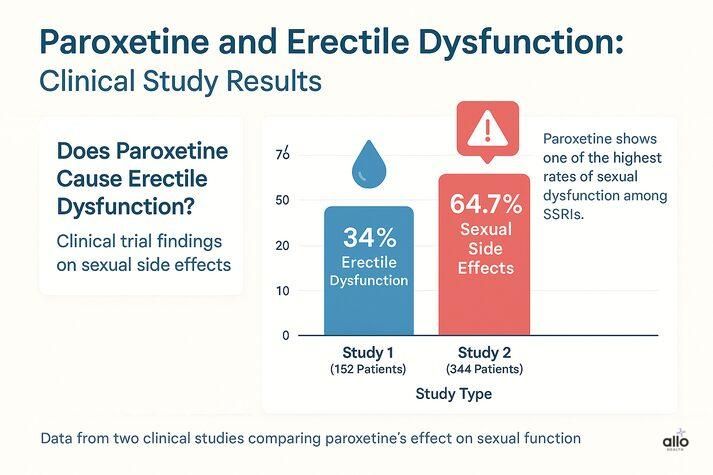
Yes, paroxetine can cause erectile dysfunction as a potential adverse side effect. Clinical data indicate that among SSRIs that cause ED, paroxetine has one of the highest rates of sexual dysfunction. Several clinical trials support this:
- A study of 152 male outpatients, 34% of those taking paroxetine experienced ED. [1]
- Another study of 344 participants reported 64.7% sexual adverse effects with paroxetine, higher than with other antidepressants. [2]
Beyond ED, patients often report decreased sexual desire, reduced sexual satisfaction, and issues with ejaculatory control or orgasm — overlapping with what’s seen in Amitriptyline and sex drive.
How Does Paroxetine Cause Erectile Dysfunction?
1. Serotonin-Dopamine Imbalance
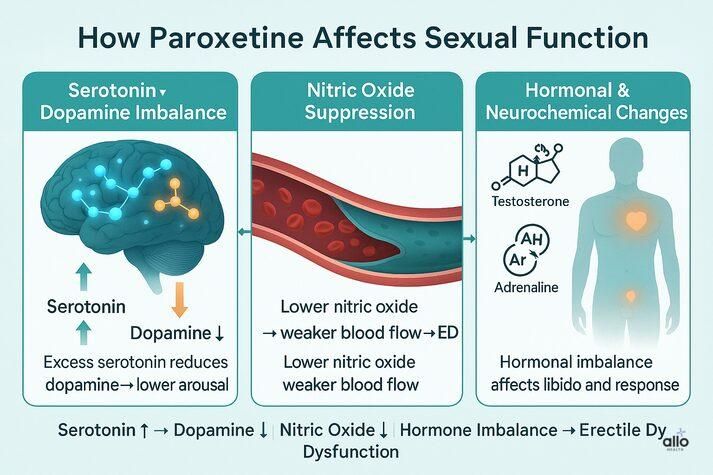
Normally, after your brain releases serotonin (a chemical that helps regulate mood), some of it is quickly reabsorbed by nerve cells. This process is called reuptake. Paroxetine blocks this reuptake ( at the 5-HT transporter), so serotonin stays active in the brain for a longer time. This helps improve mood and relieve depression. However, elevated serotonin then inhibits the release of dopamine. Since dopamine plays a key role in sexual arousal, erection, and orgasm, this reduction can significantly impair sexual functioning and cause ED. [3]
2. Lowering Nitric Oxide Production
Paroxetine suppresses nitric oxide synthase (NOS) activity, the enzyme responsible for producing nitric oxide, a molecule essential for maintaining erections — a class-wide effect across antidepressants and ED.
3. Hormonal and Neurochemical Imbalance
Paroxetine can interfere with the body’s natural balance of neuroactive steroids, special brain chemicals that help regulate mood, stress, and sexual desire. These steroids work closely with enzymes that control hormone production, so when their levels shift, it can disturb normal sexual responses like arousal and orgasm.[5] In addition, paroxetine affects brain chemicals such as norepinephrine and epinephrine (adrenaline). [6] These chemicals help the body respond to excitement, increase heart rate, and direct blood flow during arousal. When their balance is disrupted, it can reduce sexual interest, make it harder to feel physically stimulated.
Is ED Caused by Paroxetine Permanent?
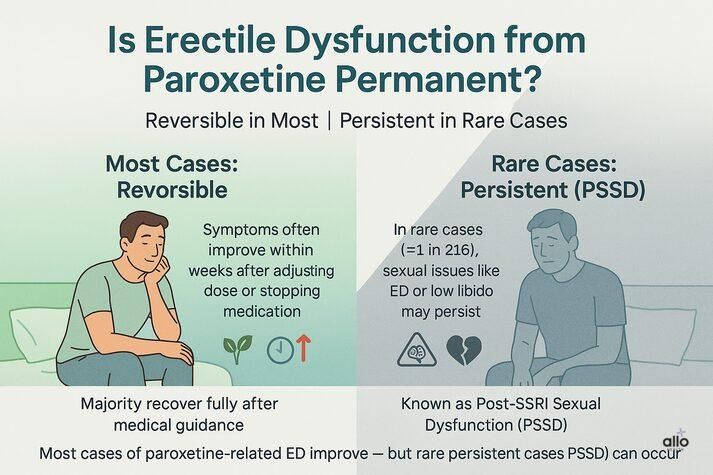
In most cases, paroxetine-induced ED is reversible. Symptoms usually improve within a few weeks of dose adjustment or drug cessation. However, in rare instances, a condition known as Post-SSRI Sexual Dysfunction (PSSD) can occur, where symptoms persist long after discontinuation. Research estimates that roughly 1 in 216 patients may experience long-term effects. [7] In PSSD, men may experience persistent erectile difficulties, genital numbness, or reduced libido, even after stopping the medication.
Sexual Side Effects of Paroxetine vs.Other Antidepressants
Among SSRIs, paroxetine ranks as the highest risk for erectile and sexual dysfunction:

Risk Level
Antidepressants
Typical Sexual Effects
High Risk

Paroxetine, Sertraline
Erectile dysfunction, delayed ejaculation, low libido
Moderate Risk
Fluoxetine, Fluvoxamine, Citalopram
Reduced desire, mild erection issues
Low Risk profiles still exist for some agents — for example, Buspirone and ED carries notably fewer sexual side effects than SSRIs.
Escitalopram, Vortioxetine
Decreased libido, mostly reversible
Very Low Risk
Bupropion (non-SSRI)
May improve sexual function
How to Manage ED Caused by Paroxetine
If you experience sexual side effects, it’s important not to stop paroxetine abruptly. Instead, discuss options with a healthcare provider. Effective treatment strategies include:
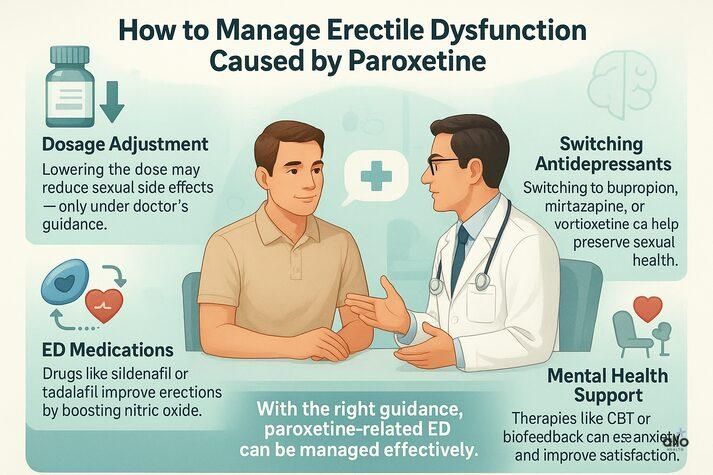
1. Dosage Adjustment
Lowering the paroxetine dose often reduces sexual side effects while maintaining antidepressant efficacy. This should always be done under medical supervision.
2. Switching Antidepressants
Alternatives such as bupropion or mirtazapine have minimal sexual side effects. Vortioxetine and agomelatine are newer antidepressants that maintain mood stability with better sexual functioning outcomes.
3. ED Medications:
Adding a phosphodiesterase type 5 inhibitor (PDE5i) like sildenafil, tadalafil, or vardenafil can help restore erectile function:
These drugs work by enhancing the nitric oxide production and improving penile blood flow.
4. Mental Health Support
Different forms of psychotherapy, like Cognitive Behavioral Therapy (CBT), biofeedback therapy, and hypnotherapy, can complement medical interventions. Addressing anxiety, body image, or relationship issues often improves overall sexual satisfaction.
How to Prevent Paroxetine-Induced ED
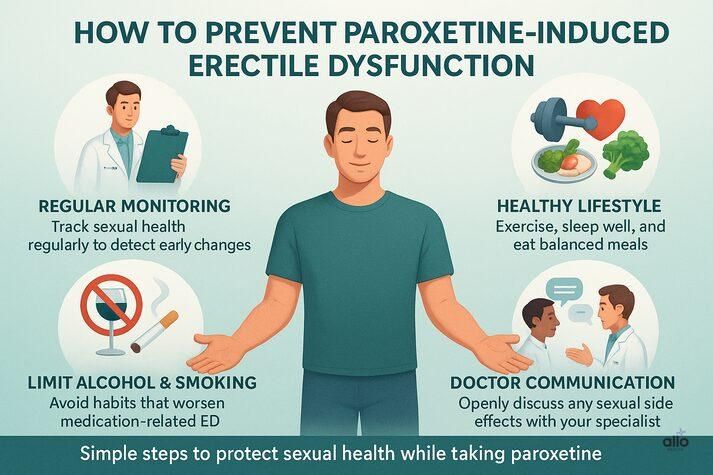
Preventive steps can significantly reduce the risk of sexual side effects — and for female partners dealing with desire changes, the pink pill for ED is a related, cross-gender conversation.
- Regular monitoring: Periodically evaluate sexual health to identify issues early.
- Healthy lifestyle: Maintain exercise, sleep, and nutrition as they improve sexual response and vascular health.
- Limit alcohol and smoking: Alcohol and smoking both can worsen medication-related ED.
- Doctor communication: Openly discuss any changes in sexual function with your psychiatrist or sexual health specialist.
Conclusion
Paroxetine remains an effective antidepressant for many people, but it carries a higher risk of erectile dysfunction and sexual side effects compared to other SSRIs. Most cases are temporary and reversible, but persistent symptoms (PSSD) can occur rarely. If ED develops, do not stop medication abruptly; instead, consult your healthcare provider. If you experience persistent ED while taking paroxetine, it’s important to consult a qualified sexual health expert or your prescribing doctor. They can assess whether the symptoms are medication-related, adjust your dosage, or suggest alternatives that support both your mental and sexual health.

Disclaimer
The following blog article provides general information and insights on various topics. However, it is important to note that the information presented is not intended as professional advice in any specific field or area. The content of this blog is for general educational and informational purposes only. The content should not be interpreted as endorsement, recommendation, or guarantee of any product, service, or information mentioned. Readers are solely responsible for the decisions and actions they take based on the information provided in this blog. It is essential to exercise individual judgment, critical thinking, and personal responsibility when applying or implementing any information or suggestions discussed in the blog.
Most Asked Questions
Does paroxetine cause erectile dysfunction (ED)?
Yes, paroxetine can cause ED in some men. It affects brain chemicals and nitric oxide levels that are important for arousal and blood flow.
Is ED from paroxetine permanent?
In most cases, no. The symptoms usually go away after adjusting the dose, switching medications, or stopping the drug under medical supervision. Rarely, a condition called post-SSRI sexual dysfunction (PSSD) can cause longer-lasting symptoms.
How common is erectile dysfunction with paroxetine?
Studies show that 34–64% of men taking paroxetine experience some form of sexual dysfunction, the highest rate among SSRIs.
Why does paroxetine affect sexual function?
Paroxetine increases serotonin, which can lower dopamine (a key chemical for arousal) and reduce nitric oxide production — both important for erections. These changes temporarily disrupt the brain and blood flow signals involved in sexual response.
Can I take Viagra or Cialis while on paroxetine?
Yes, but only under your doctor’s supervision. Medications like sildenafil (Viagra) or tadalafil (Cialis) are often prescribed to help manage SSRI-related ED safely and effectively.
Sources
- 1.
Prevalence of Antidepressant-Associated Erectile Dysfunction
- 2.
Development of erectile dysfunction in men treated for major depressive disorder with selective serotonin reuptake inhibitors
- 3.
Sexual dysfunction in selective serotonin reuptake inhibitors (SSRIs) and potential solutions
- 4.
Differential effects of serotonin reuptake inhibitors on erectile responses, NO-production, and neuronal NO synthase expression
- 5.
Effects of paroxetine treatment and its withdrawal on neurosteroidogenesis
- 6.
Inhibition of norepinephrine uptake in patients with major depression treated with paroxetine
- 7.
Estimating the risk of irreversible post-SSRI sexual dysfunction (PSSD) due to serotonergic antidepressants
- 8.
Tadalafil Preserves Penile Nitric Oxide Synthase from Detrimental Effect of Paroxetine
- 9.
Retrospective evaluation of the efficacy of daily paroxetine/tadalafil combination