Dutasteride and Erectile Dysfunction: Hair Loss Treatment Risks on Sexual Health
Written by Dr. Deepali Anand

Dr. Deepali is a medical writer and healthcare professional with a background in clinical surgery and patient care. Having transitioned from active clinical practice to medical communications, she specializes in bridging the gap between complex clinical data and patient education. Dr. Deepali is dedicated to creating evidence-based content that is grounded in scientific rigor and empathy, ensuring that sensitive topics like sexual wellness and mental health are accessible and empowering for every reader.
•
July 30, 2026
Our experts continually monitor the health and wellness space, and we update our articles when new information becomes available.
Quick Read
Dutasteride can cause erectile dysfunction by blocking enzymes that convert testosterone to DHT, affecting around 7-9% of users, typically within the first six months of treatment. The good news is that for most men, these sexual side effects are temporary and reverse within weeks to months after stopping the medication, though rare cases of persistent symptoms have been reported. If you're experiencing ED on Dutasteride, don't stop the medication abruptly, instead, consult your doctor about safer alternatives like topical formulations, alternate-day dosing, or non-hormonal options such as Minoxidil or PRP therapy. With proper medical guidance, you can manage hair loss effectively while protecting your sexual health, and temporary ED symptoms can often be treated with medications like Viagra or Cialis until hormone levels stabilize.
Dutasteride erectile dysfunction is a concern many men have when taking this medication for hair loss or prostate enlargement. Dutasteride works by lowering levels of a hormone called DHT, which helps prevent hair loss but can sometimes affect sexual function, including erectile function. If you’ve noticed changes in your erections, libido, or overall sexual performance, you’re not alone, and most importantly, these side effects are usually temporary.
In this article, we’ll break down how Dutasteride can cause erectile dysfunction, how common it really is, whether it goes away after stopping the drug, and the safest ways to manage hair loss without affecting your sexual health.

Allo asks
Have you ever experienced any sexual side effects while taking Dutasteride or Finasteride?
What Is Dutasteride Erectile Dysfunction?
Dutasteride is a 5-alpha-reductase inhibitor, a medicine used to treat conditions like hair loss and prostate enlargement. One known side effect of this drug is erectile dysfunction, along with decreased libido and ejaculation issues. These are among the most common sexual side effects linked to Dutasteride.[1]
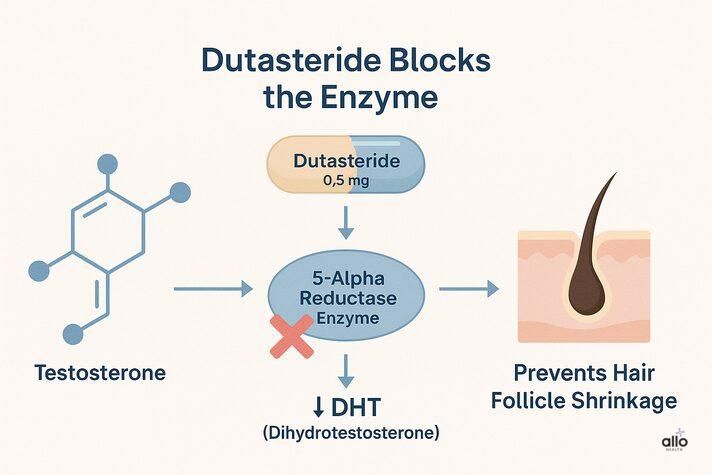
The medicine works by blocking an enzyme called 5-alpha reductase, which normally converts testosterone into dihydrotestosterone (DHT) — a hormonal suppression pattern also discussed with Silodosin and ED. While DHT is important for maintaining normal male health, in some men with a genetic tendency for hair loss, excess DHT causes hair follicles to shrink, leading to thinning hair and baldness.

When Dutasteride lowers DHT levels, it helps reduce hair loss. But this hormonal shift can sometimes affect sexual function in a small percentage of men.
Compared to Finasteride, which blocks only one form of the 5-alpha reductase enzyme, Dutasteride blocks two forms — giving it a stronger effect than even Anavar and ED in terms of androgen-axis disruption. Studies[2] show that oral Dutasteride can reduce DHT levels by up to 90%, while Finasteride lowers them by about 70%.
According to Allo Health, every 1 in 2 patients has ED, which is based on our internal clinical data of more than 2.5 Lakh patients who come to our clinic.
Let’s look more closely at why Dutasteride may cause erectile dysfunction.

How Does Dutasteride Affect Erectile Function?
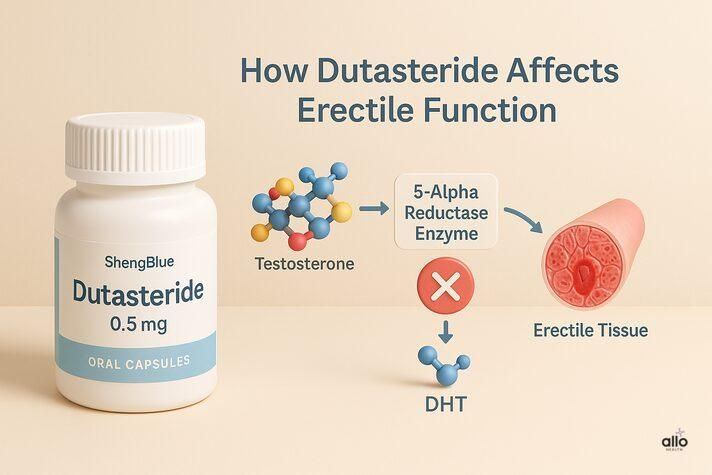
Dutasteride lowers levels of a hormone called dihydrotestosterone (DHT) by blocking the enzyme that converts testosterone into DHT. While this helps slow hair loss, it can also affect sexual function in some men.
The drug blocks both type I and type II 5-alpha reductase enzymes, leading to a sharp drop in DHT, over 90% in many cases. As DHT plays a key role in maintaining healthy erectile tissue and sexual desire, this big reduction can interfere with erections or cause a lower sex drive.
In large studies, about 7-9% of men taking Dutasteride reported erectile dysfunction, compared to 4–5.7% in those taking a placebo. Other reported side effects included decreased libido and ejaculation problems.[3]
In most cases, these effects are mild and reversible once the body adjusts or after stopping the medication. Understanding how Dutasteride affects hormones helps explain why these side effects happen, and why they don’t affect everyone the same way.
Does Erectile Dysfunction Go Away After Stopping Dutasteride?
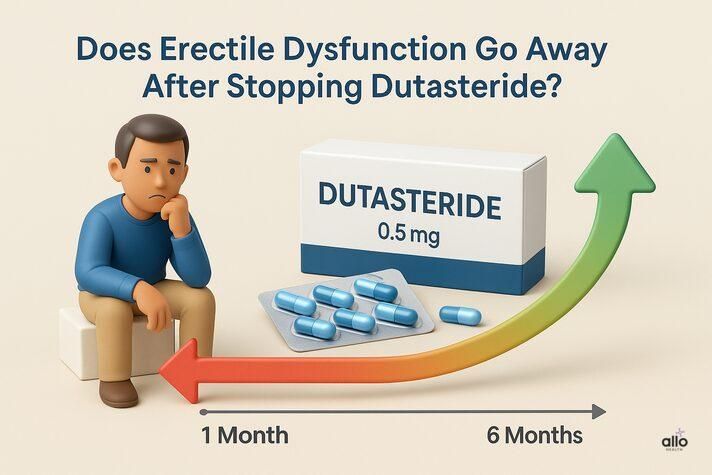
Dutasteride-related erectile dysfunction usually appears within the first six months of treatment, with many men noticing the biggest changes in sexual function during the first month after starting the medication.
The good news is that, in most cases, these side effects are temporary and reversible. Clinical research shows that sexual function often improves once the body adjusts to lower hormone levels or after stopping Dutasteride completely.
But, there have been rare reports of persistent sexual dysfunction even after discontinuing the drug. This condition is sometimes referred to as “post-finasteride syndrome,” and although it’s more often linked to Finasteride, similar cases have been seen with Dutasteride as well[4].
Researchers are still studying why this happens in a small number of people — similar open questions exist around Finasteride and ED. For most men, though, erectile function and libido return to normal within weeks or months after stopping Dutasteride, especially with proper medical support and healthy lifestyle habits.
Most men who take Dutasteride never experience erectile dysfunction. But for those who do, it’s usually temporary and improves once the medication is stopped or adjusted under medical guidance.
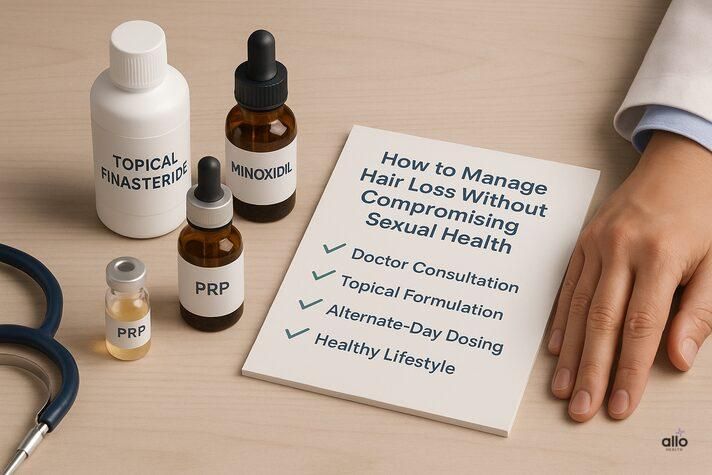
How to Manage Hair Loss Without Compromising Sexual Health
If you’re worried about losing hair and facing side effects like erectile dysfunction, there are safe ways to manage both. Here’s how:
1. Talk to Your Doctor First
Before changing or starting any medication, speak to a qualified healthcare professional. They can assess your condition, dosage, and risks, especially if you’re using Dutasteride or Finasteride.
2. Consider Topical Formulations
Research[5] shows that topical Finasteride can lower systemic absorption, which may reduce the chances of sexual side effects compared to oral tablets.
3. Try Alternate-Day Dosing (With Medical Guidance)
Your doctor might recommend taking Dutasteride every other day. This approach helps maintain hair-loss benefits while limiting hormonal changes linked to ED.
4. Explore Non-Hormonal Alternatives
If you want to avoid hormone-based drugs altogether, try:
- Minoxidil (topical) – promotes hair growth directly on the scalp
- PRP therapy – uses your own platelets to stimulate hair follicles
- Low-level laser therapy – boosts circulation and follicle health
- Lifestyle upgrades – balanced diet, less stress, good sleep, regular exercise
5. Stick to Your Prescription
Whatever option you choose, follow your treatment plan exactly. Don’t change doses or stop on your own; that can harm both your hair progress and your sexual health.
6. Manage Temporary ED With Treatment
If you experience erectile issues, PDE5 inhibitors like Viagra or Cialis may help until your hormone levels stabilize. Always use them under medical advice.
When To Talk to a Doctor
Reach out to your doctor if you notice:
- Erectile dysfunction lasting longer than 2-3 months
- Loss of libido or mood changes
- Any major shift in your sexual function
Never stop Dutasteride or Finasteride suddenly; always do it under a doctor’s supervision to ensure safe recovery and steady results.
Bottom Line
Dutasteride erectile dysfunction is real, though it doesn’t affect everyone. If you notice erection problems while taking Dutasteride, it’s important to talk to your doctor rather than stopping the medication on your own.
In most cases, erectile function returns within a few weeks or months after stopping the drug — and bridging therapy with Sildenafil for ED is sometimes used during recovery. But this decision should always be made under medical supervision, especially if you’re taking Dutasteride for benign prostatic hyperplasia (BPH) or male pattern hair loss, where it can offer significant benefits.
Remember, every individual responds differently. Your age, dosage, duration of use, and overall health can all influence how your body recovers. With the right guidance, most men find a treatment plan that supports both hair and sexual health safely.

Disclaimer
The following blog article provides general information and insights on various topics. However, it is important to note that the information presented is not intended as professional advice in any specific field or area. The content of this blog is for general educational and informational purposes only. The content should not be interpreted as endorsement, recommendation, or guarantee of any product, service, or information mentioned. Readers are solely responsible for the decisions and actions they take based on the information provided in this blog. It is essential to exercise individual judgment, critical thinking, and personal responsibility when applying or implementing any information or suggestions discussed in the blog.
Most Asked Questions
Do DHT blockers cause erectile dysfunction?
DHT blockers like Dutasteride and Finasteride can sometimes cause erectile dysfunction, though not everyone experiences it. These medicines lower DHT — a hormone that supports sexual function — which may lead to changes in erection quality or libido in a small percentage of users. Most men, however, don’t face lasting issues, and symptoms often improve after adjusting or stopping the medication under medical supervision.
Is erectile dysfunction from Dutasteride permanent?
In most cases, ED caused by Dutasteride is temporary and reversible. Sexual function usually returns within weeks or months of stopping the drug. Rarely, a small number of men report persistent symptoms, sometimes described as post-finasteride or post-Dutasteride syndrome, but these cases are still being researched and are considered uncommon.
Does Dutasteride cause penile shrinkage?
There’s no solid scientific evidence that Dutasteride directly causes permanent penile shrinkage. Some men may notice changes in erection firmness or size due to reduced blood flow when DHT levels drop, but this effect is functional, not structural, and typically reverses once hormone levels stabilize or treatment is stopped.
Can you take Viagra with Dutasteride?
Yes, Viagra (sildenafil) or other PDE5 inhibitors like Cialis can be safely taken with Dutasteride in most cases. They work in different ways: Dutasteride affects hormone levels, while Viagra improves blood flow. Always check with your doctor before combining them to ensure there are no personal contraindications.
How can I prevent sexual side effects while using Dutasteride?
To reduce the risk of side effects, talk to your doctor about topical formulations or alternate-day dosing. Maintaining a healthy lifestyle regular exercise, good sleep, stress control, and balanced nutrition, also supports hormone and sexual health. Never change your dose or stop the medication without medical advice.
Sources
- 1.
Adverse Effects and Safety of 5-alpha Reductase Inhibitors (Finasteride, Dutasteride): A Systematic Review
- 2.
Dutasteride vs Finasteride: Which Works Best For Hair Loss?
- 3.
Dutasteride: A Review of Current Data on a Novel Dual Inhibitor of 5α Reductase
- 4.
Post-finasteride syndrome
- 5.
Efficacy and safety of topical finasteride spray solution for male androgenetic alopecia: a phase III, randomized, controlled clinical trial