Cold Testicles and Erectile Dysfunction: Is There a Link?
Written by Dr. Deepali Anand

Dr. Deepali is a medical writer and healthcare professional with a background in clinical surgery and patient care. Having transitioned from active clinical practice to medical communications, she specializes in bridging the gap between complex clinical data and patient education. Dr. Deepali is dedicated to creating evidence-based content that is grounded in scientific rigor and empathy, ensuring that sensitive topics like sexual wellness and mental health are accessible and empowering for every reader.
•
July 30, 2026
Our experts continually monitor the health and wellness space, and we update our articles when new information becomes available.

Quick Read
Cold testicles don't directly cause erectile dysfunction. The scrotum naturally stays cooler than the body temperature to support healthy sperm production, and feeling cold down there is usually just a normal reflex. However, persistent, extreme coldness of testicles may indicate underlying health issues like poor blood circulation, nerve damage, hormonal imbalances, or conditions such as varicocele, diabetes, or heart disease, all of which can affect both temperature regulation and erectile function. In most cases, occasional coldness is nothing to worry about, but if you're experiencing constant coldness with erection problems, numbness, or other concerning symptoms, it's important to see a doctor. Simple lifestyle changes like staying active, managing stress, wearing breathable clothing, and maintaining hormonal balance can support both testicular and sexual health.
If you’ve ever searched “cold testicles erectile dysfunction,” you’re probably worried about a strange, chilly sensation and wondering if it means something’s wrong with your sexual health. The good news? Feeling cold down there isn’t automatically a sign of erectile dysfunction.
In most cases, it’s just your body’s natural way of regulating temperature to protect sperm and hormones. Still, when the coldness is persistent, it could signal deeper issues like poor blood circulation, nerve damage, or hormonal imbalance, all of which affect erections.
In this article, we’ll break down what’s normal, what’s not, and when it’s time to see a doctor.

Allo asks
Do you think temperature affects sexual performance?
What Is Cold Testicle Erectile Dysfunction?
The testicles (or scrotum) sit outside the body because they need to stay a little cooler than your normal body temperature to function properly. But what happens if your testicles feel too cold?

Having excessively cold testicles doesn't directly cause erectile dysfunction — but the underlying hormonal and vascular changes that do are similar to those behind age and erectile dysfunction. But it may affect sperm production and sometimes signal underlying issues with blood flow or hormones, both of which are important for healthy erections.
According to Allo Health, every 1 in 2 patients has ED, which is based on our internal clinical data of more than 2.5 Lakh patients who come to our clinic.
Understanding Why Testicles Feel Cold
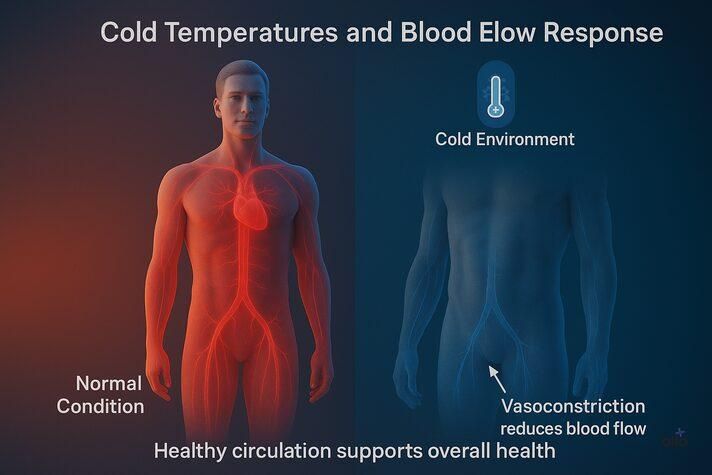
The scrotum naturally maintains a temperature about 2-4°C lower than body temperature to support sperm production — disruption of this balance can impair the vascular environment linked to arteriogenic erectile dysfunction. Your body has built-in mechanisms to regulate this temperature. When it’s cold, the dartos fascia and cremaster muscles contract, pulling the testicles closer to the body to conserve warmth. So, feeling cold in that area is usually a normal reflex, not a sign of disease or erectile problems.[1]
Only in extreme cold, around 5°F (–15°C), can the testicles be at risk of frostbite or hypothermia, which may reduce sperm production and harm testicular function. In most cases, though, a cold sensation in the groin is simply part of your body’s thermoregulatory response, not a cause of ED.

How Cold Testicles and Erectile Dysfunction Are Related
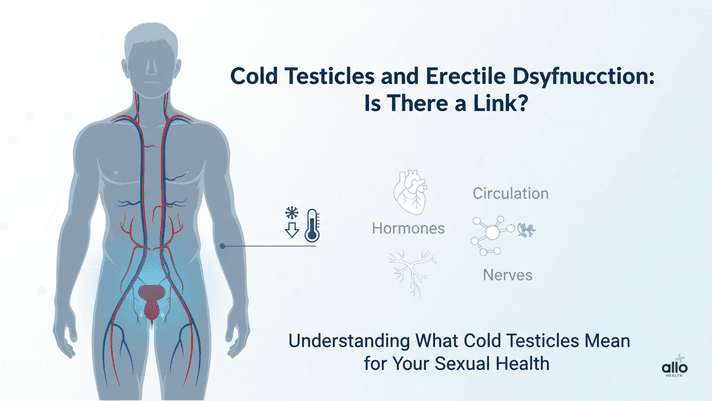
The link between cold testicles and erectile dysfunction isn’t a direct one, but it can reveal some underlying issues that affect sexual health.[2] Persistent coldness in the testicles may point to reduced blood circulation, nerve problems, or hormonal imbalances- all of which play an important role in healthy erections.
Good blood flow is essential for getting and maintaining an erection. When blood flow is restricted, it can lead to erectile difficulties. In cold environments, the body naturally causes blood vessels to narrow (vasoconstriction) to keep vital organs warm.
Similarly, nerve damage or issues affecting the body’s communication between the brain and genitals can also interfere with sexual function.
When Cold Testicles Might Signal a Deeper Issue
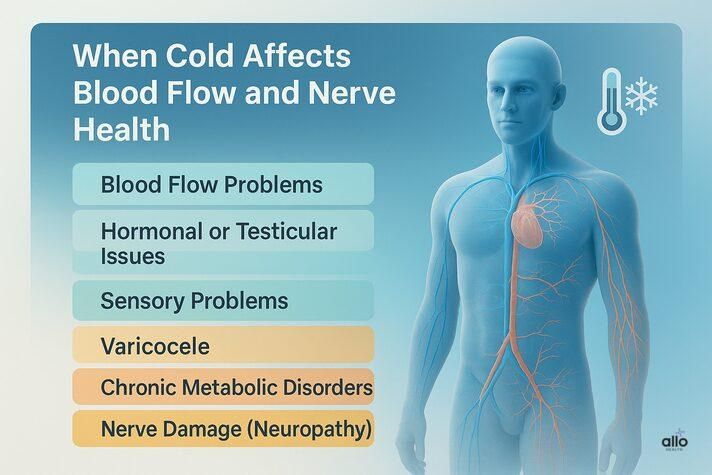
If the coldness is persistent or occurs along with other symptoms, it may point to an underlying health issue that needs attention. Here are some possible causes to be aware of:
1. Blood Flow Problems
If you notice cold hands, feet, and testicles along with erection difficulties, it could signal poor blood circulation or peripheral arterial disease.[2] These conditions limit blood flow and can contribute to both cold sensations and erectile dysfunction.
2. Hormonal or Testicular Issues
Sometimes, testicular hyperthermia or prolonged temperature imbalance can lower testosterone levels.[3]Since testosterone plays a key role in sexual arousal and erectile function, reduced testosterone production can indirectly affect performance — mirroring the hormonal dimension of atherosclerosis and erectile dysfunction.
3. Sensory Problems
Symptoms like numbness, tingling, or a cold feeling even when you’re warm may point to problems in the nervous system or endothelial function(inner cells lining of blood vessels), both involved in regulating blood flow and sensation.[2]
4. Varicocele (Swollen Veins in the Scrotum)
A varicocele happens when the veins inside the scrotum enlarge, affecting normal temperature control. This can lead to a heavy, dragging, or dull cold sensation and may interfere with hormone balance, and a varicocele can also interfere with erectile function.
6. Chronic Metabolic Disorders
Conditions like heart disease, high cholesterol, or diabetes can affect blood vessel health, reducing oxygen and blood supply to different parts of the body, including the testicles and penis. This can lead to both persistent coldness and ED symptoms.
7. Nerve Damage (Neuropathy)
Diseases such as diabetes can damage the nerves responsible for temperature regulation and sexual response. When these nerves are affected, you may experience reduced sensitivity, temperature changes, or difficulty maintaining an erection.

When to See a Doctor
If persistent coldness or erectile issues continue, it’s a good idea to consult a sexual health expert or urologist. You should seek medical attention if the coldness is:
- Constant or painful
- Accompanied by erection problems or numbness
- Linked with signs of low testosterone or other hormonal symptoms
Getting checked early helps prevent complications and allows for simple, effective treatments before the issue becomes more serious.
Erectile dysfunction isn’t caused by cold testicles themselves, but if the coldness is persistent or comes with other symptoms, it can point to issues with circulation, nerves, or hormones that deserve a closer look
Tips For Testicular Health: What You Can Do
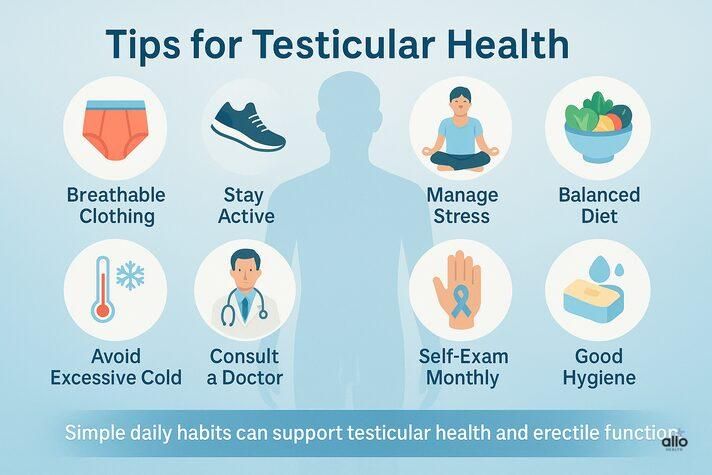
Taking care of your testicular and sexual health is simple with a few everyday habits.
- Wear comfortable, breathable clothing and underwear. Choose cotton or moisture-wicking fabrics that keep the area cool and dry.
- Stay physically active. Lifestyle changes help improve blood flow, boost testosterone, and support erectile function.
- Manage stress and anxiety. Relaxation techniques like yoga, meditation, or deep breathing can improve both mood and sexual health.
- Maintain hormonal balance. Eat a balanced diet, get enough sleep, and exercise regularly to support healthy testosterone levels.
- Avoid excessive cold exposure. Extremely cold temperatures can restrict blood flow and affect testicular function.
- Consult a specialist when needed.
- Do a monthly testicular self-exam. Check for any lumps, swelling, or unusual changes early.
- Practice good hygiene. Keep the area clean and dry to prevent infections and irritation.
Bottom Line
Cold testicles and erectile dysfunction aren't directly connected, but long-term or extreme coldness in the testicles can sometimes signal underlying health issues that affect blood flow, nerves, or hormones, all of which play a role in healthy erections — as also explored in research on beta sitosterol and erectile dysfunction.
If you experience persistent cold sensations in the genital area along with difficulty getting or keeping an erection, it’s best to consult a healthcare professional rather than focusing only on the cold feeling itself.

Disclaimer
The following blog article provides general information and insights on various topics. However, it is important to note that the information presented is not intended as professional advice in any specific field or area. The content of this blog is for general educational and informational purposes only. The content should not be interpreted as endorsement, recommendation, or guarantee of any product, service, or information mentioned. Readers are solely responsible for the decisions and actions they take based on the information provided in this blog. It is essential to exercise individual judgment, critical thinking, and personal responsibility when applying or implementing any information or suggestions discussed in the blog.
Most Asked Questions
What does it mean if my testicles are cold?
It’s usually a normal response. The scrotum keeps the testicles slightly cooler than the body to protect sperm and hormones. If the area feels cold occasionally, it’s part of your body’s natural temperature regulation. Persistent or painful coldness, though, could point to circulation or nerve issues and should be checked by a doctor.
an being cold cause erectile dysfunction?
Cold weather or low temperature doesn’t directly cause erectile dysfunction. However, cold exposure makes blood vessels narrow (vasoconstriction), which can temporarily reduce blood flow and make erections harder to achieve. Once you warm up, blood flow returns to normal.
When should I worry about cold testicles?
If the cold feeling is constant, painful, or comes with symptoms like numbness, tingling, or erection problems, it’s best to talk to a urologist or sexual health specialist. These signs may indicate circulation or hormonal issues that need evaluation.
Can poor circulation cause both cold testicles and erectile dysfunction?
Yes. Poor blood flow affects both temperature regulation and the ability to achieve erections. Conditions like diabetes, high cholesterol, or peripheral artery disease can reduce circulation, leading to cold sensations and ED symptoms.
How can I keep my testicles healthy and improve circulation?
Wear comfortable, breathable clothing, stay active, eat a balanced diet, manage stress, and avoid smoking. Regular check-ups and early treatment for any chronic health conditions can also help maintain both testicular and sexual health.
Sources
- 1.
Mild experimental increase in testis and epididymis temperature in men: effects on sperm morphology according to spermatogenesis stages
- 2.
Cold hypersensitivity in the hands and feet is associated with erectile dysfunction in young Taiwanese men
- 3.
Effects of Heat Stress-Induced Sex Hormone Dysregulation on Reproduction and Growth in Male Adolescents and Beneficial Foods