Clonidine and Erectile Dysfunction: Uses, Dosage, and Sexual Side Effects
Written by Dr. Deepali Anand

Dr. Deepali is a medical writer and healthcare professional with a background in clinical surgery and patient care. Having transitioned from active clinical practice to medical communications, she specializes in bridging the gap between complex clinical data and patient education. Dr. Deepali is dedicated to creating evidence-based content that is grounded in scientific rigor and empathy, ensuring that sensitive topics like sexual wellness and mental health are accessible and empowering for every reader.
•
July 30, 2026
Our experts continually monitor the health and wellness space, and we update our articles when new information becomes available.

Quick Read
Yes, clonidine can cause erectile dysfunction in about 1-10% of men, and it's a well-documented side effect that happens because this blood pressure medication reduces key nerve signals involved in sexual arousal and erections. The encouraging news is that clonidine-induced ED is often reversible; many men see improvement after adjusting their dose or switching medications under proper medical guidance. If you're experiencing erection problems while taking clonidine, it's crucial to talk to your doctor rather than stopping the medication abruptly, as sudden discontinuation can trigger dangerous blood pressure spikes. Your doctor can help you explore safer blood pressure alternatives that are gentler on sexual function, and may also prescribe ED medications like sildenafil or tadalafil if appropriate for your situation. Meanwhile, incorporating lifestyle changes, regular exercise, maintaining a healthy weight, quitting smoking, managing stress, and improving sleep can significantly boost both your cardiovascular health and sexual performance, giving you a comprehensive approach to protecting your well-being.
Clonidine side effects erectile dysfunction, is often searched by people who notice new or worsening erection problems after starting this blood pressure medicine. The short answer is: yes, clonidine can cause erectile dysfunction in some men, and it’s a known, documented side effect. But the good news is that these changes are often reversible and can be managed with the right medical guidance.
In this article, you’ll learn why clonidine affects sexual function in some people, how to tell whether your ED is coming from the medication or your underlying health, and what steps you can safely take, from adjusting treatment and exploring ED medications to making lifestyle changes that support both blood pressure and sexual health.

Allo asks
Have you noticed erectile dysfunction while taking BP medications?
Can Clonidine Cause Erectile Dysfunction?
Clonidine, a commonly used hypertension medicine, can cause erectile dysfunction in some people[1]. In fact, clonidine side effects erectile dysfunction is a widely searched concern because ED has been reported in about 1–10% of patients taking this medication. Some men also notice lower sexual interest or a drop in sexual performance while using clonidine[2].
Clonidine is a centrally acting alpha-2 agonist, which means it works by reducing nerve signals in the brain that normally tell blood vessels to tighten — and prescription options like Viagra (Sildenafil) for ED target erection pathways directly. This helps lower blood pressure, but in some men, it can also affect the signals involved in sexual arousal, sexual desire, and erections.
It’s important to remember that not everyone who takes clonidine develops erectile dysfunction. Hypertension itself is a common cause of ED, so it’s helpful to separate ED caused by high blood pressure from ED that might be linked to clonidine.

According to Allo Health, every 1 in 2 patients has ED, which is based on our internal clinical data of more than 2.5 Lakh patients who come to our clinic — and established options like Cialis for ED remain first-line.
So, how exactly does clonidine affect erections? Let’s break it down.
Why Does Clonidine Cause Erectile Dysfunction in Some Men?
Clonidine works by calming the body’s natural “fight-or-flight” system. It activates alpha-2 and imidazoline receptors in the brain, which lowers the release of norepinephrine, a chemical that normally keeps the body alert and maintains blood pressure.

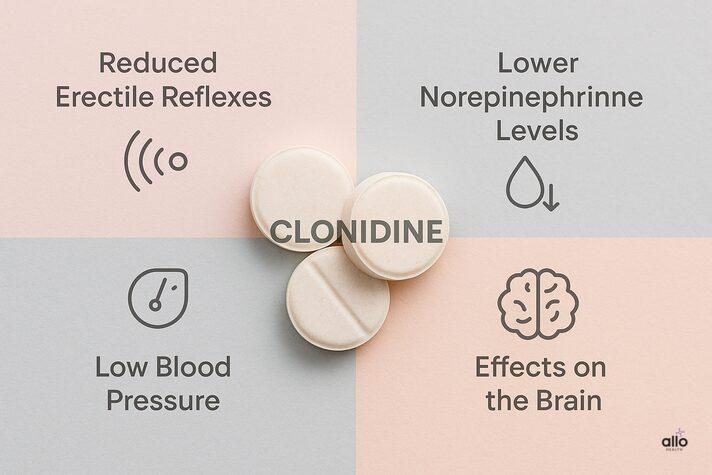
When norepinephrine drops, the whole sympathetic system slows down. This helps reduce high blood pressure, but in some men, it also affects the pathways needed for erections. Here’s how clonidine can contribute to erectile dysfunction:
1. Reduced Erectile Reflexes
Clonidine can suppress some of the reflexes in the penis that help start and maintain an erection[3].
2. Lower Norepinephrine Levels
Clonidine decreases norepinephrine, the signals that trigger reflex erections become weaker, making it harder to get or keep an erection.
3. Low Blood Pressure
Clonidine can sometimes cause hypotension (low blood pressure). When overall blood pressure drops, the blood flow reaching the penis also decreases, affecting erection quality.
4. Effects on the Brain
Some men experience fatigue, drowsiness, or low mood with long-term clonidine use. These side effects can reduce libido, arousal, and sexual responsiveness.
Clonidine can affect erections in some men, but the good news is that these changes are often reversible once we adjust the medication or treat the underlying issue.
Is Erectile Dysfunction from Clonidine Reversible?
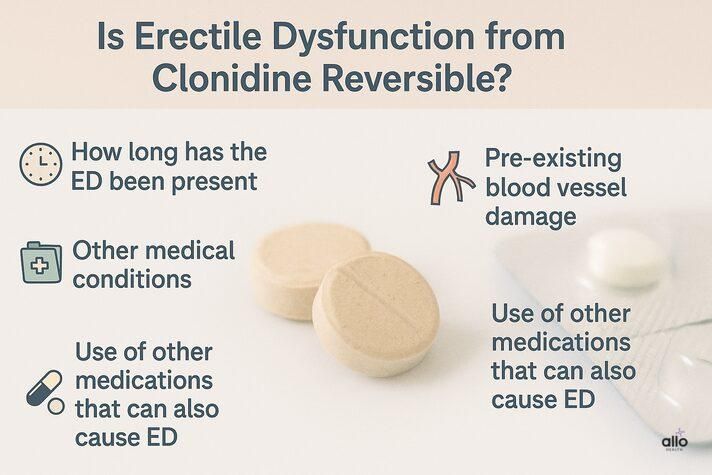
Yes. According to available research on clonidine side effects, erectile dysfunction caused by clonidine is often reversible. In many studies, men saw their erections improve after reducing or stopping clonidine under medical supervision[4]. But recovery depends on several factors, such as:
- How long has the ED been present
- Pre-existing blood vessel damage
- Other medical conditions
- Hormonal changes over time
- Use of other medications that can also cause ED
So while clonidine-induced ED can improve, the overall picture varies from person to person — and clinical options like Levitra (Vardenafil) for ED may be considered.
How to Manage Erectile Dysfunction While on Clonidine
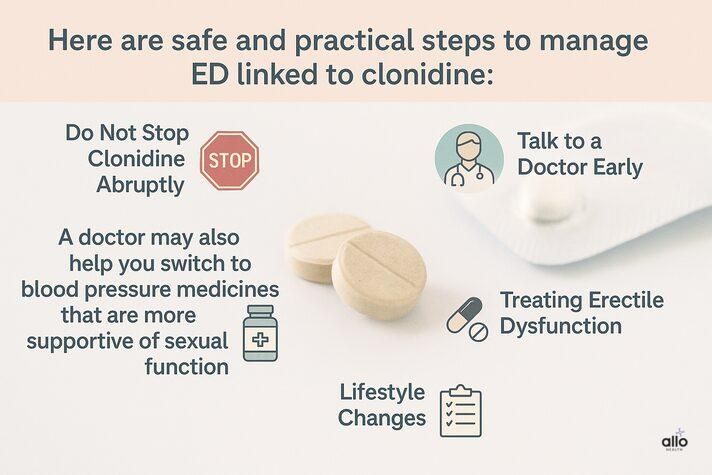
Here are safe and practical steps to manage ED linked to clonidine:
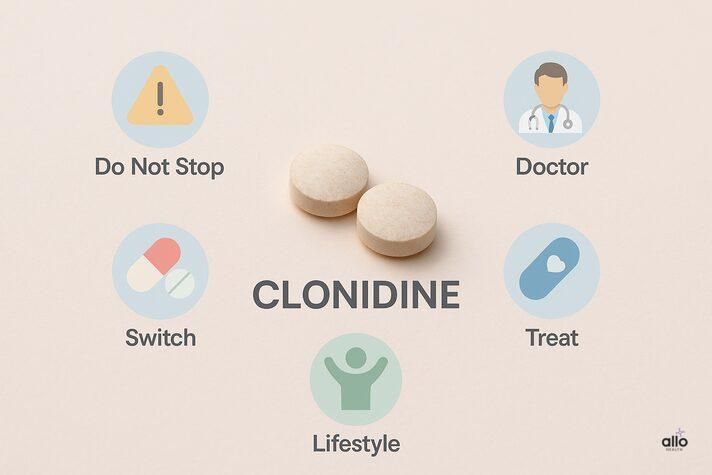
1. Do Not Stop Clonidine Abruptly
Stopping clonidine suddenly can cause serious rebound hypertension and other complications. Always talk to your doctor first. They will guide you through a slow and safe taper, if needed.
2. Talk to a Doctor Early
If you notice changes in your erections while taking clonidine, discussing it with a doctor helps identify whether:
- Clonidine is the main cause
- Another medication is contributing
- Your blood pressure or health condition is playing a role
A doctor may also help you switch to blood pressure medicines(anti-hypertensive medications) that are more supportive of sexual function, such as:
- ACE inhibitors or ARBs
- Calcium channel blockers
- Newer beta-blockers like nebivolol, which may even improve erections in some men
3. Treating Erectile Dysfunction
Once your doctor assesses your heart and blood pressure status and can prescribe ED medications, phosphodiesterase type 5 inhibitors like sildenafil or tadalafil can often be used safely.
These are usually safe for men with controlled hypertension, as long as:
- They are not on nitrate therapy
- Blood pressure is reasonably stable
4. Lifestyle Changes
Simple lifestyle improvements support both blood pressure and erectile health:
- regular exercise weight management
- quitting smoking
- better sleep
- reducing stress and
- alcohol intake
These habits strengthen blood vessels and improve overall sexual function.
When to Talk to a Doctor
It’s a good idea to speak with a doctor if you notice:
- Persistent ED that does not improve
- Severe sexual side effects after starting clonidine
- Mood changes along with sexual difficulties
- Low blood pressure symptoms like dizziness, faintness, or fatigue
A doctor can help identify whether clonidine, blood pressure, or another health issue is contributing to the problem — and traditional adjuncts like Shilajit for ED are sometimes discussed alongside treatment.
Key Takeaway
Clonidine can cause erection problems as an adverse effect in some men, and understanding clonidine side effects, erectile dysfunction, helps you make safer, more informed choices. But ED often has more than one cause. Speaking with a doctor is the best way to find the right treatment plan and protect both your sexual health and overall well-being.

Disclaimer
The following blog article provides general information and insights on various topics. However, it is important to note that the information presented is not intended as professional advice in any specific field or area. The content of this blog is for general educational and informational purposes only. The content should not be interpreted as endorsement, recommendation, or guarantee of any product, service, or information mentioned. Readers are solely responsible for the decisions and actions they take based on the information provided in this blog. It is essential to exercise individual judgment, critical thinking, and personal responsibility when applying or implementing any information or suggestions discussed in the blog.
Most Asked Questions
Is erectile dysfunction from clonidine reversible?
In many cases, yes. ED caused by clonidine often improves after the dose is adjusted or the medication is switched under medical supervision. Recovery also depends on other factors, such as existing blood vessel health, underlying conditions, and whether other medications are contributing to the problem.
Can you take Viagra while on clonidine?
Yes, Viagra (sildenafil) is often safe to use with clonidine, as long as your blood pressure is stable and you are not taking nitrates or medications that cause significant drops in blood pressure. Always check with your doctor first so they can assess your cardiovascular health and choose the safest dose.
Does clonidine affect testosterone?
Clonidine does not directly lower testosterone levels, but it can indirectly affect sexual function by reducing arousal signals, lowering blood pressure, and causing fatigue. These changes may feel similar to low-testosterone symptoms, even though hormone levels themselves usually remain normal.
What is the most common adverse effect of clonidine?
The most common side effects of clonidine include dry mouth, drowsiness, dizziness, fatigue, and sometimes low blood pressure. Sexual side effects, such as erectile dysfunction, can occur but are less common and usually reported in a small percentage of users.
What does clonidine do to men?
Clonidine lowers blood pressure by calming the body’s “fight-or-flight” system. In most men, it helps reduce anxiety, blood pressure spikes, and physical tension. However, because it slows certain nerve signals, a small number of men may experience sexual side effects like reduced libido or difficulty getting or maintaining an erection.
Sources
- 1.
Side effects of clonidine
- 2.
Long-Term Treatment of Clonidine, Atenolol, Amlodipine and Dihydrochlorothiazide, but Not Enalapril, Impairs the Sexual Function in Male Spontaneously Hypertensive Rats
- 3.
Clonidine suppresses copulatory behavior and erectile reflexes in male rats: lack of effect of naloxone pretreatment
- 4.
Catapres (clonidine hydrochloride) Label