Stress and Anxiety as Hidden Causes of Erectile Dysfunction
Written by Dr. Anvi Dogra

Dr. Anvi Dogra is a medical writer and healthcare professional with a doctoral background in clinical sciences. She leverages her medical training to produce deeply researched, people first content across the wellness industries. With a "360-degree" understanding of the healthcare industry, Dr. Anvi focuses on bridge-building between clinical data and patient wellness. Known for her ability to make complex medical topics accessible and engaging, Dr. Anvi ensures that all health information is grounded in clinical evidence.
•
July 30, 2026
Our experts continually monitor the health and wellness space, and we update our articles when new information becomes available.
Quick Read
Stress can cause impotence, and it’s more common than many people realise. Ongoing stress and anxiety trigger the fight-or-flight response, disrupt hormones like testosterone, reduce blood flow to the penis, and interfere with mental focus needed for erections. Everyday pressures and performance anxiety can trap men in a stress-ED cycle, even without any physical health problems. The good news is that stress-related erectile dysfunction is treatable through stress management, therapy, lifestyle changes, and medical support when needed. Understanding the mind–body link is the first step toward recovery and regaining sexual confidence.
Erectile dysfunction (ED) isn’t always about physical health; sometimes, it starts with the mind. Mental health struggles like stress and anxiety can interfere with your ability to get or maintain an erection. But can stress cause impotence? The answer is yes, and it's more common than most people think. The link between stress and erectile dysfunction is strong. It can not only affect performance but also self-esteem and relationships. From everyday worries to performance anxiety, psychological pressure can trigger a cycle that’s hard to break without the right tools. In this article, we’ll explore how stress affects erections, why it happens, and how to fix it. Understanding the mental side of ED is the first step toward recovery.
Does Stress Cause Erectile Dysfunction?
When we experience stress, our body activates the fight-or-flight response, preparing us to face danger or to run away — a mechanism also disrupted in conditions like ADHD and erectile dysfunction. This response is triggered by the brain (sympathetic nervous system). This causes a rise of stress hormones like adrenaline and cortisol through the nervous system.
A study [1] found that erectile dysfunction (ED) is quite common in people with anxiety disorders, and it may be more serious in people facing stress and anxiety regularly. This makes it an important issue for doctors to pay attention to.
A lot of men blame their bodies, but very often, it’s the stress in their life that’s interfering with their sexual performance.
How can stress cause erectile dysfunction?
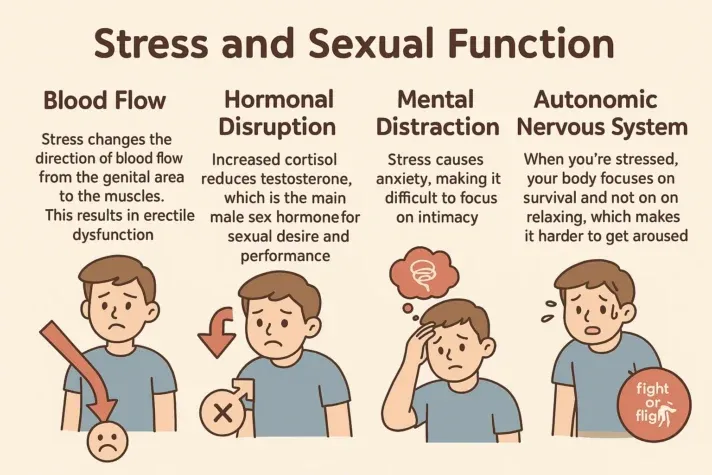
Stress affects erections in more ways than most people realise, often overlapping with depression and erectile dysfunction as compounding mental health triggers. When you are under stress, your body goes into what is called the fight-or-flight response. This is your body’s natural survival system, designed to protect you during danger, not to support sexual activity. During this response, your brain releases stress hormones such as adrenaline, noradrenaline, and cortisol.
Fight-or-flight response
Adrenaline & Noradrenaline: These hormones increase your heart rate and blood pressure so that your body can react. But, this also causes blood to move away from some areas, including the penis. Because an erection depends on good blood flow to the genitals, this shift in blood flow makes it harder to get or maintain an erection.

Cortisol: This is another major stress hormone, gives your body extra energy to deal with stress but at the same time reduces functions related to reproduction. High cortisol levels lower testosterone, which is the main male sex hormone responsible for sexual desire and erection quality. As testosterone drops, libido and sexual performance may also decline.
Effect on nervous system: Stress also affects the nervous system. Erections require the body to be relaxed and calm, which is controlled by the parasympathetic nervous system. Stress activates the sympathetic nervous system, keeping the body focused on survival rather than pleasure. When the body cannot relax, sexual arousal becomes difficult.
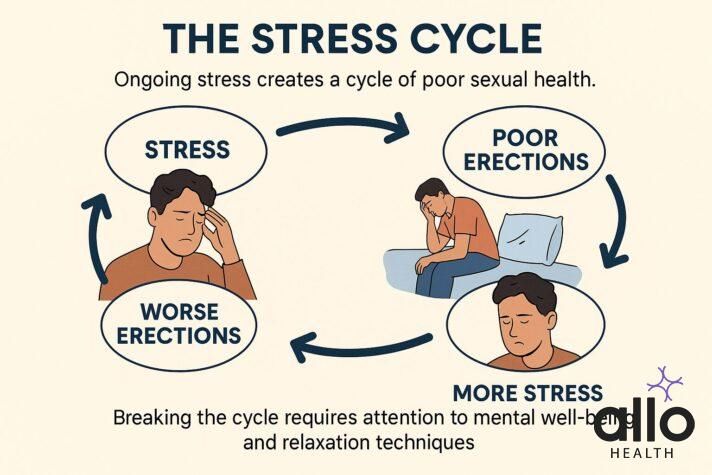
Mental distraction On a mental level, stress causes anxiety and constant worrying, which makes it hard to focus on intimacy. Since the brain plays a key role in sexual arousal, mental distractions alone can interrupt the signals needed for an erection. When stress continues for a long time, the effects become stronger. Chronic stress keeps cortisol levels high, which further reduces testosterone, libido, and sexual function. Over time, this can lead to a cycle where stress causes erectile dysfunction, erectile dysfunction increases anxiety, and anxiety makes stress worse.
Performance Anxiety and Erectile Dysfunction
Performance anxiety is the fear of not performing well during sex. It often comes from worrying about erectile dysfunction, satisfying a partner, or being judged during intimacy. This fear makes it difficult to relax, and without relaxation, erections become harder to achieve. General anxiety and sexual performance anxiety are a bit different.

General anxiety affects many areas of life, such as work, health, and relationships, and causes constant worry. Sexual performance anxiety, on the other hand, is focused only on sex and the fear of not performing well. However, both types can interfere with erections.
Anxiety triggers the same fight-or-flight response as stress, releasing adrenaline and other stress hormones. These hormones tell the body to focus on survival, not sex. Blood flow is redirected away from the genitals, muscles remain tense, and mental distractions prevent the relaxation needed for sexual arousal.
This often leads to the anxiety-ED loop. Anxiety about sex leads to erectile dysfunction. The erection problem then increases fear of failure the next time. This fear increases anxiety, and the cycle continues, making the problem worse over time.
What Causes Stress: Everyday Stress You Might Not Notice
Not all stress feels intense or dramatic — जानें ED के मानसिक कारण जो अक्सर नज़रअंदाज़ हो जाते हैं। Many small, everyday stresses slowly build up and can affect erections over time without you realising it.
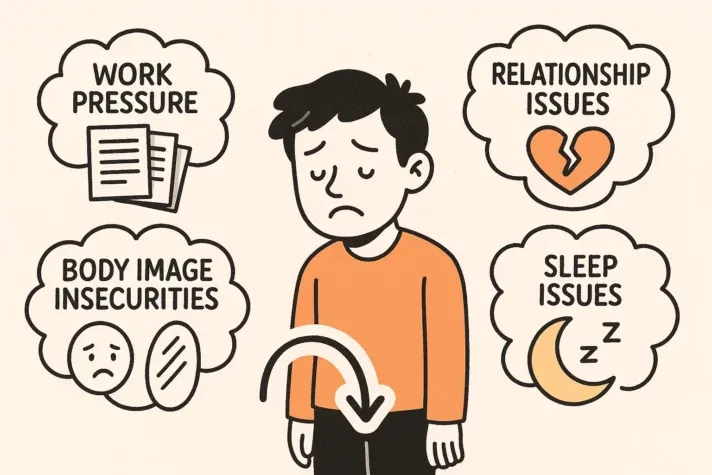
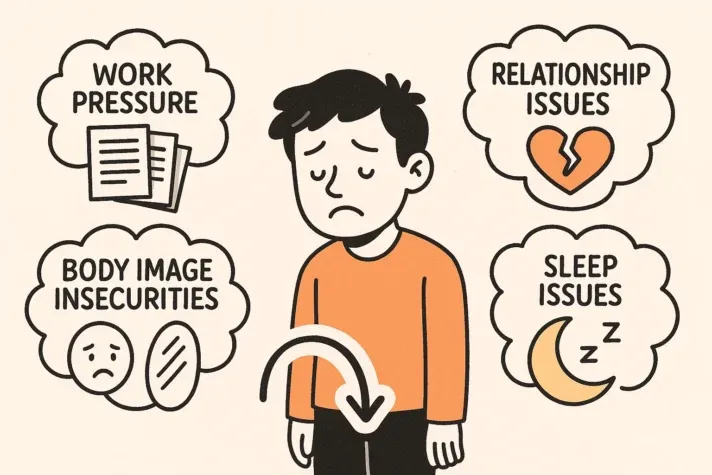
- Every day stresses: Work pressure, financial worries, relationship issues, body image insecurities and sleep issues can affect erections.
- Work stress raises cortisol, lowering sexual hormone levels and reducing sexual desire. Financial worries trigger anxiety, activating the fight-or-flight response, making it hard to relax.
- Social pressure: Societal pressure to meet expectations can add to anxiety, distracting you from intimacy. Body image concerns can make you self-conscious, reducing focus and arousal.
Over time, these stressful events accumulate, keeping your body in a state of chronic tension, affecting hormone levels, blood flow, and focus, all crucial for erections. This creates a cycle of anxiety and sexual dysfunction.
How to Cure Stress- and Anxiety-Related Erectile Dysfunction
Stress- and anxiety-related erectile dysfunction are treatable. It is because the problem lies in mental pressure, not permanent physical damage. Treatment focuses on calming the mind, relaxing the body, and breaking the stress–anxiety–ED cycle [2].
Diagnosing Psychological ED
When to suspect stress or anxiety as the cause
You may doubt about psychological ED if erection problems mainly happen during stressful times such as after work pressure, arguments, or personal worries but are less noticeable when you are relaxed. If you are otherwise healthy and do not have long-term medical conditions, stress or anxiety is often the main trigger.
How mental health professionals rule out physical causes
Doctors first make sure there is no physical cause behind ED. They may check for conditions like diabetes, heart disease, high blood pressure, or hormonal imbalances. Your doctor will ask about your medical history, medications, alcohol use, smoking, and lifestyle. Blood tests or physical exams may be done to rule out underlying health issues.
Use of tools like IIEF-5 and mental health screenings
To assess erectile function, doctors use the IIEF-5 (International index of erectile function) questionnaire. This involves asking simple questions about erection quality and consistency. Mental health screenings may also be used to check for anxiety, depression, or stress-related issues. These tools help confirm whether ED is mainly psychological and guide the right treatment approach.
Therapy-based treatments
Cognitive Behavioral Therapy (CBT) Helps identify and change negative thoughts about sex and performance. It reduces anxiety and improves sexual confidence [3]. Sex Therapy Focuses on emotional and psychological issues related to sex, helping overcome performance anxiety, fear, or past negative experiences. Relationship Counselling: Improves communication, trust, and emotional closeness, which often plays a big role in stress-related ED.
Stress-reduction techniques
Simple daily habits can make a big difference:
- Meditation, deep breathing, yoga for erectile dysfunction can help
- Calm the nervous system, lower cortisol, and improve focus during intimacy.
- Exercise, hobbies, lifestyle changes
- Regular physical activity and hobbies reduce stress, improve mood and support sexual health.
Medical and sexual health support
If therapy and lifestyle changes are not enough, medication for ED may be used — but first understanding the root erectile dysfunction causes can guide the right treatment. These medicines improve blood flow to the penis and can help restore confidence. The best results come from combining psychological therapy with medication. As this treats both the mental and physical sides of ED.
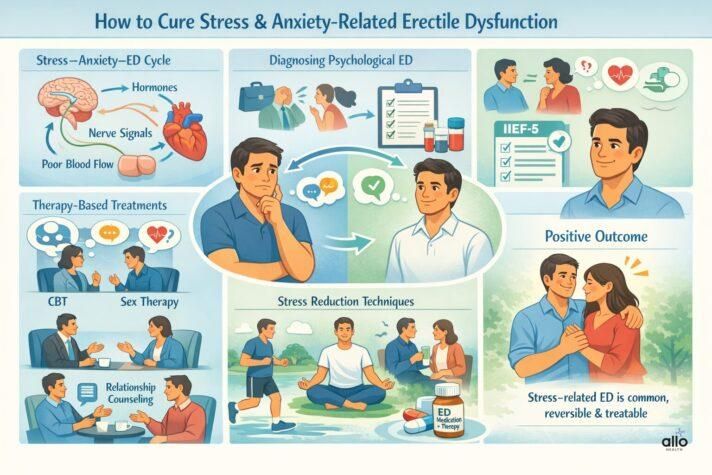
Stress related ED is treatable
Stress and anxiety can play a powerful role in erectile dysfunction by affecting hormones, blood flow, nerve signals, and mental focus. When the body stays in a constant state of pressure, it becomes difficult for erections to happen. The good news is that stress- and anxiety-related ED is common and treatable. Once the underlying mental and emotional triggers are identified, simple steps like stress management, therapy, lifestyle changes, and open communication can lead to real improvement. Understanding that ED is not a personal failure but a mind-body response is important. With the right support and timely action, most men can break the stress-ED cycle. This can regain both sexual confidence and well-being.

Disclaimer
The following blog article provides general information and insights on various topics. However, it is important to note that the information presented is not intended as professional advice in any specific field or area. The content of this blog is for general educational and informational purposes only. The content should not be interpreted as endorsement, recommendation, or guarantee of any product, service, or information mentioned. Readers are solely responsible for the decisions and actions they take based on the information provided in this blog. It is essential to exercise individual judgment, critical thinking, and personal responsibility when applying or implementing any information or suggestions discussed in the blog.
Most Asked Questions
How can erectile dysfunction caused by stress be fixed?
Erectile dysfunction caused by stress can often be improved by reducing stress levels, improving sleep, exercising regularly, and practicing relaxation techniques like deep breathing or meditation. Psychological therapies such as cognitive behavioral therapy (CBT) or sex therapy are also very effective. In some cases, doctors may recommend short-term ED medication along with stress management.
Can anxiety really cause impotence?
Yes, anxiety can cause impotence. Anxiety triggers the body’s fight-or-flight response, which reduces blood flow to the penis and interferes with sexual arousal. Ongoing anxiety can also lower confidence and create a cycle where fear of performance makes erections more difficult.
Does anxiety cause erectile dysfunction even if physical health is normal?
Yes. Many men with anxiety-related erectile dysfunction have no physical health problems. In these cases, erections may be normal during sleep or masturbation but difficult during partnered sex due to mental pressure and stress.
Can depression and anxiety together cause erectile dysfunction?
Yes, depression and anxiety together increase the risk of erectile dysfunction. Depression can lower sexual desire and energy, while anxiety interferes with arousal and erection. When both are present, the chances of ED are higher, but treatment of mental health often improves sexual function.
Is anxiety-related erectile dysfunction permanent?
No, anxiety-related erectile dysfunction is usually not permanent. With proper stress management, therapy, lifestyle changes, and medical support if needed, most men see significant improvement and regain normal erectile function.
Sources
- 1.
Erectile dysfunction in patients with anxiety disorders: a systematic review
- 2.
A Psychosocial Approach to Erectile Dysfunction: Position Statements from the European Society of Sexual Medicine
- 3.
Cognitive Behavioral Sex Therapy: An Emerging Treatment Option for Nonorganic Erectile Dysfunction in Young Men: A Feasibility Pilot Study