Lubricants and Erectile Dysfunction: Do They Help or Harm?
Written by Dr. Deepali Anand

Dr. Deepali is a medical writer and healthcare professional with a background in clinical surgery and patient care. Having transitioned from active clinical practice to medical communications, she specializes in bridging the gap between complex clinical data and patient education. Dr. Deepali is dedicated to creating evidence-based content that is grounded in scientific rigor and empathy, ensuring that sensitive topics like sexual wellness and mental health are accessible and empowering for every reader.
•
July 30, 2026
Our experts continually monitor the health and wellness space, and we update our articles when new information becomes available.
Quick Read
No, standard lubricants do not cause erectile dysfunction. Most body-safe lubes (water-based or silicone-based) actually enhance comfort and reduce performance anxiety, which can support better erections. But, certain types, especially those with numbing agents like benzocaine or lidocaine, may temporarily reduce sensation and arousal. Using too much lube can also decrease friction-based stimulation. If you're experiencing erection issues after using lube, try switching to a fragrance-free, additive-free formula and use it sparingly. Persistent ED should be evaluated by a healthcare provider to rule out underlying health conditions.
Can lube cause erectile dysfunction? It’s a common concern, especially for men who notice erection changes after using a lubricant and start wondering if there’s a connection. The good news is that standard, body-safe lubricants do not cause erectile dysfunction.
In fact, most help make intimacy more comfortable and enjoyable. But certain types of lubes, especially those with numbing agents, heavy additives, or used in excess, can sometimes reduce sensation or arousal temporarily.
In this article, we’ll break down how lubricants actually affect erections, when they might cause short-term issues, which types are safest, and how to use them correctly to support healthy, confident sexual performance.

Allo asks
Have you ever experienced temporary erection loss after using a lube?
Can Lube Cause Erectile Dysfunction?
Lubricants are commonly used by both men and women to make sexual activity smoother and more comfortable. But many people wonder, can lube cause erectile dysfunction?
The short answer is no, standard lubricants do not cause erectile dysfunction — unlike substances explored in alcohol addiction and sexual dysfunction, where the link is well established. In fact, research shows that using lube usually enhances sexual pleasure and satisfaction rather than interferes with erections.[1]

Most lubricants do not affect the body’s natural ability to achieve or maintain an erection.[2] But, in some cases, certain factors, like psychological stress, overuse of numbing lubes, or uncomfortable sensations, can lead to a temporary loss of erection. These effects are usually short-lived and not a sign of true erectile dysfunction.
According to Allo Health, every 1 in 2 patients has ED, which is based on our internal clinical data of more than 2.5 Lakh patients who come to our clinic — contributing factors often include alcohol and erectile dysfunction among others.
How Lube Can Help With Erectile Dysfunction?
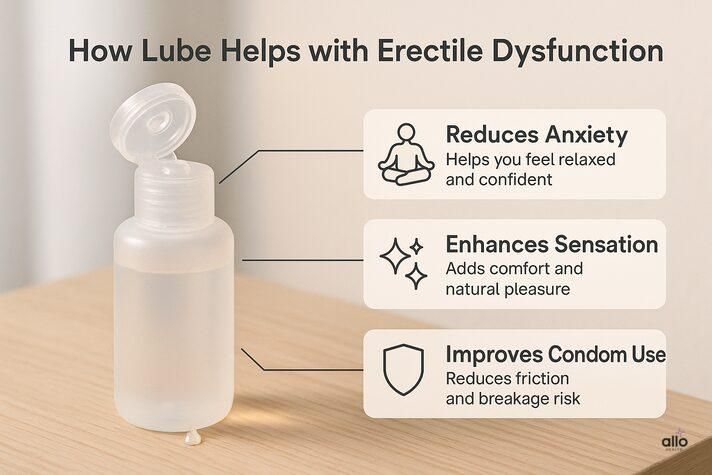
Using lubricants during sexual activity can actually help men dealing with erectile dysfunction in several ways. Here’s how:
-
Reduces Anxiety
For many men, performance anxiety can make it harder to stay aroused. Lubricants make intimacy smoother and more comfortable, helping reduce tension and allowing you to focus on pleasure rather than pressure. Feeling relaxed and confident often makes it easier to get and maintain an erection.

-
Enhances Sensation
Lube decreases friction, which can make sex feel more natural and enjoyable. This added comfort can increase stimulation and arousal, both of which support stronger erections and a better overall experience.[3]
-
Improves Condom Use
Using lubricant with condoms can prevent dryness, reduce the risk of breakage, and make application easier. This can ease worries about safety or discomfort, helping maintain arousal and erection throughout the activity.
Why People Worry That Lube Might Cause Erectile Dysfunction
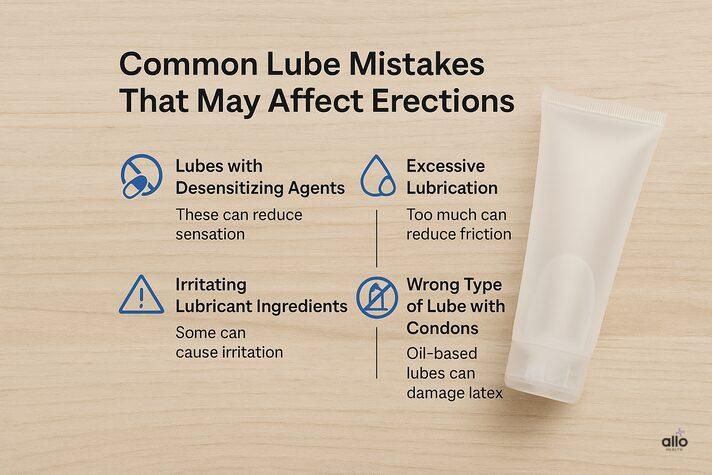
While it’s rare, the wrong type of lubricant or certain circumstances can sometimes play a role in erection difficulties. Here’s how:
-
Lubes With Desensitizing Agent
Some lubricants contain mild anesthetics like benzocaine or lidocaine to reduce sensation and help delay ejaculation. But, this numbing effect can also reduce sexual pleasure and make it harder to stay aroused. In some cases, this temporary loss of sensitivity may contribute to erection difficulties.
-
Excessive Lubrication
Using too much lubricant can remove almost all friction, which is one of the main sources of stimulation for men. When friction is lost, arousal may decrease, and the erectile response can weaken, especially in men who rely heavily on physical touch and sensation.
-
Irritating Lubricant ingredients
Certain additives in lubricants, such as glycerin, parabens, or synthetic fragrances, can cause irritation or mild allergic reactions. While these usually lead to discomfort or burning, not true erectile dysfunction, irritation can still disrupt arousal and enjoyment. Men with sensitive skin should choose gentle, hypoallergenic options.
-
Wrong Type of Lube with Condoms
Avoid using oil-based lubricants with latex condoms — and similarly, risky substances like those covered in sexual poppers and erectile dysfunction should also be avoided during intimacy. Oils can weaken the latex and cause it to break, increasing the risk of STIs and unintended pregnancy. For safer and smoother experiences, use water-based or silicone-based lubes that are condom-friendly.
Types Of Lube and How They Affect Sex
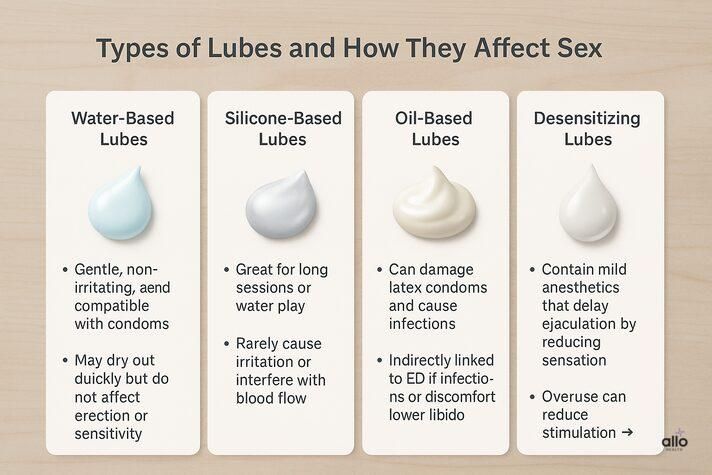
Not all lubricants work the same way. Understanding the differences can help you choose the one that feels best for your body and supports healthy sexual function.
1. Water-Based Lubes: The Safest Choice
- Water-based lubricants are gentle, non-irritating, and compatible with all types of condoms and toys.[4]
- They may dry out faster than others, but they’re easy to reapply and do not affect erections or sensitivity. This makes them a great all-around option for most people.
2. Silicone-Based Lubes: Long-Lasting & Smooth
- Silicone-based lubricants are known for their silky texture and lasting effect.
- They work well for long sessions or water-based activities, as they don’t wash away easily.
- These lubes rarely irritate and don’t interfere with blood flow, helping maintain comfort and arousal.
3. Oil-Based Lubes: Natural but Risky
- Oil-based lubricants, such as coconut or baby oil, may feel natural and moisturizing, but they come with risks.
- They can weaken latex condoms, increasing the risk of breakage and infection.
- Infections or discomfort can indirectly contribute to erectile problems by lowering confidence or libido.
4. Desensitizing Lubes: Temporary Numbness, Temporary Problem
- These lubricants contain mild numbing agents like benzocaine or lidocaine to help delay ejaculation.
- While effective for some, overuse can reduce stimulation and lead to temporary erection difficulties. It’s best to use them occasionally and under medical guidance if needed.
Some lubes contain chemicals or fragrances that can irritate sensitive skin. If you notice discomfort or reduced pleasure, switch to a simple, water-based or silicone-based option, those are safest for most people.
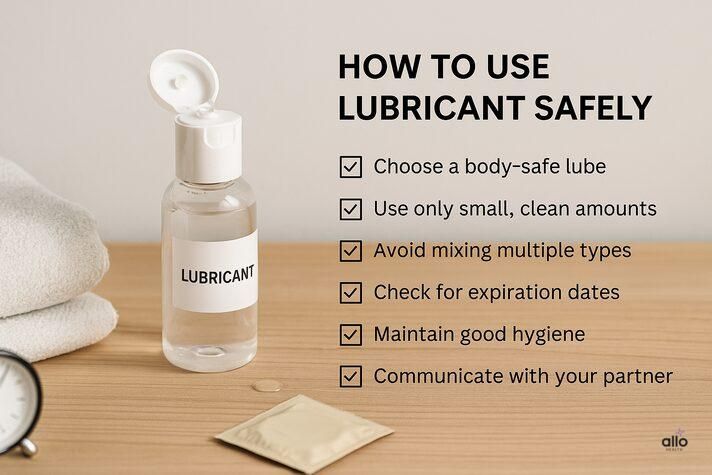
How to Use Lubricant Safely for Erectile Dysfunction
Using lubricant the right way can make intimacy smoother, more comfortable, and even help reduce anxiety that affects erections. Here’s how to do it safely and effectively:
1. Choose a Body-Safe Lube
Opt for water-based or silicone-based lubricants; they’re safe, gentle, and work well with condoms. If you have sensitive skin, avoid products with fragrances, glycerin, parabens, or other irritants that might cause discomfort or allergic reactions.
2. Use the Right Amount
A little goes a long way. Apply only a small, clean amount to prevent irritation or mess. Using too much can reduce friction, which may affect arousal and sensation.
3. Don’t Mix Different Types
Avoid mixing oil-based and silicone-based lubes; their textures don’t blend well and can cause stickiness or irritation.
4. Check Expiration and Sensitivity
Always check the expiration date and test a small patch on your skin before full use, especially if you have allergies or sensitive skin.
5. Maintain Good Hygiene
Wash your hands and the genital area before and after sex to prevent irritation or infection. Clean products and good hygiene help maintain sexual health.
6. Communicate with Your Partner
Being open about using lube can help remove psychological pressure or embarrassment during sex. Communication builds comfort, trust, and better intimacy.
7. Address Underlying Concerns
If erectile dysfunction happens often, it might point to an underlying condition such as diabetes, stress, or hormonal imbalance. Consult a healthcare professional to identify and treat the root cause.
Bottom Line
So, can lube cause erectile dysfunction — and what about medications? Muscle relaxers and erectile dysfunction is another commonly overlooked connection worth understanding. No, lubricants do not directly cause erectile dysfunction. But the wrong choice or excessive use may temporarily affect arousal or sensitivity.
If you notice erection issues specifically related to lubricant use, try switching to a fragrance-free, additive-free formula, use smaller amounts, and talk to a qualified healthcare provider to rule out other causes.

Disclaimer
The following blog article provides general information and insights on various topics. However, it is important to note that the information presented is not intended as professional advice in any specific field or area. The content of this blog is for general educational and informational purposes only. The content should not be interpreted as endorsement, recommendation, or guarantee of any product, service, or information mentioned. Readers are solely responsible for the decisions and actions they take based on the information provided in this blog. It is essential to exercise individual judgment, critical thinking, and personal responsibility when applying or implementing any information or suggestions discussed in the blog.
Most Asked Questions
Can lube cause erectile dysfunction?
No, standard lubricants do not cause erectile dysfunction. In most cases, they actually help improve comfort and reduce anxiety during sex. However, lubes that contain numbing agents (like benzocaine or lidocaine) or those used in excess can sometimes lower sensation temporarily, which may make it harder to stay aroused.
What are the side effects of using lube?
Most body-safe lubricants have no side effects. In some people, certain ingredients — such as glycerin, parabens, or artificial fragrances — can cause mild irritation, itching, or burning. Always check the ingredient list and choose a gentle, water-based or silicone-based lube if you have sensitive skin.
What are the negatives of using lube?
The main downside is choosing the wrong type. Overly numbing lubes can dull pleasure, while oil-based lubes can weaken latex condoms and increase infection risk. Using too much lubricant can also reduce friction and make stimulation less effective for some men.
Is lube harmful to sperm or fertility?
Some lubricants can reduce sperm motility (how sperm move), which might slightly lower chances of conception if you’re trying to get pregnant. If that’s a concern, use fertility-friendly lubes labeled “sperm-safe” or “non-spermicidal.” These are designed to maintain sperm health while still providing moisture and comfort.
What is the biggest cause of erectile dysfunction?
Erectile dysfunction is most often caused by blood flow issues, stress, or hormonal imbalances — not by lubricant use. Conditions like diabetes, high blood pressure, and anxiety are common underlying factors. If ED happens frequently, it’s best to consult a doctor to identify the root cause and get proper treatment.