Amoxicillin and Erectile Dysfunction: Uses, Dosage and Sexual Side Effects
Written by Dr. Ritu Koul
Dr. Ritu Koul is a medical professional and author specializing in sexual wellness. Through her writing, she focuses on evidence-based education, compassionate care, and breaking long-standing taboos around sexual health, intimacy, and relationships. Her work aims to empower readers with accurate information to make informed decisions about their well-being.
•
April 22, 2026
Our experts continually monitor the health and wellness space, and we update our articles when new information becomes available.
Quick Read
Amoxicillin does not cause erectile dysfunction, and there is no direct link between this antibiotic and sexual problems. Any changes in erections or libido during treatment are usually due to the infection, stress, or tiredness, not the medicine. Amoxicillin is safe when taken the right way, but if erection issues continue after recovery, it’s best to consult a doctor or sexual health expert.
Amoxicillin is a widely used antibiotic and a part of antimicrobial therapies used to treat various infections. This includes sore throat, sinusitis, urinary tract and middle ear infections. Many people worry about side effects when they start taking an antibiotic, and a frequent question asked is: Can amoxicillin cause erectile dysfunction? The short answer is no. Amoxicillin is safe for most people, and it is not known to cause sexual problems. If you notice changes in your sexual desire or erections, it is usually because your body is dealing with the infection, not the medicine. These changes are temporary and often improve as you start to feel better. In this article, we will look at whether amoxicillin can cause erectile dysfunction, how illness and antibiotics may influence sexual health, how it compares with other antibiotic groups like tetracyclines, quinolones, and macrolides, and what you can do to manage temporary ED while recovering.

Allo asks
Have you ever noticed a change in your erections while sick?
Does Amoxicillin Cause Erectile Dysfunction?
Amoxicillin do not cause erectile dysfunction. Research shows that some drugs may cause erectile dysfunction, but amoxicillin is not one of them.[1] Erectile dysfunction is common in men taking medications like 5-alpha reductase inhibitors for prostate issues (benign prostatic hyperplasia), hair loss (androgenetic alopecia), and mental health issues.[2]
How Amoxicillin Might Affect Sexual Health
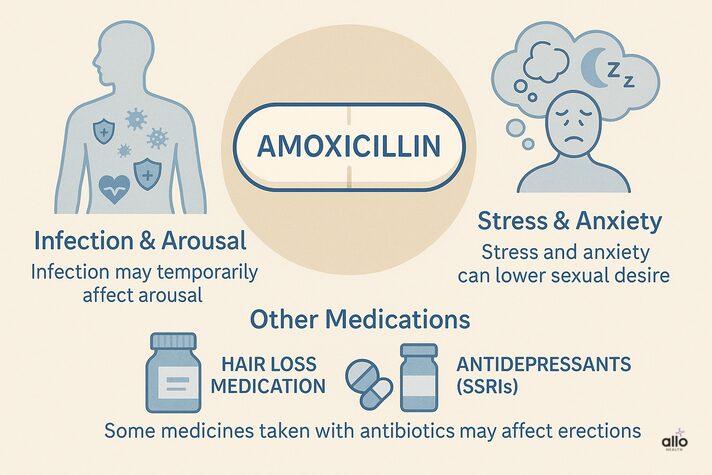
1. Infection May Affect arousal
Sexual changes can happen when the body is busy fighting an infection — part of the broader antibiotics and ED picture. Infections or illnesses such as ear, nose, and throat or urinary tract infections often cause fever, body aches, swelling, and poor sleep. During this time, short-term antibiotic exposure used to treat the infection may also temporarily affect arousal or erections. These changes usually improve once the infection clears.
2. Stress and Anxiety Lower Sexual Desire
Sometimes sickness can cause stress and anxiety, which may affect erections and performance. When the body is recovering from an infection or illness, sex often takes a back seat. Simple lifestyle changes, such as proper rest, balanced meals, and light physical activity, can support recovery, help balance sex hormones, and allow sexual function to return to normal.
3. Other Medications May Affect Erections
Some medications taken alongside antibiotics, such as certain anti-reflux medications (cimetidine), hair loss medication, or antidepressants, can stack effects — including those linked to antihistamines and ED.
Sexual Side-Effects of Amoxicillin vs. Other Antibiotics
Not all antibiotics affect sexual health in the same way, so it is important to understand how amoxicillin compares to others.

Antibiotic's
Sexual Side Effect
Amoxicillin
- Amoxicillin doesn’t affect hormones like testosterone or other hormones
- Does not cause ED; any sexual effects are indirect and linked to illness
Ciprofloxacin, Levofloxacin

- Cause mood or energy changes.
- Rarely leads to sexual side effects.
Doxycycline, Minocycline
- It may change the gut microbiome & impact hormones.
- Causes tiredness or mood shifts that reduce libido.
Azithromycin, Clarithromycin
- It can cause stomach upset and tiredness.
- Rarely affects sexual function directly.
- May contribute to temporary low energy or low interest in sex.
Dosage and Safe Use of Amoxicillin
1. Standard Adult Dosage
The exact dose depends on the type and severity of the infection. Consult a doctor for guidance on the correct dose, depending on the condition. Common adult doses include:
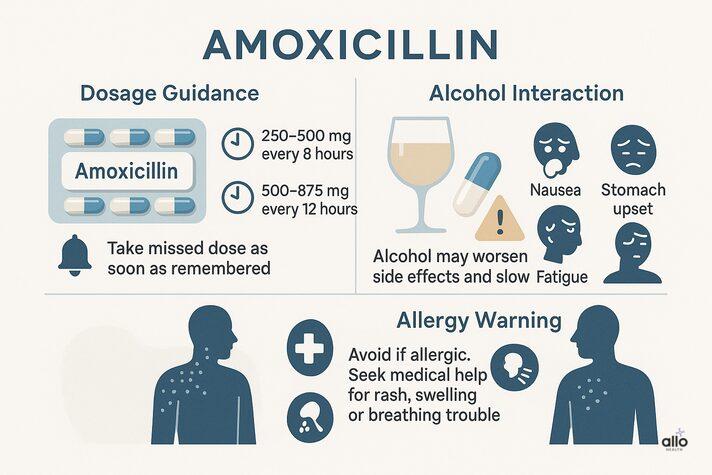
- 250-500 mg every 8 hours, or
- 500-875 mg every 12 hours
- It's recommended to complete the course even after feeling better because bacteria may still be present.
- If you miss a dose, take it as soon as you remember and continue with the regular dosing schedule.
2. Interaction with Alcohol
Amoxicillin doesn’t directly interact with alcohol, but it can cause side effects like nausea, vomiting, and diarrhoea — a tolerability overlap that also shows up in debates around aspirin and ED. Alcohol can make these side effects worse and delay recovery.[3]
3. Allergies
Do not take amoxicillin if you have a known allergy to the medication. Seek help from a healthcare professional if you notice a rash, swelling, itching, or difficulty breathing.
When to See a Doctor?
It’s normal to have short-term erection problems when you’re sick or on antibiotics. But some symptoms shouldn’t be ignored. Consult a doctor:
- If erection issues persist after the infection has healed.
- If you notice any rash, swelling, or difficulty in breathing.
- If you are dealing with depression or anxiety, which are psychological risk factors of ED.
- If you have chronic conditions like heart disease, liver disease, kidney disease, or Peyronie's disease, they may also affect sexual health on their own.
- If you think another medicine you are taking may be interacting with amoxicillin.
"Amoxicillin itself doesn't cause erectile dysfunction. What you're feeling is usually your body's response to infection, not the antibiotic, and that almost always improves as you recover.
How to Manage Temporary ED on Amoxicillin?
Having erection difficulties while you’re sick or taking antibiotics can feel worrying, but it is usually temporary. Most of the time, sexual function improves once the infection gets better. Along with treatment, simple lifestyle changes can support recovery.
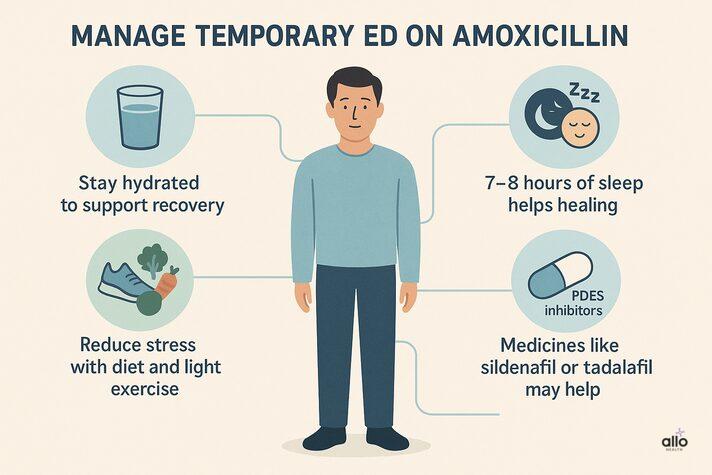
1. Stay Hydrated
Drink plenty of water throughout the day. Proper hydration also helps the body fight infections more effectively.
2. Prioritise Good Sleep
Your body heals during rest. Poor sleep may lower energy and reduce libido. Aim for 7–8 hours of sleep to support both recovery and sexual function.
3. Manage Stress and Anxiety
Being sick can cause stress and anxiety, which may affect erections. Simple lifestyle changes, such as a healthy diet and light physical activity, like walking, can help improve erectile function.
5. Limit or Avoid Alcohol
Alcohol can cause erection issues. It can slow down signals from the brain and restrict blood flow to the penis, all of which can make it difficult to get or keep an erection. Limiting alcohol consumption during recovery can help improve energy levels and erections.
6. Medications
In some cases, medications known as PDE5 inhibitors, such as sildenafil or Tadalafil for ED, are used while the underlying infection is treated. These are usually considered only if erection problems continue and should be used under medical guidance.
Conclusion
Amoxicillin is a safe and commonly used antibiotic, and it does not usually cause sexual problems. Temporary erection changes are more often related to illness, tiredness, or stress. With rest and good recovery care, most men’s sexual function returns to normal. If things do not improve, speaking with a sexual health specialist can help you understand the cause and guide you towards proper support.

Disclaimer
The following blog article provides general information and insights on various topics. However, it is important to note that the information presented is not intended as professional advice in any specific field or area. The content of this blog is for general educational and informational purposes only. The content should not be interpreted as endorsement, recommendation, or guarantee of any product, service, or information mentioned. Readers are solely responsible for the decisions and actions they take based on the information provided in this blog. It is essential to exercise individual judgment, critical thinking, and personal responsibility when applying or implementing any information or suggestions discussed in the blog.
Most Asked Questions
Can amoxicillin cause erectile dysfunction?
No, amoxicillin is not known to cause erectile dysfunction. There are no human studies linking amoxicillin to ED. If you notice erection changes while taking it, they’re usually due to the infection, stress, tiredness, or other medications, not the antibiotic itself.
Can other antibiotics affect sexual function?
Yes, some antibiotics like fluoroquinolones (ciprofloxacin, levofloxacin) and tetracyclines have been linked to mood changes, fatigue, or hormonal shifts that may affect sexual performance. These effects are rare, and amoxicillin has one of the lowest risks in this area.
Does amoxicillin affect testosterone levels?
No, amoxicillin has not been shown to lower testosterone in humans. Some animal studies suggest certain antibiotics can affect hormone pathways, but there’s no strong evidence that short courses of amoxicillin cause hormonal changes or impact male sex hormones.
How long do sexual side effects last during an infection?
Most temporary sexual changes, like low libido or weaker erections, improve as soon as the infection clears and your energy returns. For most people, this takes a few days to a couple of weeks. If symptoms persist longer, it’s a good idea to consult a healthcare provider.
When should I see a doctor about erectile dysfunction during or after antibiotic use?
See a doctor if ED continues after the infection has healed, appears suddenly and severely, or comes with symptoms like rash, swelling, breathing issues, or severe diarrhea. A sexual health expert can help identify what’s causing the problem and offer proper treatment.