Vitalix-D Capsule Benefits & Risks | Vitamin D3 60,000 IU
Written by Dr. Paavas Sharma

Dr. Paavas Sharma holds a Bachelor's degree in Dental Surgery from Manipal Academy of Higher Education. In her journey, she has garnered numerous accolades for her creative writing. Proficient in both English and Hindi, she particularly enjoys delving into topics related to sexual and dental health and possesses experience in writing about oncology. Dr. Paavas has 3 years of professional writing experience and was also involved in editorial teams for magazines since her school and college days. Apart from writing she consistently seeks opportunities for personal expression and enjoyment, whether it's cooking, Netflix sessions or indulging in crafts.
•
May 29, 2026
Our experts continually monitor the health and wellness space, and we update our articles when new information becomes available.
Quick Read
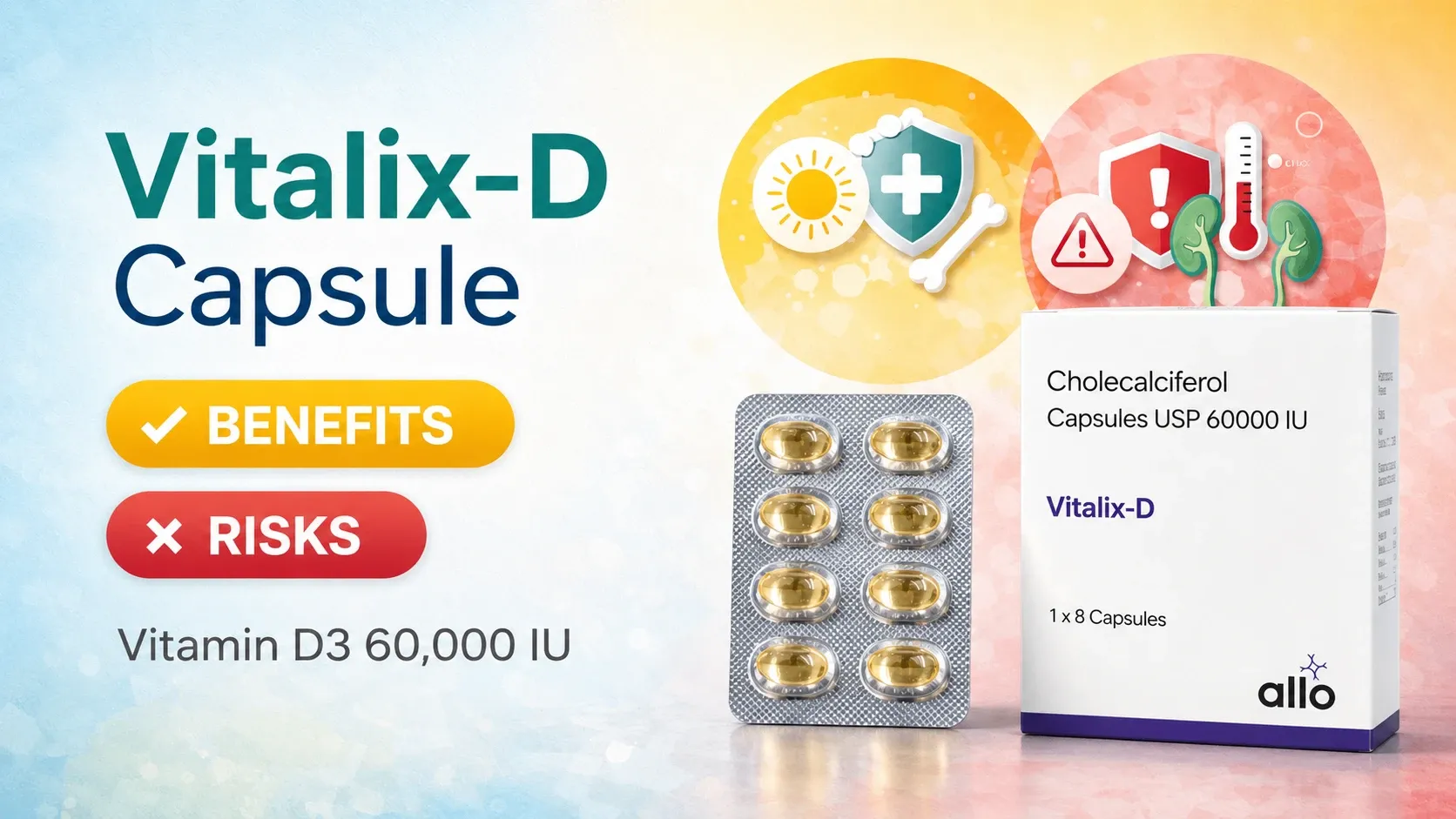
Vitalix-D capsule helps correct vitamin D deficiency and improves calcium absorption in the body. This supports stronger bones, better muscle function, and overall bone health. When taken as prescribed, most people tolerate it well with minimal side effects. However, taking too much or using it for too long can raise calcium levels in the blood. That’s why medical supervision is important while using high-dose vitamin D.
Vitalix-D contains Vitamin D3 (Cholecalciferol) 60,000 IU, a high-dose vitamin D formulation prescribed by doctors to correct vitamin D deficiency and support bone health. Like any prescription medicine, it offers clear benefits when used appropriately, but it also carries certain risks if taken incorrectly or without medical supervision.
Understanding both sides helps patients use the medicine safely and with confidence.
Benefits of Vitalix-D
1. Corrects vitamin D deficiency
The primary benefit of Vitalix-D is restoring low vitamin D levels in the body. Vitamin D deficiency is common and often goes unnoticed until symptoms appear or blood tests reveal low levels. High-dose vitamin D3 helps raise blood vitamin D levels more effectively than low-strength supplements in people who are deficient.
Correcting deficiency can reduce symptoms such as:
- Persistent fatigue
- Muscle weakness
- Bone or joint pain
- Frequent aches or discomfort
2. Improves calcium absorption
Vitamin D3 plays a crucial role in helping the body absorb calcium from food. Without adequate vitamin D, calcium absorption drops - even if dietary calcium intake is sufficient.

By improving calcium absorption, Vitalix-D helps:
- Maintain normal calcium levels in the blood
- Support bone mineralisation
- Reduce the risk of bone softening
This benefit is especially important in people with low vitamin D levels, older adults, and individuals at risk of bone loss.
3. Supports bone strength and density
Vitalix-D is commonly used as part of the treatment plan for osteoporosis and other bone-related conditions. Strong bones depend on a balance of vitamin D and calcium. By improving this balance, Vitalix-D helps maintain bone strength and reduce the risk of fractures over time.
It is often prescribed alongside:

- Calcium supplements
- Diet and lifestyle modifications
- Weight-bearing exercises
4. Helps maintain muscle function
Low vitamin D levels are associated with muscle weakness and reduced muscle strength. Restoring vitamin D levels may help improve muscle function, coordination, and overall physical stability, particularly in older adults.
Better muscle function also lowers the risk of falls, which is an important factor in preventing fractures.
5. Supports overall health
Vitamin D receptors are present in many tissues throughout the body. Adequate vitamin D levels are associated with support for:
- Immune system function
- Nervous system health
- Normal metabolic processes
While Vitalix-D is not prescribed specifically for these purposes, correcting deficiency contributes to overall health and well-being.
Risks and Side Effects of Vitalix-D
When taken exactly as prescribed, Vitalix-D is generally well tolerated. Most people do not experience noticeable side effects. However, risks can arise if the medicine is taken incorrectly, for too long, or without medical supervision.
1. Risk of high calcium levels (hypercalcemia)
The most important risk associated with excessive vitamin D intake is hypercalcemia, or high calcium levels in the blood. This usually occurs when high-dose vitamin D is taken for longer than prescribed or in higher doses than recommended.
Symptoms of high calcium levels may include:
- Nausea or vomiting
- Constipation
- Poor appetite
- Weakness or fatigue
- Increased thirst or urination
- Confusion in severe cases
Long-term hypercalcemia can affect kidney function and increase the risk of kidney stones.
2. Possible mild side effects
Some people may notice mild, temporary symptoms as their body adjusts, such as:
- Stomach discomfort
- Headache
- Metallic taste in the mouth
- Mild digestive issues
These effects are uncommon and usually resolve on their own. If they persist, it is important to inform a doctor.
3. Risk in people with certain medical conditions
Vitalix-D should be used with caution or avoided in people who have:
- High calcium levels in the blood
- Kidney stones
- Severe kidney disease
- Conditions that affect calcium metabolism
In such cases, vitamin D can worsen calcium imbalance and increase health risks.
4. Pregnancy and breastfeeding considerations
Vitamin D is important during pregnancy and breastfeeding, but excessive intake can be harmful. High-dose medicines like Vitalix-D should be taken during pregnancy or breastfeeding only if prescribed by a doctor, who will weigh the benefits against potential risks.
5. Drug interactions
Certain medicines can interfere with vitamin D absorption or metabolism. Antacids, some anticonvulsants, and other long-term medications may reduce effectiveness or increase risks if taken together improperly. Always inform your doctor about all medicines and supplements you are using.
How to reduce risks while taking Vitalix-D
You can minimise risks by:
- Taking the medicine only for the dose and duration prescribed
- Taking it with food to improve absorption
- Avoiding additional vitamin D supplements unless advised
- Not taking antacids or interfering medicines close to the dose
- Attending follow-up tests if recommended by your doctor
- Reporting any unusual symptoms promptly
Key takeaway
Vitalix-D offers clear benefits in treating vitamin D deficiency, improving calcium absorption, and supporting bone and muscle health. When used correctly under medical guidance, it is safe and effective for most people.
However, because it is a high-dose vitamin D medicine, improper use can lead to side effects - particularly high calcium levels. Medical supervision is essential to ensure safe and effective treatment.

Disclaimer
The following blog article provides general information and insights on various topics. However, it is important to note that the information presented is not intended as professional advice in any specific field or area. The content of this blog is for general educational and informational purposes only. The content should not be interpreted as endorsement, recommendation, or guarantee of any product, service, or information mentioned. Readers are solely responsible for the decisions and actions they take based on the information provided in this blog. It is essential to exercise individual judgment, critical thinking, and personal responsibility when applying or implementing any information or suggestions discussed in the blog.
Most Asked Questions
Does Vitalix-D help with bone pain or weakness?
Yes, if these symptoms are caused by vitamin D deficiency, correcting the deficiency may help.
What are the main benefits of Vitalix-D capsule?
It helps treat vitamin D deficiency, improves calcium absorption, and supports bone and muscle health.
Are side effects common with Vitalix-D?
No, most people do not experience side effects when it is taken as prescribed.
What are signs of taking too much vitamin D?
Symptoms may include nausea, constipation, weakness, and loss of appetite due to high calcium levels.
Is long-term use of Vitalix-D safe?
Long-term use should only be done if advised and monitored by a doctor.
Why Should You Trust Us?
Why Should You Trust Us?
This article was written by Dr. Paavas Sharma, who has more than 4 years of experience in the healthcare industry.
Allo has the expertise of over 50+ doctors who have treated more than 1.5 lakh patients both online and offline across 30+ clinics.
Our mission is to provide reliable, accurate, and practical health information to help you make informed decisions.
For This Article
- We reviewed 7+ high-ranking medical articles discussing vitamin D benefits and safety.
- We studied clinical guidelines and pharmacology references related to Vitamin D3 and calcium metabolism.
- We analysed medical research papers on hypercalcemia and vitamin D overdose risks.
- We explored patient discussions on health forums and social platforms to address common fears and misconceptions.
- The benefits and risks are explained in a balanced, evidence-based manner, without exaggeration.