Vitalix-D Capsule Alternatives & Comparison Explained
Written by Dr. Paavas Sharma

Dr. Paavas Sharma holds a Bachelor's degree in Dental Surgery from Manipal Academy of Higher Education. In her journey, she has garnered numerous accolades for her creative writing. Proficient in both English and Hindi, she particularly enjoys delving into topics related to sexual and dental health and possesses experience in writing about oncology. Dr. Paavas has 3 years of professional writing experience and was also involved in editorial teams for magazines since her school and college days. Apart from writing she consistently seeks opportunities for personal expression and enjoyment, whether it's cooking, Netflix sessions or indulging in crafts.
•
May 29, 2026
Our experts continually monitor the health and wellness space, and we update our articles when new information becomes available.
Quick Read
Vitalix-D capsule is a high-dose Vitamin D3 medicine used for treating deficiency. Other vitamin D options may exist with the same salt but different strengths or dosing schedules. Lower-dose supplements are usually used for maintenance, not correction. The right option depends on vitamin D levels and overall health. Always consult a doctor before switching or stopping treatment.
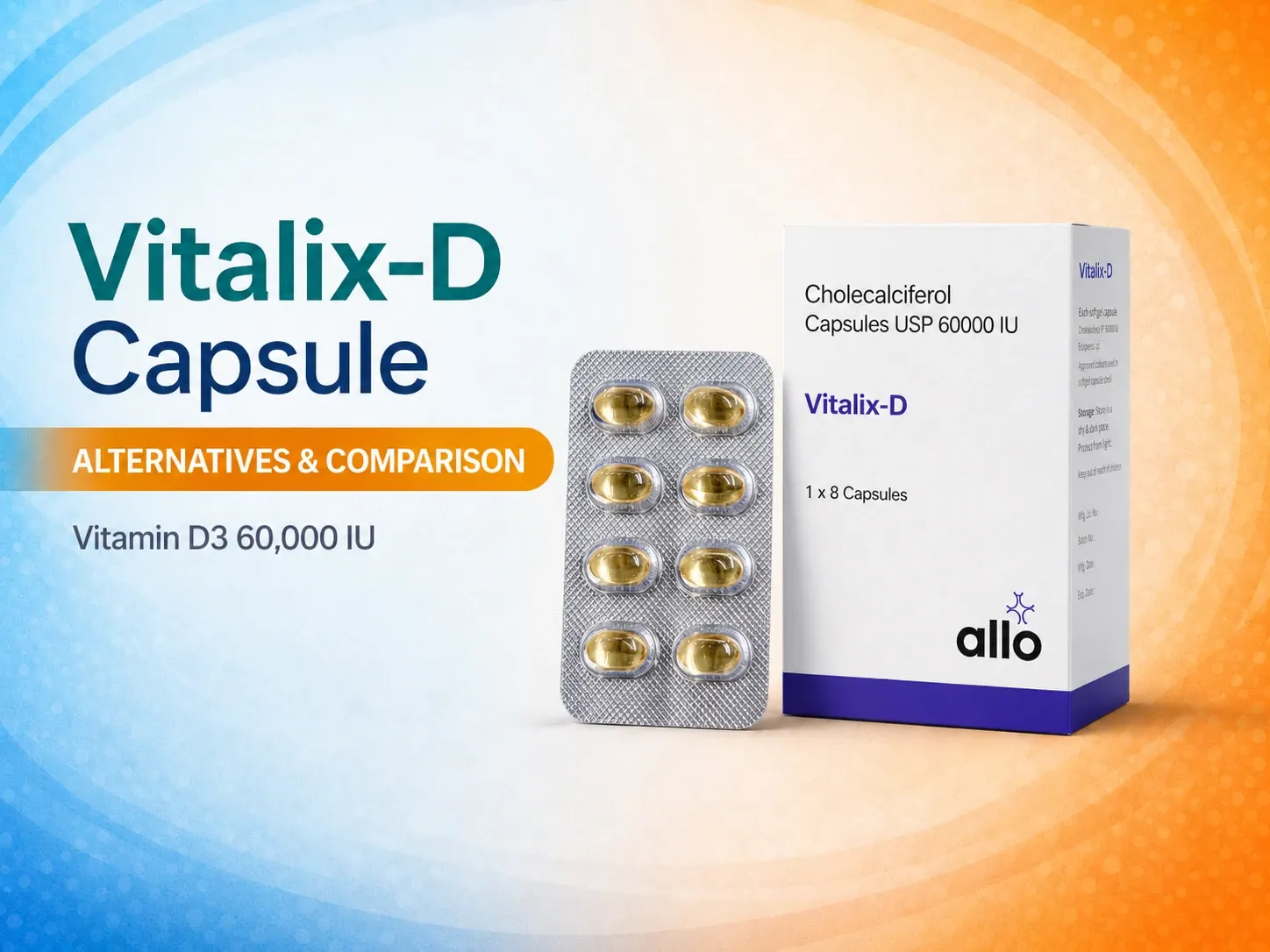
Vitalix-D contains Vitamin D3 (Cholecalciferol) 60,000 IU, a high-dose formulation prescribed to treat vitamin D deficiency and support bone health. Patients are often curious about alternatives - especially when different brands, strengths, or dosage schedules are available with the same salt.
This article explains what “alternatives” really mean for vitamin D3, how doctors compare options, and why one product may be preferred over another even when the salt appears identical.
What are alternatives to Vitalix-D?
Alternatives to Vitalix-D generally fall into three categories:
- Same salt, same strength
- Vitamin D3 (Cholecalciferol) 60,000 IU in another formulation or brand
- Same salt, different strength
- Lower-dose vitamin D3 (e.g., 1,000 IU or 2,000 IU) for maintenance
- Different dosing schedules based on clinical need
- Different approach to supplementation
- Dietary changes
- Sunlight exposure
- Combination therapy with calcium or other nutrients
Doctors choose among these options based on deficiency severity, blood test results, and patient-specific factors.
Same salt does not always mean same suitability
Many vitamin D medicines contain the same active ingredient - Vitamin D3 (Cholecalciferol) - but that does not mean they are interchangeable for every patient.

Even with the same salt and strength, products can differ in:
- Dosage form (capsule, softgel, tablet, drops)
- Absorption profile
- Recommended dosing schedule
- Tolerability for certain patients
Because vitamin D is fat-soluble, formulation and how it is taken (with food, timing, frequency) can affect how well it works.
Comparing Vitalix-D with other vitamin D options
1. Strength and dosing
Vitalix-D provides 60,000 IU, which is considered a therapeutic dose. Doctors typically prescribe this for:
- Confirmed deficiency
- Faster correction of low levels
Lower-dose vitamin D supplements are usually used:

- After deficiency is corrected
- For long-term maintenance
- In people with mild deficiency or preventive needs
This is why high-dose and low-dose vitamin D products are not used interchangeably.
2. Prescription vs routine supplements
Vitalix-D is a prescription medicine, meaning:
- It is intended for specific medical indications
- Dose and duration are decided by a doctor
- Follow-up may be required
Over-the-counter vitamin D supplements are designed for general supplementation and are usually much lower in strength. They may not be sufficient to correct significant deficiency.
3. Combination vs single-ingredient products
Some patients are prescribed vitamin D along with calcium or other nutrients. Vitalix-D contains only Vitamin D3. This allows doctors to:
- Control vitamin D dosing precisely
- Adjust calcium intake separately based on need
Combination products may be useful for some patients, but they are not suitable for everyone - especially those who need careful calcium management.
Why doctors may choose Vitalix-D
A doctor may prefer Vitalix-D when:
- Blood tests show low vitamin D levels
- A high-dose correction phase is required
- The patient needs a weekly or monthly dosing schedule
- A predictable, prescription-guided approach is needed
The choice is not about one product being “better” but about matching the treatment to the patient’s condition.
When alternatives may be considered
Doctors may consider alternatives if:
- Vitamin D levels have normalised and maintenance therapy is needed
- The patient experiences intolerance to a particular formulation
- There are specific medical conditions that require dose adjustment
- Long-term supplementation is planned
In such cases, doctors may switch to:
- Lower-dose vitamin D3
- A different dosing frequency
- Lifestyle-based management with periodic monitoring
Role of sunlight and diet as alternatives
For mild deficiency or maintenance after treatment, doctors may emphasize non-medicine approaches, such as:
- Safe sun exposure several times a week
- Vitamin D–rich foods (egg yolk, mushrooms, dairy, fortified foods, oily fish)
- Balanced calcium intake
However, these approaches are usually supportive, not replacements, during active deficiency treatment.
What patients should avoid comparing on their own
Patients should avoid choosing alternatives based solely on:
- Price
- Brand familiarity
- Advice from non-medical sources
Vitamin D is essential, but inappropriate dosing - especially at high strengths - can lead to complications. Decisions about switching or stopping medicines should always be guided by a doctor.
Key takeaway
Vitalix-D is one of several vitamin D3 options available, but it is specifically used for treating deficiency with a high-dose, prescription-guided approach. Alternatives may exist with the same salt or different strengths, but they are not automatically interchangeable.
The right choice depends on:
- Vitamin D levels
- Overall health
- Medical history
- Treatment goals
Always consult your doctor before switching, stopping, or substituting vitamin D medicines.

Disclaimer
The following blog article provides general information and insights on various topics. However, it is important to note that the information presented is not intended as professional advice in any specific field or area. The content of this blog is for general educational and informational purposes only. The content should not be interpreted as endorsement, recommendation, or guarantee of any product, service, or information mentioned. Readers are solely responsible for the decisions and actions they take based on the information provided in this blog. It is essential to exercise individual judgment, critical thinking, and personal responsibility when applying or implementing any information or suggestions discussed in the blog.
Most Asked Questions
Are there alternatives to Vitalix-D capsule?
Yes, other vitamin D3 medicines and lower-dose supplements are available.
Can I switch to another vitamin D product myself?
No, switching should be done only after consulting a doctor.
Is a lower-dose vitamin D supplement the same?
No, lower doses are usually meant for maintenance, not treating deficiency.
Why did my doctor choose a 60,000 IU capsule?
High-dose vitamin D is used when levels are significantly low.
Can sunlight replace vitamin D medicine?
Sunlight helps maintain levels but may not be enough to treat deficiency.
Why Should You Trust Us?
Why Should You Trust Us?
This article was written by Dr. Paavas Sharma, who has more than 4 years of experience in the healthcare industry.
Allo has the expertise of over 50+ doctors who have treated more than 1.5 lakh patients both online and offline across 30+ clinics.
Our mission is to provide reliable, accurate, and practical health information to help you make informed decisions.
For This Article
- We reviewed multiple clinical explanations on vitamin D dosing strategies.
- We analysed doctor recommendations on switching between high-dose and maintenance therapy.
- We studied patient confusion around substitutes and alternatives from forums.
- We avoided brand comparisons and focused on clinical decision-making logic.
- The content is designed to help patients make informed, safe choices.