Energine Usage-Composition: Ingredients, Dosage & Practical Guide
Written by Dr. Deepali Anand

Dr. Deepali is a medical writer and healthcare professional with a background in clinical surgery and patient care. Having transitioned from active clinical practice to medical communications, she specializes in bridging the gap between complex clinical data and patient education. Dr. Deepali is dedicated to creating evidence-based content that is grounded in scientific rigor and empathy, ensuring that sensitive topics like sexual wellness and mental health are accessible and empowering for every reader.
•
February 27, 2026
Our experts continually monitor the health and wellness space, and we update our articles when new information becomes available.
Quick Read
Energine contains L-Arginine 500 mg, Zinc 10 mg, and Vitamin D3 200 IU in a vegetarian sachet format. It is usually taken once daily after food, unless your doctor advises otherwise. The supplement works gradually and should not be overused or combined with similar products without guidance. Proper storage, correct timing, and medical advice are important to prevent misuse. Used responsibly, Energine can provide supportive nutritional benefits as part of a broader health plan.
If you are searching for Energine usage-composition, you likely want clear, practical information. What exactly is inside Energine? How should it be taken? Is there a right time of day? These are important questions because even nutritional supplements need to be used correctly.
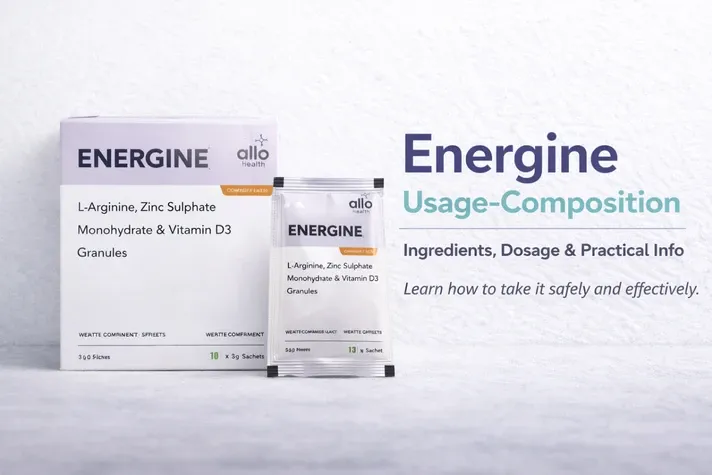
Energine Sachets contain L-Arginine, Zinc Sulphate, and Vitamin D3 in measured amounts. Understanding its composition and proper usage helps prevent misuse and ensures safer, more effective results.
This guide explains what is inside Energine, how to take it, and what practical precautions to follow.
What This Section Covers
This usage-composition guide includes:
- Active ingredients and their amounts
- Basic dosage and timing guidance
- How to take it correctly
- What to avoid while taking it
- Storage and handling advice
- General price context
This section exists to provide practical, action-oriented information and reduce confusion.

Composition of Energine
Each Energine sachet contains:
- L-Arginine – 500 mg
- Zinc Sulphate – 10 mg
- Vitamin D3 – 200 IU
These ingredients are combined in granule form inside a vegetarian sachet.
L-Arginine (500 mg)
An amino acid involved in nitric oxide production, which supports blood vessel relaxation and circulation.[1]
Zinc Sulphate (10 mg)
A mineral essential for immune function, tissue repair, and reproductive health.[2]

Vitamin D3 (200 IU)
Supports bone health, immune function, and plays a role in hormonal balance.[3]
The formula is designed as a moderate-dose, supportive supplement rather than a high-intensity or high-dose therapy.
Energine Dosage Basics & Timing
The exact dosage should follow medical advice. In most cases, supplements like Energine are taken once daily, unless otherwise directed.
General guidance includes:
- Take at a consistent time each day
- Preferably after food to reduce stomach discomfort
- Take with water as instructed
Results, if any, are gradual and depend on overall health and lifestyle factors.
It is important not to exceed the recommended dosage unless advised by a doctor.
How to Take Energine
Energine comes in a sachet form containing granules.
Typical steps:
- Open the sachet carefully.
- Pour the granules into a glass of water.
- Stir well and consume immediately.
Do not:
- Take it on a completely empty stomach if you are prone to acidity
- Mix it with alcohol
- Combine it with multiple similar supplements without medical guidance
Supplements should not replace prescribed medications unless directed by a healthcare professional
How Not to Take Energine
Avoid:
- Doubling the dose if you miss one
- Taking it alongside excessive zinc or Vitamin D supplements
- Using it as a substitute for medical evaluation in cases of persistent sexual dysfunction
If a dose is missed, simply continue with the next scheduled dose. Do not compensate by taking extra.
Storage & Handling
Proper storage helps maintain effectiveness.
- Store in a cool, dry place
- Keep away from direct sunlight
- Keep out of reach of children
- Do not use if the sachet is damaged or expired
Always check the expiry date before use.
Practical Considerations
Energine works best when used as part of a broader health plan, including:
- Balanced nutrition
- Regular physical activity
- Adequate sleep
- Stress management
It should not be seen as a quick solution. Consistency and medical guidance are important for safe and effective use.
Conclusion
Energine Sachets contain L-Arginine 500 mg, Zinc Sulphate 10 mg, and Vitamin D3 200 IU in a vegetarian granule format. It is generally taken once daily after food, unless otherwise directed by a doctor. Proper storage, correct timing, and avoiding overuse are essential for safety. Used appropriately, Energine can serve as supportive nutritional supplementation within a broader health strategy.

Disclaimer
The following blog article provides information about a drug or brand name drug and its potential effects or benefits. However, it is crucial to understand that this information is intended for general educational purposes only and should not be considered a substitute for professional medical consultation. It is highly recommended to consult with a qualified healthcare professional before making any decisions regarding medication, treatment, or healthcare management. Individuals have unique medical conditions, and the information provided in this article may not be applicable to everyone. Only a qualified healthcare provider can evaluate your specific medical situation, taking into account your medical history, conducting appropriate tests, and providing personalized advice and recommendations. They are equipped to make informed decisions tailored to your individual needs. It is crucial to emphasize that self-diagnosis, self-medication, or disregarding medical advice can have serious health consequences. This article may reference specific brand names or drugs for illustrative purposes. Mention of these names does not imply endorsement, recommendation, or guarantee of their efficacy or safety. The choice of medication should be based on discussions and individualized guidance from a healthcare professional who has a comprehensive understanding of your medical condition.
Most Asked Questions
What are the ingredients in Energine?
Each sachet contains L-Arginine 500 mg, Zinc Sulphate 10 mg, and Vitamin D3 200 IU. These ingredients support circulation and nutritional balance.
How should Energine be taken?
Energine is usually mixed with water and taken once daily after food, unless your doctor advises a different schedule.
Can I take Energine on an empty stomach?
It is generally better to take it after food to reduce the chance of stomach discomfort, especially if you are sensitive to supplements.
What should I do if I miss a dose?
If you miss a dose, take the next one at your regular time. Do not double the dose to compensate.
Can I take Energine with other supplements?
You should avoid combining it with other products containing high doses of zinc or Vitamin D unless advised by a doctor, to prevent excessive intake.
Sources
Why Should You Trust Us?
Why Should You Trust Us?
This article was written by Dr. Deepali Anand, who has more than 1 years of experience in the healthcare industry.
Allo has the expertise of over 50+ doctors who have treated more than 1.5 lakh patients both online and offline across 30+ clinics.
Our mission is to provide reliable, accurate, and practical health information to help you make informed decisions.
For This Article
- We reviewed leading pharmacy listings and supplement references related to Energine and similar L-Arginine products to ensure accuracy in composition and dosage details.
- We analyzed published research on L-Arginine, Zinc, and Vitamin D3 to provide scientifically grounded usage and safety guidance.
- We cross-checked dosage ranges against established medical references to avoid recommending excessive or unsafe intake.
- We examined common user questions across search trends and health forums to address real-world confusion around how to take such supplements properly.
- We structured this article to focus on practical instructions, safe usage, and prevention of misuse, rather than promotional claims.
- Our approach prioritizes clarity, medical responsibility, and patient safety so readers can make informed decisions with confidence.